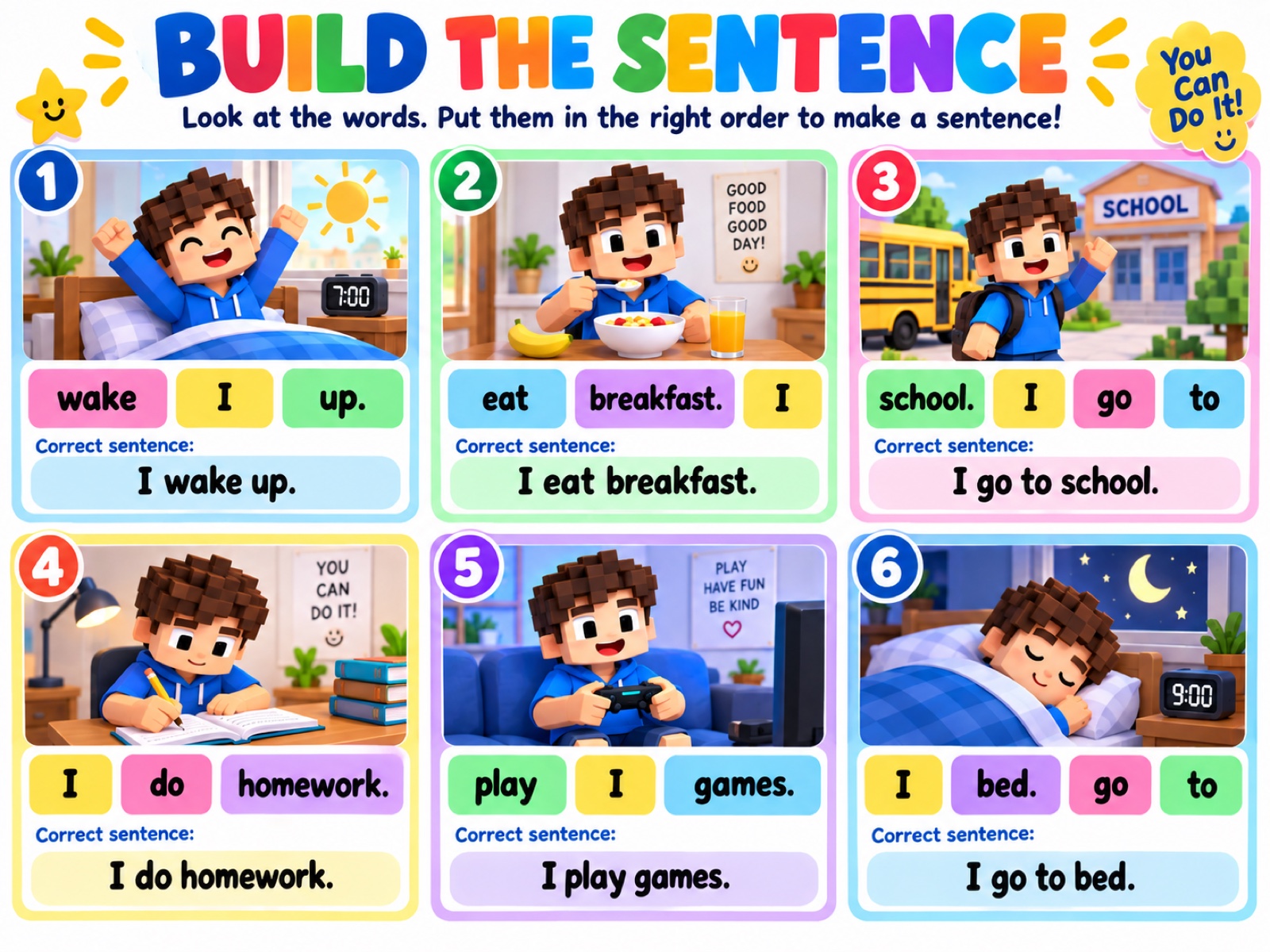
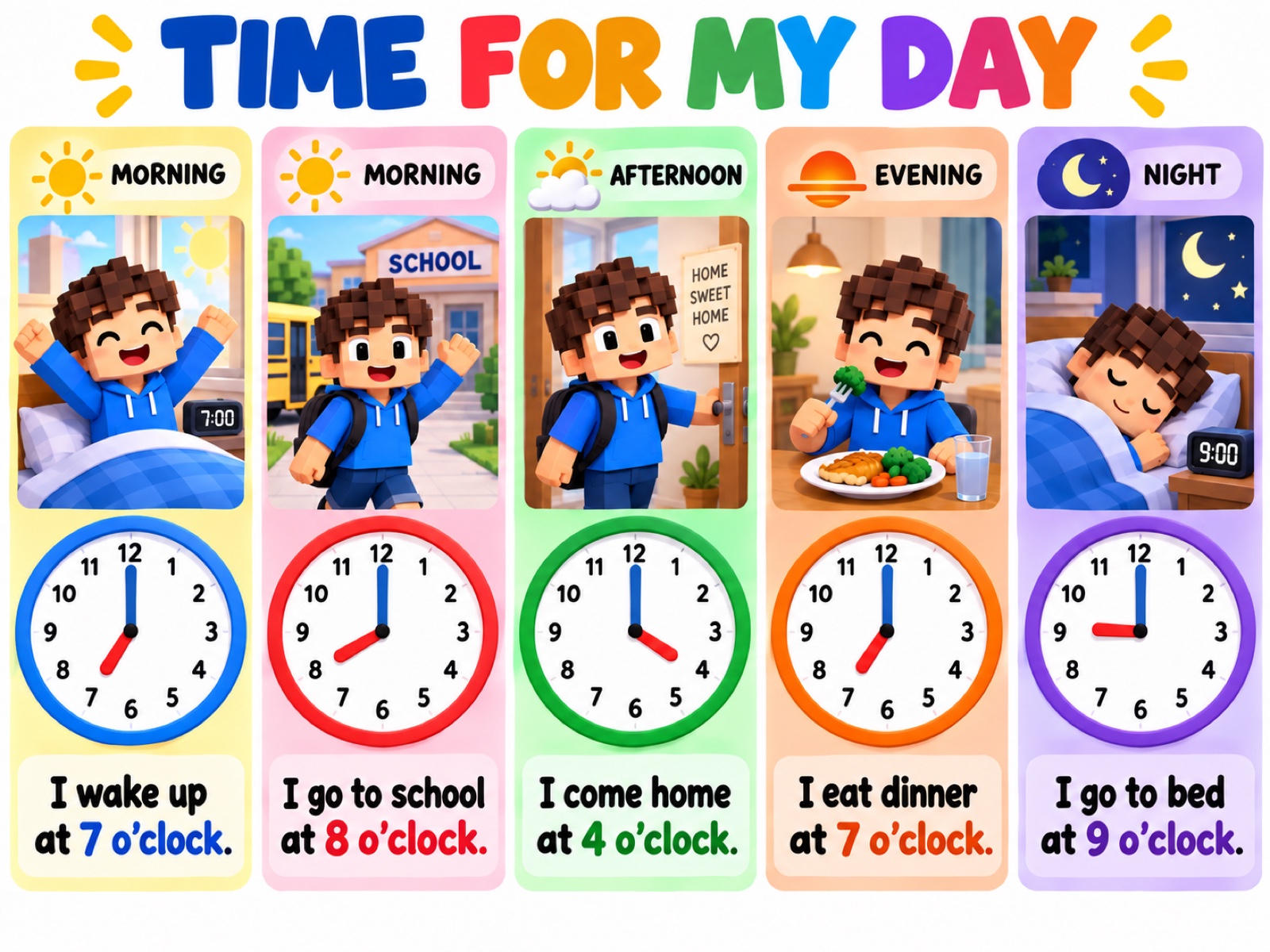
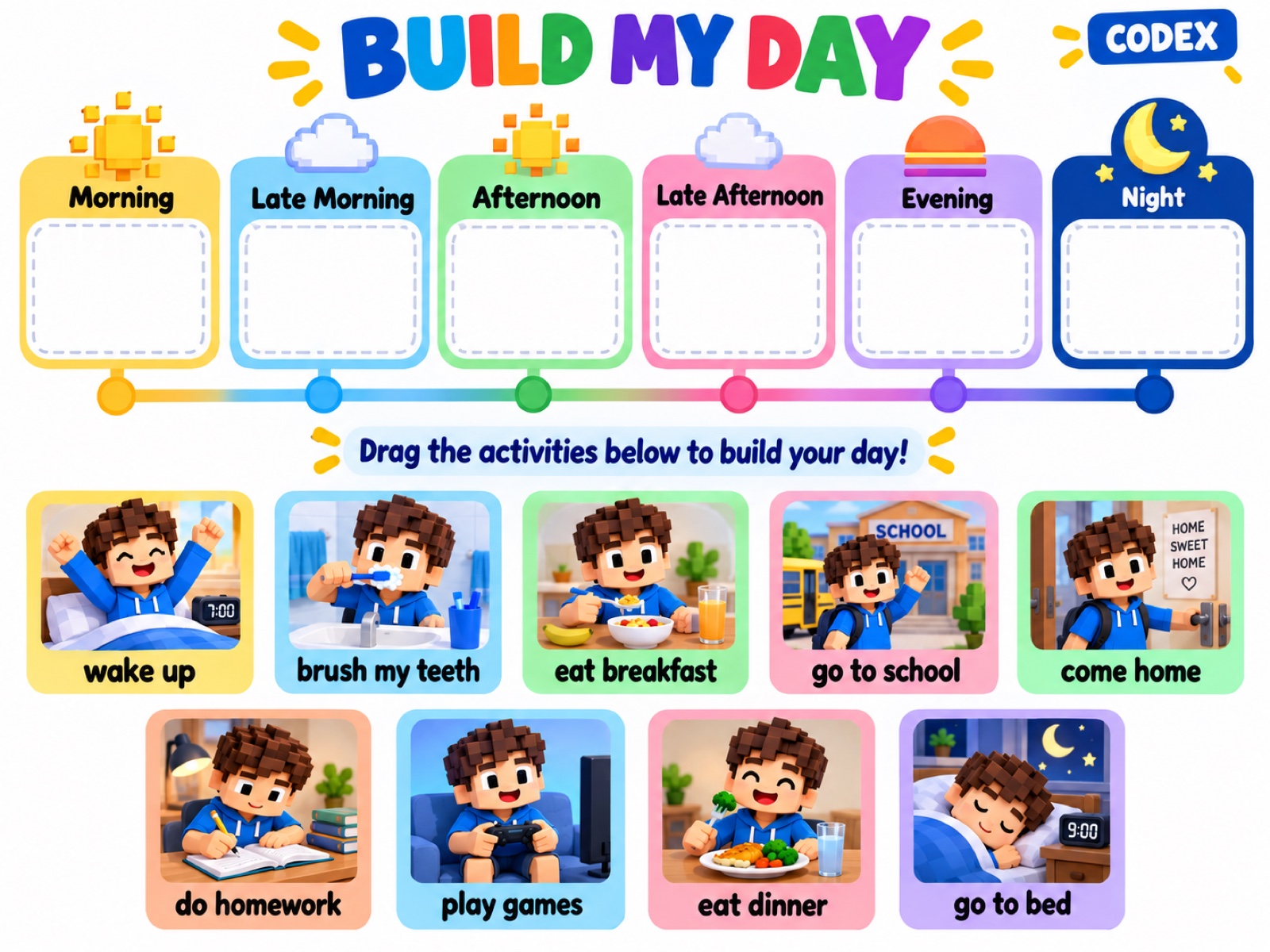
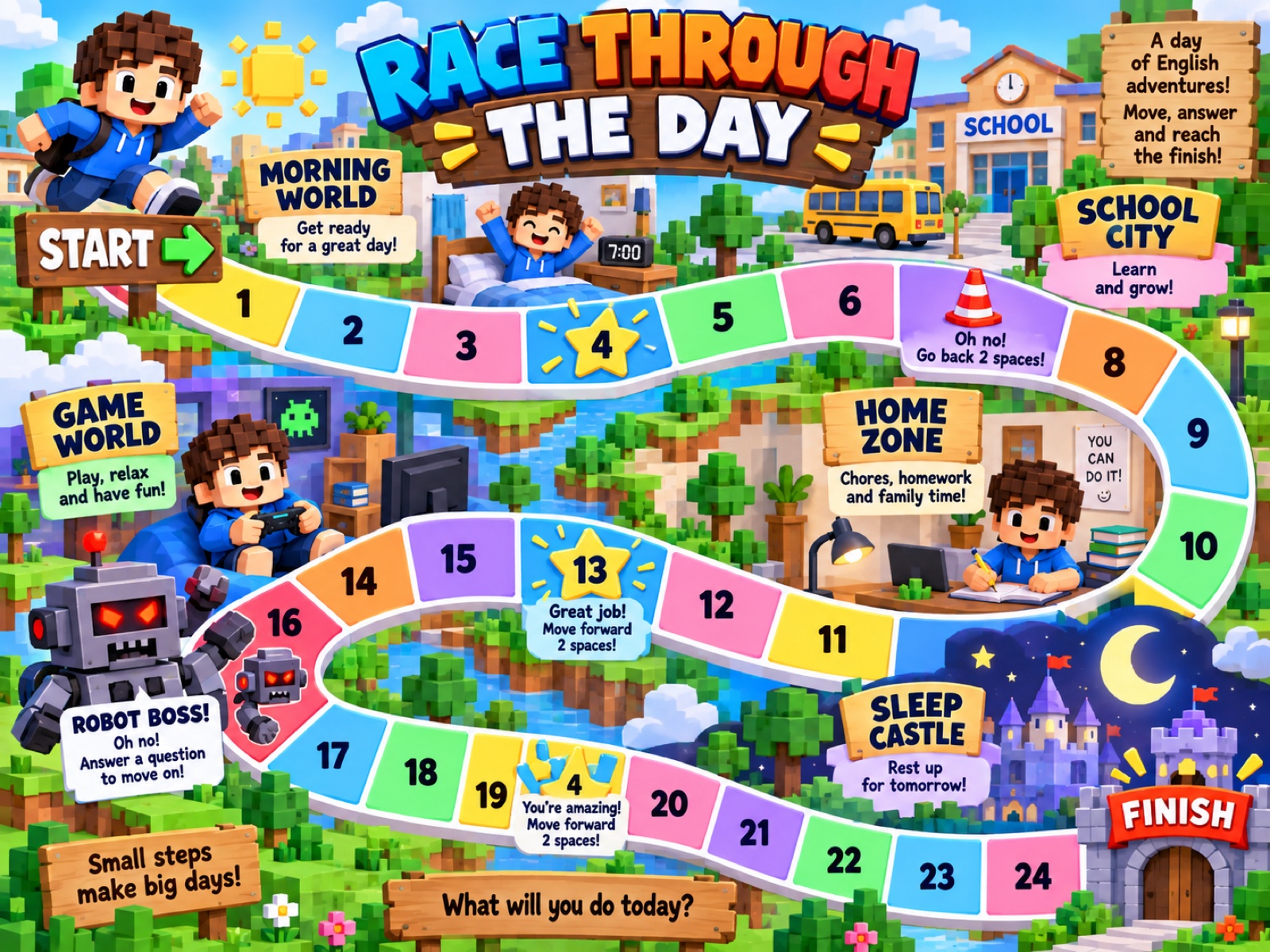
Choose your level and build useful vocabulary step by step.
Levels
A1–A2
Everyday & Survival Vocabulary
Essential language for daily situations.
12 Classes
A2–B1
Fluency & Experiences
More precise language for stories, descriptions and conversations.
12 Classes
B1–B2
Natural & Professional Vocabulary
Collocations, phrasal verbs and confident discussion language.
12 Classes
Vocabulary
Vocabulary Class
Build useful vocabulary for clear communication.
Class focus: Learn useful words, phrases and expressions for this topic at the selected level.
Vocabulary BankKey words and useful phrases
Meaning & ContextUnderstand how the language is used
PracticeRecognize and complete expressions
SpeakingUse the vocabulary in conversation
Vocabulary · A2–B1 · Class 1
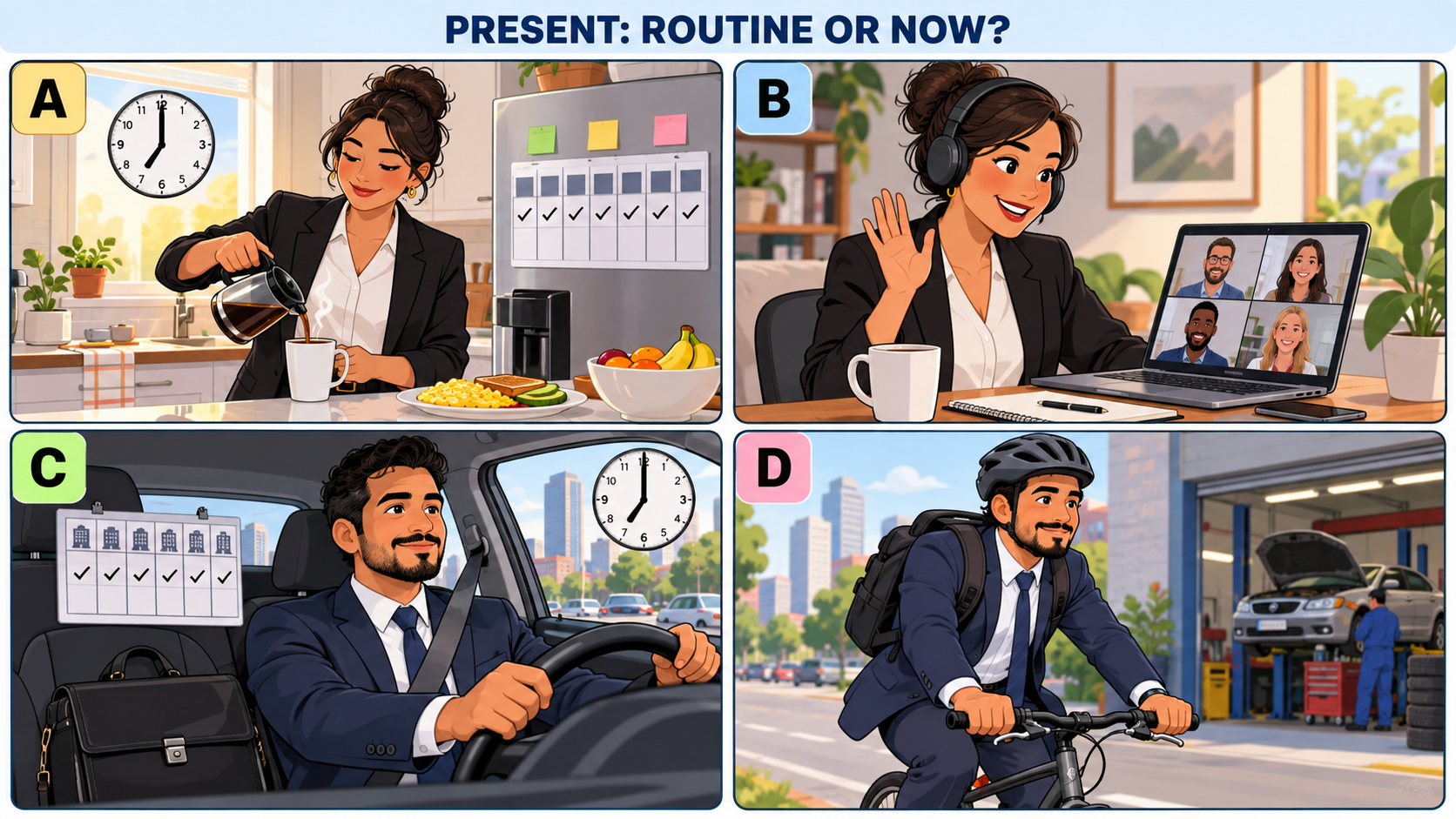
Daily Life, Routines & Time Expressions
Speak naturally about routines, habits, busy days and current activities.
Goal: Learn and actively use 15 useful words and expressions for everyday life.
Choose a section to begin.
1. Your Day in Three Words
Start with your real life.
How is your day going?
What time did you wake up today?
Choose three words to describe your typical weekday.
Build a complete answer
Use your three words in complete sentences and explain why you chose them.
2. Everyday Life Vocabulary
Learn the expressions in four useful groups.
🌅 Morning
wake up
Stop sleeping. I wake up at 7:00.
get ready
Prepare yourself. I get ready for work quickly.
commute
Travel regularly to work or school. She commutes by bus.
be in a hurry
Have little time. Sorry, I’m in a hurry.
on time
At the planned time. She is always on time.
☀️ Work & Daytime
have a break
Stop working briefly to rest. I have a break at noon.
grab lunch
Get or eat lunch quickly. We usually grab lunch nearby.
catch up on
Do work or tasks you did not finish before. I catch up on emails in the morning.
run errands
Do small necessary tasks outside your home. I run errands after work.
🌙 Evening
get home
Arrive home. I get home around 6:30.
unwind
Relax after stress or work. I unwind by watching a series.
stay up late
Not go to bed early. I stay up late on Fridays.
be exhausted
Be extremely tired. I’m exhausted after a long day.
🕒 Current Time
at the moment
Now or currently. I’m working at the moment.
these days
Currently, in this period. These days, I’m studying more.
Personal questions
Do you usually commute, work from home or study from home?
What do you do during your breaks?
What helps you unwind?
Are you busy these days?
3. Memory Match
Match every expression with its definition.
Choose two numbered cards.When you find a pair, make one true sentence with the expression.
Attempts: 0
Pairs: 0 / 15
Make a true sentence.
⭐🎉✨🏆🌟🥳
Excellent work!
You matched all 15 expressions and used them in true sentences.
4. Choose the Best Expression
Complete each sentence before revealing the answer.
1. I usually ________ at 6:30, but today I slept longer.
wake up
2. She is always ________; she never arrives late.
on time
3. I need to ________ after work. I have to go to the bank and supermarket.
run errands
4. I’m sorry, I can’t talk. I’m ________.
in a hurry
5. After a difficult day, I like to ________ by listening to music.
unwind
6. We usually ________ at a small café near the office.
grab lunch
7. I’m very tired because I ________ last night.
stayed up late
8. ________, I’m trying to improve my English.
These days
5. A Busy Day
Tell a complete story using the new vocabulary.
Your situation
You wake up late. You have an important meeting or class at 9:00. You have not answered your emails, you need to run errands after work, and you are exhausted.
Develop the story
What time did you wake up?
Were you in a hurry?
How did you commute?
Did you arrive on time?
What did you have to catch up on?
Did you have a break or grab lunch?
What errands did you run?
How did you unwind at the end of the day?
Speaking challenge
Tell the complete story using at least eight vocabulary items. Then ask your partner three questions about their busy day.
✓ At least 8 target expressions✓ Clear sequence of events✓ 3 follow-up questions
6. Fast Recall
Read the definition and say the expression.
1. To relax after work.
unwind
2. To arrive at the correct time.
be on time
3. To do tasks like shopping or going to the bank.
run errands
4. Now, currently.
at the moment
5. Very, very tired.
be exhausted
Real-life review
Say three true sentences about your real life using today’s vocabulary.
7. My Real Week
Use the vocabulary in a personal text and voice message.
Write about your typical weekday
Write 100–120 words and include at least eight vocabulary items from the class.
What time you wake upHow you get ready and commuteWhat you do during breaksWhether you run errandsHow you unwindWhat is different these days
Optional voice note
Describe yesterday in a 60–90 second voice message. Use at least five expressions from the class.
Learn nine position words, choose the right answer, find the matching picture, and speak in complete sentences.
Mission 1: Learn the positions.
⭐⭐⭐⭐⭐
Mission 1 · Learn the Words
Look, point, and read each sentence aloud.
The cat+is+position word+the box.
Touching or insideON means touching the top. IN means inside.
Up or downABOVE means higher and not touching. UNDER means lower.
Around the boxUse LEFT, RIGHT, FRONT, BEHIND, or NEXT TO.
ONThe cat is on the box.INThe cat is in the box.ABOVEThe cat is above the box.UNDERThe cat is under the box.ON THE LEFT OFThe cat is on the left of the box.ON THE RIGHT OFThe cat is on the right of the box.IN FRONT OFThe cat is in front of the box.BEHINDThe cat is behind the box.NEXT TOThe cat is next to the box.
Mission 2 · Choose the Word
The words are hidden. Look carefully and click the correct position.
Round 1 · Score 0/3
Where is the cat?
Choose one position.
Mission 3 · Find the Picture
Read the command, then click the matching picture. The picture words are hidden.
Round 1 · Score 0/3
Find it: The cat is under the box.
Click one picture.
Final Mission · Say the Sentence
Look at the picture. Answer aloud with one complete sentence.
Challenge 1 of 5
Where is the cat?
The cat+is+________+the box.
Say your sentence. Then check it.
Position Master! 🏆
You found the cat and said five complete sentences.
Kids · Airport Vocabulary
Airport Picture Cards ✈️
Look at each picture, guess the word and reveal it!
Look at the picture. Say the word, then press “Show Word.”Mira la imagen, di la palabra y después presiona “Show Word”.
Passport
Boarding Pass
Suitcase
Carry-on Bag
Check-in Desk
Security
Gate
Departure Board
Window Seat
Aisle Seat
Delayed
On Time
Kids · My Day Adventure
My Day Memory Game 🧠🗣️
Match the daily-routine pictures with their phrases. Say “I…” for every pair!
1. Flip two cards. 2. Match a picture and an activity. 3. Say an “I…” sentence aloud.Then press “I said my sentence” to collect the pair. Need help? Reveal an example.
My Day Flashcards 🌟
Look at the ten pictures before playing.
Now Play the Memory Game! 🧠
Match every picture with its English word.
Attempts: 0
Pairs: 0 / 10
Great match! Now say a sentence.
Use the word in a complete English sentence. Say it out loud before you continue.
⭐🎉🌈✨🥳🏆
Excellent speaking! You found all ten pairs!
You matched every daily activity and practiced ten sentences.
Class 5 · Beginner · 55–60 minutes
Me & My Avatar
Enter Block City, power up your English and collect five stars. Your final mission is to build and describe an avatar.
Mission stars⭐⭐⭐⭐⭐
🏆 All five stars collected!
The gates to the final escape challenge are open.
Choose a level or play them in order.
1. Mission Start 🎮
Your Block City quest begins now.
Five doors. Five stars. One English mission.
Message from the Grammar Boss
Welcome, player!
Build correct English sentences, create your avatar and unlock the treasure. Wrong answers do not remove stars—just try again.
Goal 1
Say your name, age and feeling.
Goal 2
Describe an avatar with am and is.
2. Colors Review 🎨
Scan the color map and choose the target.
Say every color aloud once.
Color scanner
Command 1
Click on…
Choose one color.
3. Numbers Review 🔢
Activate the correct number tile.
Count from one to fifteen.
Number power-up
Command 1
Click TWELVE.
Choose one number.
4. Animals Review 🐾
Find the animal in the random command.
Command 1
Click DOG.
Choose one picture.
5. New Avatar Words ⚡
Study the guide, hide it and identify each mystery picture.
Feelings: happy · sad · tired · angryDescriptions: tall · short · strong · small
Mystery picture challenge
Command 1
Click the word.
Choose one word.
6. Guess the Feeling ⚡
Look at one avatar and guess the feeling.
Mystery feeling
Command 1
How does the avatar feel?
Choose one feeling.
7. TO BE Power 💎
Unlock three simple sentence formulas.
Read the three examples aloud.
I + AM I am happy.
HE + IS He is tall.
SHE + IS She is happy.
Grammar power-up
Command 1
She ___ happy.
Choose am or is.
8. Robot Error Game 🤖
Repair one robot sentence at a time.
Robot line 1 of 4
🤖 I am happy.
Is the robot correct?
Repaired: 0 / 4
9. Am or Is? 🧩
Choose one missing power word at a time.
Question 1 of 7
I ___ eleven years old.
Choose am or is.
Score: 0 / 7
10. Avatar Builder 🧱
Choose four features and watch your description appear.
Use the board for ideas, then make your choices.
Build your avatar
1 · Height
2 · Feeling
3 · Color
4 · Pet
Your avatar
Choose one option in every group.
11. Speaking Quest 🎤
Answer one real-life question at a time.
Question 1 of 3
How old are you?
Say your answer aloud in a complete sentence.
Sentence powers
My name is … · I am 11 years old. · I am happy.
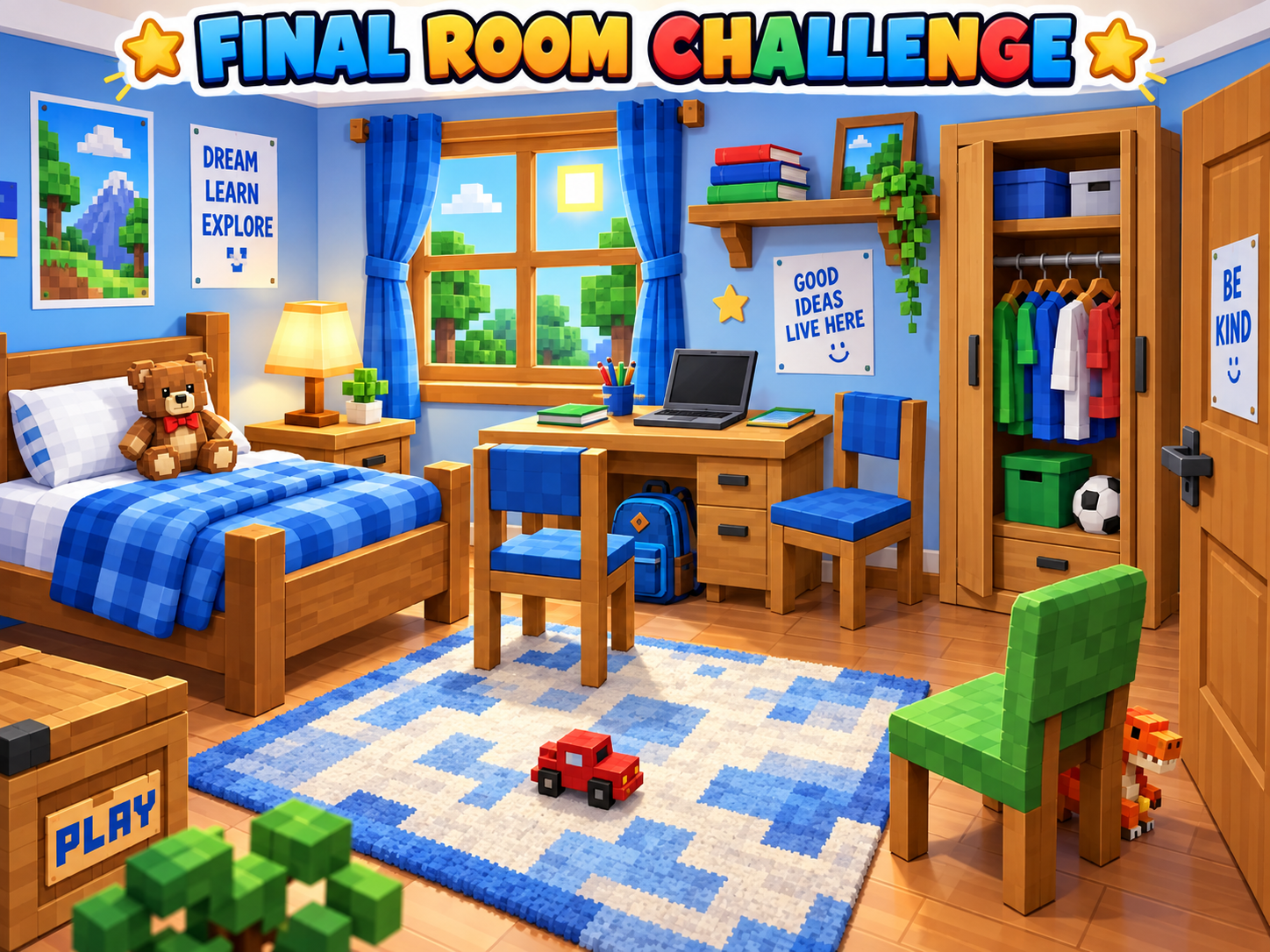
12. Final Image Challenge 🚪
Find each item and say where it is.
12345
Image 1 of 5
Find BLUE. Where is it?
Say the item and its position.
Choose the position.
⭐ 🎉 🏆 🎉 ⭐
Final challenge complete!
You found every item and said where it was.
13. Mission Complete 🏆
Check your new English powers.
⭐ ⭐ ⭐ ⭐ ⭐
Mission Complete!
You can build simple sentences with am and is.
Today I can…
Final question 1 of 3
What is your name?
Answer aloud before you reveal the model.
My name is Alex.
Class 1 · Beginner · 55–60 minutes
English Avatar Adventure
Choose your avatar, learn new colors and animals, roll the dice, and reach the Final Boss.
1. Choose Your Avatar
Choose one player. Your choice is saved for the next time you open the class.
Choose an avatar to unlock the dice.
2. New Vocabulary Power-Up
Study the new words. The old basic colors and animals are only for quick review.
orangeIt is orange. The giraffe is orange.
purpleIt is purple. The penguin is purple.
pinkThe ball is pink. The rabbit is pink.
brownThe bear is brown. It is a brown bear.
grayThe elephant is gray. The crocodile is gray.
light blueThe car is light blue. It is a light blue car.
giraffeThe giraffe is tall. It is orange.
bearThe bear is big. It is brown.
rabbitThe rabbit is small. It is pink.
cheetahThe cheetah is fast. It is yellow and black.
It is a ___.It is a ___ ___.I have a ___.I have a ___ and a ___.He has a ___.She has a ___.The ___ is ___.I can use it to ___.In my bag, I have ___.
Answer Ladder
backpack → a backpack → I have a backpack. → I have a purple backpack. → I have a big purple backpack.
9➕TWO ITEMS
10🕵️MYSTERY
11🎒INVENTORY
12🏆TREASURE
8🧠MEMORY
7👧SHE HAS
6👦HE HAS
5🎁LOOT
1🔎FIND
2🗣️NAME
3🎨COLOR
4🙋I HAVE
Ready
YOUR JOB: Roll the dice.
Roll to start your first mission.
🎲
Teacher: Finish This Turn
If the child needs help, use Try Again. Progress is never lost.
Final Boss · Mission 12
Treasure Room
Look carefully. Complete four speaking missions to unlock the chest.
🟣🎒
🩷📷
🛹
🔦🟠🪖⌚🔑🎒🏆
Boss mission 1 of 4
Find the purple backpack.
🏆 Treasure Unlocked!
You found the objects and used have and has to describe them.
No-Help Final Check
Say one complete sentence for each picture. Click it when the sentence is finished.
Today I Can…
Final score: 0 ⭐
Adventure Class · Mission Map
The English Adventure 🚀
Complete five missions, collect five stars and create your own English story.
Your stars:⭐⭐⭐⭐⭐
🏆 Adventure Complete!
You collected all five stars. Amazing English!
Choose your next mission.
1. Welcome Mission 👋
Introduce yourself and begin your English adventure.
Hi! My name is Heber. What’s your name?
Today you have five English missions. Every time you complete a mission, you get one star. Are you ready?
Icebreaker questions
What’s your name?
How old are you?
Where are you from?
What’s your favorite color?
Do you have a pet?
What games do you like?
What’s your favorite food?
What do you usually do after school?
Tell me something interesting about you.
Quick choices
2. Choose Your Character 🦸
Every English adventurer needs a character.
Choose your character to begin!
Build your character
Which character do you choose?
Why?
What is your character’s name?
How old is your character?
What can your character do?
What can’t your character do?
Power formulas
Subject+can+base verb
My character can fly. · She can speak five languages.
Subject+can’t+base verb
He can’t swim. · She can’t become invisible.
Character challenge
Tell me three things your character can do. Then explain your character’s special mission.
3. Secret Object Challenge 🔎
Find, show and describe mystery objects.
🔵Something blue
🤏Something small
🎒Something you use at school
💙Something you really like
🅱️Something that starts with B
📅Something you use every day
10
Describe your object
What is it?
What color is it?
Is it big or small?
Do you like it?
Is it yours?
Where did you get it?
When do you use it?
Why is it important to you?
Can you describe it using three adjectives?
What would happen if you lost it?
This is my backpack. It is black and red. I use it for school. It is very useful because I carry my books in it.
Guessing challenge
Describe the object without saying its name. Can the other player guess it?
4. Grammar Detective 🕵️
A mysterious robot made mistakes. Can you repair every sentence?
LEVEL 1
1. She are eleven years old.
She is eleven years old.
2. I likes video games.
I like video games.
3. He can to swim.
He can swim.
4. They is my friends.
They are my friends.
5. My dog have big ears.
My dog has big ears.
LEVEL 2
6. Yesterday I go to school.
Yesterday I went to school.
7. He don’t like vegetables.
He doesn’t like vegetables.
8. I am play football now.
I am playing football now.
9. She watch TV every evening.
She watches TV every evening.
10. We was very tired yesterday.
We were very tired yesterday.
Bonus detective question: Why is each sentence incorrect?
Create three correct sentences
Something you do every day.
Something you did yesterday.
Something you are doing now.
I play video games every day. I visited my grandmother yesterday. I am speaking English now.
5. Listening Challenge 🎧
Discover important information in Leo’s story.
Listen once for the general idea. Listen again for the details. You do not need to understand every word.
Leo is eleven years old and lives in a small town with his parents and his dog, Max. Every morning, he gets up at seven o’clock and walks to school with his best friend. His favorite subject is science because he loves learning about space and animals. After school, Leo usually plays basketball, but today he is staying at home because it is raining. He is building a spaceship with cardboard boxes. One day, Leo wants to become an astronaut and travel to Mars.
Listening questions
1. How old is Leo?
He is eleven years old.
2. Who does he live with?
He lives with his parents and his dog.
3. What time does he get up?
He gets up at seven o’clock.
4. How does he go to school?
He walks to school.
5. What is his favorite subject?
His favorite subject is science.
6. Why isn’t he playing basketball today?
Because it is raining.
7. What is he building?
He is building a spaceship.
8. What does he want to be in the future?
He wants to be an astronaut.
Your opinion
Would travelling to Mars be exciting or scary?
Would you like to be an astronaut? Why?
What would you take to Mars?
6. The Mystery Door 🚪
Open the glowing door and create a complete adventure.
A different world appears!
🌲Magical forest
🪐Another planet
🌊Underwater city
🌆Futuristic city
🐉Dragon
👽Alien
Build the story
What can you see?
What animals or people live there?
Is the place dangerous or friendly?
What happens when you enter?
Who do you meet?
What problem do you have?
How do you solve the problem?
Do you return home or stay there?
Adventure toolbox
Characters
An alienA robotA dragonA superhero
Actions
findexplorerunhelpescapefightdiscoverreturn
Story words
FirstThenSuddenlyAfter thatFinally
First, I open the door. Then, I see a futuristic city. Suddenly, a robot asks me for help. After that, we look for a missing spaceship. Finally, we find it and I return home.
7. Adventure Review 🏆
Celebrate your progress and choose your next adventure.
🌟 English Adventure Completed!
You understood questions, used new vocabulary and created your own story.
Your feedback
Which activity was your favorite?
Which activity was difficult?
What would you like to learn in English?
Choose a future class topic
Choose one or more topics!
Beginner Adventure · Level 1
English Level 1 ✨
Learn simple English, complete five missions and introduce yourself.
Mission stars:⭐⭐⭐⭐⭐
🏆 Level 1 Complete!
You can introduce yourself in English!
Choose a section to begin.
1. Welcome 👋
Say your first complete sentence in English.
Hello! My name is Heber.
What’s your name?
My name is __________.
Say: “My name is…”
Say: “Nice to meet you!”
First success!
Say your name three times: slowly, normally and with a big smile.
2. Secret English Check 🔍
Discover how many English words you already know.
This is a game, not a test. Every English word counts!
Great! You already know some English! 🌟
3. Mission 1 · Hello, I Am… 😀
Say your name, your age and how you feel.
Useful words
HelloHiGoodbyeMy name is…I am eleven years old.How are you?
How are you?
😀happy
🙂good
😬nervous
🤩excited
😴tired
Conversation A
A: Hello! My name is Heber. What’s your name?
B: My name is ______.
A: How old are you?
B: I am eleven years old.
Conversation B
A: How are you?
B: I’m happy!
Change roles
Ask: “What’s your name?” and “How are you?”
4. Mission 2 · Colors & Numbers 🎨
Choose colors, count to ten and find missing numbers.
Choose your favorite color
My favorite color is ______.
Numbers 1–10
12345678910
onetwothreefourfivesixseveneightnineten
Missing number game
One, two, three, four…?
Five!
Six, seven…?
Eight!
Two, three, four…?
Five!
Eight, nine…?
Ten!
5. Mission 3 · Action Game 🕺
Listen, understand and do the action.
🎯Press “New Action”!
Action library
Stand up.Sit down.Look.Listen.Clap.Jump.Turn around.Open your hands.Close your eyes.Show me your pencil.
Now you are the teacher!
Give these three instructions:
Stand up!Clap!Sit down!
6. Mission 4 · I Like… 💙
Flip each card to reveal the word and its picture.
Two complete expressions
I like + thing.I like pizza.I like video games.
I don’t like + thing.I don’t like cats.I don’t like football.
Like or don’t like?
Choose three cards and make three complete sentences.
7. Mission 5 · My Pet & My Things 🐶
Say what you have using one simple structure.
I+have+a / an + thing
I have a ______.
Pet questions
Do you have a pet?
Yes, I do. / No, I don’t.
What animal is it?
What’s its name?
I have a dog. Its name is Max.
8. Mini Reading 📖
Meet Alex and find five important details.
Meet Alex! Hello! My name is Alex. I am eleven years old. I like video games and pizza. My favorite color is green. I have a dog. Its name is Max.
Choose or answer
1. What’s his name: Alex or Max?
His name is Alex.
2. Is Alex ten or eleven?
He is eleven.
3. Does he like pizza?
Yes, he does.
4. What’s his favorite color?
Green.
5. Does he have a dog or a cat?
He has a dog.
9. Introduce Yourself 🌟
Put everything together and speak in complete sentences.
🌟 All Five Missions Complete!
You are ready to introduce yourself in English.
Hello!My name is ______.I am eleven years old.I’m happy.My favorite color is ______.I like ______.I have ______.
Amazing!
First, read the model together. Then hide the help words and introduce yourself again.
A1+
A1+ English
Build clear sentences about everyday life.
Regular Classes
A1+ · Class 1
The Daily Routine Detective 🕵️♀️
Describe routines, investigate habits and build confident Present Simple sentences.
Answer: No, I don’t. I stay in bed for ten minutes.
Keep the conversation moving
After every answer, ask one related follow-up question.
7. The Suspicious Routine
Read Leo’s routine and investigate the details.
Meet Leo
Leo works at a small hotel. He wakes up at 6:15 every morning, but he doesn’t get up immediately. He checks his phone for fifteen minutes. Then, he takes a shower and gets dressed. He doesn’t have breakfast at home because he starts work at 7:30. He usually buys a sandwich near the hotel. Leo finishes work at 4:00 and goes home by bus. In the evening, he cooks dinner, watches a series and talks to his friends. He goes to bed at about 11:30. On Saturdays, his routine is completely different. He wakes up late and spends the afternoon with his family.
Vocabulary in context
A. Not the sameB. In most situationsC. Without waitingD. Be with someone or do an activity for a periodE. Not far from something
1. Immediately
C. Without waiting
2. Usually
B. In most situations
3. Near
E. Not far from something
4. Different
A. Not the same
5. Spend time
D. Be with someone or do an activity for a period
True or False?
1. Leo works in a restaurant.
False — He works at a hotel.
2. He gets up immediately.
False — He checks his phone first.
3. He has breakfast near his workplace.
True.
4. He finishes work in the evening.
False — He finishes at 4:00.
5. He goes home by bus.
True.
6. He has a different routine on Saturdays.
True.
Talk about the story
Is Leo’s routine similar to yours?
What is one healthy habit in his routine?
What is one unhealthy habit?
Would you like to start work at 7:30? Why?
What does Leo do in the evening?
What time does he go to bed?
8. The Routine Doctor
Ask questions, diagnose the problem and recommend a better routine.
Patient’s problem
“I’m always tired. You are my routine doctor. Ask questions and help me create a better routine.”
Ask the patient
What time do you go to bed?
What time do you wake up?
Do you have breakfast?
Do you exercise?
Do you drink a lot of coffee?
Do you use your phone at night?
What do you do after work?
I go to bed at 2:00 a.m.
I wake up at 7:00.
I don’t have breakfast.
I drink six cups of coffee.
I don’t exercise.
I watch videos in bed.
Your recommendations
Go to bed earlier.Have breakfast.Don’t drink six cups of coffee.Exercise after work.Don’t use your phone in bed.Drink more water.
Change roles
Invent a terrible routine. The new routine doctor asks questions and gives at least four recommendations.
9. My Day Challenge
Describe a complete day without stopping.
Your description must include:
✓ Two morning activities✓ Two work or study activities✓ Two evening activities✓ One negative sentence✓ One adverb of frequency✓ One time expression✓ Three sequencing words
Planning words only
FirstThenAfter thatIn the eveningFinally
First, I usually wake up at 7:00, but I don’t get up immediately. Then, I take a shower and get dressed. I have coffee, but I don’t have a big breakfast. I start work at 9:00 and have lunch at 1:00. After that, I finish work and go home. In the evening, I have dinner and watch TV. Finally, I go to bed at about 11:00.
Speak naturally
Use the planning words as support, but do not read complete sentences.
10. Homework
Compare your real routine with your dream routine.
Part 1 · My real routine
Write 8–10 sentences. Include:
Your wake-up timeYour morning routineYour work or study routineYour evening routineOne negative sentenceTwo adverbs of frequency
Part 2 · My dream routine
Write another 8–10 sentences.
In my dream routine, I wake up at…I have…I don’t…In the afternoon…In the evening…
Part 3 · Verb transformation
Present
Past Simple
-ing
wake up
__________
__________
go
__________
__________
drink
__________
__________
eat
__________
__________
have
__________
__________
get
__________
__________
sleep
__________
__________
start
__________
__________
finish
__________
__________
take
__________
__________
Present
Past Simple
-ing
wake up
woke up
waking up
go
went
going
drink
drank
drinking
eat
ate
eating
have
had
having
get
got
getting
sleep
slept
sleeping
start
started
starting
finish
finished
finishing
take
took
taking
A1+ · Class 2
My Free-Time Personality 🎮⚽🎬
Talk about hobbies, frequency and your perfect weekend.
Your goals:
Weekend activitiesAdverbs of frequencyHow often…?Like / love / hate + verb-ingPersonality quizPerfect-weekend challenge
Choose a section to begin.
1. Weekday or Weekend?
Compare your usual week with your free time.
Quick routine review
What time do you usually wake up?
What do you have for breakfast?
What time do you start work or class?
Where do you have lunch?
What do you do after work or class?
What time do you go to bed?
Weekdays, weekends or both?
Wake up earlyGo to workCook dinnerWatch moviesMeet friendsClean the housePlay video gamesGo to a restaurantExerciseSleep late
Make complete sentences
I usually ________ on weekdays.
I sometimes ________ on weekends.
I ________ on weekdays and weekends.
I usually wake up early on weekdays. I sometimes go to restaurants on weekends. I exercise on weekdays and weekends.
2. The Hobby Collection
Build a colorful collection of hobbies and weekend activities.
📚
read books
🛍️
go shopping
🎬
watch movies
👥
go out with friends
🎧
listen to music
🍽️
eat at a restaurant
🎮
play video games
👨👩👧👦
visit family
⚽
play football
🚶
go for a walk
🏃
exercise
🏠
stay at home
👩🍳
cook
😴
sleep late
📷
take photos
🧹
clean the house
💃
dance
😌
relax
✈️
travel
❤️
spend time with family
Useful expressions
Expression
Meaning
Example
go out
Leave home to have fun
I go out on Saturday night.
stay in
Remain at home
I usually stay in on Friday nights.
hang out with friends
Spend relaxed time with friends
I hang out with my friends on Saturdays.
go for a walk
Walk for pleasure
I go for a walk on Sunday morning.
spend time with family
Be together with family
I spend time with my family on Sundays.
Quick vocabulary challenge
Name three indoor activities.
Name three outdoor activities.
Name two activities you do alone.
Name two activities you do with friends.
Name two relaxing activities.
Name one activity you never do.
3. The Frequency Ladder
Show how often your activities happen.
Adverb
Frequency
Example
Always
100%
I always have coffee in the morning.
Usually
About 80%
I usually watch movies on weekends.
Often
About 70%
I often visit my family.
Sometimes
About 50%
I sometimes play video games.
Rarely
About 10%
I rarely go dancing.
Never
0%
I never work on Sundays.
Position in the sentence
With most verbs
Subject+frequency adverb+main verb
I usually watch movies at home.He often plays football on Saturdays.She never works on Sundays.
With the verb TO BE
Subject+am / is / are+frequency adverb
I am usually tired after work.He is always busy on Mondays.They are sometimes at home.
I always go out on Fridays. ✅Adverb before the main verb
I am always tired on Fridays. ✅Adverb after the verb to be
Questions with How often
How often + do / does + subject + base verb?
How often do you exercise?How often do you visit your family?How often does your friend play football?
I exercise every day. I usually exercise three times a week. I sometimes exercise. I never exercise.
4. Guess My Frequency
Discover the secret activity by asking complete questions.
Secret activity
One person secretly chooses an activity. The other person asks questions and guesses it.
Question toolbox
Do you do it at home?
Do you do it with friends?
Do you do it on weekends?
How often do you do it?
Do you need special equipment?
Is it relaxing?
Is it expensive?
A: Do you do it at home? B: Yes, I do. A: How often do you do it? B: I usually do it three times a week. A: Do you watch movies? B: Yes, I do!
Change roles
Play again with a new secret activity. Try to guess it using five questions or fewer.
5. What Do You Enjoy Doing?
Express your preferences with verb-ing.
❤️❤️ Love❤️ Really like🙂 Like😐 Don’t mind🙁 Don’t like😠 Hate
Subject + like / love / enjoy / hate + verb-ing + complement
I like playing football.I love watching movies.I enjoy cooking for my family.I don’t mind cleaning the house.I don’t like working on weekends.I hate waking up early.
Questions and short answers
Do + you + like + verb-ing?
Do you like traveling?Do you enjoy cooking?Do you hate cleaning?
Natural answers
Yes, I do.No, I don’t.Yes, I love it!It’s okay.Not really.
Third person
He likes playing video games.
She loves reading books.
My friend doesn’t like cooking.
He likes playing football. ✅ He like play football. ❌
-ing spelling
Base verb
-ing form
Remember
read
reading
Add -ing
watch
watching
Add -ing
play
playing
Add -ing
cook
cooking
Add -ing
dance
dancing
Remove final e
take
taking
Remove final e
run
running
Double the consonant
swim
swimming
Double the consonant
travel
traveling / travelling
Both spellings are used
shop
shopping
Double the consonant
6. What Type Are You?
Answer honestly and discover your free-time personality.
Do you like staying at home?
Do you enjoy meeting new people?
Do you like trying new food?
Do you love traveling?
Do you enjoy exercising?
Do you like going to parties?
Do you enjoy spending time alone?
Do you hate waking up early on weekends?
How often do you go out with friends?
How often do you try something new?
🏠 The HomebodyYou love relaxing at home. You enjoy watching movies, cooking and sleeping late.
🦋 The Social ButterflyYou love meeting people, going out and spending time with friends.
🌍 The AdventurerYou enjoy traveling, trying new activities and visiting different places.
🏃 The Active PersonYou love exercising, walking and playing sports.
Talk about your result
Which personality are you?
Do you agree with the result?
Can a person have two personalities?
What activities show your personality?
7. Sentence Challenge
Build correct sentences and repair common mistakes.
A. Put the words in order
1. usually / I / on Saturdays / play football
I usually play football on Saturdays.
2. watching / loves / she / movies
She loves watching movies.
3. you / how often / exercise / do
How often do you exercise?
4. never / on Sundays / works / he
He never works on Sundays.
5. don’t like / early / waking up / I
I don’t like waking up early.
6. sometimes / we / at home / stay
We sometimes stay at home.
7. enjoy / does / cooking / he
Does he enjoy cooking?
8. always / my friends / busy / are
My friends are always busy.
B. Correct the mistakes
1. I watch usually movies on Saturdays.
I usually watch movies on Saturdays.
2. She like reading books.
She likes reading books.
3. Do you like play football?
Do you like playing football?
4. He don’t enjoy cooking.
He doesn’t enjoy cooking.
5. I am never go shopping on Sundays.
I never go shopping on Sundays.
6. How often you visit your family?
How often do you visit your family?
8. Two Different Weekends
Compare Daniel and Oliver’s free-time personalities.
Daniel and Oliver
Daniel and Oliver are good friends, but their weekends are very different. Daniel works hard during the week, so he usually stays at home on Friday night. He loves watching action movies and cooking. On Saturday morning, he often cleans his apartment and goes shopping. In the afternoon, he sometimes visits his parents. He rarely goes to parties because he doesn’t like noisy places.
Oliver is very social and active. He always goes out on Friday night and often meets friends at a café. He enjoys playing football on Saturday mornings. In the afternoon, he usually goes for a walk or visits a new place. On Sundays, he has lunch with his family. He loves having busy weekends, but he sometimes feels tired on Monday morning.
True or False?
1. Daniel usually goes out on Friday night.
False — He usually stays at home.
2. Daniel enjoys cooking.
True.
3. Daniel often goes to parties.
False — He rarely goes to parties.
4. Oliver plays football on Saturday mornings.
True.
5. Oliver never spends time with his family.
False — He has lunch with his family on Sundays.
6. Oliver sometimes feels tired on Mondays.
True.
Speaking questions
Who is more similar to you: Daniel or Oliver?
What does Daniel like doing?
How often does Oliver go out on Friday nights?
Why does Daniel stay at home?
Who has a more relaxing weekend?
Who has a more interesting weekend?
Would Daniel and Oliver enjoy spending a weekend together?
9. My Perfect Weekend
Describe the perfect Saturday and Sunday.
Your answer must include
Two Saturday activitiesTwo Sunday activitiesOne activity with friends or familyTwo adverbs of frequencyTwo preference expressionsOne activity you dislikeOne reason with because
Preparation prompts
What time do you wake up?
What do you do on Saturday morning?
Where do you go?
Who do you spend time with?
What do you like doing?
What don’t you like doing?
What do you do on Sunday?
Why is this weekend perfect?
On my perfect weekend, I usually wake up at 9:00 because I don’t like waking up early. On Saturday morning, I have a big breakfast and go for a walk. In the afternoon, I often meet my friends. I love eating at restaurants and talking with them. On Sunday, I sometimes stay at home and watch movies. I also spend time with my family. I never work on my perfect weekend because I want to relax.
Speak naturally
Use the prompts as support and describe your perfect weekend without reading a complete paragraph.
10. My Free-Time Profile
Complete your written and spoken profile.
Part 1 · Frequency
Use always, usually, often, sometimes, rarely or never.
I ______ watch movies on weekends.
I ______ play sports after work.
I ______ visit my family.
I ______ go shopping on Sundays.
I ______ wake up early on weekends.
I ______ meet my friends during the week.
Part 2 · Preferences
I love ______.
I really like ______.
I enjoy ______.
I like ______ with my friends.
I don’t mind ______.
I don’t like ______.
I hate ______.
My best friend likes ______.
Part 3 · Real weekend
Write 8–10 sentences.
Three weekend activitiesThree adverbs of frequencyTwo expressions with verb-ingOne negative sentenceOne sentence with because
Part 4 · Voice recording
Record a one-minute voice message describing your perfect weekend. Speak naturally without reading the complete paragraph.
Alejandro
English for Thailand
Practical English for the course, the classroom and real communication.
Classes
Alejandro · Class 1 · B1−/B1+
Starting the Course in Thailand (Present Simple and Present Continuous)
English for the classroom, the course and real communication in Thailand.
Today’s goals:
Introduce yourself naturallyExplain why you are taking the courseTalk about routines and current preparationsAsk polite questionsRequest clarificationUse body and technique vocabulary
Choose a section to begin.
1. Thailand & the Course
Talk about your plans, expectations and preparation.
Why are you going to Thailand?
What do you already know about the course?
How do you feel about studying in another country?
What do you expect to happen on the first day?
What part of the course might be easy for you?
What part might be challenging?
What will you do if you don’t understand the instructor?
What would you like to learn during the course?
Useful expressions
I’m looking forward to…
I’m a little nervous about…
I expect the course to be…
I’m hoping to learn…
The most challenging part might be…
If I don’t understand, I’ll…
I already have some experience with…
I would like to improve…
Continue the conversation
Why?Can you give me an example?What makes you think that?Have you experienced something similar before?How are you preparing for it?
2. In, On & At
Choose the correct preposition for time and place.
IN
Countries and cities · months and years · parts of the day · enclosed spaces
in Thailandin Chiang Maiin Octoberin the morningin the classroom
ON
Days · dates · surfaces · specific days
on Mondayon October 15thon the tableon the first day
AT
Exact times · specific points · events · mealtimes
at 9:00at the training centerat the courseat lunchtime
Complete with in, on or at
1. I’m going to study _____ Thailand.
in
2. The course begins _____ Monday.
on
3. The first class starts _____ 9:00 a.m.
at
4. I’m going to stay _____ Chiang Mai.
in
5. We have practical sessions _____ the afternoon.
in
6. I’ll meet the instructor _____ the training center.
at
7. The final assessment is _____ the last day.
on
8. The equipment is _____ the table.
on
9. I’m interested _____ traditional Thai massage.
in
10. We’ll have a break _____ lunchtime.
at
Speak
What do you normally do in the morning?
What do you usually do on weekends?
Where are you normally at 8:00 a.m.?
What would you like to do in Thailand?
What will you probably do on your first day?
What objects can you find on a massage table?
3. Present Simple vs. Present Continuous
Contrast regular facts with current or temporary situations.
Present SimpleRoutines, permanent information, facts, schedules, skills and experienceAffirmative: Subject + base verb / verb-sNegative: Subject + don’t / doesn’t + base verbQuestion: Do / Does + subject + base verb?I work as a therapist.The course starts at 9:00.I don’t speak Thai.
Present ContinuousActions now, temporary situations, current preparations and organized arrangementsAffirmative: Subject + am / is / are + verb-ingNegative: Subject + am / is / are + not + verb-ingQuestion: Am / Is / Are + subject + verb-ing?I’m preparing for my trip.I’m staying in Chiang Mai.Are the students practicing now?
Choose the correct form
1. I normally work / am working from Monday to Friday.
I normally work from Monday to Friday.
2. The course starts / is starting at 9:00 every morning.
The course starts at 9:00 every morning.
3. I stay / am staying in Chiang Mai during the course.
I am staying in Chiang Mai during the course.
4. The instructor usually demonstrates / is demonstrating the technique first.
The instructor usually demonstrates the technique first.
5. Look! The students practice / are practicing a new movement.
Look! The students are practicing a new movement.
6. I don’t speak / am not speaking Thai.
I don’t speak Thai.
7. This month, I prepare / am preparing for my trip.
This month, I am preparing for my trip.
8. We normally work / are working with a partner.
We normally work with a partner.
Make it personal
I normally work…
I currently live…
I’m preparing for…
I’m taking this course because…
I usually study English…
At the moment, I’m improving…
The course begins…
During the course, I’m staying…
4. Introduce Yourself
Build a clear introduction for your new classmates.
My name is Alejandro and I’m from…
I currently work…
I have experience in…
I’m taking this course because…
I’m hoping to learn…
I’m currently preparing by…
The most challenging part might be…
After the course, I would like to…
One-minute introduction
Introduce yourself. Explain where you are from, what you do, why you are taking the course and what you hope to learn.
Two present-simple sentencesTwo present-continuous sentencesOne personal objectiveOne possible challenge
Hi, I’m Alejandro and I’m from Spain. I’m going to Thailand to take a massage course. I already have some experience, but I’m interested in learning new techniques and improving my practical skills. I’m also working on my English because I’ll need to communicate with instructors and international students. I’m excited about the course, but I think understanding technical instructions might be challenging.
5. Direct & Indirect Questions
Ask instructors and classmates politely and clearly.
Direct question
Question word + auxiliary / modal + subject + main verb?
Where do we leave our equipment?When does the class begin?How should I place my hands?
Indirect question
Polite introduction + question word + subject + verb
Could you tell me where the classroom is?Do you know when the session begins?Could you explain how this technique works?
Indirect Yes / No question
Polite introduction + if / whether + subject + verb
Do you know if we need to bring towels?Could you tell me whether we are working with a partner?
Ask for a demonstration
Could you show me + how to + base verb?
Could you show me how to support the neck?Could you show me how to adjust the table?
Remember: after the polite introduction, use normal sentence order. Could you tell me where is the classroom? ✕ Could you tell me where the classroom is? ✓
Make each question more polite
1. Where is the practical room?
Could you tell me where the practical room is?
2. What time does the afternoon session begin?
Do you know what time the afternoon session begins?
3. Do we need to bring our own clothes?
Do you know if we need to bring our own clothes?
4. How do I adjust this table?
Could you show me how to adjust this table?
5. Can you repeat the instructions?
Could you repeat the instructions, please?
6. Am I using the correct technique?
Could you check if I’m using the correct technique?
Clarification toolkit
Could you say that again, please?
Could you speak a little more slowly?
What does “pressure” mean?
Could you demonstrate that again?
Am I doing this correctly?
Could you check my position?
Let me make sure I understood.
Do you mean that I should press here?
6. The First Day
Practice two realistic conversations at the training center.
Role-play 1 · Meet a classmate
Introduce yourself and begin a natural conversation with another international student.
Ask where the student is fromAsk about previous experienceExplain why you chose the courseMention something excitingMention one concernAsk three follow-up questions
Useful questions
Where are you from?
Do you have any experience with massage?
What made you choose this course?
How long are you staying in Thailand?
What would you like to learn?
Are you nervous about anything?
Role-play 2 · Talk to the instructor
Welcome to the course. Our morning classes begin at 8:30, and the practical sessions take place after lunch. You’ll usually work with a partner. Please bring comfortable clothes, a notebook and a bottle of water. Tomorrow, we’ll begin with body position and basic pressure techniques.
Ask about:
The practical roomThe length of the morning classThe materials you needThe practical sessionsSomething you didn’t understand
Language requirement
Use at least two indirect questions and one clarification expression.
7. Body & Technique Vocabulary
Recognize the language used in practical massage instructions.
Word
Meaning
Example
pressure
the amount of force applied
Apply gentle pressure.
movement
a change in position
Use slow movements.
position
the way the body is placed
Change your position.
posture
the way you hold your body
Maintain good posture.
muscles
body tissue that produces movement
Relax the muscles.
joints
places where two bones meet
Avoid pressure on the joints.
shoulders
where the arms meet the upper body
Relax your shoulders.
lower back
the lower part of the back
Do you have pain in your lower back?
neck
the area between the head and shoulders
Support the neck carefully.
wrists
the joints between the hands and arms
Keep your wrists straight.
Action verbs
Verb
Meaning
Natural combination
apply
put or use something
apply pressure
press
push firmly
press gently
stretch
make longer or extend
stretch the muscles
bend
move into a curved angle
bend your knees
breathe
take air in and out
breathe slowly
release
let go or reduce
release tension
relax
make less tense
relax your shoulders
support
hold and keep in position
support the neck
Pronunciation focus
pressure — PREH-shur
posture — PAH-stcher
muscles — MUS-uhlz · the c is silent
joints — JOY-nts
wrists — rists · the w is silent
breathe — breeð
release — ree-LEES
support — suh-PORT
breath · nounTake a deep breath.
breathe · verbBreathe slowly.
8. Instruction Practice
Choose the correct vocabulary and give clear instructions.
Choose the correct word
1. Please change your position / pressure and lie on your back.
position
2. Keep your back straight and maintain good posture / movement.
posture
3. Don’t put too much pressure / muscle on the neck.
pressure
4. Use slow, controlled movements / wrists.
movements
5. Relax your shoulders / joints and breathe slowly.
shoulders
6. Keep your wrists / muscles straight while applying pressure.
wrists
7. This technique can help release tension in the muscles / position.
muscles
8. You should always protect the client’s joints / posture.
joints
Complete the instructions
apply · press · stretch · bend · breathe · release · relax · support
1. __________ gentle pressure to the lower back.
Apply
2. __________ slowly and deeply.
Breathe
3. __________ your shoulders.
Relax
4. __________ the neck with one hand.
Support
5. __________ gently; don’t use too much force.
Press
6. __________ your knees to protect your lower back.
Bend
7. __________ the muscles carefully.
Stretch
8. This movement can help __________ tension.
release
Mini demonstration
Put these ideas in a logical order and explain the process with First, Next, Then, After that and Finally.
Apply gentle pressureAsk your partner to breathe slowlySupport the neckAsk your partner to relax their shouldersUse slow movementsRelease the pressure carefully
First, ask your partner to relax their shoulders and breathe slowly. Next, support the neck carefully. Then, apply gentle pressure and use slow movements. Finally, release the pressure carefully.
Explain why
Why is good posture important?
What can happen if you apply too much pressure?
Why should you keep your wrists straight?
When should a client change position?
How can slow breathing help a client relax?
9. First Day at the Training Center
Combine the language from the complete class.
Situation
You arrive at the training center, meet the instructor and prepare for the first practical activity.
Introduce yourselfExplain why you are taking the courseUse one present-simple sentenceUse one present-continuous sentenceAsk two polite questionsRequest clarification onceUse five new vocabulary words
Instructor’s message
Alejandro, please change your position and relax your shoulders. Keep your wrists straight, support your partner’s neck and apply gentle pressure using slow movements.
Common corrections
I’m going to do a course.
I’m going to take a course.
I want improve my English.
I want to improve my English.
I have experience making massages.
I have experience giving massages.
The course begins in Monday.
The course begins on Monday.
Could you explain me this technique?
Could you explain this technique to me?
Could you tell me where is the room?
Could you tell me where the room is?
Final speaking challenge
Complete the situation naturally without reading a prepared paragraph. Use polite, clear English and ask for clarification whenever you need it.
Dani
Professional English
Executive communication and practical English for real situations.
Classes
Extra Practice
Dani · Class 1 · B1+/B2
Project & Operations Updates
Passive voice for clear executive project updates
Professional goals:
Explain projects and processesReport completed workDescribe current progressPresent next stepsUse Oil & Gas vocabularyAnswer executive questions
Choose a section to begin.
1. Executive Warm-Up
Describe your responsibilities, projects and decision-making processes.
What are your main responsibilities at Petrobras?
What types of projects does your department manage?
How often are safety inspections carried out?
What projects are currently being developed?
Have any important changes been implemented recently?
How are major decisions usually made?
Active to passive
Transform your own active sentence into a project-focused passive sentence.
Our team reviews the contracts.Active voice
The contracts are reviewed by our team.Passive voice
2. Oil & Gas Executive Vocabulary
Use precise language for projects, regulations and operations.
Vocabulary
Meaning
Professional use
stakeholder
Person or organization affected by a project
Key stakeholders will be consulted.
regulatory approval
Official permission from an authority
Regulatory approval must be obtained.
compliance
Following laws, standards or regulations
Compliance is monitored continuously.
milestone
Important stage in a project
The first milestone has been reached.
contractor
Company or person hired for specific work
All contractors must follow the protocol.
procurement
Process of obtaining goods and services
The procurement process is underway.
production capacity
Maximum amount that can be produced
Production capacity will be increased.
infrastructure upgrade
Improvement of facilities or systems
The upgrade is expected to improve reliability.
supply chain
Network involved in producing and delivering goods
Supply-chain risks are being assessed.
safety protocol
Official safety procedure
A stricter safety protocol has been implemented.
emissions target
Objective for reducing emissions
The emissions target must be met.
operational efficiency
Ability to operate effectively with minimal waste
Operational efficiency is being improved.
Executive collocations
meet a deadlinemeet an emissions targetcomply with regulationscarry out an inspectionaward a contractapprove a proposalincrease production capacityimplement a safety protocolreduce operational costsassess potential risks
Complete orally
Before a project begins, regulatory approval must be…
In our company, safety inspections are…
Contracts are normally awarded after…
Production capacity can be increased by…
Potential risks should be…
Regulatory approval must be obtained. Safety inspections are carried out regularly. Contracts are normally awarded after proposals are reviewed. Production capacity can be increased by upgrading the infrastructure. Potential risks should be assessed before a final decision is made.
3. Passive Voice
Focus on the process, result or decision.
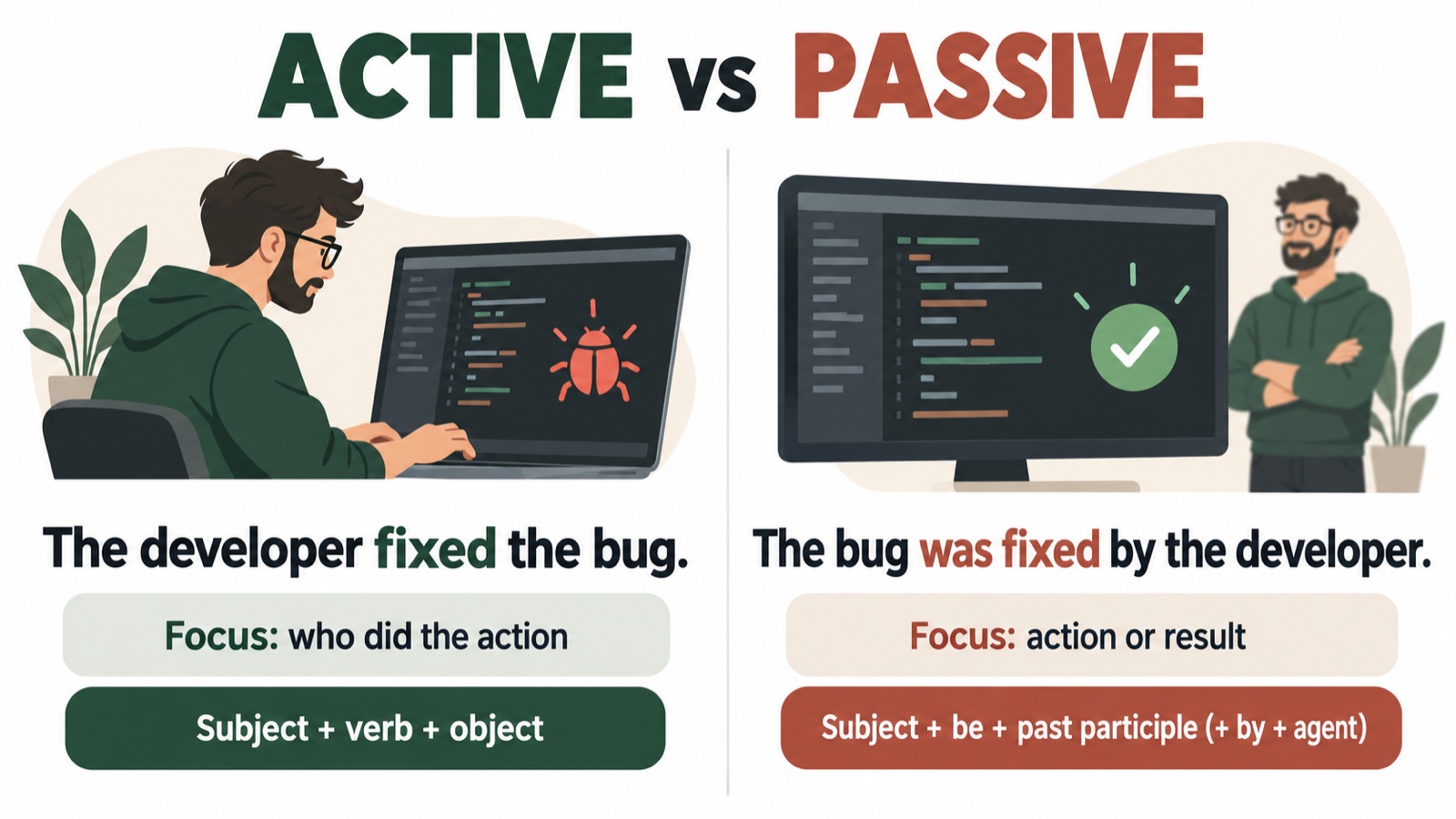
Active voiceSubject + verb + objectThe engineering team reviews the proposal.The person or company is the focus.
Passive voiceObject + be + past participleThe proposal is reviewed by the engineering team.The process or result is the focus.
The contract was approved by the regional director.
4. Executive Passive Structures
Use concise structures common in meetings and presentations.
Be expected to
The project is expected to reduce operational costs.
Be scheduled to
The new facility is scheduled to become operational in October.
Be required to
All contractors are required to follow the safety protocol.
Be designed to
The system is designed to improve operational efficiency.
Be authorized to
Only senior managers are authorized to approve the proposal.
Create an executive update
Choose three structures and create three true or realistic sentences about a project.
5. Controlled Practice
Transform each sentence into the passive voice.
1. The engineering team inspects the pipelines every quarter.
The pipelines are inspected every quarter.
2. Management approved the proposal last month.
The proposal was approved last month.
3. The legal department is reviewing the contract.
The contract is being reviewed.
4. The company has implemented stricter safety measures.
Stricter safety measures have been implemented.
5. The project team will complete the first phase in October.
The first phase will be completed in October.
6. All contractors must follow the regulations.
The regulations must be followed by all contractors.
7. Experts expect the upgrade to improve efficiency.
The upgrade is expected to improve efficiency.
8. The procurement department will select the supplier.
The supplier will be selected by the procurement department.
6. Complete the Project Update
Use the correct passive form of each verb.
1. The new compressor station __________ next year. (commission)
will be commissioned
2. The negotiations __________ yet. (not finalize)
have not been finalized
3. All safety equipment __________ regularly. (inspect)
is inspected
4. A technical issue __________ during the last audit. (identify)
was identified
5. The environmental impact study __________ currently. (conduct)
is currently being conducted
6. All regulatory approvals must __________ before construction begins. (obtain)
be obtained
7. Three international suppliers __________ for the project. (shortlist)
have been shortlisted
8. The final decision __________ at the next board meeting. (make)
will be made
7. Executive Project Briefing
Read a concise update about a regional expansion project.
Regional Gas Expansion Project
The Regional Gas Expansion Project was launched last year. The environmental assessment has already been completed, and the necessary permits have been obtained. At present, the technical proposal is being reviewed by the regional board.
Three international suppliers have been shortlisted. The final contract is expected to be awarded during the fourth quarter. Once construction is completed, production capacity will be increased by approximately 20%.
Potential operational risks are currently being assessed, and a contingency plan has been prepared. All contractors will be required to comply with international safety standards.
Comprehension
1. When was the project launched?
It was launched last year.
2. What has already been completed?
The environmental assessment has already been completed.
3. What is currently being reviewed?
The technical proposal is currently being reviewed.
4. How many suppliers have been shortlisted?
Three international suppliers have been shortlisted.
5. When is the contract expected to be awarded?
During the fourth quarter.
6. How much will production capacity increase?
By approximately 20%.
7. What will contractors be required to do?
They will be required to comply with international safety standards.
Language challenge
Find one past simple passive.
The Regional Gas Expansion Project was launched last year.
Find two present perfect passives.
The environmental assessment has been completed. The necessary permits have been obtained.
Find two present continuous passives.
The technical proposal is being reviewed. Potential operational risks are being assessed.
Find two future passives.
Production capacity will be increased. All contractors will be required to comply with the standards.
8. Upgrade Your Executive English
Transform basic statements into concise professional updates.
We are checking the proposal.
The proposal is currently being reviewed.
They haven’t decided yet.
A final decision has not yet been made.
We will finish it soon.
The next phase is expected to be completed shortly.
Everyone must follow the rules.
All regulatory requirements must be met.
We found a problem.
A potential issue was identified.
We chose three companies.
Three companies have been shortlisted.
We will tell you later.
Further information will be provided shortly.
Compare the tone
How does the executive version sound more formal, objective and results-focused?
9. Executive Meeting Language
Introduce, clarify and close a professional update.
Introducing an update
Let me give you a brief overview of the project.
I’d like to provide a quick update on our progress.
One point worth highlighting is that…
At this stage, the proposal is being reviewed.
Answering carefully
That point is still being assessed.
The timeline has not yet been finalized.
I would prefer to confirm the figures before commenting.
A final decision is expected next month.
Clarifying
Could you elaborate on that point?
Could you clarify what you mean by…?
Am I correct in understanding that…?
Would you mind providing additional details?
Closing
The next steps will be communicated shortly.
I’ll follow up with the relevant department.
Further information will be provided after the meeting.
Mini update
Use one expression from every group to create a short professional exchange.
10. International Partner Meeting
Give a clear update to a potential international partner.
Situation
You represent an energy company in a meeting with a potential international partner.
Project information
Project item
Current status
Useful passive
Technical proposal
Under review
The proposal is being reviewed.
Environmental assessment
Completed
The assessment has been completed.
Three suppliers
Shortlisted
Three suppliers have been shortlisted.
Final supplier
Selected next month
The supplier will be selected next month.
Equipment
Installed in the first half of next year
The equipment will be installed next year.
Safety requirements
Monitored continuously
Safety requirements are being monitored.
Final approval
Given by the regional board
Approval will be given by the board.
Production capacity
Expected to increase by 15%
Capacity is expected to increase by 15%.
Partner questions
Could you give me an overview of the project?
What has already been completed?
Is the proposal still being reviewed?
Have the suppliers been selected?
When will the equipment be installed?
How are safety requirements monitored?
Who will give the final approval?
What results are expected from the project?
Are there any risks that are still being assessed?
What are the next steps?
Your response must include
At least five passive structuresTwo executive expressionsOne clarification questionOne diplomatic answer
Let me give you a brief overview of the project. The environmental assessment has already been completed, and three suppliers have been shortlisted. At present, the technical proposal is being reviewed by the regional board. The final supplier is expected to be selected next month, and the equipment will be installed during the first half of next year. All safety requirements are being monitored continuously. Once the project is completed, production capacity is expected to increase by approximately 15%.
11. Written Project Update
Prepare a professional written and spoken update.
Executive report
Write 120–150 words about a real or fictitious project. Do not include confidential information.
Two present-simple passivesOne present-continuous passiveOne present-perfect passiveOne future passiveOne modal passiveFour vocabulary expressions from the class
Suggested structure
Project overview: The project was launched…
Completed work: The initial assessment has been…
Current status: The proposal is currently being…
Next steps: The final decision will be…
Requirements: All contractors must be…
Expected result: The project is expected to…
Oral update
Use the same report to give a clear 60–90 second presentation without reading every sentence.
Dani · Class 2 · Professional English
TO or FOR?
Purpose, receivers, destinations and intended users at work
Class goal: Choose to or for naturally when explaining professional actions.
Choose a section to begin.
1. Workplace Warm-Up
Talk about documents, people and reasons.
Your work
What documents do you usually prepare at work?
Who usually receives those documents?
Why do you contact suppliers or colleagues?
Useful workplace language
prepare a proposal
Create a suggested plan or offer.
We prepare proposals for new partners.
send an update
Give the latest information.
I sent an update to the director.
confirm a deadline
Check and agree on the final date.
We called to confirm the deadline.
arrange a meeting
Organize a meeting.
She arranged a meeting for Friday.
review a report
Read and check a report.
I need to review the report.
contact a supplier
Communicate with a provider company.
We plan to contact the supplier.
One Portuguese word can correspond to to or for. In English, first identify the relationship: purpose, receiver, destination, intended user or event.
2. TO + Verb
Use to to explain why you do something.
Purpose
Subject+action+to+base verb
Ask: Why? Answer: To + verb.
I called the supplier to confirm the date.
We arranged a meeting to discuss the budget.
She opened the report to check the figures.
for confirm ✗ to confirm ✓
Complete the ideas
I study English to…
I contact suppliers to…
We organize meetings to…
Why did you call the supplier?
I called the supplier to confirm the delivery date.
3. TO + Receiver or Destination
Show who receives something or where someone goes.
Receiver
Subject+send / give / email / show+something+to+someone
Destination
Subject+go / travel+to+place
I sent the report to my manager.
She emailed the proposal to the client.
We showed the presentation to the team.
They went to the supplier’s office.
Speak
Who do you send reports to?
Who do you show presentations to?
Where do you travel for meetings?
4. FOR + Person or Event
Identify the intended user, beneficiary or occasion.
Intended user, benefit or event
Subject+prepare / make / buy / book+something+for+person / event
I prepared a report for my manager.
We made a presentation for the visitors.
She booked a hotel for her colleague.
They prepared slides for the conference.
Compare the meaning
FOR DaniI prepared the report for Dani.Dani is the intended user or beneficiary.
TO DaniI sent the report to Dani.Dani is the receiver.
Use both
First, I prepared the report for Dani. Then, I sent it to Dani.
Who do you prepare reports for?
What do you prepare for meetings?
5. Need, Want & Plan + TO
Use the correct verb pattern for intentions and requirements.
Verb pattern
Subject+need / want / plan+to+base verb
We need to review the contract.
I want to discuss the proposal.
They plan to contact the supplier.
We need for review the contract. ✗ We need to review the contract. ✓
Two different jobs for TO
Verb patternWe need to review the contract.to review follows need.
PurposeWe met to review the contract.to review explains why we met.
Combine them
We need to call the supplier to confirm the deadline.
Today, I need to…
This week, I want to…
Next month, we plan to…
6. Choose & Explain
Choose to or for, then explain the relationship.
purposereceiverdestinationintended user or eventneed / want / plan + to
1. I’m calling ___ confirm the meeting.
to confirm — purpose
2. We prepared the slides ___ Friday’s conference.
for Friday’s conference — intended event
3. Please email the contract ___ Ana.
to Ana — receiver
4. We need ___ update the schedule.
to update — need + to + base verb
5. I booked a hotel room ___ our visitor.
for our visitor — intended user or beneficiary
6. We went ___ the supplier’s office.
to the supplier’s office — destination
7. We met ___ discuss the proposal.
to discuss — purpose
8. I plan ___ contact the client tomorrow.
to contact — plan + to + base verb
Personalize
Choose three sentences and change the details so they are true for your work.
7. What, Who & Why
Turn short notes into complete professional explanations.
What?Sent a revised scheduleTo whom?The supplierWhy?To confirm the delivery dateWhat?Prepared a budget summaryFor whom?The directorWhy?To explain additional costsWhat?Booked a meeting roomFor whom?Visiting clientsWhy?To discuss a new projectWhat?Emailed a proposalTo whom?A potential partnerWhy?To present a new service
Build your sentences
I sent ___ to ___.
I prepared ___ for ___.
I booked ___ for ___.
I did this to ___.
Show two complete models
I sent the revised schedule to the supplierto confirm the delivery date.
I booked a meeting room for the visiting clientsto discuss a new project.
Develop the message
What information did it include?
Why was it necessary?
When did you send or prepare it?
What happens next?
8. Workplace Role-Plays
Use the grammar naturally in professional situations.
A. Confirming a supplier meeting
Friday · 10:00 a.m.
Purpose: discuss the proposal
Invitation receiver: Ana, the coordinator
Project summary: supplier team
Required information: updated prices
Good morning. How can I help?
What is the purpose of the meeting?
Who receives the invitation?
Who is the summary for?
Why do you need the updated prices?
Good morning. I’m calling to confirm our meeting on Friday at ten. We’re meeting to discuss the new proposal. I’ll send the invitation to Ana. I’m preparing a project summary for your team. We need to receive the updated prices before the meeting.
B. Energy expo update
Presentation: visitors
Purpose: explain a new project
Revised order: supplier
Call purpose: confirm delivery
Summary: manager
Next contact: events team
What did you prepare for the expo?
Why did you prepare it?
Who received the revised order?
Why are you calling the supplier?
Who is the summary for?
Who do you plan to contact next?
We prepared a presentation for the expo visitorsto explain the new project. The revised order was sent to the supplier. I’m calling the supplier to confirm the delivery date. I also prepared a summary for my manager, and I plan to contact the events team next.
9. Final Speaking Challenge
Explain one real professional task clearly.
Describe a real task
Give a five-sentence professional update. Use every pattern below.
I need to…Action + purpose: to + verbSend something to a receiverPrepare something for a person or eventI plan to…
Meaning check
What is the difference? “I prepared the presentation for my manager.” “I sent the presentation to my manager.”
For my manager means the manager is the intended user or beneficiary. To my manager means the manager is the receiver.
Extra clarity
TO + verb vs. FOR + verb-ing
I use the software to track expenses. = my purpose The software is for tracking expenses. = its function
“Thank you ___ sending the report.”
Thank you for sending the report.
“Send it to me” vs. “Send it for me”
Send it to me: I am the receiver. Send it for me: do the sending on my behalf.
Voice-message practice
I need to…
I called / emailed / met someone to…
I sent ___ to ___.
I prepared ___ for ___.
Dani · Class 3 · B1+/B2 · 40 minutes
Modals for Business Meetings
Recommendations, options, possibilities and requirements at work.
Goal: Give a clear update such as: “We have to confirm the delivery today. We should contact the supplier first. We could arrange an alternative delivery, but it might cost more.”
1Understand each meaning
2Choose and correct
3Use the language in a meeting
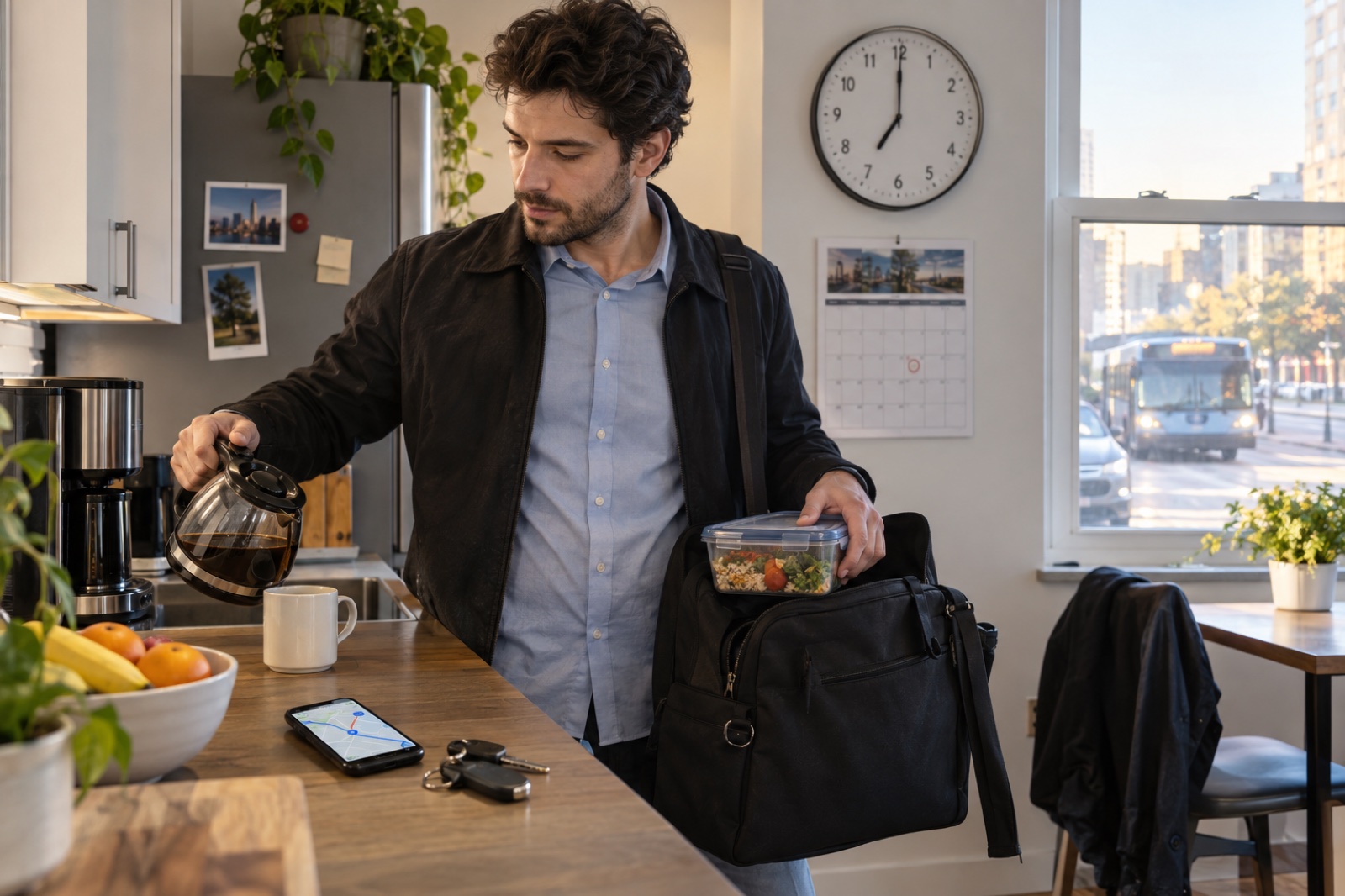
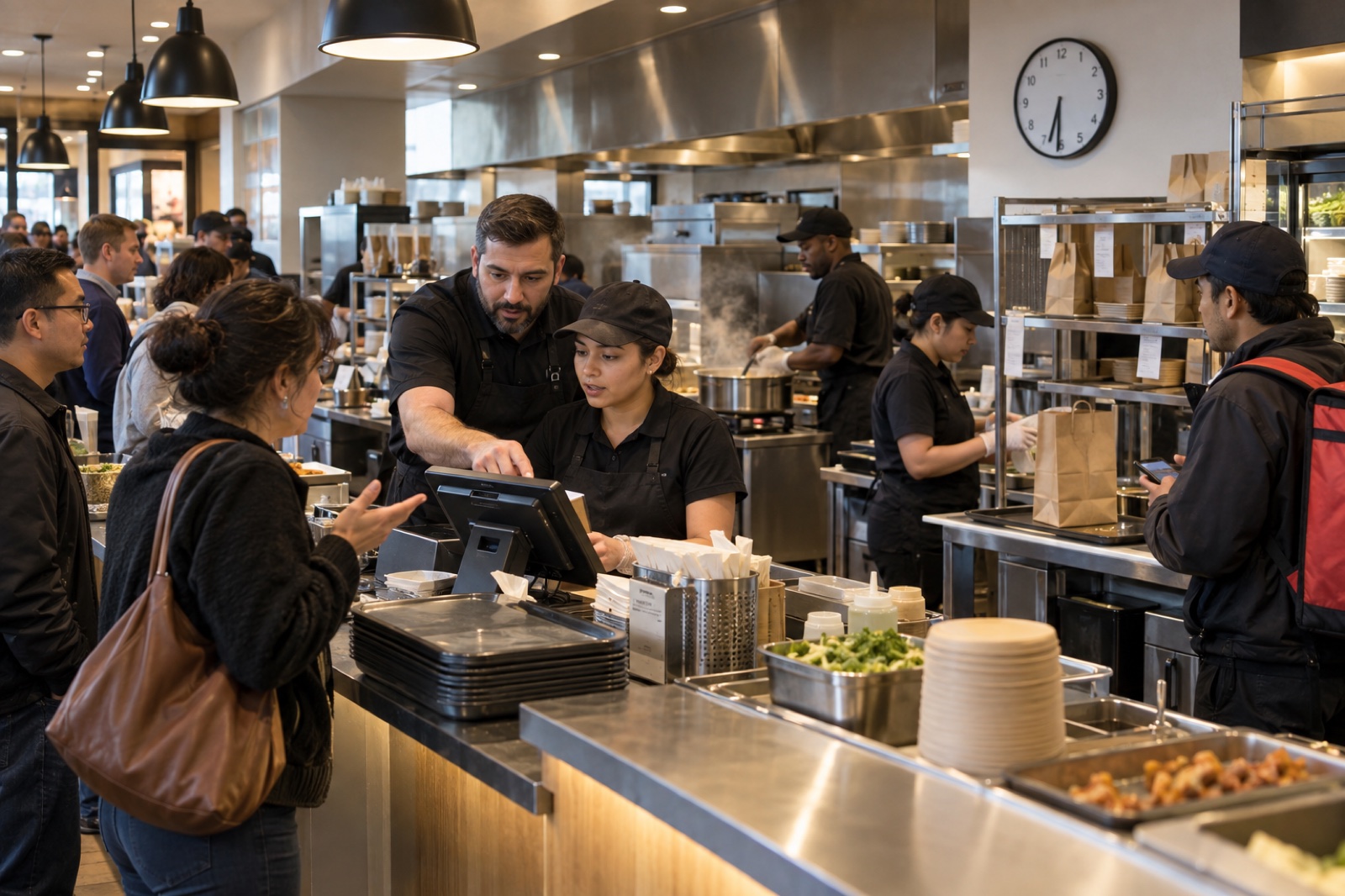
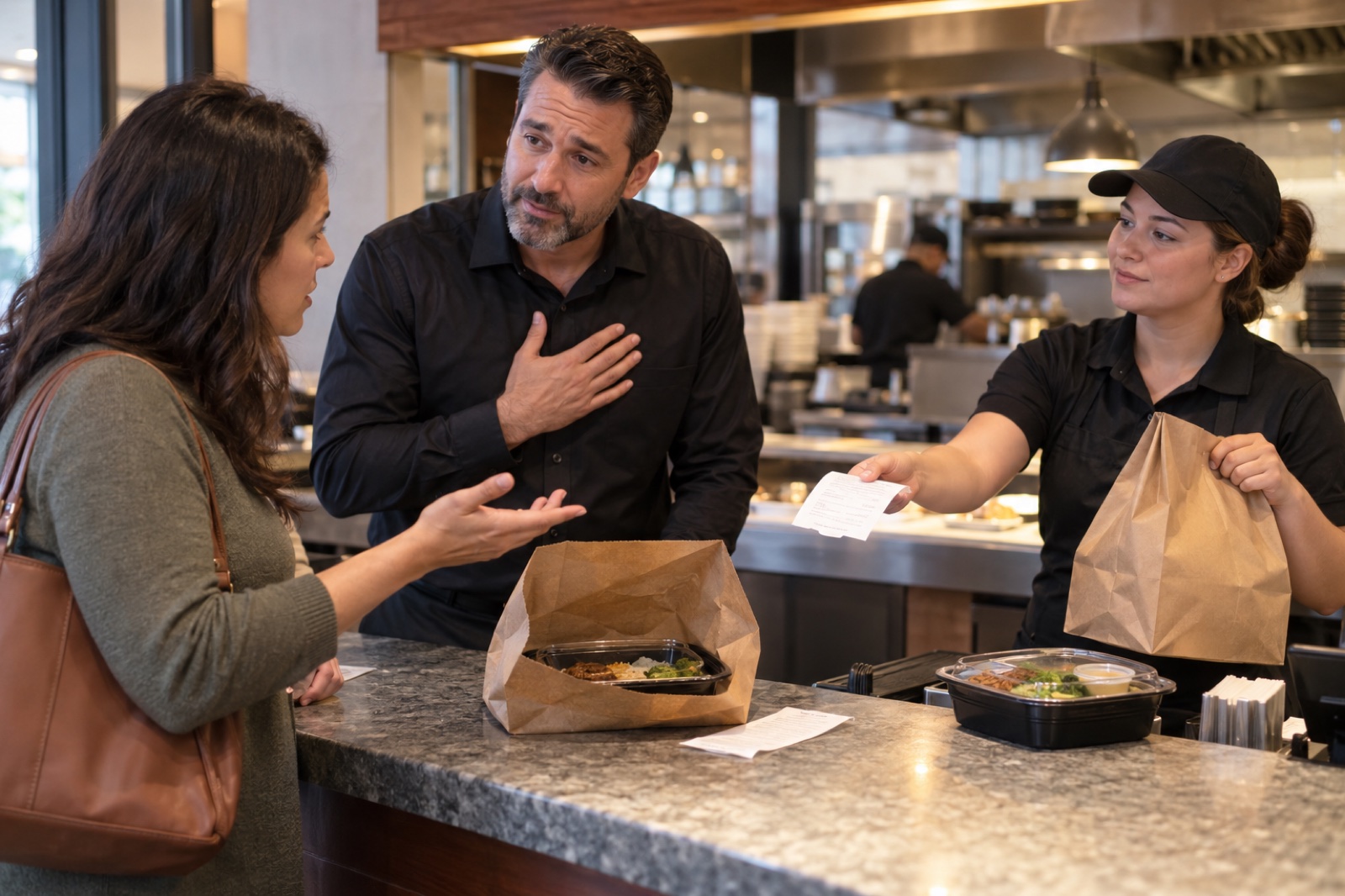
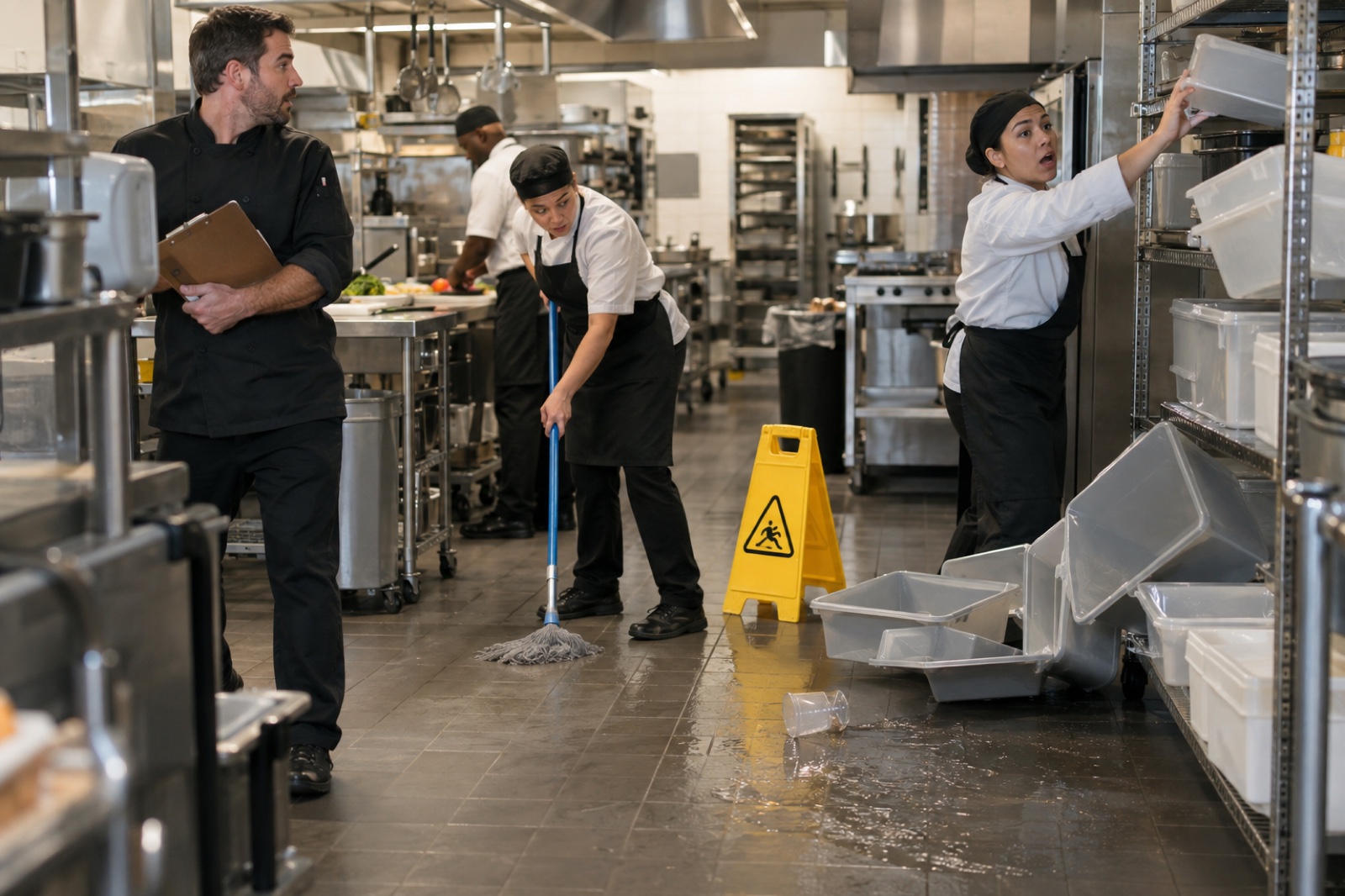
3 pictures
Workplace Situations
The pictures are visible here and again inside their speaking sections.
1 · Budget report2 · Supplier call3 · Energy expo
Choose a section. Try each task first, then use the buttons to see an answer or model.
1. What Do We Do Next?
Respond to a delivery problem before your manager's meeting.
Situation
A supplier says that an important delivery will arrive late. You have a meeting with your manager in ten minutes.
1. What is the first thing you do?
First, I check the delivery details and confirm the new arrival time.
2. Who do you contact?
I contact the supplier and then update my manager.
3. What problems can a late delivery cause?
It might delay the project, increase costs or affect an important event.
4. What information does your manager need?
My manager needs the reason for the delay, the new delivery time, the possible impact and our available options.
Today's four questions
What is necessary?What do you recommend?What options are available?What might happen?
2. Decision Vocabulary
Use eight words for meetings, plans and requirements.
deadline
The latest time a task must be completed.
The deadline is Friday.
delay
Something happening later than planned.
There is a delay with the delivery.
supplier
A company or person that provides products or services.
We need to contact the supplier.
approval
Official permission to do something.
We need approval for the additional cost.
alternative
Another available choice.
We need to consider an alternative.
requirement
Something necessary because of a rule or agreement.
Written approval is a requirement.
optional
Available, but not required.
Attendance at the dinner is optional.
confidential
Private and intended only for authorized people.
These financial details are confidential.
Quick speaking
1. One important deadline in my work is…
…submitting the monthly report by the last working day.
2. I usually need approval for…
…additional project costs and schedule changes.
3. If our first plan doesn't work, an alternative is…
…using another supplier or changing the delivery schedule.
3. The Modal Map
Match each business meaning with the right expression.
SHOULDa recommendation
COULDan available option
MIGHT / MAYan uncertain possibility
MUSTa strong rule
HAVE TOa necessary action
Meaning
Expression
Example
A recommendation
should
We should review the proposal.
An available option
could
We could arrange another meeting.
An uncertain possibility
might / may
The delay might affect the project.
A strong requirement
must
We must protect confidential information.
A necessary action
have to
We have to submit the report today.
Main formula
Subject + MODAL + BASE VERB
Positive
We should call.She could help.The price might increase.Everyone must follow the rules.
Negative
We should not send an incomplete report.The supplier might not deliver on time.You must not share confidential information.
Question
Should we contact the manager?Could we arrange another meeting?
Three important rules
1. We should to check. / We should check.
We should check. Do not use to immediately after the modal.
2. She shoulds call. / She should call.
She should call. Do not add -s to the modal.
3. She might arrives late. / She might arrive late.
She might arrive late. Use the base form of the following verb.
Note:Have to follows a different pattern. You will practise it in Section 5.
4. Should and Could
Separate your recommendation from the available options.
RecommendationSHOULD
Use should when you think an action is sensible.
Subject + SHOULD + base verb
We should check the figures.You should send the agenda in advance.We shouldn't wait until Friday.
Available optionCOULD
Use could to put one possible option on the table.
Subject + COULD + base verb
We could contact another supplier.We could move the meeting online.Could you prepare a summary?
We could call the supplier.Calling is an available option.
We should call the supplier.Calling is my recommendation.
Speaking checks
1. A colleague has an important presentation tomorrow but hasn't prepared. What should she do?
She should prepare the key points today. She shouldn't wait until tomorrow morning.
2. The meeting room is unavailable. Give two possible alternatives.
We could move the meeting online, or we could reserve a room in another building.
3. Could you send the report to me? What meaning does could have here?
It makes a polite request.
5. Possibility and Requirements
Use might, may, must and have to precisely.
Uncertain possibility
MIGHT / MAY
Subject + MIGHT / MAY + base verb
The delivery might arrive late.The client may request more information.The additional cost might affect the budget.
Both forms describe a possibility, not a definite result.
Strong rule
MUST
Subject + MUST + base verb
We must follow the company's rules.Visitors must wear identification badges.We must protect confidential information.
Existing requirement
HAVE TO
I / you / we / they + HAVE TO + base verb He / she / it + HAS TO + base verb
We have to finish the report today.She has to obtain approval.The supplier has to confirm the date.
Questions with have to
DO / DOES + subject + HAVE TO + base verb?
Does she have to sign? ✓ Does she has to sign? ✕
Mustn't or don't have to?
MUSTN'TIt is prohibited. Do not do it.You mustn't share the password.
DON'T HAVE TOIt is not necessary. You have a choice.You don't have to attend the optional dinner.
1. The meeting is optional. Can I attend?
Yes. You don't have to attend, but you can.
2. The information is confidential. Can I share it with an unauthorized visitor?
No. You mustn't share it.
3. We send a proposal with an incorrect price. What might happen?
The client might question the proposal, and we might have to send a corrected version.
Connection to TO and FOR
We should call the supplier to confirm the delivery.
Should call = modal + base verb. To confirm = purpose of calling.
We could prepare a summary for the director and send it to her.
For the director = intended user. To her = receiver.
Key rule: Do not put to immediately between a modal and its following verb.
6. Choose, Correct and Explain
Read the complete sentence and explain why the modal fits.
Choose the best expression
1. The contract requires delivery by Friday. We have to / might deliver by Friday.
have to — it is a contractual requirement.
2. My recommendation is to check the figures again. We should / mustn't review them.
should — it expresses a recommendation.
3. One available option is express delivery. We could / have to use an express courier.
could — it introduces an available option.
4. The supplier hasn't confirmed the date. The delivery might / must arrive late.
might — it describes an uncertain possibility.
5. Attendance at the dinner is optional. You mustn't / don't have to attend.
don't have to — attendance is not required, but it is allowed.
6. Company rules prohibit sharing these passwords. You mustn't / don't have to share them.
mustn't — sharing the passwords is prohibited.
Correct the sentences
7. We should to contact the supplier.
We should contact the supplier. Use modal + base verb.
8. She have to send the report today.
She has to send the report today. Use has to with she.
Personalize
Give a recommendation about a typical task at work.
We should review the updated figures before presenting them to the director.
Explain one thing that is optional in a fictional workplace.
Employees don't have to attend the informal dinner, but they can join if they want to.
7. The Budget Report
Explain a requirement, recommendation, option and risk.
1Describe 1 minute
2Answer 2 minutes
3Role-play 2 minutes
Situation card
DeadlineThe director needs the report at 4:00 p.m.
ProblemTwo figures are still unconfirmed.
Available helpThe finance team can check them.
Company requirementFigures must be verified before the report is sent.
Look, describe and discuss
What is she doing?
What is she working on?
What does she have to do before sending the report?
What should she do first?
Who could she contact?
What might happen if the figures are incorrect?
She is checking a budget report. She has to verify the two unconfirmed figures. She should contact the finance team first. Incorrect figures might affect the director's decision.
Role-play · The director calls
Director: “I need the report at four. Is everything ready?”
Explain the problem and propose a plan. Then answer: “What do you recommend?” and “Who could help you?”
We have to verify two figures before sending the report. I think we should contact the finance team now. We could ask them to prioritize these figures. Incorrect information might affect your decision.
8. The Delayed Delivery
Present a problem, an option and a recommendation.
1Describe 1 minute
2Answer 2 minutes
3Role-play 2 minutes
Situation card
EventThe energy expo starts on Saturday.
ProblemPrinted brochures might arrive after the event starts.
AlternativeAn express courier can deliver on Friday.
Additional costUSD 150
RequirementYour manager must approve additional spending.
Look, describe and discuss
What is happening?
What problem is she dealing with?
What should she confirm with the supplier?
What alternative could the company use?
What does she have to obtain?
What might happen with the original arrangement?
She is calling the supplier about delayed brochures. She should confirm the new delivery date. The company could use an express courier. She has to obtain her manager's approval for the additional cost. The original delivery might arrive too late.
Role-play · Update your manager
Manager: “What is the delivery problem, and what options do we have?”
Present the problem, the option and your recommendation. Then explain what approval you need.
The brochures might arrive too late for the expo. We could use an express courier for an additional USD 150. I think we should choose that option, but we have to obtain your approval first.
TO and FOR follow-up
Why do you need to call the supplier?
We need to call the supplier to confirm the Friday delivery. The brochures are for the expo.
9. The Energy Expo
Offer information, explain options and protect confidential details.
1Describe 1 minute
2Answer 2 minutes
3Role-play 2 minutes
Situation card
GoalIntroduce the project and meet potential partners.
Available materialsApproved brochures and a digital presentation.
RestrictionInternal financial information is confidential.
Optional itemVisitors can choose whether to take a brochure.
Next stepArrange a follow-up meeting.
Look, describe and discuss
Where are they?
What is the representative giving to the visitor?
What should she explain?
What could she offer?
What information mustn't she share?
Do visitors have to take a brochure?
They are at an energy expo. She is giving a brochure to a visitor. She should explain the project clearly. She could offer the digital presentation or a follow-up meeting. She mustn't share confidential financial information. Visitors don't have to take a printed brochure.
Role-play · Welcome a potential partner
Visitor: “Hello! I'm interested in your project. What information is available?”
Then answer: “Do I have to take a brochure?” and “Could we arrange a meeting next week?”
You don't have to take a printed brochure. We could email the approved presentation to you instead. I think we should arrange a follow-up meeting next week to discuss possible cooperation.
Another visitor asks for internal financial information. What rule do you need to remember?
We mustn't share confidential financial information.
10. One-Minute Business Update
Combine all five meanings in one clear professional response.
Choose one situation
The budget reportThe delayed delivery
Give your manager a one-minute update using all five sentence starters.
Requirement: We have to…
Recommendation: We should…
Available option: We could…
Possible problem: It might…
Purpose: I'll contact…to…
We have to confirm the delivery date today. We should contact the supplier before the manager's meeting. We could use an express courier, but it might cost an additional USD 150. I'll contact the supplier to confirm whether Friday delivery is available.
Final meaning check
What is the difference between “You mustn't attend” and “You don't have to attend”?
Mustn't means attendance is prohibited. Don't have to means attendance is optional.
Correct and create
We should to call the supplier.
We should call the supplier.
Create a new sentence with the same modal structure.
We should review the proposal before the meeting.
Success checklist
✓ I can recommend an action.✓ I can suggest an option.✓ I can discuss an uncertain problem.✓ I can explain a requirement.✓ I can separate prohibition from choice.
Dani · Class 4 · B1+/B2 · 70 minutes
First & Second Conditionals
Business decisions, real consequences and hypothetical strategy
Class goal: Explain what will happen in a realistic future situation and what you would do in an imaginary or less likely situation.
1 · Understand2 · Build3 · Decide4 · Brief
4 situations
Decision Lab
Use the pictures to separate real operational plans from hypothetical business strategy. Each scene appears again in the speaking section.
Choose a section. Try each task before using the answer or model buttons.
1. Real or Imaginary?
Classify each situation before you decide what to do.
REAL / POSSIBLE
The situation may happen. Make a practical future plan.
If the delivery is late, what will you do?
IMAGINARY / LESS LIKELY
The situation is not the current reality. Explore a strategy.
If you had twice the budget, what would you change?
Warm-up questions
What will you do if an important delivery arrives late?
What will you do if the screen stops working during a presentation?
What would you do if you had twice the current budget?
What would you change if you were the project director?
Which two questions describe realistic future possibilities, and which two describe imaginary situations?
Real / possible: the late delivery and the screen failure. Imaginary / less likely: having twice the budget and being the project director.
2. Decision Vocabulary
Use precise words for plans, trade-offs and negotiations.
contingency plan
A backup plan for an unexpected problem.
We need a contingency plan for the delivery.
feasible
Possible and practical to do.
Is Friday delivery feasible?
allocate
Assign money, time or resources for a purpose.
We could allocate more funds to digital promotion.
trade-off
A balance in which one benefit requires a sacrifice.
The lower price involves a trade-off in delivery time.
negotiate
Discuss terms to reach an agreement.
We may need to negotiate the contract.
compromise
An agreement in which both sides accept less.
A two-year agreement could be a good compromise.
postpone
Move something to a later time.
We might postpone the launch.
approve
Give official permission.
The manager must approve the additional cost.
supplier
A company that provides goods or services.
The supplier will confirm the schedule.
deadline
The latest time a task must be completed.
We have to meet the Friday deadline.
Quick check
1. Which expression means “a backup plan”?
Contingency plan.
2. Which verb means “assign money or resources”?
Allocate.
3. Which word means “possible and practical”?
Feasible.
4. What do both sides often make during a negotiation?
A compromise.
3. First Conditional
Talk about a real or possible future situation and its likely result.
REAL FUTURE POSSIBILITY
IFpresent simple,will + base verb
If the supplier confirms today, we will keep the schedule.
If the brochures do not arrive, we will use the digital version.
If the manager approves the cost, we will book the courier.
What will you do if the client asks for a discount?
Important: Do not use will after if in this pattern. ✓ If the supplier replies, we will confirm the order. ✗ If the supplier will reply…
Use modals in the result
Result form
Meaning
Example
will
expected result
If they agree, we will proceed.
can / could
ability or option
If the courier is available, we could use it.
might
uncertain possibility
If the price rises, we might reduce the order.
should
recommendation
If visitors arrive early, we should welcome them inside.
must / will have to
requirement
If the screen fails, we will have to use the tablet.
What form comes immediately after a modal verb?
Use the base verb: could offer, might change, should check, must approve. Do not add to or -s.
4. Real Decision Practice
Complete realistic future plans, then respond orally.
Complete the sentences
1. If the supplier ___ today, we ___ the current schedule. (confirm / keep)
If the supplier confirms today, we will keep the current schedule.
2. If the brochures ___ on time, we ___ the digital version. (not arrive / use)
If the brochures do not arrive on time, we will use the digital version.
3. If the manager ___ the extra cost, we ___ an express courier. (approve / book)
If the manager approves the extra cost, we will book an express courier.
4. If the screen ___ working, we ___ the cable first. (stop / check)
If the screen stops working, we will check the cable first.
5. What ___ you ___ if the client asks for a discount? (will / do)
What will you do if the client asks for a discount?
6. If we ___ confirmation today, we ___ postpone the order. (not receive / have to)
If we do not receive confirmation today, we will have to postpone the order.
Make a practical plan
The price increases. What could you do?
The manager does not approve the plan. What will you do?
Visitors arrive early. What should the team do?
You run out of brochures. What can you offer?
If the price increases, we could negotiate a smaller order. If the manager does not approve the plan, we will review the budget. If visitors arrive early, we should welcome them in the meeting area. If we run out of brochures, we can offer the digital presentation.
5. Second Conditional
Explore imaginary, hypothetical or less likely business situations.
HYPOTHETICAL SITUATION
IFpast simple,would + base verb
If we had a larger budget, we would build a premium booth.
If I were the manager, I would approve the plan.
If the client requested a discount, we could offer 5%.
What would you do if the budget were reduced?
Two key rules: 1. Do not use would after if: ✓ If I were the manager… 2. In formal hypothetical English, use were with I, he, she and it.
Different results
Result form
Meaning
Example
would
hypothetical result
If we had more time, we would prepare another proposal.
could
hypothetical option
If delivery were flexible, we could offer another date.
might
uncertain hypothetical result
If we reduced promotion, we might reach fewer clients.
would have to
hypothetical requirement
If we changed the contract, we would have to review the cost.
6. Strategy Practice
Complete hypothetical decisions and defend your choices.
Complete the sentences
1. If we ___ a larger budget, we ___ a premium booth. (have / build)
If we had a larger budget, we would build a premium booth.
2. If I ___ the project director, I ___ more funds to digital promotion. (be / allocate)
If I were the project director, I would allocate more funds to digital promotion.
3. How ___ you ___ if the client ___ a 10% discount? (would / respond / request)
How would you respond if the client requested a 10% discount?
4. If we ___ a contingency plan, we ___ the contract. (not have / might lose)
If we did not have a contingency plan, we might lose the contract.
5. If the supplier ___ a lower price, we ___ a longer agreement. (offer / could negotiate)
If the supplier offered a lower price, we could negotiate a longer agreement.
6. If the new schedule ___ feasible, we ___ the launch. (not be / postpone)
If the new schedule were not feasible, we would postpone the launch.
Hypothetical boardroom
What would you change if you controlled the entire expo budget?
What could the team do if it had another week to prepare?
What might happen if the company accepted every client request?
If I controlled the entire budget, I would… If the team had another week, it could… If the company accepted every request, it might…
7. Compare & Choose
Choose the conditional from the speaker’s intended meaning.
FIRST CONDITIONAL
Real or possible future situation
If + present simple, will / modal + base verb
If the budget is reduced, we will change the plan.
SECOND CONDITIONAL
Imaginary or hypothetical situation
If + past simple, would / could / might + base verb
If the budget were unlimited, we would expand the project.
Build the sentences
1. A definite plan for a possible delay: “If the delivery is delayed, we will…”
If the delivery is delayed, we will contact the supplier immediately.
2. An alternative for a possible technical problem: “If the screen stops working, we could…”
If the screen stops working, we could use the tablet.
3. An uncertain consequence of a price increase: “If the supplier increases the price, we might…”
If the supplier increases the price, we might reduce the order.
4. An imagined result with a different budget: “If we had a larger budget, we would…”
If we had a larger budget, we would choose the premium booth.
5. A hypothetical option with more preparation time: “If we had another week, we could…”
If we had another week, we could prepare a second presentation.
6. A future obligation caused by a real change: “If the manager changes the deadline, we will have to…”
If the manager changes the deadline, we will have to revise the schedule.
Correct the errors
If the supplier will reply, we will confirm the order.
If the supplier replies, we will confirm the order.
If I would be the manager, I would approve the plan.
If I were the manager, I would approve the plan.
If the price increased tomorrow, we will need more approval.
Real possibility: If the price increases tomorrow, we will need approval. Hypothetical: If the price increased, we would need approval.
If we had more time, we would to prepare another proposal.
If we had more time, we would prepare another proposal.
8. Four Business Decisions
Describe, analyze and give a concise professional update.
Spend about four minutes on each image. Keep the model hidden until the response is complete.
First Conditional · Real problem
1. Delayed Delivery
EventThe energy expo starts on Saturday.
ProblemThe brochures might arrive after the event starts.
AlternativeAn express courier can deliver on Friday.
Cost / requirementUSD 150 · manager approval
What will you do if the brochures arrive on Friday?
What could you do if the original delivery is delayed?
What will you have to do if the courier costs an additional USD 150?
What might happen if you wait until Saturday?
The brochures might arrive too late for the expo. If the supplier confirms delivery for Friday, we’ll keep the original order. If they cannot deliver on time, we could use an express courier. If we choose that option, we’ll have to obtain the manager’s approval for the additional USD 150.
First Conditional · Real problem
2. Screen Failure
Event statusThe expo opens in 30 minutes.
ProblemThe presentation screen is not working.
TechnicianHe might repair it in 20 minutes.
Backups / riskLaptop, USB, tablet, spare cable · visitors may arrive early
What will you do if the technician repairs the screen?
What could you use if he cannot repair it?
What should you do if visitors arrive early?
What might happen if you do not test the backup materials?
The main screen isn’t working, but the technician is checking it. If he repairs it in the next 20 minutes, we’ll use the original presentation. If he cannot repair it, we could use the tablet or laptop. We should test the backup equipment now because visitors might arrive early.
Second Conditional · Imaginary strategy
3. Budget Cut
Imagine that management reduced the expo budget by 20%.
Option A
Option B
Keep the large premium booth
Use a smaller booth
Reduce digital promotion
Invest more in digital promotion
Strong physical presence
Lower cost and wider online reach
What would you change if the budget were reduced by 20%?
Would you keep the large booth or choose the smaller one?
How could you reduce costs without damaging the visitor experience?
What might happen if you reduced digital promotion?
If our budget were reduced by 20%, I would choose the smaller booth and maintain the digital campaign. We could reduce decoration costs and use reusable materials. If we reduced digital promotion, we might reach fewer potential clients. A smaller booth would be a reasonable trade-off.
Second Conditional · Imaginary negotiation
4. Client Negotiation
Imagine that a client made three requests.
Client request
Your possible position
A 10% lower price
Offer a maximum discount of 5%
Delivery two weeks earlier
Check whether one week earlier is feasible
A one-year contract
Prefer three years, but consider two years
What would you say if the client requested a 10% discount?
What could you offer if delivery two weeks earlier were not feasible?
What compromise would you propose if the client rejected a three-year contract?
What might happen if the company accepted every request?
If the client requested a 10% discount, I would explain that we could offer a maximum of 5%. If delivery two weeks earlier were not feasible, we might offer delivery one week earlier. If they rejected a three-year contract, I would propose a two-year agreement as a compromise. We would have to review the total cost before accepting major changes.
9. Final Executive Briefing
Combine one real decision with one hypothetical strategy.
Your two-minute update
Choose one real situation and one hypothetical situation. Include every element below.
Let me give you a brief overview of the situation.
At this stage…
If…, we will…
If that happens, we could / might / should…
If we had / were…, we would…
One point worth highlighting is that…
For that reason, I recommend…
After one minute: new information
Choose one change and adapt the plan immediately.
The manager does not approve the additional cost.
The technician cannot repair the screen.
The budget is reduced by another 10%.
The client rejects the compromise.
What will you do if that happens?
What would you do if you had complete authority to make the decision?
Let me give you a brief overview of the situation. At this stage, the brochures may arrive too late for the expo. If the supplier cannot confirm Friday delivery, we will use an express courier. If that happens, we will have to request approval for the extra cost. If I had complete authority, I would approve the courier and protect the event schedule. For that reason, I recommend confirming the delivery today and preparing a digital backup.
Teacher correction prompts
If the student says…
Prompt
If the supplier will call…
What tense do we use after if?
If I would be the manager…
Use the past form after if.
If she approve…
Remember the present-simple -s.
We would to change…
Use would + base verb.
We might needs…
Use modal + base verb.
If I was the director…
In formal hypothetical English, use If I were.
Success checklist
✓ One professional introduction✓ One First Conditional sentence✓ One modal option or recommendation✓ One Second Conditional sentence✓ One clear next step
Dani · Class 5 · Practical English · 60 minutes
Shopping & Paying
Ask about prices, colors and sizes, try something on, and pay with confidence.
Class goal: Complete a simple shopping conversation using six short, useful phrases.
1 · See it2 · Say it3 · Choose it4 · Build it5 · Use it
PriceHow much is this?SizeDo you have this in a larger size?ColorDo you have this in black?Try onCan I try this on?PayCan I pay by card?BuyI’ll take it.
Choose a section. Say the phrase before you use an answer or model button.
1. Shopping Vocabulary
Look at the picture, choose between two options, and say the word.
Point to the shoes. Shoes or dress?Point to the card. Cash or card?Point to the fitting room. Bag or fitting room?
Say all eight words once: shirt · dress · shoes · bag · price tag · card · cash · fitting room.
2. Ask the Price
Use one question for one item and a small variation for two items.
ONE ITEMHow much is this?a shirt · a dress · a bagTWO ITEMSHow much are these?shoes · socks · earrings
Customer: How much is this?
Shop assistant: It’s twenty-eight dollars.
Customer: Okay, thank you.
Say the price
$15
It’s fifteen dollars.
$35
It’s thirty-five dollars.
$48
It’s forty-eight dollars.
3. Ask for a Different Size
Use larger when it is too small, and smaller when it is too big.
The useful pattern
Do you have this ina larger size?
It’s too small.Do you have this in a larger size?It’s too big.Do you have this in a smaller size?
Your shirt is too small. What do you ask for?
Complete: “It’s too big. Do you have this in ______?”
Do you have this in a smaller size?
4. Ask for a Different Color
Keep the beginning and change only the color.
One pattern, many choices
Do you have this inblack / blue / green?
You see a pink dress, but you want black.You want the same shirt in blue.
Shop assistant: What color would you like?
Customer: Do you have this in black?
Shop assistant: Yes. Here you are.
5. Try It On
Use try on as one useful expression.
ONE ITEMCan I try this on?TWO ITEMSCan I try these on?
Shop assistant: Can I help you?
Customer: Yes. Can I try this on?
Shop assistant: Of course. The fitting room is over there.
Customer: Thank you.
You are holding a pair of shoes. What changes?
Can I try these on?
6. Pay
Ask about the payment method and understand a short answer.
The payment question
Can I payby card?
Shop assistant: That’s forty dollars.
Customer: Can I pay by card?
Shop assistant: Yes, of course.
Customer: Thank you.
The assistant says “Sorry, cash only.” What does it mean?
cash onlycard onlycontactless payment
7. Decide to Buy
Use one short sentence when you want the item.
I’ll take it.
This means: “I want to buy this item.”
Shop assistant: Do you like it?
Customer: Yes. I’ll take it.
Shop assistant: Great. Cash or card?
Customer: Can I pay by card?
You like the dress and want to buy it.
8. Choose the Correct Phrase
Look at each situation and click the natural sentence.
🏷️ A shirt has a $29 price tag.👗 You are standing beside the fitting room.👕 The shirt is too small.💳 You want to use your credit card.
9. Build the Sentence & Role-play
Click the words in the correct order, then use the phrases in a conversation.
Challenge 1 · Price
Challenge 2 · Fitting room
Challenge 3 · Color
Challenge 4 · Payment
Three micro role-plays
1. Buy a shirt
Assistant: Can I help you?
Dani: Ask the price and ask to try it on.
Yes. How much is this? Can I try this on?
2. Change the color
The shirt is red. Dani wants black.
Dani: Ask for the color, try it on, then buy it.
Do you have this in black? Can I try this on? I’ll take it.
3. Pay
Assistant: That’s forty dollars.
Dani: Ask to use a card.
Can I pay by card? Thank you.
10. Final Shopping Challenge
Look at one numbered picture and say the complete sentence.
Random situation
Picture 1 · Ask about the price.
Say the complete sentence before revealing the model.
How much is this?
Stars: 0 / 6
Complete role-play
Shop assistant: Hello! Can I help you?
Dani: Ask the price.
Shop assistant: It’s thirty-five dollars.
Dani: Ask to try it on.
Shop assistant: Of course.
Dani: It is too small. Ask for a larger size, decide to buy it, and ask to pay by card.
Yes. How much is this? Can I try this on? It’s too small. Do you have this in a larger size? Great. I’ll take it. Can I pay by card?
✓ I can ask the price.✓ I can ask for a size.✓ I can ask for a color.✓ I can ask to try something on.✓ I can ask to pay by card.✓ I can say that I want to buy it.
Short voice-message homework
Record a 30–45 second shopping dialogue. Use at least four of the six target phrases.
Dani · Class 6 · B1+/B2 · 70 minutes
Third Conditional + Modal Perfects
Review completed projects, evaluate past decisions, and discuss lessons learned professionally.
Class goal: Explain how a past result could have been different and evaluate what the team should, could, might, or must have done.
1 · Review2 · Understand3 · Practice4 · Debrief
Late brochuresScreen failureBudget overrunUnsuccessful negotiation
Professional focus: Evaluate the process, not the person. Prefer “We should have…” or “The process could have…” over accusatory language.
Choose a section. Complete each task before opening the answer or model.
1. First or Second Conditional?
Review future possibilities and hypothetical strategies before looking backward.
FIRST CONDITIONAL
Real or possible future situation
If + present simple, will / modal + base verb
If the supplier confirms the date, we will keep the schedule.
SECOND CONDITIONAL
Imaginary present or future situation
If + past simple, would / modal + base verb
If we had a larger budget, we would build a bigger booth.
Identify the meaning
1. If the manager approves the additional cost, we will book the courier.
2. If I were the director, I would change the approval process.
3. If the client requests more information, we can arrange another meeting.
4. If we had more preparation time, we could test every backup system.
Transition to today’s lesson
The First Conditional looks forward to a possible future. The Second imagines a different present or future. The Third Conditional looks backward and imagines a different past.
2. Vocabulary for a Project Debrief
Use precise language for outcomes, causes, setbacks, and improvements.
outcome
The final result of an activity or process.
The overall outcome was positive.
oversight
A mistake caused by not noticing or checking something.
Not testing the cable was an oversight.
setback
A problem that delays progress or makes success harder.
The late delivery was a temporary setback.
exceed the budget
Spend more than the planned amount.
The project exceeded the budget by USD 3,500.
prevent
Stop something from happening.
A checklist could have prevented the problem.
anticipate
Think about a possible situation before it happens.
We should have anticipated the additional costs.
contingency plan
A backup plan for a possible problem.
The team needed a better contingency plan.
root cause
The main underlying reason for a problem.
We need to identify the root cause.
take responsibility
Accept responsibility for an action or result.
The team took responsibility for the mistake.
lessons learned
Knowledge from experience that improves future work.
We documented the lessons learned.
Quick oral check
What do we call the main underlying reason for a problem?
The root cause.
What means spending more than planned?
Exceed the budget.
What could prevent a technical failure?
A checklist, a test, or a contingency plan.
Why do teams discuss lessons learned?
To improve future decisions and avoid repeating the same mistakes.
3. Third Conditional
Imagine a different result for a past situation that cannot be changed.
IMAGINARY PAST CONDITION + IMAGINARY PAST RESULT
IFsubject + had + past participle,subject + would have + past participle
If we had confirmed the date, the brochures would have arrived earlier.
If the team had tested the screen, they would have discovered the problem.
If we had tracked every expense, we would have noticed the increase.
Imagined past
If we had confirmed the delivery earlier, the brochures would have arrived on time.
What really happened
We did not confirm it earlier, and the brochures did not arrive on time.
Past participles
Base
Past
Past participle
be
was / were
been
do
did
done
choose
chose
chosen
know
knew
known
take
took
taken
prepare
prepared
prepared
Negative and questions
Negative
If we hadn’t waited, we wouldn’t have missed the deadline.
WH-question
What would you have done if the supplier had cancelled?
Yes / no question
Would you have accepted the offer if the client had changed the contract?
Changing the order
We would have discovered the problem if we had tested the equipment.
If we would have confirmed the date… ✗
Do not normally use would have after if.
If we had confirmed the date, the brochures would have arrived earlier. ✓
Explain the real situation: “If we had tested the screen, we would have discovered the loose cable.”
We did not test the screen, so we did not discover the loose cable before the presentation.
4. Modal Perfects
Evaluate past decisions, unused options, possibilities, and deductions.
General formula
modal+have+past participle
SHOULD HAVEadvisable, but it did not happen
We should have tested the screen.
We shouldn’t have waited until the final day.
COULD HAVEan available option was not used
We could have prepared a digital brochure.
MIGHT HAVEan uncertain past possibility
The supplier might have misunderstood the deadline.
MUST HAVEa strong logical conclusion
The cable must have come loose during setup.
WOULD HAVEthe expected unreal past result
If the team had arrived earlier, they would have tested the equipment.
Constructive debrief language In hindsight, we should have confirmed the schedule earlier. A stronger review process could have prevented the error. The delay might have been caused by a communication problem.
The cable was disconnected. This is the strongest logical explanation.
5. Controlled Practice
Complete the structures, choose the meaning, and correct common errors.
A. Complete the Third Conditional
1. If we ___ the schedule earlier, the brochures ___ on time. (confirm / arrive)
If we had confirmed the schedule earlier, the brochures would have arrived on time.
2. If the team ___ the equipment, they ___ the loose cable. (test / discover)
If the team had tested the equipment, they would have discovered the loose cable.
3. If finance ___ the figures every day, we ___ the problem sooner. (check / identify)
If finance had checked the figures every day, we would have identified the problem sooner.
4. If the company ___ a 5% discount, the client ___ the proposal. (offer / might accept)
If the company had offered a 5% discount, the client might have accepted the proposal.
5. If we ___ until the final day, we ___ the deadline. (not wait / not miss)
If we hadn’t waited until the final day, we wouldn’t have missed the deadline.
6. What ___ you ___ if the manager ___ the extra cost? (do / not approve)
What would you have done if the manager hadn’t approved the extra cost?
B. Choose the modal perfect
Testing was the correct action, but the team did not do it.
The team should have tested the backup system.
A digital presentation was available, but nobody used it.
We could have used the digital presentation.
Perhaps the supplier misunderstood the time.
The supplier might have misunderstood the time.
A disconnected cable is the most logical explanation.
The cable must have come loose during setup.
Waiting until the final day was a mistake.
We shouldn’t have waited until the final day.
C. Correct the errors
If we had confirm the order, it would have arrived earlier.
If we had confirmed the order, it would have arrived earlier.
If I would have known, I would have called the manager.
If I had known, I would have called the manager.
We should have to tested the equipment.
We should have tested the equipment.
The supplier might has misunderstood the deadline.
The supplier might have misunderstood the deadline.
If they had offered better terms, we would accepted.
If they had offered better terms, we would have accepted.
6. Energy Expo — Post-Event Review
Listen first, then read and identify the four problems.
The expo was completed on Friday, and the overall visitor response was positive. However, the team experienced four important problems.
First, the printed brochures arrived at 11:30 a.m., after the first group of visitors had already left. The delivery schedule had only been confirmed the previous evening. If the team had confirmed it two days earlier, they could have arranged express delivery.
Second, the main presentation screen stopped working. A backup USB drive was available, but the files had not been tested. If the team had checked the backup, they would have continued the presentation more quickly.
Third, the final cost was USD 18,500, although the approved budget was USD 15,000. Several urgent expenses had not been added to the daily tracker. If every expense had been recorded, the manager might have noticed the increase earlier.
Finally, the client negotiation ended without an agreement. The client requested conditions that the team was not authorized to accept. If the team had discussed its flexibility before the meeting, it might have proposed a compromise.
Comprehension
1. What four problems did the team experience?
Late brochures, a screen failure, a budget overrun, and an unsuccessful negotiation.
2. When did the brochures arrive?
At 11:30 a.m.
3. Why was the backup USB drive not immediately useful?
The files on it had not been tested.
4. By how much did the project exceed its budget?
By USD 3,500.
5. Why did the negotiation end without an agreement?
The client requested conditions the team was not authorized to accept.
6. Which problem could have been prevented most easily? Why?
Open answer. Support the choice with evidence from the report.
Language search
Find one Past Perfect passive structure.
had only been confirmed · had not been tested · had not been added
Find examples of could have and might have.
could have arranged express delivery · might have noticed the increase · might have proposed a compromise
7. Visual Debrief · Late Brochures
Describe what happened, analyze the decision, and imagine a different result.
Expo opened10:00 a.m.
Brochures arrived11:30 a.m.
Visitors without brochuresApproximately 60
Schedule confirmedThe evening before the event
Unused optionExpress delivery two days earlier
Guided questions
What happened?
What should the team have done?
What could they have done two days earlier?
What might have happened if the brochures had arrived before ten?
The brochures arrived an hour and a half after the expo opened, so approximately 60 visitors did not receive them. In hindsight, we should have confirmed the schedule earlier. If we had confirmed it two days before the event, we could have booked express delivery. If the brochures had arrived before ten, more visitors would have received information about the project.
8. Visual Debrief · Screen Failure
Use evidence to make a past deduction and propose an unused option.
FailureFive minutes after the presentation began
Cause discoveredA loose cable
Technician arrived15 minutes later
BackupA USB drive was available
Backup problemThe files had not been tested
Guided questions
What must have caused the screen failure?
What should the team have checked?
How could they have continued more quickly?
What would have happened if the backup files had worked?
The screen failed five minutes after the presentation began. The cable must have come loose during setup. We should have tested the screen and the backup files before visitors arrived. If the USB files had worked correctly, we could have continued the presentation on another device while the technician repaired the screen.
9. Visual Debrief · Budget Overrun
Review the figures, identify the process problem, and suggest improvements.
Approved budgetUSD 15,000
Final costUSD 18,500
Express deliveryUSD 150
Additional printingUSD 800
Staff overtimeUSD 1,200
Decoration and servicesUSD 1,350
Process problemUrgent expenses were not added to the daily tracker
Guided questions
By how much did the project exceed its budget?
What should the team have recorded?
What might the manager have noticed if every expense had been tracked?
What could the team have reduced or changed?
The project exceeded the approved budget by USD 3,500. The team should have recorded every urgent expense in the daily tracker. If the costs had been updated each day, the manager might have noticed the increase earlier. We could have reduced decoration costs or requested approval before authorizing overtime and additional printing.
10. Visual Debrief · No Agreement
Compare the client’s requests with the team’s authority and propose a compromise.
Client request
Team’s authorized position
10% price reduction
Maximum discount: 5%
Delivery two weeks earlier
One week earlier was feasible
One-year contract
A two-year contract was acceptable
Preparation problem
The team had not discussed its flexibility
Guided questions
Why did the negotiation end without an agreement?
What should the team have discussed before the meeting?
What compromise could they have proposed?
What might have happened if they had offered a two-year contract?
The negotiation ended without an agreement because the client’s requests were outside the team’s original authorization. We should have discussed our flexibility before the meeting. If we had prepared a clear negotiation range, we could have offered a 5% discount, delivery one week earlier, and a two-year contract. The client might have accepted that compromise.
11. Final Executive Debrief
Lead a clear, professional post-event meeting.
Random debrief scenario
Late brochures
Explain what happened, what the team should have done, one unused option, and one different past result.
In hindsight, we should have confirmed the delivery schedule earlier. If we had confirmed it two days before the expo, we could have booked express delivery and more visitors would have received the brochures.
Your speaking framework
Let me give you a brief overview of what happened.
The main issue was that…
This might have been caused by…
In hindsight, we should have…
We could have…
If we had…, we would have…
One point worth highlighting is that…
Next time, if…, we will…
Teacher follow-up questions
What makes you think that was the root cause?
Which problem should have been prioritized?
What could the team have done with its existing resources?
What would have happened if nobody had noticed?
How will you prevent this situation next time?
✓ One Third Conditional sentence✓ One sentence with should have✓ One sentence with could have✓ One sentence with might have or must have✓ One First Conditional for next time✓ Professional, non-accusatory tone
Optional homework
Written: Write eight sentences about a completed business project: three Third Conditionals and five modal-perfect sentences.
Voice message: Record a 90-second project debrief. Include the outcome, one setback, what should and could have been done, one Third Conditional, and one First Conditional for future improvement.
Dani · Extra Practice
Speaking
Visual workplace practice with TO and FOR
Your task: Describe what you see. Then use the situation card to answer the questions. The card gives you the details—you don’t need to invent a story.
11 minute Describe
22 minutes Answer questions
33 minutes Role-play & feedback
Patterns to use
PurposeAction + to + base verbI called to confirm the date.ReceiverSend / give + something + to + someoneI sent the report to Ana.Intended user or occasionPrepare + something + for + someone / eventI prepared slides for the meeting.Necessary action or planNeed / plan + to + base verbWe need to check the figures.
Choose one picture. Only one scene will appear at a time.
Picture 1 · Preparing a Budget Report
Describe, answer and complete the role-play.
1Describe
2Answer
3Role-play
Pattern guide
PurposeAction + to + base verbReceiverSend + something + to + someoneIntended readerPrepare + something + for + someoneNecessary actionNeed + to + base verb
Look and describe
What is the woman doing?
What objects can you see on her desk?
Situation card
Your taskPrepare a budget report
Intended readerAna, your director
PurposeExplain additional project costs
MeetingMonday at 10:00 a.m.
Next stepEmail the report to Ana today
Guided questions
Who are you preparing the report for?
Why are you preparing it? Use to + verb.
Who do you need to email it to?
What do you need to check before sending it?
I’m preparing a report for…
I’m preparing it to…
I need to email it to…
Before sending it, I need to…
Role-play · Your director calls
Give a quick update about the task, intended reader, purpose and next step.
Your director: “Hi! Give me a quick update. What are you preparing for Monday’s meeting?”
Your director: “Why do we need this report?”
Your director: “When will you send it to me?”
Complete the role-play before revealing the model.
I’m preparing a budget report for you. I’m preparing it to explain the additional project costs. I need to check the figures, and then I’ll email it to you today.
Does preparing a report for Ana necessarily mean Ana has already received it?
No. Preparing and sending are different actions.
Picture 2 · Delayed Delivery
Call the supplier and confirm the new delivery date.
1Describe
2Answer
3Role-play
Pattern guide
PurposeAction + to + base verbReceiverSend + something + to + someoneOccasionSomething + for + an eventNecessary actionNeed + to + base verb
Look and describe
What is the woman doing?
What problem does the document on her desk show?
Situation card
ProblemBrochures for the energy expo are delayed
Supplier’s contactAlex
Proposed new deliveryFriday morning
Purpose of your callConfirm the new delivery date
Next stepSend the updated schedule to the events team
Guided questions
What are the brochures for?
Why are you calling Alex?
What do you need to confirm?
Who will you send the updated schedule to?
The brochures are for…
I’m calling to…
We need to…
After the call, I’ll send… to…
Role-play · Speak to the supplier
Open the call, explain the delay and confirm what happens next.
Alex: “Hello, Alex speaking. How can I help?”
Alex: “We can deliver the brochures on Friday morning.”
Alex: “Who needs to receive the updated schedule?”
Complete the role-play before revealing the model.
I’m calling to confirm the new delivery date. The brochures are for the energy expo. We need to receive them on Friday morning. Please send the updated schedule to me, and I’ll forward it to the events team.
I’m calling for confirm the delivery. ✗
Correct the sentence and repeat the complete idea.
I’m calling to confirm the delivery. ✓
Picture 3 · Energy Expo
Welcome a visitor and present your company’s new project.
1Describe
2Answer
3Role-play
Pattern guide
PurposeAction + to + base verbReceiverGive / email + something + to + someoneIntended userPrepare + something + for + someonePlanPlan + to + base verb
Look and describe
Where are the people?
What is the woman giving to the visitor?
What can you see at the booth?
Situation card
Your roleRepresent your company at the expo
MaterialsBrochures prepared for visitors
PurposeExplain a new energy project
Current actionGive a brochure to a visitor
Follow-upEmail the presentation to the visitor tomorrow
Guided questions
Who were the brochures prepared for?
Who are you giving a brochure to?
Why are you attending the expo?
What do you plan to send after the conversation?
These brochures are for…
I’m giving a brochure to…
We’re here to…
I plan to email… to…
Role-play · Welcome a potential business partner
Welcome the visitor, offer a brochure and explain the purpose of the materials.
Visitor: “Hello! I’d like to learn about your new project.”
Visitor: “Why is your company attending this event?”
Visitor: “Please send the presentation to me tomorrow.”
Complete the role-play before revealing the model.
Welcome! We prepared these brochures for visitors. We’re here to introduce our new project and meet potential partners. I’ll give a brochure to you now, and I plan to email the presentation to you tomorrow.
Final challenge
Hide the sentence support. Repeat your complete response without reading the starters.
Why?Who receives it?Who is it prepared for?
Developer Area
Professional English
English for software development, projects and technical communication.
Classes
Developer Area · Review · B1–B2
My Work, My Life & What Happened
Speak clearly about routines, current situations, completed events, and actions in progress in the past.
Review: Present Simple · Present Continuous · Past Simple · Past Continuous · in, on, and at Speaking goal: Use the grammar naturally in work and everyday situations.
1RoutineWhat usually happens
2NowWhat is happening
3PastWhat happened
4Past momentWhat was happening
Choose a section. Speak first, then use the answer buttons to check.
1. Four Different Answers
Give at least two sentences for every answer.
5 min
Warm-up
A. Your usual life
What do you normally do before you start working?
What do you usually do after work?
B. Your current life
What are you working on at the moment?
Are you learning anything new these days?
C. Your recent past
What did you do yesterday after work?
What was the last problem you solved?
D. A moment in the past
What were you doing at 9:00 last night?
What were you doing when you received your last message?
Keep the conversation moving
Why?Where?Who with?How often?What happened next?Can you give me an example?
Fast contrast
Say one true sentence about your routine, one about now, one about yesterday, and one about a past moment.
2. Quick Grammar Reset
Review the form, meaning, and signal words.
7 min
The four structures
Present Simple
Use: routines, habits, facts
I test websites. / I don’t test apps.
Do you test websites?
subject + base verb / verb-s
Present Continuous
Use: now or a temporary current situation
I’m testing a website. / I’m not testing an app.
Are you testing a website?
am / is / are + verb-ing
Past Simple
Use: completed past actions
I tested a website yesterday. / I didn’t test an app.
Did you test the website?
past verb · didn’t + base verb
Past Continuous
Use: an action in progress at a past moment
I was testing a website. / I wasn’t testing an app.
Were you testing the website?
was / were + verb-ing
Remember:be makes its own questions. She is at work → Is she at work? They were at home → Were they at home?
One verb, four meanings
I test websites. Regular work.
I’m testing a website. Current activity.
I tested a website yesterday. Completed activity.
I was testing a website when the client called. Activity in progress + event.
Your turn
Make four similar sentences with work, study, or cook.
When and while
Past Continuous + when + Past Simple
I was reviewing the code when I found a bug.
While + Past Continuous, Past Continuous
While I was reviewing the code, my coworker was checking the logs.
In, on, and at
Word
Time
Place or expression
at
at 9:00 · at noon · at night
at work · at home · at the airport
on
on Monday · on Friday morning
on the desk · on the screen · on the bus
in
in September · in 2026 · in the morning
in the office · in the car · in the code
No preposition: yesterday, last Monday, every morning. On time means at the scheduled time; in time means early enough.
3. Usually, But These Days…
Contrast your routine with a temporary current situation.
10 min
Talk about your real life
I usually work from home, but this week I’m working in the office because we’re testing a new system.
Where do you usually work? Where are you working this week?
What do you normally work on? What are you developing at the moment?
Which tools do you usually use? Are you using anything different these days?
How does your team normally communicate? Is anything different this week?
What do you usually do in your free time? Are you spending it differently these days?
Use: I usually…, but at the moment… because…
Speak for Alex
Connect the ideas. Do not simply read the table.
Usually
This week
Works from home
Works at the client’s office
Develops small business websites
Helps with a large online store
Works alone
Collaborates with four developers
Finishes work at 5:00
Works until 7:00
Exercises after work
Rests at home after work
Does Alex usually work with a large team?
No. He usually works alone.
Why is this week different?
He is working at the client’s office and helping with a large online store.
Is he working longer hours?
Yes. He usually finishes at 5:00, but this week he is working until 7:00.
What isn’t he doing this week?
He isn’t working alone, and he isn’t exercising after work.
Reverse the interview
Ask the teacher two questions about routines, two about current activities, and one follow-up question with why.
4. Yesterday, Step by Step
Build a clear past sequence and form accurate questions.
9 min
Reconstruct your day
First…Then…After that…Later…Finally…
What time did you wake up?
What did you do before work?
What was your first task?
Who did you speak to?
What did you finish?
What did you do after work?
60–90 second challenge
Describe yesterday from morning to evening without stopping.
Teacher follow-up
Did you work from home?
What did you have for lunch?
Did you finish everything?
What didn’t you finish?
Did anything unexpected happen?
How did you feel at the end of the day?
Turn each cue into a question
wake up / what time
What time did you wake up?
work / where
Where did you work?
lunch / what
What did you have for lunch?
speak to / who
Who did you speak to?
finish work / when
When did you finish work?
tired / after work
Were you tired after work?
Remember: Did you finish? — not “Did you finished?” · Were you tired? — not “Did you tired?”
Retell the teacher’s day
Begin: “You woke up at… Then you… You didn’t… After work, you were…”
5. What Happened?
Report a technical incident and an everyday problem.
13 min
The checkout problem
Read the facts once. Then close the details and report the incident in your own words.
You were reviewing the code. Mia was testing the checkout page. Leo was checking the server logs.
A customer reported a failed payment.
Mia found the same problem during testing.
Leo found an error in the payment service logs.
The team rolled back the latest update.
Payments started working again.
The team carried out additional tests.
At 10:00, I was reviewing the code while Mia was testing the checkout page…
Manager’s questions
What were you doing when the customer reported the problem?
What was Mia doing?
Was Leo testing the checkout page?
What did Mia find?
Where did Leo find the error?
Did the team fix the code immediately?
What did the team do instead?
When did payments start working again?
What did you do after that?
Required language
3 Past Simple sentences3 Past Continuous sentences1 sentence with when1 sentence with while1 negative sentence
The missing wallet
Story facts
Saturday afternoon · You were shopping with a friend · Your friend was trying on a jacket · You received a message and checked your phone · At the checkout, you noticed your wallet was missing · You checked your bag · A shop assistant found the wallet near the fitting rooms · You thanked the assistant and paid.
45–60 second story
Tell the complete story. Then answer: Where were you? Who were you with? What was your friend doing? When did you notice the problem? What did you do first? Who found it? How did you feel?
Switch roles
What were you doing when…?What happened next?Did you…?Was anyone…?How did you solve it?
6. Where and When?
Build complete answers with in, on, and at.
8 min
Add the correct preposition
Answer each question and add one extra detail.
Question
Fact
Where do you usually work?
home
When do you start?
8:30
When does your team usually meet?
Mondays
When are you most productive?
morning
Where was your phone yesterday?
car
Where did you find the instructions?
website
Where was the error?
code
Where was the message?
screen
Where were you when the client called?
bus
When did the server go down?
Friday afternoon
I usually work at home, but sometimes I work in the office.
Two meanings
on time
I arrived on time for the meeting.
At the scheduled time.
in time
I arrived in time to hear the final presentation.
Early enough for something.
Do your meetings usually start on time?
Did you ever arrive somewhere just in time?
Do you prefer working in the morning or at night?
What do you normally do on the weekend?
Catch the mistake
“I start working in nine.”
I start working at nine.
“My laptop is in the desk.”
My laptop is on the desk. “In the desk” is possible only when it is inside a compartment.
“I found the solution in the internet.”
I found the solution on the internet.
“We met at Monday.”
We met on Monday.
“I was on my car.”
I was in my car.
7. The New Colleague
Explain your work and a recent incident in three rounds.
12 min
Mixed role-play
Teacher: a new colleague · Student: a developer explaining the job, the current situation, and a recent incident.
Round 1 · Normal work
What do you do here? What are your main responsibilities? How does your team organize its work? What do you normally do when someone reports a bug?
I usually work on…Our team checks…We normally communicate…I don’t usually…
Round 2 · Current situation
What are you working on at the moment? What is the rest of the team doing? Are you experiencing any problems? What are you trying to figure out?
At the moment, we’re…I’m looking into…The team is trying to…We aren’t using… because…
Round 3 · Recent incident
What happened? What were you doing when it started? What were the other developers doing? What did you find? How did you solve it?
Yesterday, the server…I was… when…While my coworker was…, I was…First… Then… Finally…
Normal job: frontend developer. Regular tasks: build pages, fix interface bugs, attend morning meetings. Current project: an online booking platform. Current problem: some users cannot sign in. Yesterday at 11:00: reviewing the login page. Coworker: checking the authentication service. Discovery: an incorrect setting. Solution: corrected the setting and tested the login process.
Vocabulary challenge
Expression
Meaning
work on
spend time doing or developing something
look into
investigate
figure out
understand or find an answer
go down
stop working or become unavailable
go over
review carefully
carry out
perform
back up
make a copy of data
come back online
become available again
90-second summary
Cover your normal work, the current project, and the past incident. Use at least five expressions from the vocabulary table.
8. Correction & Exit Challenge
Correct each sentence aloud, then make it personal.
6 min
Oral error correction
1. He don’t work from home.
He doesn’t work from home.
2. I am work on a new application.
I am working on a new application.
3. Does she working on the frontend?
Is she working on the frontend? For a regular responsibility: Does she work on the frontend?
4. Yesterday, we didn’t found the problem.
Yesterday, we didn’t find the problem.
5. What did you doing when the server crashed?
What were you doing when the server crashed?
6. The developers was checking the logs.
The developers were checking the logs.
7. I was knowing the answer.
I knew the answer.
8. We had a meeting in Monday.
We had a meeting on Monday.
9. The information was in the website.
The information was on the website.
10. I usually am checking my emails before work.
I usually check my emails before work.
One-minute speaking challenge
Speak without stopping. Include all six targets.
1 regular responsibility1 current activity1 completed past action1 past action in progress + an event1 expression with in1 with on and 1 with at
I usually… At the moment, I’m… Yesterday, I… I was… when… My coworker was…
Final feedback
One thing you expressed clearly.
One grammar pattern to improve.
One useful expression to reuse.
Optional voice note
Record two minutes: 30 seconds about your routine, 30 seconds about your current work, and 60 seconds about a recent problem. Use when, while, and three expressions with in, on, or at.
CLASS 5 · PROFESSIONAL ENGLISH
What have we completed?
Present Perfect & Past Simple
Describe progress, ask about experience and explain when something happened.
01 · Understand
02 · Compare and expand
03 · Practise
04 · Speak and review
DEVELOPER AREA · 01 / 16
Recent work
Start with four questions. Use a full sentence for each answer.
Finished past
What did you work on yesterday?
What was the last problem you solved?
Up to now
What have you completed this week?
Have you ever developed an online store?
See the difference
Past Simple = finished action and finished time. Present Perfect = past action connected to now.
A finished past time → Past Simple. A result, experience or progress connected to now → Present Perfect.
More warm-up questions
Did you finish any important tasks? Did you have any meetings yesterday? Have you learned anything new this month? Have you fixed any bugs this week?
DEVELOPER AREA · 02 / 16
Present Perfect: the three forms
✓ AFFIRMATIVE
SUBJECT+HAVE / HAS+PAST PARTICIPLE
HAVE I · you · we · theyHAS he · she · it
I have completed the task.She has updated the database.
✕ NEGATIVE
SUBJECT+HAVEN’T / HASN’T+PAST PARTICIPLE
We haven’t tested the mobile version.The client hasn’t approved the design.
? QUESTION
HAVE / HAS+SUBJECT+PAST PARTICIPLE?
Have you finished the task?Has she sent the documentation?
Yes, I have. · No, I haven’t. Yes, she has. · No, she hasn’t.
Contractions
I’veYou’veWe’veThey’veHe’sShe’sIt’shaven’thasn’t
Important: In “She’s sent the documentation,” she’s means she has, because it is followed by a past participle.
What is the complete form of “We’ve completed the homepage”?Show answer
We have completed the homepage.
DEVELOPER AREA · 03 / 16
Past participles
The Present Perfect uses the past participle, sometimes called the third form.
Base verb
Past Simple
Past participle
complete
completed
completed
test
tested
tested
develop
developed
developed
deploy
deployed
deployed
fix
fixed
fixed
change
changed
changed
build
built
built
write
wrote
written
find
found
found
send
sent
sent
make
made
made
run
ran
run
take
took
taken
break
broke
broken
choose
chose
chosen
do
did
done
see
saw
seen
go
went
gone
begin
began
begun
become
became
become
We have wrote the documentation.Show correction
We have written the documentation.
She has went home.Show correction
She has gone home.
I have did the task.Show correction
I have done the task.
DEVELOPER AREA · 04 / 16
Result, experience and progress
A. Recent result
The exact time is not important. The result matters now.
We’ve fixed the server. It is working now.I’ve finished the report. It is ready now.The client has approved the design. We can continue.The update has broken the login page. It is not working now.
B. Experience
Talk about professional or life experience without saying exactly when.
I have worked with international clients.I have developed several online stores.I have never used that framework.Have you ever managed a development team?
C. Progress up to now
Describe what has or has not been completed before the present.
We have completed three milestones so far.The team has fixed most of the bugs.We haven’t finished the mobile version yet.The application has improved significantly.
Speaking check — explain the present result
We’ve deployed the update.
The client has changed the requirements.
I’ve lost my password.
The server has gone down.
We’ve completed the testing phase.
Show possible explanations
The new version is available now. · Our plan needs to change now. · I cannot log in now. · The service is unavailable now. · We can move to the next phase now.
DEVELOPER AREA · 05 / 16
Time words
JUST
A very short time ago.
have / has+just+participle
We’ve just deployed the update.
ALREADY
Earlier than expected or before now.
have / has+already+participle
I’ve already checked the logs.
YET
Questions and negatives; normally at the end.
… yet?
Have you finished yet? We haven’t finished yet.
EVER
Experience at any time in a person’s life.
Have+subject+ever+participle?
Have you ever worked abroad?
NEVER
Not at any time. Do not add another negative.
have / has+never+participle
I’ve never used that tool.
SO FAR / RECENTLY
So far: until now. Recently: during the recent period.
We’ve fixed six bugs so far. I’ve recently started a new tool.
1. Have you finished the report ___?Show answer
yet
2. We’ve ___ completed the homepage, so it is ready early.Show answer
already
3. I’ve ___ used that framework. This will be my first time.Show answer
never
4. The client has ___ sent new feedback. It arrived one minute ago.Show answer
just
DEVELOPER AREA · 06 / 16
Past Simple: finished time
Affirmative
Subject+past form
We deployed the update yesterday. I found the problem last night.
Negative
Subject+did not+base verb
We didn’t deploy the update. I didn’t find the problem.
Question
Did+subject+base verb?
Did you finish the task? When did you find the error?
Finished past-time expressions
yesterdaylast nightlast weektwo hours agoin 2025on Mondayat 3:00when I started this job
I have fixed the problem yesterday.Show correction
I fixed the problem yesterday.
We have deployed the update two hours ago.Show correction
We deployed the update two hours ago.
DEVELOPER AREA · 07 / 16
Choose the tense
Present Perfect
No specific finished time · current result · experience up to now · progress so far
We’ve completed the homepage.I’ve worked with international clients.
Past Simple
Specific or understood finished time · completed past event · details about an experience
We completed it yesterday.I worked with a Brazilian client in 2025.
The conversation pattern
A: Have you ever developed an online store? B: Yes, I have. A: When did you develop it? B: I developed it last year. A: What technology did you use? B: I used React and Node.js.
Quick decision
1. Finished time?Yes → Past Simple
2. Result, progress, or experience?Yes → Present Perfect
3. A completed past story?Use Past Simple for details
1. We __________ the homepage yesterday. (finish)Show answer
finished
2. We __________ already __________ the homepage. (finish)Show answer
have already finished
3. The client __________ the final design yet. (not approve)Show answer
hasn’t approved
4. The client __________ us new feedback on Monday. (send)Show answer
sent
5. I __________ never __________ that framework. (use)Show answer
have never used
6. __________ you ever __________ an online store? (develop)Show answer
Have you ever developed
7. When __________ you __________ it? (develop)Show answer
did you develop
8. The update __________ the login system last night. (break)Show answer
broke
9. The development team __________ just __________ the problem. (resolve)Show answer
has just resolved
10. We __________ five bugs so far. (find)Show answer
have found
11. I __________ the database before yesterday’s deployment. (back up)Show answer
backed up
12. The client __________ already __________ off on the homepage. (sign)Show answer
has already signed
13. A new technical problem __________ yesterday afternoon. (come up)Show answer
came up
14. The QA team __________ several tests recently. (carry out)Show answer
has carried out
15. We __________ the first milestone last Friday. (complete)Show answer
completed
DEVELOPER AREA · 11 / 16
Have you ever…?
Teacher: Have you ever worked with a difficult client? Student: Yes, I have. Teacher: When did it happen? Student: It happened last year. Teacher: What did the client request? Student: The client requested many changes.
Interview questions
Have you ever developed an online store?
Have you ever missed a project deadline?
Have you ever worked with an international client?
Have you ever found a serious security problem?
Have you ever broken a website with an update?
Have you ever learned a programming language by yourself?
Have you ever worked all night?
Have you ever received unclear requirements?
Have you ever had a difficult technical interview?
Have you ever managed another developer?
Past Simple follow-up questions
When did it happen?Where were you working?Who was involved?What happened?What did you do?How did you solve it?How long did it take?What did you learn?
Reverse interview
Ask the teacher three Have you ever…? questions. After every answer, ask at least two Past Simple follow-up questions.
DEVELOPER AREA · 12 / 16
Read a project update
We have made significant progress on the new customer portal. So far, the development team has completed the homepage, the registration page, and the user dashboard. We have also set up the main database and connected it to the application.
The frontend developer finished the registration page last Tuesday. On Wednesday, the backend team connected the application to the database. The QA team carried out the first round of tests on Thursday and found six errors.
We have already resolved four of those errors, but we haven’t fixed the other two yet. One of the outstanding issues is affecting the payment system. I’ve just looked into the server logs, and I’ve identified the probable cause.
The client sent us additional feedback yesterday. They requested a few changes to the user dashboard, but they have already signed off on the general design. Overall, the project has progressed well, and we haven’t encountered any major blockers so far.
Comprehension
1. What has the team completed so far?Show answer
The homepage, registration page, and user dashboard.
2. What has the team set up?Show answer
The main database.
3. When did the frontend developer finish the registration page?Show answer
Last Tuesday.
4. What did the backend team do on Wednesday?Show answer
They connected the application to the database.
5. How many errors did the QA team find?Show answer
Six errors.
6. How many errors has the team resolved?Show answer
Four errors.
7. Have they fixed all the errors yet?Show answer
No, they haven’t. Two errors are still outstanding.
8. What is one outstanding issue affecting?Show answer
The payment system.
9. What has the developer just identified?Show answer
The probable cause of the payment issue.
10. When did the client send additional feedback?Show answer
Yesterday.
11. Has the client approved the general design?Show answer
Yes. The client has signed off on it.
12. Has the team encountered any major blockers?Show answer
No, it hasn’t encountered any major blockers so far.
Grammar discovery
Find six Present Perfect structures, four Past Simple verbs, just, already, yet, so far, four project words, and four phrasal verbs.Show examples
Present Perfect: have made, has completed, have set up, have resolved, haven’t fixed, I’ve identified. Past Simple: finished, connected, carried out, found, sent, requested. Key words: so far, already, yet, just. Project words: progress, feedback, outstanding, blockers. Phrasal verbs: set up, carry out, look into, sign off on.
Speaking summary
Close the text and summarize the project update in your own words.
DEVELOPER AREA · 13 / 16
The project meeting
Roles
Teacher: Project manager · Student: Web developer The manager wants an update on the new customer portal.
Completed so far
Homepage · registration page · main database · basic dashboard · first testing round
Recently completed
Login bug fixed · database connected · server logs reviewed · four errors resolved
Not completed yet
Mobile testing · payment error · final documentation · client training
Specific past events
The client sent feedback on Friday. QA found six errors on Thursday. The developer fixed the login bug yesterday. The team completed the homepage last week.
Current blocker
The payment system occasionally rejects valid cards.
priority: investigate the payment issue
Project manager’s questions
What have you completed so far?
Have you finished mobile testing yet?
Has the client approved the design?
How many errors have you resolved?
What did QA find on Thursday?
When did you fix the login problem?
Have you identified any blockers?
Have you looked into the payment problem?
What has the client requested?
When did the client send feedback?
Have you prepared the documentation yet?
How has the project progressed so far?
Useful professional expressions
We’ve made significant progress.
We’ve already completed…
We’ve just finished…
We haven’t completed… yet.
So far, we’ve resolved…
One task is still pending.
We have two outstanding issues.
We’ve identified a blocker.
90-second uninterrupted update
3 completed tasks2 pending tasks1 recent result2 specific past events1 blocker1 current priority
Show model opening
We’ve made significant progress on the customer portal. So far, we’ve completed the homepage, the registration page, and the main database. We haven’t finished the mobile testing or final documentation yet. Yesterday, we fixed the login bug, and on Thursday, QA found six errors. Our main blocker is the payment-system issue, so our current priority is investigating that problem.
DEVELOPER AREA · 14 / 16
From experience to details
Choose three topics
An application you have developedA difficult bug you have solvedA framework you have learnedA client you have worked withA project you have completedA mistake you have madeA technical challenge you have experienced
Part 1 · General experience
Present Perfect
I have developed…
I have worked with…
I have experienced…
I have never…
Part 2 · Specific story
Past Simple
I developed it in…
The client requested…
We experienced a problem when…
I solved it by…
Give a complete answer before revealing the model.Show model
I have developed several e-commerce websites. I developed my first one two years ago. The client wanted a simple online store, but they changed the requirements several times. I finished the project in approximately three months.
DEVELOPER AREA · 15 / 16
Correct the mistakes
1. I have finished the task yesterday.Show correction
I finished the task yesterday.
2. We have already finish the homepage.Show correction
We have already finished the homepage.
3. Did you ever developed an online store?Show correction
Have you ever developed an online store?
4. I have never worked with that client last year.Show correction
I worked with that client last year.
5. The team hasn’t found the problem yet?Show correction
Has the team found the problem yet?
6. She has wrote the documentation.Show correction
She has written the documentation.
7. We didn’t completed the testing.Show correction
We didn’t complete the testing.
8. Has the client sent the feedback yesterday?Show correction
Did the client send the feedback yesterday?
9. I have saw this error before.Show correction
I have seen this error before.
10. The update has broke the login page.Show correction
The update has broken the login page.
11. We resolved already five problems.Show correction
We have already resolved five problems.
12. I haven’t never used that framework.Show correction
I have never used that framework.
DEVELOPER AREA · 16 / 16
Final review and homework
Complete one sentence for each category
Recent result: I’ve just…
Earlier than expected: We’ve already…
Incomplete task: We haven’t… yet.
Experience: I’ve…
No experience: I’ve never…
Progress: So far, we’ve…
Specific past action: Yesterday, I…
Specific past question: When did you…?
Final contrast
Explain the difference: 1. I’ve fixed the bug. 2. I fixed the bug yesterday. 3. Have you ever fixed a security problem? 4. When did you fix it?Show expected explanation
Sentence 1 focuses on the current result. Sentence 2 gives a specific finished time. Sentence 3 asks about general professional experience. Sentence 4 asks for the details of that experience.
Homework — Project Status Report
Write a 150–180-word update about a real or imaginary development project.
4 Present Perfect affirmative sentences2 Present Perfect negative sentences4 Past Simple sentencesjust, already, yet, so far5 project words4 phrasal verbs
Show suggested structure
We have made good progress on… So far, we have completed… We have already… We have just… However, we haven’t… yet. Yesterday, the development team… On Monday, the client… We looked into… The main blocker is…
Developer Area · Class 4 · B1–B2
What Could We Have Done Differently?
Analyze technical incidents, explain consequences and propose better past decisions.
Grammar: First, Second and Third Conditionals · should have · shouldn’t have · could have · might have
Class route · 70 minutes
1ReviewReal and imaginary results
2Look backThird Conditional
3EvaluatePast modals
4ReportTechnical post-mortem
Choose a section
1. Warm-up · Real, Imaginary or Past?
Complete each idea naturally, then classify it.
If I have time tonight, …
If I had more free time, …
If I had known about the issue, …
If the server goes down, …
If I were the project manager, …
If we had tested the feature, …
If the client confirms today, …
If I could change one past decision, …
After every answer, explain: Is it a real possibility, an imaginary situation, or an impossible past situation?
Classify the eight starters.
Real: 1, 4 and 7. Imaginary: 2 and 5. Impossible or different past: 3, 6 and 8.
2. First Conditional
Use it for a real or likely future result.
If+Present Simple,will / may / might / can+base verb
Likely result
If the server goes down, we will restart it.
If the client confirms today, we can deploy tomorrow.
Different certainty
If the team finishes early, we may begin testing.
If traffic increases, the site might slow down.
If the server will go down… ✕ If the server goes down… ✓ Do not normally use will in the if-clause.
Quick speaking
What will you do if the API fails?
What will happen if the client changes the requirements?
What can the team do if the deadline moves?
What might happen if testing is delayed?
What will you do if you find a critical bug?
What can happen if users enter invalid data?
3. Second Conditional
Use it for an imaginary or less likely present or future situation.
If+Past Simple,would / could / might+base verb
Imaginary result
If I had more time, I would improve the dashboard.
If I worked remotely, I could live in another city.
Advice
If I were the manager, I would change the process.
If I were you, I would document the incident.
If I would have more time… ✕ If I had more time… ✓ Do not use would in the if-clause.
Discuss
If you had a larger development team, what would you improve?
If you could redesign one feature, which one would you choose?
If you were the project manager, what would you change?
If the deadline were flexible, what could the team do?
If you could automate one task, which task would it be?
If the company changed its tech stack, what might happen?
4. First vs. Second Conditional
Decide whether the situation is possible or imagined.
First · possible
If the client approves the design, we will start development.
Second · hypothetical
If the client approved the design, we would start development.
Topic
Real / possible
Hypothetical
Deadline
If the deadline changes, we will adjust the sprint.
If the deadline changed, we would reduce the scope.
Team size
If we hire another developer, we can finish sooner.
If we had a larger team, we could test more.
Budget
If the budget increases, we will add monitoring.
If the budget were larger, we would replace the old system.
Remote work
If we work remotely tomorrow, we will meet online.
If we worked remotely full-time, we might hire globally.
Technology
If this library works, we will use it.
If we changed the stack, training would take time.
Explain how the meaning changes when the verb changes from present to past.
The Present Simple makes the condition real or reasonably possible. The Past Simple makes it hypothetical, imagined or less likely.
5. Third Conditional
Imagine a different past and its different result.
If+had + past participle,would / could / might have+past participle
Examples
If we had tested the feature, we would have found the bug.
If the server had not failed, the website would not have gone down.
More possibilities
If I had known earlier, I could have helped.
If the client had replied sooner, we might have finished on time.
Sentence → reality
Conditional
If we had created a backup, we would have recovered the data.
Reality
We did not create a backup. We did not recover the data.
Conditional
If the update had been smaller, it might not have caused so many problems.
Reality
The update was large. It caused many problems.
Four useful patterns
Affirmative
If we had tested it, we would have found the error.
Negative condition
If we hadn’t ignored the warning, we would have prevented the failure.
Negative result
If the system had had more capacity, it wouldn’t have crashed.
Both negative
If the team hadn’t rushed, they wouldn’t have introduced the bug.
6. Third Conditional Questions
Ask what a person would, could or might have done.
Information questions
What+would you have done+if+had + past participle?
What would you have done if the server had crashed?
Yes / no questions
Would you have+past participle+if+had + past participle?
Would you have changed the architecture if you had known about the risk?
Speaking practice
What would you have done if the database had failed?
How would you have reacted if a client had rejected the project?
Would you have accepted the deadline if you had known about the risks?
What could the team have done if testing had revealed the bug?
What might have happened if the outage had lasted longer?
Would you have chosen the same technology if you had had more information?
7. Clause Order and Punctuation
Both orders are correct; punctuation changes.
If-clause first
If we had tested the system, we would have found the bug.
Use a comma after the if-clause.
Result first
We would have found the bug if we had tested the system.
No comma is normally needed.
Reorder: The outage would not have happened / if / the team had monitored capacity.
If the team had monitored capacity, the outage would not have happened. OR The outage would not have happened if the team had monitored capacity.
8. All Three Conditionals Together
See one technical situation from three time perspectives.
First · real future
If the server fails again, we will restart it.
A possible future event.
Second · imagined present
If the server were more stable, we would have fewer problems.
An unreal or hypothetical situation now.
Third · different past
If the server had been more stable, we would not have lost data.
The past cannot be changed.
Identify the conditional
1. If the API fails, we’ll switch to the backup service.
First Conditional — a real future possibility.
2. If the API were faster, the page would load more quickly.
Second Conditional — a hypothetical present situation.
3. If the API had failed, we would have received an alert.
Third Conditional — an unreal past situation.
4. If we deploy tonight, users may see a short interruption.
First Conditional — a possible future consequence.
5. If I were the lead developer, I would require two reviews.
Second Conditional — an imagined role.
6. If we had required two reviews, we might have caught the bug.
Third Conditional — a different past possibility.
9. Past Modals
Evaluate decisions and possibilities after an incident.
subject+modal+have+past participle
We should had tested it. ✕ We should have tested it. ✓ After a modal, use have, not had.
should have
The best action was not taken.
We should have tested the payment system.
Reality: We did not test it.
shouldn’t have
A past action was a mistake.
We shouldn’t have ignored the warning.
Reality: We ignored it.
could have
An alternative was possible.
We could have rolled back earlier.
Reality: We had the option, but did not use it.
might have
A past cause or result is uncertain.
The update might have caused the failure.
Reality: It is possible, not certain.
Form
Main meaning
Question it answers
should have
Better action not taken
What was the right thing to do?
shouldn’t have
Mistake that was made
What action was wrong?
could have
Possible alternative
What other option existed?
might have
Uncertain past possibility
What possibly caused or resulted from it?
10. Condition or Direct Criticism?
Choose whether to name the mistake or connect cause and result.
Direct evaluation
We should have tested the payment system.
This directly evaluates the team’s decision.
Cause and consequence
If we had tested the payment system, we would have found the bug.
This explains the alternative result.
Professional combined response
We should have tested the payment system. If we had tested it, we would have found the bug before deployment.
Combine each prompt into two sentences
Create a backup / recover the data
Check the logs / identify the problem earlier
Train support / answer customers clearly
Monitor capacity / prevent the outage
Test the update / find the bug
Roll back earlier / reduce downtime
Show one model before speaking.
We should have created a backup. If we had created one, we could have recovered the data.
11. Technical Post-mortem Word Bank
Use precise language to explain an incident.
root causeThe main reason a problem happened.
preventableAble to be stopped before it happened.
oversightA detail or responsibility someone missed.
safeguardA protective measure or control.
recoveryThe process of restoring normal service.
impactThe effect the incident had.
downtimeThe period when a service was unavailable.
warningA sign of possible danger or failure.
failureWhen a system or component stops working.
responsibilityThe duty to manage or complete something.
Discuss
What was the root cause of a recent technical problem?
Was the incident preventable?
What oversight contributed to it?
Which safeguard was missing?
How long was the downtime?
What impact did users experience?
Who had responsibility for the decision?
What would improve recovery next time?
12. Phrasal Verbs for Incident Response
Describe what the system and team did.
Phrasal verb
Meaning
Technical example
go down
stop working
The payment service went down.
back up
copy data safely
We should have backed up the database.
roll back
return to an earlier version
The team rolled back the release.
look into
investigate
Developers looked into the error.
carry out
perform
We carried out a post-mortem.
find out
discover
We found out why the API failed.
shut down
turn off
We shut down the affected service.
follow up on
continue checking
I’ll follow up on the action items.
come back online
become available again
The site came back online at 10:00.
come up
appear unexpectedly
Several issues came up during testing.
Oral practice
Describe a service that went down.
What data should the team have backed up?
When should a team roll back a release?
What did the developers look into?
What test did they carry out?
What did they find out?
When did the service come back online?
What issue came up afterward?
13. Controlled Practice
Complete each sentence with the correct conditional or past modal form.
1. If the server ___ down, we will restart it.
goes — First Conditional.
2. If we ___ more resources, we would improve the system.
had — Second Conditional.
3. If the team ___ the database, they would have recovered the data.
had backed up
4. If the client had replied sooner, we ___ earlier.
could have finished
5. We ___ the system before launch.
should have tested
6. The update ___ the failure, but we are not certain.
might have caused
7. If the system crashes, we ___ the logs immediately.
should check
8. If I ___ the project lead, I would change the review process.
were
9. If we had analyzed the logs earlier, we ___ the root cause.
would have found
10. We ___ the capacity warning.
shouldn’t have ignored
11. If the deadline had been realistic, the team ___ all the tasks.
would have completed
12. We ___ a different framework.
could have used
13. If the team starts now, it ___ by Friday.
can finish
14. What ___ you ___ if the server had failed?
would / have done
15. If monitoring had been configured, the outage ___.
might not have happened
14. Choose the Correct Option
Select the form that makes the sentence correct.
1. If the server go / goes down, we will restart it.
goes
2. If I have / had more time, I would refactor the code.
had
3. If we tested / had tested the release, we would have found the bug.
had tested
4. We should have create / created a backup.
created
5. If capacity had been higher, the server wouldn’t crash / wouldn’t have crashed.
wouldn’t have crashed
6. The update might cause / might have caused the failure.
might have caused
7. If the client confirms today, we will / would deploy tomorrow.
will
8. If I were the manager, I will / would change the process.
would
9. We would carry out / would have carried out more tests if we had had time.
would have carried out
10. If the backup system failed / had failed, recovery would have taken longer.
had failed
15. Speaking · Technical Post-mortem
Explain an incident, evaluate decisions and imagine a better outcome.
Incident: Friday evening release
The team released an update at 8:00 p.m. after basic testing. They did not test the payment feature or create a backup. A capacity warning had been ignored, and support had not received training.
Traffic increased. The payment service went down, then the server went down. Customers could not buy anything and support agents were confused. The outage lasted two hours. Developers found the root cause, rolled back the update and brought the site back online. The company apologized.
Part 1 · Describe what happened
What had the team tested before release?
What had they not tested?
Which warning had they ignored?
What happened after traffic increased?
How did the team recover?
What impact did the incident have?
Part 2 · Evaluate the decisions
The team should have…
They shouldn’t have…
They could have…
The update might have…
Part 3 · Imagine a different past
What would have happened if they had tested payments?
What if they had created a backup?
What if they had not ignored the warning?
What if support had received training?
What if they had deployed earlier in the day?
What if they had rolled back immediately?
Final 90-second report
1. Incident: The problem occurred when…
2. Root cause: Before the release, the team had… / had not…
3. Evaluation: They should have… They shouldn’t have… They could have…
4. Alternative outcome: If they had…, they would / could / might have…
5. Prevention: If a similar risk appears again, we will…
16. Role-play · Manager and Developer
Discuss responsibility without sounding defensive.
Manager questions
What exactly happened?
What had the team completed before deployment?
Why wasn’t the payment feature tested?
What should the team have done differently?
Which warning shouldn’t have been ignored?
Could the outage have been prevented?
What might have caused the server failure?
What would have happened if the team had rolled back earlier?
Who had responsibility for the final decision?
What will we do if this risk appears again?
Developer response goals
State facts clearly.
Accept appropriate responsibility.
Separate confirmed causes from possibilities.
Suggest specific safeguards.
End with a real future action.
Useful professional phrases
Based on the logs, the root cause was…
We should have identified…
We shouldn’t have proceeded without…
We could have reduced the impact by…
The traffic increase might have contributed to…
If we had…, we would have…
I take responsibility for…
If this warning appears again, we will…
Model closing statement
I take responsibility for approving the release without complete payment testing. We should have treated the capacity warning as a blocker. If we had tested under realistic traffic, we might have found the issue before deployment. If the warning appears again, we will stop the release and carry out a full load test.
17. Error Correction
Find and repair the grammar problem. Two sentences are already correct.
1. If we would have tested the feature, we found the bug.
If we had tested the feature, we would have found the bug.
2. If the server didn’t fail, we wouldn’t have lost data.
If the server hadn’t failed, we wouldn’t have lost data.
3. We should had checked the logs.
We should have checked the logs.
4. We could used a backup if someone suggested it.
We could have used a backup if someone had suggested it.
5. If I would know about the risk, I would have stopped the release.
If I had known about the risk, I would have stopped the release.
6. The update might have caused the failure.
Correct.
7. If the client sent the information earlier, we would have finished.
If the client had sent the information earlier, we would have finished.
8. We shouldn’t have ignored the warning.
Correct.
9. What would you did if the database had failed?
What would you have done if the database had failed?
10. If the team had monitored capacity, the outage didn’t happen.
If the team had monitored capacity, the outage wouldn’t have happened.
11. We should have carry out more tests.
We should have carried out more tests.
12. If I was the manager, I would change the process.
If I were the manager, I would change the process.
18. Final Review & Homework
Finish with a complete, professional incident analysis.
Say one original sentence for each category
1. First Conditional · a real future risk
2. Second Conditional · an imaginary improvement
3. Third Conditional · a different past
4. should have · the better action
5. shouldn’t have · a past mistake
6. could have · an unused alternative
7. might have · an uncertain past cause
8. A post-mortem word
9. An incident-response phrasal verb
10. A professional recommendation
Final contrast
First
If the server fails again, we will roll back.
Second
If the server were more stable, we would have less downtime.
Third
If we had rolled back earlier, the downtime would have been shorter.
Explain the difference among the three sentences.
The first describes a real future plan. The second imagines a different situation now. The third imagines a different past action and result.
Homework · Incident Post-mortem
Write 180–220 words about a real or imaginary technical incident.
Part 1: What happenedPart 2: What the team should or could have donePart 3: What would have happened under different conditions2 First Conditional sentences2 Second Conditional sentences5 Third Conditional sentences2 should have + 1 shouldn’t have2 could have + 1 might have5 post-mortem words4 phrasal verbs
Last Friday, our team deployed an update after limited testing. Before the release, we had completed the basic checks, but we had not tested the payment feature under heavy traffic. The service went down shortly after deployment. We should have treated the capacity warning as a blocker…
Developer Area · Class 1 · B1/B2
A Web Developer’s Daily Work
Describe regular responsibilities and explain what is happening in current projects.
Grammar focus: Present Simple vs. Present Continuous.
Choose a section to begin.
1. Routine or Right Now?
Compare your regular work with your current situation.
What kind of developer are you?
What programming languages do you normally use?
Do you work independently or with a team?
What are you working on at the moment?
Are you developing any new features this week?
How often do you communicate with clients?
Are you experiencing any technical problems right now?
Usually or right now?
UsuallyI use JavaScript.I work remotely.Our team meets every morning.
Right nowI’m using React for my current project.I’m working from an office today.We’re fixing a payment bug.
Your contrast
Say two things you usually do and two things you are doing now or this week.
2. Present Simple
Describe routines, facts and regular responsibilities.
I develop websites.We use GitHub.He manages the database.The server stores customer information.
Negative
Subject + do/does not + base verb
I don’t design mobile applications.We don’t deploy updates on Fridays.He doesn’t work with Python.The website doesn’t support that feature.
Questions
Do/Does + subject + base verb?
Do you work remotely?Do you use React?Does your team test every feature?Does the website store personal information?
Time expressions
usuallyalwaysoftensometimesrarelyneverevery dayon Mondaysonce a week
Developer examples
I usually check my emails before I start coding.
Our team meets every morning.
We often release updates on Fridays.
The company develops e-commerce websites.
My manager assigns tasks every week.
3. Present Continuous
Describe current projects, temporary situations and actions happening now.
When do we use it?
Actions happening nowCurrent projectsTemporary situationsChanges happening around the present
Affirmative
Subject + am/is/are + verb-ing
I am fixing a bug.We are testing the website.He is updating the database.The server is running slowly.
Negative
Subject + am/is/are not + verb-ing
I’m not working on the interface today.We aren’t deploying the update yet.She isn’t checking the server.The application isn’t responding.
Questions
Am/Is/Are + subject + verb-ing?
Are you working on a new project?Is your team testing the website?Are users reporting problems?Is the server working correctly?
Time expressions
nowright nowcurrentlyat the momenttodaythis weekthese days
Developer examples
I’m currently developing a new dashboard.
We’re testing the payment system.
The client is requesting some changes.
More users are visiting the website this week.
The team is working from home today.
4. Routine vs. Current Work
Choose the tense according to the situation.
Present Simple
Present Continuous
Difference
I develop websites.
I’m developing a website.
Regular job vs. current project
We use React.
We’re using Vue for this project.
Normal tool vs. temporary choice
The server normally runs well.
The server is running slowly today.
Usual situation vs. current problem
I work from home.
I’m working from the office today.
Permanent pattern vs. temporary location
What is the difference? “I develop mobile applications.” “I’m developing a mobile application.”
The first sentence describes regular work. The second describes a current project.
Create three contrasts
I usually use…, but this week I’m using…
Our server normally…, but today it is…
I usually work…, but today I’m working…
5. Web Development Word Bank
Use precise vocabulary for daily work and current projects.
Word
Meaning
Example
bug
An error in a program
We’re fixing a bug.
feature
A function a product offers
The application includes a search feature.
deadline
The final date for completing work
We usually meet our deadlines.
requirement
Something the client needs
The client is changing the requirements.
framework
A structure used to develop software
Our team uses React as a framework.
database
An organized collection of information
The database stores customer information.
server
A system that provides data or services
The server is responding slowly.
interface
The part of a system users interact with
I’m redesigning the user interface.
deployment
The process of releasing software
Our deployments normally happen on Fridays.
update
A change that improves software
We’re preparing an important update.
Use the word bank
What framework do you normally use?
What information does your database store?
How often do you release updates?
Are you fixing any bugs right now?
Is your client changing any requirements?
What features does your current project include?
6. Developer Phrasal Verbs
Learn natural expressions used in technical work.
Phrasal verb
Meaning
Example
work on
Develop or improve something
I’m working on the checkout page.
set up
Install or prepare something
We’re setting up a new server.
log in
Enter a system using credentials
Users log in with their email addresses.
sign up
Create a new account
More people are signing up this week.
back up
Make a copy of data
We back up the database every night.
look into
Investigate something
I’m looking into the login problem.
run into
Encounter a problem
We often run into compatibility issues.
figure out
Understand or solve something
I’m trying to figure out the cause.
roll out
Officially release something
We usually roll out updates on Fridays.
shut down
Stop operating
The server shuts down automatically at night.
Log in is a verb: Users log in with a password. Login is a noun or adjective: The login page isn’t working.
Complete orally
I usually work on…
Right now, I’m setting up…
Our team backs up…
We often run into…
Currently, I’m looking into…
More users are signing up because…
7. Controlled Practice
Use the Present Simple or Present Continuous.
Complete the sentences
1. Our team usually __________ the code before deployment. (review)
reviews
2. I __________ a problem with the payment system right now. (investigate)
am investigating
3. The database __________ customer information. (store)
stores
4. We currently __________ a new dashboard. (develop)
are currently developing
5. He normally __________ from home. (work)
works
6. Today, he __________ from the company’s office. (work)
is working
7. The client often __________ the requirements. (change)
changes
8. The client __________ several changes this week. (request)
is requesting
9. We __________ updates on Fridays. (roll out)
roll out
10. More users __________ for the service this month. (sign up)
are signing up
11. The server usually __________ without problems. (run)
runs
12. The server __________ slowly today. (run)
is running
Choose the correct option
1. I use / am using JavaScript for most of my projects.
use
2. This week, I use / am using a new framework.
am using
3. Our team meets / is meeting every morning.
meets
4. We test / are testing the payment feature right now.
are testing
5. The website normally works / is working well.
works
6. The website works / is working slowly today.
is working
8. A Developer’s Current Project
Read about Alex’s routines and current technical work.
My name is Alex, and I work as a front-end developer for a software company. I usually start my day by checking my messages and reviewing my tasks. Our team uses GitHub to manage the code, and we have a short meeting every morning.
I normally develop user interfaces and test websites on different devices. I also communicate with clients and make sure that the final product meets their requirements.
This week, I’m working on an e-commerce website. I’m developing a new checkout page, and another developer is setting up the payment system. We’re also redesigning the mobile interface because some customers are having difficulty using it.
At the moment, I’m looking into a login problem. Some users are entering the correct passwords, but the system isn’t accepting them. I’m trying to figure out what is causing the bug while my coworker is checking the database.
We usually roll out updates on Fridays, but we aren’t releasing this update yet because we’re still testing the main features.
Comprehension
1. What does Alex do?
He is a front-end developer for a software company.
2. What does he usually do at the beginning of his day?
He checks his messages and reviews his tasks.
3. What platform does the team use to manage the code?
GitHub.
4. What does Alex normally develop?
User interfaces.
5. What is he working on this week?
An e-commerce website and a new checkout page.
6. Who is setting up the payment system?
Another developer.
7. Why is the team redesigning the mobile interface?
Because some customers are having difficulty using it.
8. What problem is Alex looking into?
A login problem.
9. What is his coworker checking?
The database.
10. Why isn’t the team releasing the update yet?
Because they are still testing the main features.
Grammar discovery
Find five examples of the Present Simple, five examples of the Present Continuous, five technical words and five phrasal verbs.
Present Simple: I work, I usually start, our team uses, we have, I normally develop. Present Continuous: I’m working, I’m developing, is setting up, we’re redesigning, customers are having. Technical words: interface, requirements, website, payment system, database, bug, feature. Phrasal verbs: setting up, looking into, figure out, roll out, working on.
9. Speaking & Project Check-In
Compare your usual work with what is happening now.
Usually vs. right now
Daily responsibilities
What do you usually do at the beginning of your workday?
What are you doing at the moment?
Programming tools
What programming languages do you normally use?
Which language or framework are you using for your current project?
Technical problems
How do you normally handle technical problems?
Are you looking into any problems right now?
Work location
Where do you normally work?
Are you working from the same place today?
Meetings
How often does your team have meetings?
Is your team preparing for a meeting today?
Updates
How often do you roll out updates?
Are you preparing an update this week?
Project check-in
What do you normally work on?
What are you working on this week?
Does your team usually meet every day?
Are you experiencing any problems?
What problem are you looking into?
Is the server working correctly?
How often do you back up the database?
Are users reporting any problems?
When do you usually roll out updates?
Are you releasing an update this week?
Useful answers
I usually work on…At the moment, I’m developing…Our team normally…We’re currently testing…I’m looking into the problem.We’re trying to figure out the cause.We aren’t releasing the update yet.
10. Corrections, Review & Homework
Repair common mistakes and finish with a professional description.
Correct the sentences
1. I am work on a new website.
I am working on a new website.
2. Our team is usually meeting every morning.
Our team usually meets every morning.
3. He don’t use this framework.
He doesn’t use this framework.
4. We developing a payment feature right now.
We are developing a payment feature right now.
5. Does she working remotely?
Does she work remotely?
6. The server doesn’t responding.
The server isn’t responding.
7. I usually am checking my emails first.
I usually check my emails first.
8. Are your company develop mobile applications?
Does your company develop mobile applications?
9. The client change the requirements every week.
The client changes the requirements every week.
10. We are back up the database now.
We are backing up the database now.
Final review
My regular job: I…
My usual routine: I usually…
My current project: I’m currently…
A current problem: We’re trying to…
Something that isn’t happening: We aren’t…
Explain the difference: “We test the website.” “We’re testing the website.”
“We test the website” describes a routine or regular responsibility. “We’re testing the website” describes something happening now or during the current period.
Homework · Routine and Current Project
Write 120–150 words about your work.
Paragraph 1 · My regular workYour positionRegular responsibilitiesTools you normally useHow your team works
Paragraph 2 · My current projectWhat you are developingWhat your team is doingCurrent problemsWhat you are trying to solve
Five Present Simple sentencesFive Present Continuous sentencesFive words from the word bankFive phrasal verbs
I work as a… I usually… My team uses… At the moment, I’m working on… We’re currently developing… We’re also looking into…
Developer Area · Class 3 · B1/B2
When the Website Crashed
Explain completed development tasks and describe what was happening during a technical incident.
Grammar focus: Past Simple vs. Past Continuous · Professional goal: Report a technical incident clearly.
Choose a section to begin.
1. Yesterday at Work
Compare completed actions with actions that were in progress.
What did you work on yesterday?
Did you fix any bugs?
Did you have any meetings?
What task did you complete?
Did you communicate with a client?
What were you doing at 10:00 yesterday morning?
Were you coding when someone interrupted you?
Did anything unexpected happen?
What difference do you notice?
Completed action
Action in progress
Question
I fixed a bug.
I was testing the website.
What happened?
We deployed an update.
We were monitoring the server.
What was happening?
The client called me.
I was writing code.
Was the action finished or in progress?
Your workday contrast
Say three completed actions and three actions that were in progress yesterday.
2. Past Simple
Describe finished actions, specific past events and completed sequences.
When do we use it?
Finished past actionsSpecific past timesCompleted sequencesShort interrupting events
Affirmative
Subject + past form of the verb
I fixed the bug.We tested the website.The client requested a new feature.The team deployed the update.I found an error in the code.We built a new landing page.
Negative
Subject + did not + base verb
I didn’t finish the task.We didn’t deploy the update.The client didn’t approve the design.The server didn’t respond.
Questions
Did + subject + base verb?
Did you fix the bug?Did the client report the problem?Did the server shut down?Did your team complete the deployment?
Short answers
Yes, I did.No, I didn’t.Yes, they did.No, they didn’t.
We didn’t deployed the update. ✕ We didn’t deploy the update. ✓ After didn’t, use the base verb.
First, we checked the logs. Then, we found the error.
3. Past Continuous
Describe background actions and activities in progress at a past moment.
When do we use it?
Action in progress at a past momentLonger interrupted actionBackground informationSimultaneous past actions
Affirmative
Subject + was/were + verb-ing
I was testing the application.She was updating the database.The server was running normally.We were monitoring the website.The users were reporting errors.
Was or were?
was: I, he, she, itwere: you, we, they
Negative
Subject + was/were not + verb-ing
I wasn’t checking the server.She wasn’t working on the interface.We weren’t monitoring the database.The developers weren’t testing the mobile version.
Questions
Was/Were + subject + verb-ing?
Were you coding when the error appeared?Was the server working correctly?Was the client testing the application?Were the developers monitoring the system?
Time expressions
at 10:00 yesterdayat that momentall morningwhilewhenasduring the deployment
Developer examples
I was writing code at 10:00 yesterday.
We were deploying the update when the server crashed.
The QA team was testing the application all morning.
Users were reporting errors while we were investigating the problem.
4. Past Simple, Past Continuous, When & While
Connect a longer background action with a shorter event.
Past Simple
Past Continuous
Difference
The server crashed.
The server was running slowly.
Short event vs. action in progress
I found a bug.
I was reviewing the code.
Completed discovery vs. background action
The client called.
We were having a meeting.
Interruption vs. longer situation
CompletedI fixed the bug.The action was completed.
In progressI was fixing the bug.The action was in progress at a past moment.
Interrupted action
Past Continuous + when + Past Simple
I was testing the website when the server crashed.We were updating the database when users reported an error.The developer was sharing his screen when the connection stopped.
Using when
I was writing code when the client called.
We were monitoring the website when the server went down.
When the server went down, we were monitoring the website.
Using while
While + action in progress + short event
While I was testing the website, I found a bug.While we were deploying the update, the server went down.While the client was using the application, an error message appeared.
Two simultaneous actions
While I was checking the logs, my coworker was reviewing the code.The developers were fixing the bug while the QA team was testing.While the server was restarting, users were waiting to log in.
Build the incident
Longer action: I was testing the application. Short event: The server crashed. Combined: I was testing the application when the server crashed.
5. Irregular Verbs for Web Developers
Use important irregular past forms in technical reports.
Base verb
Past Simple
Example
build
built
We built a new website.
write
wrote
I wrote the code yesterday.
find
found
The team found an error.
send
sent
I sent the report to the client.
run
ran
We ran several tests.
make
made
The client made a request.
take
took
The deployment took two hours.
break
broke
The update broke the login feature.
go
went
The server went down.
come
came
The website came back online.
choose
chose
We chose a new framework.
leave
left
A developer left a comment in the code.
Memory challenge
Close the list and say eight past forms. Then create four true technical sentences.
6. Technical Incident Word Bank
Use precise vocabulary when a system stops working.
Word
Meaning
Example
outage
A period when a system is unavailable
The outage lasted thirty minutes.
crash
A sudden system failure
The server crash affected all users.
error message
A message explaining a problem
An error message appeared on the screen.
log
A record of system activity
We checked the server logs.
patch
A small update that fixes a problem
The team released a security patch.
root cause
The fundamental reason for a problem
We found the root cause of the outage.
rollback
Returning to a previous software version
We performed a rollback.
request
An attempt to obtain data or a service
The server didn’t process the request.
response
Information returned by a system
The API returned an incorrect response.
downtime
Time when a system is unavailable
The update caused ten minutes of downtime.
Use complete sentences
When did your last technical problem happen?
Did you check the system logs?
What was causing the problem?
Did your team perform a rollback?
How much downtime did the incident cause?
Were users receiving an error message?
Did the team find the root cause?
How long did the outage last?
7. Phrasal Verbs for Technical Problems
Use natural expressions in incident reports.
Phrasal verb
Meaning / past form
Example
go down
Stop working · went down
The server went down.
bring up
Mention · brought up
The client brought up a security problem.
carry out
Perform · carried out
We carried out several tests.
come up
Appear unexpectedly · came up
A new problem came up.
go over
Review carefully · went over
We went over the logs.
hand over
Transfer responsibility · handed over
I handed the issue over to the backend team.
follow up on
Investigate later · followed up on
We followed up on the user’s report.
switch over
Change systems · switched over
We switched over to the backup server.
take down
Make unavailable · took down
The update took down the website.
come back online
Start working again · came back online
The server came back online after ten minutes.
Complete orally
Yesterday, the server went down while…
The client brought up…
We carried out…
A new problem came up when…
While I was going over the logs…
We switched over to…
The website came back online after…
8. Controlled Grammar Practice
Use the Past Simple or Past Continuous.
Complete the sentences
1. I __________ the website when the server crashed. (test)
was testing
2. The server suddenly __________ responding. (stop)
stopped
3. We __________ the database at 3:00 p.m. (update)
were updating
4. While I __________ the logs, I found an unusual error. (check)
was checking
5. The client __________ us while we were having a meeting. (call)
called
6. The developers __________ the new feature yesterday. (finish)
finished
7. What __________ you __________ when the outage started? (do)
were / doing
8. The users __________ to log in when the error message appeared. (try)
were trying
9. We __________ the root cause immediately. (not find)
didn’t find
10. __________ the server __________ normally before the crash? (run)
Was / running
11. While the backend team __________ the bug, the QA team was testing the application. (fix)
was fixing
12. The website __________ back online after twenty minutes. (come)
came
Choose the correct option
1. I reviewed / was reviewing the code when I found the bug.
was reviewing
2. The server went / was going down at exactly 4:15 p.m.
went
3. While we deployed / were deploying the update, users reported problems.
were deploying
4. The client called / was calling us yesterday morning.
called
5. At 11:00, the development team had / was having a meeting.
was having
6. We switched / were switching to the backup server and restored the service.
switched
9. Video Activity: What Were You Doing?
Listen for Past Continuous structures and transfer them to web development.
Video: What Were You Doing? – Past Continuous Focus on what each person was doing and what interrupted the action.
Before watching
What were you doing at 8:00 last night?
Were you working, resting or watching something?
Did anyone call or message you?
What were you doing when you received the message?
What question do you expect to hear repeatedly?
What were you doing?
First viewing
How many people were speaking?
What were they talking about?
Were they discussing the present or the past?
What question did they repeat?
What activities did you hear?
Did anything interrupt the activities?
Second viewing · Grammar detective
Four examples with was + verb-ingFour examples with were + verb-ingTwo completed Past Simple actionsOne Past Continuous questionOne negative sentence
Complete from memory
What __________ you __________? (do)
I __________ __________.
We __________ __________.
She __________ __________ when…
While they __________ __________…
Web-development transfer
Original idea: I was watching television. Developer version: I was monitoring the server.
I was __________ when the client called.
We were __________ when the server went down.
While I was __________, I found a bug.
The users were __________ when the website crashed.
What were you doing when the error appeared?
Manager call
Explain what everyone was doing during a technical incident.
I was…My coworker was…The backend developers were…The users were…While we were…, the server…We were… when…
10. The Payment System Outage
Read a technical incident report and identify the sequence of events.
Yesterday, our development team was preparing an important update for an e-commerce website. I was reviewing the code while two of my coworkers were testing the payment system. Everything was working normally at the beginning.
At approximately 2:30 p.m., we deployed the update. A few minutes later, the server suddenly went down. Several customers were trying to complete their purchases when an error message appeared.
While I was checking the server logs, my coworker noticed that the API was returning an incorrect response. Another developer was going over the most recent changes when he found the root cause. A small error in the new code was preventing the system from processing payments.
We didn’t fix the problem immediately. First, we switched over to the backup server. Then, we performed a rollback and removed the problematic update. The website came back online twenty minutes later.
While the website was recovering, we were following up on the customers’ reports. Finally, we carried out several tests and confirmed that the payment system was working correctly.
Comprehension
1. What was the development team preparing?
An important update for an e-commerce website.
2. What was the developer doing?
Reviewing the code.
3. What were the coworkers testing?
The payment system.
4. When did they deploy the update?
At approximately 2:30 p.m.
5. What happened a few minutes later?
The server suddenly went down.
6. What were customers doing when the error appeared?
They were trying to complete their purchases.
7. What was the API returning?
An incorrect response.
8. Who found the root cause?
Another developer who was going over the most recent changes.
9. Did the team fix the problem immediately?
No, they didn’t.
10. Why did they perform a rollback?
To remove the problematic update and return to a working version.
11. How long did the outage last?
Twenty minutes.
12. What did the team do before confirming that the system was working?
They carried out several tests.
Grammar discovery
Find six Past Simple verbs, six Past Continuous structures, two sentences with when, three sentences with while, five technical words and five phrasal verbs.
Past Simple: deployed, went, appeared, noticed, found, switched, performed, removed, came, confirmed. Past Continuous: was preparing, was reviewing, were testing, were trying, was checking, was returning, was going over, was preventing, was recovering, were following up. When: customers were trying… when an error message appeared / a developer was going over… when he found the root cause. While: while coworkers were testing / while I was checking / while the website was recovering. Technical words: server, API, response, code, payment system, logs, update. Phrasal verbs: went down, going over, switched over, came back online, following up on, carried out.
11. Technical Incident Report
Report a website failure to a manager or client.
1. Background
Use the Past Continuous.
We were preparing…I was working on…The QA team was testing…Users were accessing…
2. Interruption
Use the Past Simple.
Suddenly, the server…An error message…The client called…Users reported…
3. Simultaneous actions
Use while.
While I was checking…While the backend team was fixing…The users were waiting while…My coworker was reviewing… while I was…
4. Resolution
Use the Past Simple.
We found…We switched over…We performed…The server came back online…Finally, we confirmed…
Follow-up questions
What were you doing when the incident started?
What happened first?
Were users reporting problems?
Was the server responding?
What was your coworker doing?
What did you find in the logs?
Did you perform a rollback?
How long did the outage last?
When did the website come back online?
What did you do after the incident?
Useful professional expressions
We were deploying an update when the server went down.
Users were receiving an error message.
We immediately started investigating the incident.
While I was checking the logs, my coworker was reviewing the code.
We found the root cause.
We switched over to the backup server.
We performed a rollback.
The website came back online after twenty minutes.
We carried out additional tests.
Everything was working correctly again.
Your incident report
Imagine the company website stopped working yesterday. Explain what happened and what the team was doing.
Past Continuous backgroundPast Simple eventsTwo sentences with whenTwo sentences with whileFive technical wordsFive phrasal verbsClear resolution
12. Corrections, Final Review & Homework
Repair common mistakes and write a complete technical report.
Correct the sentences
1. I was test the application when it crashed.
I was testing the application when it crashed.
2. We were deploy the update at 3:00 p.m.
We were deploying the update at 3:00 p.m.
3. The server was went down yesterday.
The server went down yesterday.
4. The client didn’t reported the problem.
The client didn’t report the problem.
5. What did you doing when the error appeared?
What were you doing when the error appeared?
6. While I checked the logs, my coworker was testing the website.
While I was checking the logs, my coworker was testing the website.
7. The users was trying to log in.
The users were trying to log in.
8. Did the server responded correctly?
Did the server respond correctly?
9. We didn’t found the root cause.
We didn’t find the root cause.
10. I was knowing that something was wrong.
I knew that something was wrong.
Final review
Completed task: Yesterday, I…
Action in progress: At 10:00, I was…
Interrupted action: I was… when…
Simultaneous actions: While I was…, my coworker was…
Technical result: Finally, we…
Explain the difference: 1. I checked the server logs. 2. I was checking the server logs. 3. I was checking the server logs when I found the error.
Sentence 1: The action was completed. Sentence 2: The action was in progress. Sentence 3: The longer action was interrupted by a shorter event.
Homework · Technical Incident Report
Write 120–150 words about a real or imaginary technical incident.
Four Past Simple sentencesFour Past Continuous sentencesTwo sentences with whenTwo sentences with whileFive words from the word bankFive phrasal verbsClear beginning, problem and resolution
Yesterday, our team was working on… I was… while my coworkers were… At approximately…, the server… Users were… when… While I was checking…, my coworker… We found… Then, we switched over… Finally, the website came back online…
Developer Area · Class 2 · B1+/B2
A Day in the Life of a Web Developer
Describe routines, current projects, completed tasks and technical incidents.
Professional goal: Give a clear project update using four tenses, technical vocabulary and phrasal verbs.
Choose a section to begin.
1. Your Work as a Developer
Introduce your responsibilities, tools and current projects.
Are you a front-end, back-end or full-stack developer?
What programming languages do you use?
What kind of websites or applications do you usually develop?
What are you working on at the moment?
What did you do yesterday?
Were you working on anything difficult yesterday?
What usually happens when there is a serious bug?
Useful answer starters
I work as…I usually develop…Our team uses…At the moment, I’m working on…Yesterday, I…I was… when…
Professional introduction
Describe your role, regular responsibilities and current project in six complete sentences.
2. The Four Tenses
Connect routines, current work, completed tasks and past incidents.
Use the timeline to see routines, current projects, finished tasks and interrupted actions.
🟢 Present Simple
Routines, facts, regular responsibilities and permanent situations.
Affirmative: Subject + base verb / verb-sI develop websites. He manages the database.Negative: Subject + do/does not + base verbI don’t design mobile applications.Question: Do/Does + subject + base verb?Do you work remotely?Clues: usually, often, every day, on Mondays
🟣 Present Continuous
Actions happening now, current projects, temporary situations and current changes.
Affirmative: am/is/are + verb-ingI am fixing a bug.Negative: am/is/are not + verb-ingThey aren’t testing the application.Question: Am/Is/Are + subject + verb-ing?Are you working on the login page?Clues: now, currently, today, this week
🔴 Past Simple
Finished actions, completed sequences and actions at a specific past time.
Affirmative: Subject + past verbWe deployed the update.Negative: did not + base verbWe didn’t deploy the update.Question: Did + subject + base verb?Did the client approve the design?Clues: yesterday, last week, ago, suddenly
🔵 Past Continuous
An action in progress at a past moment, background information or an interrupted action.
Affirmative: was/were + verb-ingI was testing the website.Negative: wasn’t/weren’t + verb-ingThey weren’t monitoring the system.Question: Was/Were + subject + verb-ing?Were you working when the server crashed?Clues: while, when, at 3:00 yesterday
Quick comparison
Tense
Main idea
Developer example
Present Simple
Regular work
I build e-commerce websites.
Present Continuous
Current work
I’m building a payment system.
Past Simple
Finished task
I fixed the payment bug yesterday.
Past Continuous
Past action in progress
I was testing the system when it crashed.
Regular job vs. current projectI develop websites.I’m developing a website.
Short event vs. action in progressThe server crashed.I was updating the database when the server crashed.
3. Technical Word Bank
Ten useful words for software projects and development work.
Word
Meaning
Example
bug
An error in a program
We found a bug in the payment system.
feature
A function a product offers
We’re developing a search feature.
deadline
The final date for completing something
We have to meet Friday’s deadline.
requirement
Something the client or system needs
The client changed the requirements.
framework
A structure used to develop software
Our team uses React as a framework.
database
An organized collection of information
The database stores customer information.
server
A system that provides data or services
The server stopped responding.
interface
The part of a system users interact with
I’m redesigning the user interface.
deployment
The process of releasing software
Yesterday’s deployment was successful.
update
A change that improves software
We released a security update.
Use the vocabulary
What framework do you normally use?
What information does your database store?
What features are you currently developing?
Did you meet your last deadline?
What happened during your last deployment?
Were you working when the last major bug appeared?
4. Developer Phrasal Verbs
Use natural expressions for systems, projects and problems.
Phrasal verb
Meaning
Example
work on
Develop or improve something
I’m working on the checkout page.
set up
Install or prepare something
I set up the development environment.
log in
Enter a system using credentials
Users can’t log in to their accounts.
sign up
Create a new account
More users are signing up today.
back up
Make a copy of data
We back up the database every night.
look into
Investigate something
We’re looking into the server problem.
run into
Encounter a problem
We ran into an issue during deployment.
figure out
Understand or solve something
I figured out what caused the bug.
roll out
Officially release something
We rolled out the new version last Friday.
shut down
Stop operating
The server shut down unexpectedly.
log in = verb: Users can’t log in. login = noun or adjective: The login page isn’t working.
Complete orally
I usually work on…
Right now, I’m setting up…
Yesterday, I ran into…
I was looking into… when…
Our team rolled out…
The server shut down while…
5. Grammar Practice
Choose the tense that matches the technical situation.
1. Our team usually __________ the code before deployment. (review)
reviews
2. I __________ a problem with the payment system right now. (investigate)
am investigating
3. We __________ the new version yesterday. (deploy)
deployed
4. I __________ the website when the server crashed. (test)
was testing
5. This application __________ more than ten languages. (support)
supports
6. We currently __________ the user interface. (redesign)
are redesigning
7. The client __________ the final design last week. (not approve)
didn’t approve
8. What __________ you __________ when the error message appeared? (do)
were / doing
9. While the team __________ the database, the website shut down. (update)
was updating
10. The client suddenly __________ a new feature. (request)
requested
6. The Failed Deployment
Listen for the general problem, then read and investigate.
Listen first without looking at the text. What was the general technical problem?
Daniel works as a full-stack developer for a software company. He usually starts his day by checking his messages and reviewing his assigned tasks. His team uses React for the user interface, and it stores customer information in a secure database.
This week, Daniel is working on a new client portal. He is developing a payment feature, and one of his coworkers is redesigning the login page.
Yesterday, the team rolled out an important update. At first, everything worked normally. However, at approximately 3:00 p.m., the server suddenly shut down.
Daniel was monitoring the website when users started reporting errors. While he was looking into the problem, another developer was checking the database. They discovered that a bug was affecting the payment system. Daniel fixed the bug, and the team restarted the server.
Today, the website is working normally, but Daniel is still testing the payment feature.
Comprehension
1. What does Daniel do?
He works as a full-stack developer for a software company.
2. What does he usually do at the beginning of the day?
He checks his messages and reviews his assigned tasks.
3. What is he working on this week?
A new client portal and a payment feature.
4. What is his coworker redesigning?
The login page.
5. What did the team roll out yesterday?
An important update.
6. What happened at approximately 3:00 p.m.?
The server suddenly shut down.
7. What was Daniel doing when users started reporting errors?
He was monitoring the website.
8. What was the other developer doing?
The other developer was checking the database.
9. What caused the problem?
A bug was affecting the payment system.
10. What is Daniel doing today?
He is still testing the payment feature.
Grammar discovery
Find two present simple sentences, two present continuous sentences, four past simple verbs, three past continuous verbs, four phrasal verbs and five words from the word bank.
Present simple: Daniel works… / He usually starts… Present continuous: Daniel is working… / He is developing… Past simple: rolled out, worked, shut down, discovered, fixed, restarted Past continuous: was monitoring, was looking into, was checking, was affecting Phrasal verbs: rolled out, shut down, looking into, restarted Word bank: interface, database, feature, update, server, bug
7. Developer Status Update
Give a complete professional update using all four tenses.
1. Normal responsibilities
I usually…I’m responsible for…Our team normally…We use…
2. Current work
At the moment, I’m…This week, we’re…The client is currently…We’re working on…
While I was fixing the bug, the users were waiting.
8. The server was shut down suddenly yesterday.
The server shut down suddenly yesterday.
Final developer report
Describe your normal role, current project, one completed task and one technical incident without reading a script.
Developer Area · Extra Class · B1/B2
In, On & At
Use prepositions of time and place naturally in daily life, travel, work and technology.
Goals: Describe schedules and locations, understand important exceptions, and distinguish expressions such as on time and in time.
Choose a section to begin.
1. Where and When?
Answer naturally and notice the prepositions in each example.
Where are you right now?
What time did you wake up today?
What do you normally do on the weekend?
Where were you at 8:00 last night?
What do you usually do in the morning?
Do you prefer working at home or in an office?
What did you do on Monday?
Where do you usually go in summer?
I’m at home.
I woke up at 7:00.
I relax on the weekend.
I work better in the morning.
Notice the pattern
AT points to an exact moment or general location. ON connects with days and surfaces. IN places something inside a period or space.
2. Prepositions of Time
Choose the preposition according to the size and type of time expression.
AT
A specific point
at 8:00at noonat midnightat lunchtimeat nightat the moment
I start working at 9:00. The website is unavailable at the moment.
ON
A day or date
on Mondayon Fridayson August 26on my birthdayon Friday morningon the weekend
We have a meeting on Monday. She called me on Friday morning.
IN
A longer period
in Augustin 2026in summerin the morningin the future
I started this job in 2026. We normally travel in summer.
Important exception in the morning · in the afternoon · in the evening · at night
Quick comparison
AT 10:00 exact time
ON Tuesday day
IN September longer period
The meeting is at 10:00on Tuesdayin September.
When we use no preposition
Do not use in, on or at before last, next, every, this, yesterday or tomorrow.
Correct
Incorrect
We worked from home last Monday.
We worked from home on last Monday. ❌
We’re travelling next summer.
We’re travelling in next summer. ❌
I exercise every morning.
I exercise in every morning. ❌
I’m busy this afternoon.
I’m busy in this afternoon. ❌
American English: on the weekend · British English: at the weekend. Both are correct; use one variety consistently.
3. Prepositions of Place
Think of a point, an enclosed space or a surface and medium.
AT
A point, activity or general location
at homeat workat schoolat the airportat the doorat a restaurant
I’m at work right now. Someone is standing at the door.
IN
Inside or within an area
in a roomin the officein a cityin a countryin the carin a photograph
I left my phone in the car. They work in the United States.
ON
A surface, transport or medium
on the tableon the screenon the buson a planeon a websiteon Zoom
An error appeared on the screen. We had the meeting on Zoom.
Remember: at home — not “at the home.” We can say at my house, at the hotel and at the office.
Transport pattern
ON the bus · the train · the plane · a ship · a bicycle
IN a car · a taxi
AT the airport · the station · the bus stop
Technology pattern
on televisionon the radioon the interneton a websiteon social mediaon the phoneon Zoom
4. Important Contrasts
Small changes in the preposition can change the perspective or meaning.
At work vs. in the office
At work: working or at your workplace.In the office: physically inside the office.
At a meeting vs. in a meeting
At a meeting: attending the event.In a meeting: participating and probably unavailable.
On a website vs. in a document
I found it on a website.I found it in a document.There is an error on the page.There is an error in the code.
Common expressions
at workI received the message at work.
at the momentThe server is unavailable at the moment.
on the phoneI spoke to the client on the phone.
on the internetI found the solution on the internet.
in a hurryI made a mistake because I was in a hurry.
in advancePlease send the information in advance.
On time vs. in time
ON TIMEPunctual: at the planned time.The meeting started on time.I arrived on time for the meeting.
IN TIMEBefore it is too late.We fixed the server in time.I arrived in time to catch my flight.
Which expression completes each sentence? 1. The developer completed the project ___, exactly as scheduled. 2. We stopped the error ___ to prevent an outage.
1. on time · 2. in time
5. Controlled Practice
Complete each sentence before revealing the key.
Complete with in, on or at
1. I normally start working ___ 8:30.
2. We have team meetings ___ Mondays.
3. The company opened ___ 2022.
4. I’m more productive ___ the morning.
5. I don’t normally check my emails ___ night.
6. The client called me ___ Friday afternoon.
7. We’re releasing the new version ___ September.
8. I usually relax ___ the weekend.
9. The meeting started ___ noon.
10. The website went down ___ August 15.
11. My coworker is ___ work.
12. I left my laptop ___ the office.
13. The instructions are ___ the website.
14. She’s speaking to the manager ___ the phone.
15. We met ___ the airport.
16. There was an error ___ the code.
17. Your documents are ___ the table.
18. I saw the advertisement ___ social media.
19. We discussed the problem ___ a meeting.
20. He was reading his messages ___ the bus.
1. at · 2. on · 3. in · 4. in · 5. at · 6. on · 7. in · 8. on (US) / at (UK) · 9. at · 10. on · 11. at · 12. in · 13. on · 14. on · 15. at · 16. in · 17. on · 18. on · 19. at/in · 20. on
Choose the correct option
1. I work better at / in the morning.
2. The meeting is at / on Wednesday.
3. The meeting starts in / at 3:00.
4. I’m currently at / on work.
5. The information is in / on the internet.
6. My laptop is in / on the desk.
7. We travelled in / on the train.
8. I left my wallet in / on the taxi.
9. The client appeared in / on the screen.
10. We finished the project on / in time, before the deadline.
11. She always arrives on / in time.
12. I’m usually busy at / on Monday mornings.
1. in · 2. on · 3. at · 4. at · 5. on · 6. on · 7. on · 8. in · 9. on · 10. in · 11. on · 12. on
6. A Busy Weekend
Read the story and investigate the prepositions.
Last Saturday, I woke up at 7:30 in the morning. I normally sleep longer on the weekend, but I had an important online meeting. The meeting started at 9:00, and everyone arrived on time.
I participated in the meeting from home. Two of my coworkers were at the office, and our manager was in a taxi when the meeting started. He joined us on his phone because he didn’t arrive at the office in time.
During the meeting, we found an error on the company’s website. The problem was in the payment code, so one developer started working on it immediately. We found some useful information on the internet and fixed the problem at noon.
In the afternoon, I met some friends at a café. We sat at a table near the window and talked about our plans for the future. In the evening, we went to the cinema. I finally arrived home at midnight.
Comprehension
1. What time did the person wake up?
At 7:30.
2. What does the person normally do on the weekend?
The person normally sleeps longer.
3. What time did the meeting start?
At 9:00.
4. Did everyone arrive on time?
Yes, everyone arrived on time.
5. Where were the coworkers?
Two coworkers were at the office.
6. Where was the manager?
He was in a taxi.
7. How did the manager join the meeting?
He joined on his phone.
8. Where did they find the error?
On the company’s website.
9. Where was the actual problem?
In the payment code.
10. When did they fix it?
At noon.
11. Where did the person go in the afternoon?
To a café to meet friends.
12. What time did the person arrive home?
At midnight.
Preposition discovery
Find four examples of at, four examples of on, four examples of in, one example of on time and one example of in time.
At: at 7:30, at 9:00, at the office, at noon, at a café, at a table, at midnight. On: on the weekend, on his phone, on the website, on the internet. In: in the morning, in a taxi, in the payment code, in the afternoon, in the future, in the evening. On time: everyone arrived on time. In time: he didn’t arrive at the office in time.
7. Speaking & Role-Play
Use the target expressions to describe your week and plan a meeting.
My week
What time do you start work?
What do you normally do in the morning?
Where do you have lunch?
Do you have meetings on Mondays?
Are you usually at home or at work in the afternoon?
What do you do at night?
What do you usually do on the weekend?
Do you spend time on the internet?
Use at least six
at workat homeat nighton Mondayon the weekendon the internetin the morningin the afternoonin the futureon time
Role-play: Planning a meeting
Situation
You and a colleague need to schedule an important meeting. Agree on the day, time, place or platform and the information everyone needs.
What day will you meet?
What time will the meeting begin?
Will it happen at the office or on Zoom?
Will you meet in the morning or in the afternoon?
What information should people send in advance?
How will everyone arrive on time?
Are you available on Tuesday?
Can we meet at 10:30?
I’m normally busy in the morning.
Let’s meet in the afternoon.
We can meet at the office.
The meeting can be on Zoom.
I’ll send the information in advance.
Please arrive on time.
8. Error Correction
Correct each sentence before revealing the answer.
1. I start working in 9:00.
I start working at 9:00.
2. We have a meeting at Monday.
We have a meeting on Monday.
3. She was born on 1995.
She was born in 1995.
4. I normally work at the morning.
I normally work in the morning.
5. We don’t work in night.
We don’t work at night.
6. I’m currently in work.
I’m currently at work.
7. I found the information in the internet.
I found the information on the internet.
8. She left her phone on the car.
She left her phone in the car.
9. We travelled in the bus.
We travelled on the bus.
10. The meeting is in Friday morning.
The meeting is on Friday morning.
11. I arrived in time at exactly 10:00.
I arrived on time at exactly 10:00.
12. We’re travelling in next summer.
We’re travelling next summer.
9. Final Review & Homework
Bring the time and place patterns together.
Complete with your own information
Exact time: I usually…
Day: On Monday, I…
Long period: In summer, I…
General location: I’m normally at…
Inside a place: There are… in…
Surface or medium: I saw… on…
Punctuality: I arrived on time for…
Before it was too late: I arrived in time to…
Final speaking challenge
Create two sentences that use all three prepositions.
I have a meeting at 10:00on Mondayin September.
Homework: My Schedule and Favorite Places
Write 120–150 words about your weekly schedule and the places you normally visit.
Five examples with atFive examples with onFive examples with inOne example of on timeOne example of in timeTwo work-related sentencesTwo weekend sentences
I normally wake up at… In the morning, I… I work at… On Mondays, I… On the weekend, I usually… Last Saturday, I arrived at… In the future, I want to…
Developer Area · Class 7 · B1/B2
What’s Next?
Projects, arrangements, predictions and spontaneous decisions.
Grammar focus: Will · Be going to · Present Continuous for future · Professional goal: Discuss an upcoming web-development project.
Choose a section to begin.
1. Your Future
Connect your real plans with the three future forms.
What are you going to do after class?
Are you working tomorrow?
What project are you going to work on next?
Do you think AI will change web development?
Will websites be very different in ten years?
Are you meeting anyone this week?
Are you going to learn a new programming language?
What will your job look like in the future?
Three different future meanings
I think AI will change web development.Opinion or prediction
I’m going to learn a new framework.Plan or intention
I’m meeting a client tomorrow.Confirmed arrangement
Quick review · Present and past
1. I usually __________ at 9:00. (start)
start
2. At the moment, I __________ on a new website. (work)
am working
3. Yesterday, I __________ a technical problem. (solve)
solved
4. I __________ the application when the server went down. (test)
was testing
5. Our team __________ meetings every Monday. (have)
has
6. The client __________ us while we were deploying the update. (call)
called
2. Future with Will
Make predictions, spontaneous decisions, offers and promises.
SUBJECTWILL / WON’TBASE VERBCOMPLEMENT
✓ Affirmative
Subject+will+base verb+complement
AIwillchangethe way developers work.
✕ Negative
Subject+won’t+base verb+complement
Wewon’treleasethe update without testing it.
? Question
Will+subject+base verb+complement?
Willthe clientapprovethe design?
Short answers: Yes, they will. / No, they won’t.
After will, always use the base verb. She will finishes the task. ✕ She will finish the task. ✓
When do we use will?
Opinion or prediction
I think AI will automate repetitive tasks.
Cybersecurity will become more important.
Maybe users will prefer voice interfaces.
Decision made now
The server isn’t responding. I’ll look into it.
The client needs the report. I’ll prepare it now.
Offer or promise
I’ll help you with the deployment.
We’ll finish the project on time.
I won’t share your information.
Useful prediction starters
I think…I believe…I’m sure…I expect…Probably…Maybe…In my opinion…
3. Be Going To
Describe previous plans, intentions and predictions with evidence.
SUBJECTAM / IS / AREGOING TOBASE VERBCOMPLEMENT
✓ Affirmative
Subject+am / is / are+going to+base verb
Wearegoing todevelopa new feature.
✕ Negative
Subject+am / is / are + not+going to+base verb
Wearen’tgoing toreleasethe application yet.
? Question
Am / Is / Are+subject+going to+base verb?
Areyougoing toupdatethe website?
After going to, use the base verb. We’re going to developing a website. ✕ We’re going to develop a website. ✓
Plan or intentionThe decision already exists.I’m going to learn React.We’re going to redesign the homepage.
Prediction with evidenceYou can see evidence now.Look at those errors. The deployment is going to fail.The server is running slowly. It’s going to crash.
Compare two predictions
I think the server will crash.Opinion
The server is making unusual noises. It’s going to crash.Present evidence
4. Present Continuous for Future
Describe arrangements that are already organized or confirmed.
Specific timeSpecific daySpecific placeAnother personConfirmed appointment
SUBJECTAM / IS / AREVERB-INGFUTURE TIME
✓ Affirmative
Subject+am / is / are+verb-ing+future time
Wearepresentingthe new designon Friday.
✕ Negative
Subject+am / is / are + not+verb-ing+future time
Wearen’treleasingthe updatethis week.
? Question
Am / Is / Are+subject+verb-ing+future time?
Areyoumeetingthe clienttomorrow?
I’m going to meet the client soon.Intention or plan
I’m meeting the client at 10:00 tomorrow.Confirmed arrangement with a time
5. Compare the Future Forms
Match every situation with its clearest future form.
Future form
Main use
Example
will
Opinion or prediction
AI will change web development.
will
Decision made now
I’ll check the server.
will
Offer or promise
I’ll help you with the task.
be going to
Previous plan or intention
I’m going to learn Python.
be going to
Prediction with evidence
The server is going to crash.
present continuous
Confirmed arrangement
I’m meeting the client tomorrow.
One action · Three meanings
I’ll check it.
You receive a message about a problem and decide now.
I’m going to check it this afternoon.
You made the plan before speaking.
I’m checking it with my manager at 3:00.
The arrangement is confirmed.
Bonus · Present Simple for schedules
Subject+base verb / verb-s+scheduled time
The meeting starts at 9:00.
The course begins next Monday.
The new development cycle starts in September.
We’re meeting the client at 9:00.Personal arrangement
The meeting starts at 9:00.Official schedule
Future time expressions
tomorrowtonightthis afternoonlaternext weeknext monthon Mondayat the weekendin two dayssoonby Fridayin five years’ time
Do not use a preposition before next, this, last, every, tomorrow or tonight. We’re meeting the client next Monday. ✓ We’re meeting the client on next Monday. ✕
6. Future Project Word Bank
Use precise vocabulary for plans, releases and client work.
Word
Meaning
Example
deadline
Final time to complete something
We’re going to meet the deadline.
milestone
Important stage in a project
Our next milestone is the beta version.
roadmap
Plan showing future development
We’ll review the product roadmap.
requirement
Something the product must have
The client is going to change the requirements.
estimate
Approximate calculation of time or cost
I’ll prepare an estimate.
priority
Most important task
Security will be our main priority.
feature
Function of a product
We’re adding a payment feature.
release
A version made available to users
The next release is in October.
deployment
Process of making software available
The deployment is going to take two hours.
availability
Time when someone or something is available
I’ll check the team’s availability.
update
New or improved version
We’re releasing an update on Friday.
feedback
Opinions about a product or project
The client will give us feedback.
Use the words
What is your next professional milestone?
How do you estimate the time needed for a project?
What is your main priority when you build a website?
Do clients usually change their requirements?
When is your next deadline?
What feature are you going to develop next?
How do you prepare for a deployment?
Who normally gives you feedback?
7. Plans & Projects Phrasal Verbs
Use natural expressions for future technical work.
Phrasal verb
Meaning
Example
set up
Prepare or create something
We’re going to set up a new database.
work on
Spend time developing something
I’m working on the homepage tomorrow.
roll out
Introduce a product or feature
We’ll roll out the update next week.
look into
Investigate
I’ll look into the problem.
follow up on
Get more information later
I’ll follow up on the client’s request.
put off
Postpone
We aren’t going to put off the release.
carry out
Perform a task
We’re going to carry out several tests.
back up
Make a copy of data
I’ll back up the database.
sign off on
Officially approve
The client will sign off on the design.
hand over
Transfer responsibility
We’re handing the project over on Friday.
Complete with your ideas
Tomorrow, I’m going to work on…
Next week, our team is going to set up…
I think the company will roll out…
Don’t worry. I’ll look into…
Before the deployment, we’ll back up…
The client is signing off on…
We aren’t going to put off…
We’re handing the project over…
8. Controlled Grammar Practice
Complete each sentence with will, be going to or the Present Continuous.
1. I think AI __________ web development significantly. (change)
will change
2. The website isn’t responding. I __________ the server now. (check)
will check
3. We decided yesterday that we __________ the homepage. (redesign)
are going to redesign
4. I __________ the client at 10:00 tomorrow. (meet)
am meeting
5. Look at the server activity! It __________. (crash)
is going to crash
6. Don’t worry. I __________ you with the deployment. (help)
will help
7. We __________ the new version next Friday. The date is confirmed. (release)
are releasing
8. The company plans to hire more developers. It __________ the development team. (expand)
is going to expand
9. I’m sure users __________ the new feature. (like)
will like
10. The manager and I __________ the roadmap this afternoon. (review)
are reviewing
11. We don’t have enough time. We __________ the deadline. (miss)
are going to miss
12. The client requested more information. Okay, I __________ an email. (send)
will send
13. __________ you __________ on the mobile version tomorrow? (work)
Are you working…?
14. What __________ your team __________ next month? (develop)
What is your team going to develop…?
15. Do you think remote work __________ more common? (become)
will become
9. Choose the Correct Form
Use the situation to make the decision.
1. I think developers will use / are going to use more AI in the future.
will use — opinion about the future
2. The phone is ringing. I’ll answer / I’m going to answer it.
I’ll answer — spontaneous decision
3. We made the decision yesterday. We will change / are going to change the framework.
are going to change — previous decision
4. I am meeting / will meet the client at 3:00. It’s already confirmed.
am meeting — confirmed arrangement
5. Look at those errors! The deployment will fail / is going to fail.
is going to fail — present evidence
6. Don’t worry. I will help / am helping you.
will help — offer
7. We are presenting / will present the design tomorrow at 11:00. The client accepted the invitation.
are presenting — confirmed arrangement
8. Maybe the project is going to take / will take longer than expected.
will take — uncertain prediction
9. The team is going to start / will start a new project. They decided last week.
is going to start — previous plan
10. The meeting is starting / starts at 9:00 according to the schedule.
starts — official schedule
10. Respond Quickly
React naturally with the correct future form.
1. The client is calling, but your coworker is busy.
I’ll answer the phone.
2. You decided last week to study a new programming language.
I’m going to study Python.
3. You have a confirmed meeting tomorrow at 2:00.
I’m meeting the client tomorrow at 2:00.
4. You see hundreds of error messages appearing.
The system is going to crash.
5. Your coworker needs help testing the application.
I’ll help you test it.
6. You believe websites will use more artificial intelligence.
Websites will use more AI in the future.
More situations
Your team decided to redesign the application.
You have a deployment scheduled for Friday.
The client needs a new estimate immediately.
The server is getting extremely hot.
Your manager arranged a meeting for tomorrow.
Your coworker forgot to back up the database.
You have a personal plan to work abroad.
You believe remote work will continue growing.
11. The New Client Portal
Read a professional project plan and identify the future forms.
Next month, our company is going to start an important project for an international client. We’re going to develop a new customer portal that will allow users to manage their accounts, download documents and contact the support team.
The project officially starts on September 7. We’re meeting the client that morning to confirm the final requirements. Later that week, our designer is presenting the first interface proposal. I think the client will like the design, but they’ll probably request a few changes.
I’m going to work on the frontend, and another developer is going to set up the database. We’re also adding a new authentication system. We haven’t selected the final system yet, but we’ll make that decision during Monday’s meeting.
Our first milestone is at the end of September. We’re carrying out the initial tests on September 28, and the client is reviewing the beta version two days later. If we find a serious problem, we’ll look into it immediately.
The schedule is ambitious, but I believe we’ll finish the project on time. We aren’t going to put off the final release unless there is a major security issue.
Comprehension
1. When is the company going to start the project?
Next month.
2. What are they going to develop?
A new customer portal.
3. What will users be able to do?
Manage their accounts, download documents and contact the support team.
4. When does the project officially start?
On September 7.
5. Who are they meeting that morning?
The client.
6. What is the designer presenting?
The first interface proposal.
7. What does the developer think about the design?
The client will like it but will probably request a few changes.
8. What is the developer going to work on?
The frontend.
9. Who is going to set up the database?
Another developer.
10. When will they select the authentication system?
During Monday’s meeting.
11. What is their first milestone?
The end of September.
12. When are they carrying out the tests?
On September 28.
13. What will they do if they find a serious problem?
They’ll look into it immediately.
14. Does the developer think they will finish on time?
Yes.
Grammar discovery
Find examples of will, be going to, Present Continuous arrangements, Present Simple schedules, project vocabulary and phrasal verbs.
Will: will allow, will like, they’ll request, we’ll make, we’ll look into, we’ll finish. Be going to: is going to start, we’re going to develop, I’m going to work on, is going to set up, aren’t going to put off. Present Continuous arrangements: we’re meeting, the designer is presenting, we’re carrying out, the client is reviewing. Present Simple schedule: the project officially starts on September 7. Word bank: requirements, interface, milestone, beta version, release. Phrasal verbs: work on, set up, carry out, look into, put off.
12. My Next Project
Describe a real or imaginary upcoming project.
Part 1 · General plan
Use be going to.
We’re going to develop…
I’m going to work on…
The client is going to…
We aren’t going to use…
Our main priority is going to be…
Part 2 · Confirmed arrangements
Use the Present Continuous.
We’re meeting…
I’m presenting…
The team is starting…
We’re carrying out…
The client is reviewing…
Part 3 · Predictions
Use will.
I think the project will…
The client will probably…
Users will…
We won’t…
The new feature will…
Follow-up questions
What are you going to develop?
Who is going to work on the project?
When are you starting?
Are you meeting the client?
What tools are you going to use?
How long do you think the project will take?
What problems will you probably experience?
Will you finish on time?
When are you presenting the first version?
What will you do if the client changes the requirements?
13. Project Kickoff Meeting
Plan an online booking platform in a professional meeting.
The project
Your company is going to build an online booking platform. You are the web developer in the kickoff meeting.
I think the first version will be ready in three weeks.
I’ll contact the designer.
The QA team is testing the platform on Friday.
The client will probably request some changes.
We aren’t going to release it without testing.
Don’t worry. I’ll look into any technical problems.
Your meeting goal
Use will, be going to and the Present Continuous at least twice each. Include five words from the word bank and three phrasal verbs.
14. Error Correction
Repair the future form in each sentence.
1. I will to finish the feature tomorrow.
I will finish the feature tomorrow.
2. We going to develop a mobile application.
We’re going to develop a mobile application.
3. She is going to presenting the design.
She is going to present the design.
4. Will you going to attend the meeting?
Are you going to attend the meeting?
5. I think AI is replace web developers.
I think AI will change the work of web developers.
6. I’ll checking the server now.
I’ll check the server now.
7. We are meet the client tomorrow.
We are meeting the client tomorrow.
8. The server is running very slowly. It will going to crash.
The server is running very slowly. It’s going to crash.
9. The company going to hire another developer.
The company is going to hire another developer.
10. Are you work tomorrow morning?
Are you working tomorrow morning?
11. I’m going to the office next Monday to meet the client.
This sentence is correct. “Going to” describes movement here.
12. The meeting will starts at 10:00.
The meeting starts at 10:00.
13. We aren’t going release the update.
We aren’t going to release the update.
14. I promise I’m going to help you right now.
I promise I’ll help you right now.
15. We’re meeting the client on next Friday.
We’re meeting the client next Friday.
15. Final Review & Homework
Show the meaning of every future form.
Complete one sentence for each category
Prediction: I think technology will…
Spontaneous decision: The client is calling. I’ll…
Offer: Don’t worry. I’ll…
Promise: I promise I won’t…
Plan: I’m going to…
Evidence: Look at… It’s going to…
Arrangement: I’m meeting…
Schedule: The meeting starts…
Final contrast
Explain the difference: 1. I’ll talk to the client. 2. I’m going to talk to the client. 3. I’m talking to the client at 3:00 tomorrow.
I’ll talk to the client: a spontaneous decision, offer or promise. I’m going to talk to the client: a previous plan or intention. I’m talking to the client at 3:00 tomorrow: a confirmed arrangement with a specific time.
Homework · My Professional Future
Write 150–180 words in two paragraphs.
Paragraph 1 · My upcoming plansA project you’re going to work onA skill you’re going to learnYour confirmed arrangementsYour next professional objective
Paragraph 2 · The future of technologyArtificial intelligenceRemote workCybersecurityWebsites and applicationsThe role of developers
Requirements
Four sentences with willFour with be going toThree Present Continuous arrangementsOne Present Simple scheduleFive words from the word bankFive phrasal verbs
Next month, I’m going to work on… My team is starting… We’re meeting… I think the project will… In the future, AI will… Developers won’t… I’m also going to learn…
Alejandro · Class 2 · B1−/B1+
Giving and Following Instructions
Give clear instructions, follow a sequence and ask for clarification.
70-minute lesson:
Affirmative imperativesNegative imperativesPolite instructionsSequence wordsClarification phrasesPartner speaking practice
Choose a section to begin.
1. Warm-up — Remember and Use
Recall key vocabulary and discuss clear instructions.
7 minutesSpeaking target: answer + reason
A. Vocabulary recall
Ask the questions before showing the answers:
1. What do we call the area between your head and your shoulders?
Neck.
2. What connects your hands to your arms?
Wrists.
3. What do we call the places where two bones meet?
Joints.
4. What word describes the amount of force you apply?
Pressure.
5. What word describes the way you hold your body?
Posture.
6. What verb means to take air into and out of your lungs?
Breathe.
7. What verb means to make your muscles less tense?
Relax.
8. What verb means to hold something and help keep it in position?
Please + base verb + complement or Base verb + complement + please
Please watch the demonstration.Change your position, please.Please relax your shoulders.Wait a moment, please.
Tone of voice also matters: an instruction can be clear and friendly at the same time.
D. Add useful details
Base verb + object + adverb
Move your hands slowly.Handle the equipment carefully.Release the pressure gently.Breathe slowly.Press gently.
Gentle pressure describes the pressure. Press gently describes how to press.
E. Put instructions in order
First…Then…After that…Finally…
First, watch the instructor. Then, ask your questions. After that, explain the movement to your partner. Finally, check your understanding.
Quick oral practice
1. Give one instruction with “relax.”
Relax your shoulders.
2. Give one negative instruction with “start.”
Don’t start yet.
3. Give one polite instruction with “change.”
Please change your position.
4. Give one instruction with “slowly.”
Move your hands slowly.
3. Practice — Build and Correct Instructions
Say every answer as a complete sentence.
8 minutesOral practice
Do the exercises mainly as oral practice. After each answer, Alejandro should say the complete sentence.
A. Complete the instructions
Use each verb once: relax · breathe · watch · change · support · release · press · stretch
1. __________ your shoulders.
Relax your shoulders.
2. __________ slowly and deeply.
Breathe slowly and deeply.
3. __________ the instructor before you begin.
Watch the instructor before you begin.
4. __________ your position so you can see the demonstration.
Change your position so you can see the demonstration.
5. __________ the equipment with both hands while moving it.
Support the equipment with both hands while moving it.
6. __________ the pressure slowly.
Release the pressure slowly.
7. Don’t __________ too hard on the practice cushion.
Don’t press too hard on the practice cushion.
8. Don’t __________ your partner’s muscles before the instructor explains the technique.
Don’t stretch your partner’s muscles before the instructor explains the technique.
B. Correct the mistakes
1. To relax your shoulders.
Relax your shoulders.
2. Don’t to start yet.
Don’t start yet.
3. Please moving your hands slowly.
Please move your hands slowly.
4. Breath slowly.
Breathe slowly.
5. Don’t applying pressure yet.
Don’t apply pressure yet.
6. Press gentle.
Press gently.
C. Make it clearer
Improve each instruction by adding a specific detail.
1. Move.
Move your right hand slowly.
2. Relax.
Relax your shoulders before you begin.
3. Put it there.
Place the practice cushion in the center of the table.
4. Watch.
Watch the instructor’s hands carefully.
5. Change your position.
Change your position so you can see the demonstration clearly.
There is no single correct answer. The goal is to make each instruction more precise.
4. Listening — Follow the Sequence
Listen, order the actions and explain the steps.
8 minutesTwo listenings
First listening
Read the script aloud without showing it to the student.
Listening question
What object are the students using for this language practice?
First, place the practice cushion in the center of the table. Then, stand where you can see the demonstration clearly.
Watch my hands and pay attention to the movement of my wrists. Don’t begin yet.
Next, place both hands on the cushion. Press gently, then release the pressure slowly. Don’t rush.
After that, take your hands off the cushion and explain the movement to your partner.
Finally, change roles. Listen carefully while your partner gives the same instructions.
Second listening — Put the actions in order
Explain the movement to your partner.
Watch the demonstration.
Place the cushion on the table.
Change roles.
Press gently and release the pressure.
1. Place the cushion on the table. 2. Watch the demonstration. 3. Press gently and release the pressure. 4. Explain the movement to your partner. 5. Change roles.
Comprehension questions
1. Where does the cushion go?
In the center of the table.
2. What should students watch during the demonstration?
The instructor’s hands and wrist movements.
3. Can they begin immediately?
No. They wait and watch first.
4. How should they press?
Gently.
5. What happens after one person explains the movement?
They change roles.
The questions with should are only for listening comprehension; do not introduce a new grammar topic here.
Speaking follow-up
Your partner arrived late. Explain the sequence in your own words.
FirstThenAfter thatFinally
First, place the practice cushion in the center of the table. Then, watch the instructor carefully. After that, place both hands on the cushion and press gently. Finally, explain the movement to your partner and change roles.
5. Speaking Workshop — Working with a Partner
Move from guided instructions to independent clarification.
25 minutesThree rounds
All three rounds use the same situation. Alejandro moves from guided support to explaining and responding more independently.
These demonstrations are language simulations; they do not teach massage procedures.
Round 1 — Guided Instructions
7 minutes · Situation: You are helping a classmate prepare for a demonstration.
Turn the notes into complete instructions
Bag → under the table
Practice cushion → center of the table
Position → somewhere with a clear view
Demonstration → watch carefully
Start → not yet
Questions → ask after the demonstration
Requirements
Four affirmative imperativesOne negative imperativeOne instruction with pleaseThree sequence words
Possible opening: First, put your bag under the table. Then, place the practice cushion in the center…
Teacher follow-up
Where exactly should I put the cushion?
Can I start now?
What do I do after the demonstration?
Place it in the center. Don’t start yet. Ask your questions after the demonstration.
Round 2 — Make Me Understand
8 minutes · Situation: Alejandro gives instructions, but the teacher misunderstands or does something different.
You do not need to perform the actions physically; describe what you are supposedly doing.
Alejandro’s sequence
Place both hands on the practice cushion.
Press gently.
Release the pressure slowly.
Take your hands off the cushion.
Change roles.
Teacher’s deliberate misunderstandings
Teacher: I’m putting one hand on the cushion.
Put both hands on the cushion, please.
Teacher: I’m pressing very hard.
Don’t press hard. Press gently.
Teacher: I’m releasing the pressure very quickly.
Don’t rush. Release the pressure slowly.
Teacher: I’m starting again before you finish speaking.
Wait a moment, please. Listen to the complete instruction first.
Teacher: I don’t know what to do next.
Take your hands off the cushion. Then, change roles.
Challenge
Repeat the explanation without looking at the notes. Alejandro’s goal is to clarify the message, not repeat a memorized text word for word.
Round 3 — Ask, Check and Explain Again
10 minutes: Alejandro is now the student and you are the instructor.
Situation A — Too fast
You explain the sequence too quickly. Ask for a slower explanation.
Could you explain that more slowly, please?
Situation B — Unknown word
You say: “Release the pressure.” Alejandro does not understand release. Ask about the word. After explaining it, ask him to give the instruction in his own words.
What does “release” mean?
Situation C — Poor visibility
Alejandro cannot see your hands. Explain the problem and request another demonstration.
I can’t see your hands clearly. Could you show me again?
Situation D — Wrong order
You say: “Explain the movement to your partner.” Confirm whether the demonstration comes first.
Do I watch the demonstration first?
Situation E — Teach it back
After the questions are clear: Now explain the complete sequence to a new student.
Recycled clarification phrases
Could you say that again?Could you show me again?What does that mean?What do you mean by…?Is this correct?First I…, then I… Is that right?
Teacher’s correction focus
Base verb in instructionsDon’t + base verbLogical orderMessage clarity
Note other errors for later so that you do not interrupt every sentence.
6. Vocabulary Preview — Next Class
Recognize eight words for “Talking to a Client.”
7 minutesRecognition only
The next class will be Talking to a Client. Today, introduce just eight words so that Alejandro is already familiar with them.
Word
Meaning
Useful phrase
pain
an unpleasant physical feeling
pain in my lower back
injury
physical damage to the body
a wrist injury
discomfort
a mild unpleasant physical feeling
mild discomfort
tension
tightness in the body or muscles
tension in my shoulders
sore
painful or tender
sore muscles
stiff
difficult or uncomfortable to move
a stiff neck
mild
not very strong
mild pain
severe
very strong or serious
severe pain
Notice the difference
Sore vs. stiffSore: it hurts or feels tender.Stiff: it feels difficult to move.
Mild vs. severeMild: not very strong.Severe: very strong or serious.
Recognition practice
1. My neck is difficult to move. It feels stiff / mild.
My neck feels stiff.
2. My muscles hurt after exercise. They feel sore / severe.
My muscles feel sore.
3. The discomfort is not very strong. It is mild / severe.
The discomfort is mild.
4. The pain is very intense. It is mild / severe.
The pain is severe.
5. I hurt my wrist last week. I have a wrist injury / tension.
I have a wrist injury.
6. I feel tightness in my shoulders. I have muscle tension / injury.
I have muscle tension.
Read and repeat
I have pain in my lower back.
My neck feels stiff.
My shoulders feel sore.
I have a wrist injury.
The discomfort is mild.
The pain is severe.
Do not complete a full client consultation yet: that will be the speaking task in the next class.
7. Final Challenge and Feedback
Guide a classmate through a clear sequence.
5 minutesFinal speaking task
Explain the practice-cushion demonstration to a new classmate without reading.
Include
At least five clear instructionsTwo negative instructionsThree sequence wordsSlowly, gently or carefullyOne polite instruction
First, place the practice cushion in the center of the table. Then, stand where you can see clearly. Please watch the instructor’s hands carefully, but don’t begin yet. After that, place both hands on the cushion and press gently. Don’t rush; release the pressure slowly. Finally, take your hands off the cushion and change roles.
Clarification check
Teacher instruction: “Move it.”
What should I move? Where should I move it?
Final feedback
One thing he did wellTwo important correctionsAn opportunity to repeat the corrected sentences
Expected outcome: Alejandro can guide another person through a simple sequence and ask for help when an instruction is unclear.
Alejandro · Class 3 · B1−/B1+ · 70 minutes
Experiences and Real-Life Situations
Talk about general experiences, then explain when, where, and how one specific event happened.
Conversation pattern: Have you ever…? → Yes, I have. → When did it happen? → It happened…
1See the differenceExperience or event?
2Build the formsColor-coded formulas
3Tell the storyWork, travel and health
4Use it naturallyPhrasal verbs and role-play
Choose a section. Say your answer before opening the model.
1. Experience or Finished Event?
Use the visual clues to decide which tense you need.
Left: general life experience. Right: one finished event with a specific date.
Present Perfect
General experience — the exact finished time is not stated or is not important.
I have traveled for work.I have studied massage.I have had problems at airports.
Past Simple
Finished event — the sentence tells us when it happened.
I traveled to Madrid last year.I studied massage in 2024.My suitcase broke yesterday.
Look closely and discuss
How many different experiences can you see on the left?
Can you see an exact date on the left?
Has the man traveled before?
Has he studied massage?
Where is the man on the right?
What happened to his suitcase?
Can you see a specific date?
Which side shows a finished event?
Use the Present Perfect for the man’s general life experiences. Use the Past Simple for the airport problem because it happened on a specific finished date.
I have traveled abroad.She has taken several courses.
Subject+haven’t / hasn’t+past participle
I haven’t visited Thailand.He hasn’t had this problem before.
Have / Has+subject+ever+past participle?
Have you ever missed a flight?Has she ever taken a massage course?
Past Simple · specific event
One finished time or a detail about one occasion.
Subject+past form+finished time
I traveled to Italy last year.He hurt his wrist during training.
Subject+didn’t+base verb
She didn’t lose her passport.We didn’t finish the meeting.
Question word+did+subject+base verb?
Where did you go?How did you solve the problem?
The complete conversation pattern
1ExperienceHave you ever lost your luggage?
2Short answerYes, I have.
3Specific timeWhen did it happen?
4Past detailIt happened in Madrid in 2024.
5ContinueWhat did you do?
General experience
Specific event
Have you ever traveled alone?
When did you travel alone?
I have given presentations in English.
I gave a presentation last Monday.
She has had reservation problems.
She had a problem yesterday.
We haven’t worked abroad.
We didn’t work abroad last year.
Has he had this pain before?
When did the pain start?
Time signals
Present Perfect
everneverbeforein my lifeseveral times
Past Simple
yesterdaylast weekin 2025two days agowhen I was younger
Two important rules: Use never without another negative: “I have never visited Thailand.” Do not use did with was or were: “Where were you?”
Correct or incorrect? “I haven’t never visited Thailand.”
Incorrect. Say: I have never visited Thailand or I haven’t visited Thailand.
Correct or incorrect? “Where did you be yesterday?”
Incorrect. Say: Where were you yesterday?
3. Controlled Practice
Choose the form, complete the dialogue, and create follow-up questions.
A. Choose the correct form
1. I ___ to Brazil in 2025.
2. ___ with a difficult customer?
3. I ___ an international flight in my life.
4. We ___ the registration form yesterday.
5. Alejandro ___ several professional courses.
6. When ___ from your last trip?
7. ___ a stiff neck?
8. My discomfort ___ two days ago.
9. She ___ a presentation in English.
10. What ___ when you complained?
B. Complete the conversation
A: ___ you ever ___ your luggage? B: Yes, I ___. A: Where ___ it happen? B: It ___ in Madrid two years ago. A: How long ___ you wait? B: I ___ for three days.
Have you ever lost your luggage? Yes, I have. Where did it happen? It happened in Madrid two years ago. How long did you wait? I waited for three days.
C. Create the Past Simple follow-up
I have traveled alone. → When…?
When did you travel alone?
I have given a presentation in English. → Where…?
Where did you give the presentation?
I have had a hotel reservation problem. → What…?
What happened at the hotel?
I have worked with an international client. → How…?
How did you communicate with the client?
4. Six Real-Life Situations
Ask about the experience, then investigate one specific occasion.
1. Work presentation
Have you ever given an important presentation at work?
When did you give your last presentation? What was it about? Who attended? How did you feel? Did everything go well? What problem did you have?
2. Missing luggage
Have you ever lost your luggage?
Where did it happen? Which airline did you travel with? What did you do? Did the airline find it? How long did you wait? Story: It happened when… First… Then… In the end…
3. Hotel check-in
Have you ever had a problem while checking in at a hotel?
What was wrong with the reservation? What did the receptionist say? How did they solve it? Useful: My reservation isn’t showing in the system. Could you check again, please?
4. Cooking problem
Have you ever run out of an ingredient while cooking?
What were you cooking? Which ingredient did you need? What did you use instead? Did the food taste good? Did you change the recipe?
5. Client consultation
Have you ever had a stiff neck or severe back pain?
Area: neck and shoulders Sensation: stiffness and tension Intensity: mild Started: yesterday morning Previous experience: two months ago
Ask: Where do you feel discomfort? Is the pain mild or severe? When did it start? Have you had this problem before?
6. Missed connection
Have you ever missed a train, bus, or flight?
When did it happen? Why were you late? Where were you going? Did you buy another ticket? What did you do next? Story: First… Unfortunately… Because of that… In the end…
30–45 second story
Choose one picture. Answer the experience question, answer at least two Past Simple follow-ups, and tell the complete story.
5. Eight Phrasal Verbs
Recognize each situation, then use the expression in both tenses.
Look first. Reveal each answer when you are ready.
check in register at a hotel or airport checked in
fill out complete a form filled out
find out discover information found out
look after take care of someone or something looked after
put off postpone something put off
run out of have no more of something ran out of
deal with handle a problem or situation dealt with
get back return to a place got back
Phrasal verb
Present Perfect experience
Past Simple detail
check in
Have you ever checked in without your passport?
What time did you check in?
fill out
Have you ever filled out a visa application?
Which form did you fill out?
find out
Have you ever found out that a flight was cancelled?
How did you find out?
look after
Have you ever looked after someone’s pet?
Whose dog did you look after?
put off
Have you ever put off an important meeting?
Why did you put it off?
run out of
Have you ever run out of money while travelling?
What did you run out of?
deal with
Have you ever dealt with a difficult client?
How did you deal with the situation?
get back
Have you ever got back home very late?
What time did you get back?
Separable phrasal verb: put off the meeting · put the meeting off · put it off.
Visual speaking game
Choose a random picture. Say the phrasal verb, explain its meaning in simple English, create a Present Perfect question, answer it, and add one Past Simple follow-up question.
6. Integrated Role-Plays
Use the two tenses together in realistic conversations.
1. International classmate
Teacher’s information: First trip to Thailand; arrived last Tuesday; checked in at 3:00 p.m.; lost luggage once in Madrid; the airline found it the next day; has never taken a massage course abroad.
Three Present Perfect questionsThree Past Simple follow-upsOne phrasal-verb question
Have you ever visited Thailand before? No, I haven’t. When did you arrive? I arrived last Tuesday. What time did you check in?
2. Work colleague
Teacher’s information: Has given three presentations in English; last presentation was Monday; topic was customer satisfaction; has dealt with one difficult customer; put off a meeting yesterday because of a delayed flight.
Ask about presentationsAsk when and whatAsk about the customerUse deal with or put off
Have you ever given a presentation in English? Yes, I have. When did you give your last one? I gave it on Monday. What was it about?
3. Client consultation
Client’s information: Mild discomfort in the lower back; started three days ago; has happened before; previous occasion was six months ago; muscles feel sore; no recent injury.
One experience questionThree event-detail questionsOne intensity questionOne previous-class word
Have you had this problem before? When did the discomfort start? What were you doing when it started? Did you have an injury? Is the discomfort mild or severe? Do your muscles feel sore?
Professional boundary: Gather information clearly. Do not diagnose a condition or recommend treatment in this language activity.
7. Problems and Safety Preview
Recognize four words that will appear in the next class.
dizzinessa feeling that you may fall or that the room is moving
numbnessnot being able to feel part of the body normally
crampa sudden, painful muscle contraction
swollenlarger than usual because of fluid or inflammation
Quick recognition
1. “I can’t feel my fingers properly.”
Numbness
2. “The room feels like it is moving.”
Dizziness
3. “My ankle is larger than usual.”
Swollen
4. “My leg muscle suddenly became tight and painful.”
Cramp
Recognition only today. The next class will use these words in complete safety conversations.
8. Final Speaking Challenge
Move naturally from a general experience to a specific past story.
Random conversation
Have you ever dealt with a difficult client?
Answer the experience question. Then explain when it happened, what the problem was, and how you dealt with it.
Yes, I have. It happened last year. A client was unhappy with a reservation. I listened carefully, explained the options, and solved the problem with my manager.
Every answer must include
A Present Perfect experience questionA short answer: Yes, I have / No, I haven’tAt least two Past Simple detailsOne clear time expressionOne phrasal verb when possibleA 30–45 second story
Useful follow-up questions
When did it happen?
Where were you?
Who was with you?
What did you do first?
How did you deal with it?
How did the situation end?
Finish strong
Complete four random conversations: one about work, one about travel, one about daily life, and one about a professional course.
Klara
Travel English Plan
Choose a travel class to begin.
Classes
Klara · Travel English
This class area is ready for its lesson content.
Klara · Class 4 · Practical A2
At the Hotel
Problems & Requests
Goal: Report basic hotel problems and make simple, polite requests using six useful sentences.
Today’s route · 60 minutes
1SeeRecognize the situation
2SpeakUse one useful sentence
3SolveComplete the hotel challenge
You don’t need perfect English. You need useful English.
Choose a section
1. Goal & Hotel Vocabulary
See the picture, choose between two words and say the answer aloud.
Today’s mission
Imagine you are travelling and there is a problem in your hotel. By the end of class, you can solve it in English.
Look and say each word.
🚿 Shower or bed?
Shower. Say: This is a shower.
📺 TV or telephone?
TV. Say: This is a TV.
🔑 Key or card?
Key. Say: This is a key.
🧳 Luggage or breakfast?
Luggage. Say: This is luggage.
2. Magic Sentence · No Hot Water
Use one short sentence to report the problem.
What can you say?
There’s no hot water.
Repeat and react
Teacher: Hot water?
Klara: There’s no hot water.
Teacher: Cold shower?
Klara: There’s no hot water.
Which pattern reports that something is missing?
There’s no + noun. There’s no hot water.
3. Magic Sentence · It Isn’t Working
Change only the object and reuse the same pattern.
Look at the problem and say the sentence.
The TV isn’t working.
Reusable pattern
THE + THING + ISN’T WORKING
The air conditioning isn’t working.The light isn’t working.The key isn’t working.The Wi-Fi isn’t working.
Fast substitutions
📺 TV❄️ air conditioning💡 light🔑 key📶 Wi-Fi
🔑 ❌ What can you say?
The key isn’t working.
4. Magic Sentence · Ask for an Item
Make a polite hotel request.
Read and repeat.
Can I have another towel, please?
Reusable pattern
CAN I HAVE + THING + PLEASE?
Can I have another towel, please?Can I have another key, please?Can I have some water, please?
You need one more key. What can you say?
Can I have another key, please?
5. Magic Sentence · Ask for Help
Use this sentence in almost any difficult situation.
Practice the sentence.
Can you help me, please?
Klara: Excuse me. Can you help me, please?
Receptionist: Of course. What’s the problem?
Klara: The key isn’t working.
What polite words can you add at the beginning and end?
Excuse me at the beginning and please at the end.
6. Magic Question · Breakfast Time
Ask one useful question about the hotel schedule.
Look and ask the question.
What time is breakfast?
Use the question again
What time is check-out?
What time does the restaurant open?
Practice these as complete useful questions. No extra grammar explanation is needed today.
You want to know when you must leave the room. What can you ask?
What time is check-out?
7. Magic Question · Leave Your Luggage
Ask the receptionist to keep your bags after check-out.
Imagine you have checked out, but your flight is later.
Can I leave my luggage here?
Klara: Excuse me. Can I leave my luggage here?
Receptionist: Yes, of course.
Klara: Thank you.
Your train leaves at 6:00 p.m. and check-out is at 11:00 a.m. What can you ask?
Can I leave my luggage here?
8. Three Patterns & Mini Challenge
Choose the sentence that matches each situation.
Three patterns solve many hotel problems.
Problem
THERE’S NO + NOUN
There’s no hot water. There’s no soap. There’s no Wi-Fi.
Broken
THE + THING + ISN’T WORKING
The TV isn’t working. The key isn’t working. The air conditioning isn’t working.
Request
CAN I HAVE + THING + PLEASE?
Can I have another towel, please? Can I have another key, please? Can I have some water, please?
First mini challenge
🚿
📺 ❌
🧻
🙋♀️ ❓
9. Build the Sentence & Role-play
Tap the word blocks in the correct order, then use the sentence in a short conversation.
Build each sentence before revealing the model.
Challenge 1
Challenge 2
Challenge 3
Challenge 4
Micro role-plays
1. Reception: “Hello, reception. How can I help you?” Your room has only cold water.
Klara: There’s no hot water. Reception: I’m sorry. What room are you in? Klara: Room 205. Reception: Okay. I’ll send someone. Klara: Thank you.
2. Reception: “How can I help?” Your television has no signal.
Klara: The TV isn’t working. Reception: I’m sorry. What room number? Klara: Room 205.
3. Ask the receptionist for one more towel.
Klara: Can I have another towel, please? Reception: Of course. Klara: Thank you.
4. Your room key does not open the door.
Klara: The key isn’t working. Reception: Let me see. Klara: Thank you.
10. Surprise Hotel Game & Final Challenge
See the situation and react in five seconds.
Say one useful sentence for each numbered picture.
Stars: 0 / 6 ⭐
Surprise situation
🚿 ❌
What can you say?
There’s no hot water.
Real travel situation
1. Arrival Receptionist: “Hello! Welcome. Do you have a reservation?” Yes, I have a reservation.
2. In your room 🚿 ❌ There’s no hot water.
3. Another problem 📺 ❌ The TV isn’t working.
4. One request 🧻 Can I have another towel, please?
Today you can say
✓ There’s no hot water.✓ The TV isn’t working.✓ The key isn’t working.✓ Can I have another towel, please?✓ Can you help me, please?✓ Can I leave my luggage here?
Small homework · See → Speak
Record one short audio. Look at these six situations and say the matching sentence:
🚿 ❌📺 ❌📶 ❌🔑 ❌🧻🧳
No long writing exercise.
Klara · Class 1 · A2
Planning a Trip
Build complete sentences and describe an ideal trip.
Today’s Plan
Learn travel vocabulary, build stronger sentences and plan a complete trip.
Explore destinationsUse would like toTalk about plansExpress preferencesGive reasons with becauseComplete a travel role-play
Choose a section to begin.
1. Warm-Up & Travel Vocabulary
Start with your travel experiences and learn ten useful words.
Where would you like to go next?
Do you enjoy travelling?
What countries have you visited?
What was your favourite destination?
Do you prefer beaches, cities or mountains?
Who do you usually travel with?
Short answerItaly.With my husband.
Complete sentenceMy favourite destination was Italy.I usually travel with my husband.
Essential vocabulary
destination
accommodation
flight
reservation
suitcase
sightseeing
🍽️local food
🛡️travel insurance
🏙️city centre
🧭guided tour
2. Mystery Destinations
Read the clues, guess the place and create one complete sentence.
Mystery 1 · Left photo
This country is famous for pizza and pasta.You can visit Rome and Venice.It has many historical buildings.
Italy I would like to visit Italy because I love Italian food.
Mystery 2 · Middle photo
This city has the Eiffel Tower.It is famous for art, fashion and food.You can visit the Louvre Museum.
Paris I would like to visit Paris because I enjoy art.
Mystery 3 · Right photo
This country has beautiful islands.It is famous for white buildings and blue roofs.People often visit Santorini.
Greece I would like to visit Greece because I love the sea.
Your choice
Which destination would you choose?
Why would you choose it?
Who would you travel with?
What would you do there?
3. Build Complete Sentences
Turn short ideas into clear travel plans.
Expressing desires
Subject + would like + to + base verb + complement
I would like to visit Italy.I would like to try local food.
Talking about plans
Subject + am/is/are going to + base verb + complement
I am going to stay in a hotel.We are going to travel in September.
Expressing preferences
Subject + prefer + noun / verb-ing
I prefer hotels.I prefer travelling by train.
Giving reasons
Complete idea + because + subject + verb + complement
I would like to visit Italy because I love Italian food.
Sentence ladders
Destination Italy. → Visit Italy. → I want to visit Italy. → I would like to visit Italy. → I would like to visit Italy because I love history.
Accommodation A hotel. → Stay in a hotel. → I’m going to stay in a hotel. → I’m going to stay in a hotel near the city centre.
Transportation Train. → By train. → I prefer travelling by train. → I prefer travelling by train because it is comfortable.
Create your own ladders
Spainan apartmenttravelling by plane
4. Put the Words in Order
Build each sentence and read it aloud.
1. like / visit / I / would / Prague / to
I would like to visit Prague.
2. going / stay / I’m / hotel / in a / to
I’m going to stay in a hotel.
3. travelling / I / by train / prefer
I prefer travelling by train.
4. want / local food / try / I / to
I want to try local food.
5. travelling / husband / I’m / with my
I’m travelling with my husband.
6. because / interesting / Japan / is / visit / I’d like to / it
I’d like to visit Japan because it is interesting.
Personalize every sentence
Change one detail after checking the answer.
I would like to visit Vienna.I’m going to stay in an apartment.
5. A Trip to Portugal
Listen for the general idea and then for specific details.
First listening: focus on the destination and the general plan. Second listening: listen for dates, people, accommodation and activities.
Anna is planning a trip to Portugal. She is going to travel in September with her best friend. They are going to stay in a small hotel in Lisbon for five nights. Anna would like to visit historical places and try local food. She also wants to take a day trip to the beach. She prefers travelling by train because it is comfortable and she can enjoy the scenery. They haven’t booked their accommodation yet, but they are going to make a reservation this weekend.
1. Where is Anna going?
She is going to Portugal.
2. When is she going to travel?
She is going to travel in September.
3. Who is she travelling with?
She is travelling with her best friend.
4. Where are they going to stay?
They are going to stay in a small hotel in Lisbon.
5. How long are they going to stay?
They are going to stay for five nights.
6. What would Anna like to do?
She would like to visit historical places and try local food.
7. Why does she prefer travelling by train?
Because it is comfortable and she can enjoy the scenery.
8. Have they booked their accommodation?
No, they haven’t.
6. Choose Your Trip
Choose one option and give a reason with because.
Beach or mountains?
Hotel or apartment?
Plane or train?
City centre or countryside?
Guided tour or independent sightseeing?
Relaxing holiday or active holiday?
Build a complete answer
I prefer ________ because ________.
I prefer the beach because I enjoy swimming. I would like to stay in an apartment because it is more private. I prefer travelling by train because I can see the countryside.
7. Travel Agency Role-Play
Ask for information and build a complete travel plan.
Travel agent: Good afternoon. How can I help you?
Traveller: I would like to plan a trip to Italy.
Travel agent: When are you going to travel?
Traveller: I’m going to travel in October.
Travel agent: Who are you travelling with?
Traveller: I’m travelling with my sister.
Travel agent: How long would you like to stay?
Traveller: I would like to stay for seven days.
Travel agent: What type of accommodation do you prefer?
Traveller: I prefer a small hotel near the city centre.
Travel agent: What would you like to do there?
Traveller: I would like to visit museums, try local food and take a guided tour.
Travel agent: How would you like to travel?
Traveller: I would like to travel by plane.
Travel agent: Excellent. Let’s look at some options.
Travel agent questions
Where would you like to go?
When are you going to travel?
Who are you travelling with?
How long would you like to stay?
Where would you like to stay?
How would you like to travel?
What would you like to do?
Why did you choose this destination?
Traveller support card
I would like to go to…
I’m going to travel in…
I’m travelling with…
I would like to stay for…
I prefer staying in…
I would like to travel by…
I want to…
I chose this destination because…
Change roles
Become the travel agent and continue the conversation. Ask at least one spontaneous follow-up question.
I would like to visit Antarctica.I’m going to travel with my cat.I would like to stay in an ice hotel.
8. Final Speaking Challenge
Describe your ideal trip using complete sentences.
✓ 6–8 complete sentences✓ would like to✓ going to✓ prefer✓ because
I would like to visit Greece because I love the sea and warm weather. I’m going to travel in June with my husband. We are going to travel by plane and stay in a small hotel near the beach. I would like to visit historical places, take photographs and try local food. I think it is going to be a wonderful trip.
9. Exit Ticket
Complete each sentence without looking at your notes.
I would like to visit…
I’m going to stay…
I prefer travelling by…
I want to…
I chose this destination because…
Ready for the next trip
Use your five sentences to give one short final travel plan.
Klara · Class 2 · A2−
At the Airport
Check in, ask about a flight, understand schedules and explain travel plans.
Grammar focus: Present Simple, Present Continuous and will.
Choose a section to begin.
1. Airport Grammar Toolkit
Match each tense with its job at the airport.
Present Simple
Official schedules
Subject + base verb / verb-s
The flight leaves at 8:30. Boarding starts at 7:45.
Subject + don’t/doesn’t + base verb
The flight doesn’t leave at 8:30.
What time + does + subject + base verb?
What time does the flight leave?
Present Continuous
Personal arrangements
Subject + am/is/are + verb-ing
I’m flying to London tomorrow. We’re travelling together.
Subject + am/is/are not + verb-ing
I’m not travelling alone.
Am/Is/Are + subject + verb-ing?
Where are you flying tomorrow?
Will
Decisions, offers and predictions
Subject + will + base verb
I’ll check the departure board. The flight will be late.
Subject + won’t + base verb
I won’t check in this bag.
Will + subject + base verb?
Will the flight leave on time?
Simple comparison
Situation
Tense
Example
Official schedule
Present Simple
The flight leaves at 9:00.
Personal arrangement
Present Continuous
I’m flying to Rome tomorrow.
Decision or offer now
Will
I’ll help you with your bag.
Which tense describes each idea? 1. A departure time on a board 2. Your organized trip tomorrow 3. A decision you make right now
1. Present Simple · 2. Present Continuous · 3. Will
2. Warm-Up & Airport Vocabulary
Talk about airport experiences and learn essential travel words.
What happens before you board a plane?
Do you like airports?
Do you usually arrive early?
Where are you travelling next?
Are you travelling alone?
What will you do if your flight is late?
I usually arrive two hours early. I’m travelling to Spain next month. I’ll have a coffee if my flight is late.
Essential vocabulary
🛂passport
🎫boarding pass
🧳suitcase
🎒carry-on bag
🛎️check-in desk
🔍security
🚪gate
🛫departure board
🪟window seat
💺aisle seat
⏳delayed
✅on time
Quick questions
Where do you show your passport?
Where can you see your gate?
Do you prefer a window seat or an aisle seat?
What do you carry in your suitcase?
What does “delayed” mean?
3. Complete the Schedule
Use the departure board to answer questions about official times.
Flight
Destination
Departure
Boarding
Gate
OK205
London
9:30
8:50
12
FR118
Madrid
10:15
9:35
7
BA340
Paris
11:00
10:20
19
Grammar reminder: Use the Present Simple because a departure board shows an official schedule.
1. What time does the flight to London leave?
It leaves at 9:30.
2. What time does boarding start for Madrid?
Boarding starts at 9:35.
3. Which flight leaves at 11:00?
The flight to Paris leaves at 11:00.
4. What gate does the Paris flight leave from?
It leaves from gate 19.
5. Does the London flight leave at 10:15?
No, it doesn’t. It leaves at 9:30.
Create two questions
Ask one question about departure and one question about boarding.
4. Personal Travel Plans
Complete the organized plans with the Present Continuous.
Present Continuous: am / is / are + verb-ing
1. I __________ to London tomorrow. (fly)
I’m flying to London tomorrow.
2. We __________ at the airport at 7:00. (meet)
We’re meeting at the airport at 7:00.
3. My husband __________ with me. (travel)
My husband is travelling with me.
4. We __________ two suitcases. (take)
We’re taking two suitcases.
5. I __________ in a hotel near the airport. (stay)
I’m staying in a hotel near the airport.
6. We __________ home on Sunday. (return)
We’re returning home on Sunday.
Personalize the plans
I’m flying to __________ next __________.
I’m travelling with __________.
We’re staying for __________ days.
We’re taking __________.
I’m flying to Rome next month. I’m travelling with my friend. We’re staying for five days.
5. Quick Decisions with Will
Read each airport problem and make an immediate decision.
Quick decision: I’ll + base verb Example: Your suitcase is very heavy. → I’ll remove my jacket.
1. You can’t find your gate.
I’ll check the departure board.
2. You are thirsty.
I’ll buy some water.
3. Your flight is delayed.
I’ll wait in a café.
4. You don’t understand the announcement.
I’ll ask an airport employee.
5. Your phone battery is low.
I’ll charge my phone.
6. Your friend cannot carry her suitcase.
I’ll help her with the suitcase.
Your own airport problem
Invent one new problem and make a quick decision with I’ll…
6. Choose the Correct Tense
Choose the form that matches the situation.
1. My flight leaves / is leaving at 8:15 according to the schedule.
leaves — official schedule
2. I fly / am flying to Italy tomorrow.
am flying — personal arrangement
3. Don’t worry. I help / will help you.
will help — offer
4. Boarding starts / is starting at 7:30.
starts — official schedule
5. We stay / are staying with friends this weekend.
are staying — personal arrangement
6. I think the flight is / will be late.
will be — prediction
7. What time does the flight leave / is the flight leaving?
does the flight leave — official schedule
8. Where are you travelling / do you travel next week?
are you travelling — personal arrangement
9. My suitcase is too heavy. I will remove / remove some clothes.
will remove — decision now
10. The check-in desk opens / is opening at 6:00.
opens — official schedule
Explain the choice
After every answer, say: schedule, arrangement, decision, offer or prediction.
7. Check-In Dialogue
Read the conversation, change roles and find the three grammar forms.
EmployeeGood morning. Where are you flying today?
PassengerI’m flying to London.
EmployeeAre you travelling alone?
PassengerNo, I’m travelling with my sister.
EmployeeMay I see your passport?
PassengerOf course. Here it is.
EmployeeDo you have any luggage?
PassengerYes, I have one suitcase and one carry-on bag.
EmployeeYour suitcase is a little heavy.
PassengerOkay, I’ll remove my jacket.
EmployeeDo you prefer a window seat or an aisle seat?
PassengerI prefer a window seat, please.
EmployeeHere is your boarding pass. Boarding starts at 10:20.
PassengerWhat time does the flight leave?
EmployeeIt leaves at 11:00 from gate 16.
PassengerWhere is gate 16?
EmployeeGo through security and turn right.
PassengerThank you.
Find two examples of Present Simple, two examples of Present Continuous and one example with will.
Present Simple: Boarding starts at 10:20. / What time does the flight leave? / It leaves at 11:00. Present Continuous: Where are you flying today? / I’m flying to London. / Are you travelling alone? / I’m travelling with my sister. Will: I’ll remove my jacket.
Change three details
Choose a new destination, companion and seat preference. Then repeat the dialogue.
8. Airport Announcement
Listen for the destination, times, gate, delay and boarding information.
First listening: understand the general situation. Second listening: listen for the exact details.
Attention, passengers travelling to Amsterdam. Flight KL405 leaves at 4:30 this afternoon. Boarding starts at 3:50 at gate 21. Today, the flight is leaving 30 minutes late because of bad weather. Passengers with small children will board first. Please have your passports and boarding passes ready.
1. Where are the passengers travelling?
They’re travelling to Amsterdam.
2. What is the flight number?
KL405.
3. What time does the flight normally leave?
It leaves at 4:30.
4. What time does boarding start?
Boarding starts at 3:50.
5. What is the gate number?
Gate 21.
6. Why is the flight leaving late?
Because of bad weather.
7. Who will board first?
Passengers with small children will board first.
Why does the announcement use all three forms?
Present Simple gives the normal schedule. Present Continuous describes today’s temporary change. Will says what will happen next.
9. Airport Role-Play
Check in for a flight and use all three grammar forms.
Passenger information
Detail
Information
Useful sentence
Destination
Edinburgh
I’m flying to Edinburgh tomorrow.
Companion
Husband
I’m travelling with my husband.
Luggage
One suitcase
I have one suitcase.
Seat preference
Aisle seat
I prefer an aisle seat.
Boarding
2:20 p.m.
What time does boarding start?
Departure
3:00 p.m.
What time does the flight leave?
Gate
14
What gate does it leave from?
Problem
Suitcase too heavy
I’ll remove some clothes.
Present Continuous: travel arrangementPresent Simple: official scheduleWill: quick decisionPassport and luggageSeat preferenceGate directions
EmployeeWhere are you flying?
PassengerI’m flying to Edinburgh tomorrow.
EmployeeAre you travelling alone?
PassengerNo, I’m travelling with my husband.
EmployeeYour suitcase is too heavy.
PassengerI’ll remove some clothes.
PassengerWhat time does boarding start?
EmployeeBoarding starts at 2:20.
PassengerWhat time does the flight leave?
EmployeeIt leaves at 3:00 from gate 14.
Change roles
Create new flight information and complete the check-in again.
10. Final Challenge & Homework
Review schedules, arrangements and quick decisions.
Final airport challenge
Present Simple: My flight __________.
Present Continuous: I’m __________ tomorrow.
Will: I’ll __________.
My flight leaves at 10:00. I’m travelling to Paris tomorrow. I’ll check the departure board.
Homework A · Correct verb form
1. My flight __________ at 7:30 tomorrow. (leave)
2. I __________ to Madrid next week. (fly)
3. Boarding __________ at 6:45. (start)
4. Don’t worry. I __________ you with your suitcase. (help)
5. We __________ at the airport tomorrow morning. (meet)
6. I think the plane __________ late. (be)
7. What time __________ the check-in desk __________? (open)
8. She __________ with her husband next Friday. (travel)
1. leaves · 2. am flying · 3. starts · 4. will help · 5. are meeting · 6. will be · 7. does / open · 8. is travelling
Homework B · Voice message
Record a one-minute message about an upcoming trip.
Two Present Simple sentences about the scheduleTwo Present Continuous sentences about personal arrangementsTwo sentences with will
I’m flying to Spain next Saturday. I’m travelling with my sister. Our flight leaves at 9:30, and boarding starts at 8:50. I think the airport will be busy. I’ll arrive three hours early, and I’ll have breakfast at the airport.
Five sentences to remember
I’m flying to London tomorrow.
The flight leaves at 10:00.
Boarding starts at 9:20.
I’ll check the departure board.
I’ll ask an airport employee.
Klara · Class 5 · A2
At a Restaurant
Order food, describe eating habits and explain what is happening in a restaurant.
Grammar focus: Present Simple vs. Present Continuous.
Choose a section to begin.
1. Restaurant Habits
Compare usual preferences with actions happening now.
How often do you eat at restaurants?
What type of restaurants do you like?
What do you usually order?
Do you prefer meat, fish or vegetarian food?
Are you feeling hungry now?
Are you drinking anything now?
HabitI usually eat at restaurants twice a month.I normally order pasta.
1. I usually __________ pasta, but today I __________ fish. (order / order)
order / am ordering
2. The waiter __________ our drinks now. (bring)
is bringing
3. This restaurant __________ traditional Czech food. (serve)
serves
4. We __________ for our table at the moment. (wait)
are waiting
5. My husband never __________ spicy food. (eat)
eats
6. Look! The chef __________ our meal. (prepare)
is preparing
7. They usually __________ by card. (pay)
pay
8. Why __________ you __________ at the menu? (look)
are / looking
9. This dish __________ nuts. (contain)
contains
10. I __________ alcohol, so I’d like some water. (not drink)
don’t drink
5. Correct the Mistakes
Repair the tense and question structure.
1. She order the soup every time.
She orders the soup every time.
2. I am usually eating breakfast at home.
I usually eat breakfast at home.
3. They is waiting for the bill.
They are waiting for the bill.
4. Does this dish contains dairy products?
Does this dish contain dairy products?
5. The waiter serving another table now.
The waiter is serving another table now.
6. I don’t eating seafood.
I don’t eat seafood.
7. Are you want a dessert?
Do you want a dessert?
8. He is pay the bill at the moment.
He is paying the bill at the moment.
We normally say Do you want dessert? ✓ Not Are you wanting dessert? ✕ Want, like, prefer, know and need are not normally used in the continuous form.
6. Dinner at the Blue Olive
Listen for habits, preferences and actions happening tonight.
Listen without reading first. Then reveal the text and check the details.
Emma and Daniel usually eat at home, but tonight they are having dinner at the Blue Olive Restaurant. The restaurant serves Mediterranean food, and Daniel loves seafood. Emma doesn’t eat fish, so she is looking at the vegetarian dishes.
At the moment, Daniel is ordering grilled salmon, and Emma is asking the waiter about the vegetable pasta. The waiter is explaining that the pasta contains cheese but doesn’t contain meat. Daniel usually drinks beer with dinner, but tonight he is drinking sparkling water because he is driving. They are enjoying the restaurant, but they are still waiting for their starters.
1. Do Emma and Daniel usually eat at restaurants?
No. They usually eat at home.
2. What type of food does the restaurant serve?
Mediterranean food.
3. Does Emma eat fish?
No, she doesn’t.
4. What is Emma looking at?
The vegetarian dishes.
5. What is Daniel ordering?
Grilled salmon.
6. Does the vegetable pasta contain meat?
No, it doesn’t.
7. What does Daniel usually drink?
Beer.
8. Why is he drinking sparkling water tonight?
Because he is driving.
9. What are they waiting for?
Their starters.
7. What Is Happening?
Look at the restaurant scenes and describe the actions.
Look carefully: who is doing each action?
What is happening now?
What is the waiter doing?
What are the customers doing?
Is the woman drinking water?
Who is talking on the phone?
Are the chefs eating?
What is the family doing?
What usually happens?
What does a waiter usually do?
What do chefs usually do?
Do customers usually pay before or after eating?
Does she normally drink wine in restaurants?
8. Restaurant Role-Play
Arrive, order, solve a problem and pay.
Useful expressions
Arriving
I have a reservation under the name…Do you have a table for two?We are waiting for two more people.
Ordering
Could I see the menu, please?I’d like to order…What do you recommend?Does this dish contain nuts?Could I have this without onions?
During the meal
We are still waiting for our drinks.Excuse me, I ordered the soup.We aren’t enjoying this dish.Everything tastes delicious.
Paying
Could we have the bill, please?Do you accept credit cards?Can we pay separately?Is service included?
Waiter: Good evening. Do you have a reservation?
Customer: Yes, I have a reservation under the name Novak.
Waiter: Excellent. Please follow me. Here is the menu.
Customer: Thank you. Do you serve vegetarian food?
Waiter: Yes. We serve vegetable pasta and mushroom risotto.
Customer: What do you recommend?
Waiter: The mushroom risotto is very popular.
Customer: Great. I’ll have that. Does it contain nuts?
Waiter: No, it doesn’t.
Customer: Perfect. My friend is still looking at the menu.
Waiter: No problem. I’m bringing your water now.
Your challenge
Make a reservationAsk about the menuExplain one food preferenceOrder a meal and drinkDescribe something happening nowReport a small problemAsk for the bill
Choose a problem card
You are still waiting for your drink.The waiter is bringing the wrong dish.Your food is cold.You don’t eat dairy products.The restaurant doesn’t accept cards.A customer is sitting at your reserved table.
9. Final Challenge & Homework
Talk about habits and imagine that you are in a restaurant now.
My restaurant habitsHow often do you eat at restaurants?What do you usually order?What food do you never eat?What type of restaurant do you prefer?
At a restaurant nowWhere are you sitting?What are you eating and drinking?What are the people around you doing?Are you enjoying the meal?
I usually eat at restaurants twice a month. I prefer Italian restaurants, and I normally order pasta. I don’t eat very spicy food. Right now, I’m sitting in a small restaurant near the city centre. I’m eating mushroom pasta and drinking sparkling water. The waiter is serving another table, and two people are waiting for their food.
Homework
I usually __________ at restaurants.
I never __________.
My favourite restaurant serves __________.
Right now, I am __________.
My family is __________ at the moment.
I usually drink __________, but today I’m drinking __________.
Voice message
Imagine you are having dinner at a restaurant. Describe what you usually eat, what you are eating tonight and what three people in the restaurant are doing.
Three Present Simple sentencesThree Present Continuous sentencesOne restaurant question
Five memory sentences
I usually order pasta.
This restaurant serves local food.
Does this dish contain nuts?
I’m looking at the menu.
We’re still waiting for our food.
Arkadiusz
2-Week Plan
Choose a class, extra class or test.
Tests
Extra Classes
Classes
Arkadiusz · 2-Week Plan
This class area is ready for its lesson content.
Arkadiusz · Class 1
My Job and My English
Workplace communication, listening and everyday shift language.
Choose a section to begin.
1. Getting to Know You
Talk naturally about your job and your English.
Let’s talk
Today I want to learn more about you, your job and the situations in which you use English. Don’t worry about mistakes. Just speak naturally.
How long have you lived in the United States?
What is your exact position at Panda Express?
How long have you worked there?
What are your main responsibilities?
What does a normal shift look like?
Who do you speak with most: customers, coworkers or managers?
In which situations is English most difficult?
Have customers ever asked you to repeat something?
Which American accents are difficult for you?
What would you most like to improve?
Are you a supervisor? What supervisory duties do you perform?
2. Video, Listening & Expressions
Practise natural English for taking and confirming customer orders.
How to Order at a McDonald’s Drive-Thru
Video · 4:34
Before watching
What expressions do employees use when taking an order?
What makes drive-thru conversations difficult?
Have you ever misunderstood a customer’s order?
What do you say when a customer speaks too quickly?
How do you confirm that an order is correct?
What questions do customers normally ask at Panda Express?
Which is more difficult: understanding the order or explaining the menu?
What information should an employee always confirm before charging the customer?
Don’t try to understand every word. Concentrate on the order, the price and the way the employee communicates.
While watching
Identify these details:
□ The restaurant
□ The items ordered
□ The total price
□ The method of payment
□ Fast or slow service
□ How the interaction ends
Comprehension
1. What restaurant does she visit?
McDonald’s.
2. What two items does she order?
A cheeseburger and small fries.
3. Does she order a drink?
No, she doesn’t.
4. How much does she pay?
$5.75.
5. Is the service fast or slow?
Fast.
6. What does she receive with her food?
The food, receipt and napkins.
7. Was the employee easy to understand?
Personal answer.
8. Which part was the most difficult?
Personal answer.
9. How would this interaction be different at Panda Express?
Personal answer.
Natural expressions
“What can I get for you?”
It means: “¿Qué desea pedir?”
It sounds more natural and friendly than “What do you want?”
“What would you like?”“Are you ready to order?”“What can I get started for you?”
“Can I get…?”
An informal and natural way to order something.
“Can I get a cheeseburger?”“Can I get orange chicken?”“Can I get that with fried rice?”“Can I get an extra sauce?”“Can I get that without onions?”
In connected speech, it can sound like: Can-I-get-a…?
“Anything else?”
It means: “¿Algo más?”
“That’s it, thanks.”“That’s everything.”“No, that’ll be all.”“Actually, can I add a drink?”
“Your total comes to…”
Use this expression to say the total price.
“Your total comes to five seventy-five.”
In the United States, $5.75 is normally said as “five seventy-five.” You do not need to say “five dollars and seventy-five cents.”
“Here you go”
Use it when you give something to another person.
“Here you go. That’s your receipt.”
Depending on the situation, it means “Aquí tiene” or “Tome.”
“Have a good one”
An informal way to say “Have a good day.”
Natural response: “Thanks, you too!”
Quick repetition
Repeat each expression slowly and then at natural speed.
“What can I get for you?”
“Anything else?”
“Your total comes to five seventy-five.”
“Here you go.”
“Have a good one.”
3. Workplace Vocabulary
Useful language for a restaurant shift.
Expression
Meaning
Example
shift
A scheduled period of work
I start my shift at 11:00.
station
A particular work area
I’m working at the register station.
register
The place or machine where customers pay
She’s covering the register.
rush
A very busy period
The lunch rush starts around noon.
short-staffed
Without enough employees
We’re short-staffed today.
cover
Temporarily do another person’s job
Can you cover the front?
restock
Replace items that have been used
We need to restock the sauces.
run out of
Have none of something left
We’re running out of rice.
handle
Manage or deal with something
I handle customer complaints.
responsibility
Something you are expected to do
Training employees is one of my responsibilities.
Match the situation
There are not enough employees today.
SHORT-STAFFED
The restaurant is extremely busy at lunchtime.
RUSH
There are no more sauces.
RUN OUT OF
You temporarily work at the register.
COVER
You deal with a customer complaint.
HANDLE
You add more cups and napkins.
RESTOCK
Talk about your workplace
What shift do you normally work?
Which station do you prefer?
When is the biggest rush?
How often are you short-staffed?
What do you frequently run out of?
What types of problems do you handle?
4. Grammar in Context
Present simple vs. present continuous at work.
I usually supervise the front.Routine or responsibility
Today, I’m covering the register.Current or temporary situation
Which sentence describes a routine?
I usually supervise the front.
Which sentence describes a current or temporary situation?
Today, I’m covering the register.
Present simple
I normally start at 10:00.We get busy at lunchtime.My manager checks the inventory.I don’t usually work on Sundays.
Present continuous
I’m helping a customer right now.We’re training a new employee this week.My coworker is covering my station today.We aren’t serving that item at the moment.
Choose the correct form
I usually work / am working the afternoon shift.
work
Today, I cover / am covering the register.
am covering
We often get / are getting busy around noon.
get
Look—the customer waits / is waiting for his order.
is waiting
My manager normally checks / is checking the inventory.
checks
This week, we train / are training two new employees.
are training
I don’t usually handle / am not usually handling deliveries.
handle
Why do you cover / are you covering this station today?
Two employees are absent. The restaurant is getting busy. One employee is covering the register, and the team is running out of several items.
What normally happens during a shift?
What is different today?
What is each employee doing?
Which problems are you handling?
Model: We normally have five employees during the lunch rush, but today we’re short-staffed. I usually work at the front, but I’m covering another station today.
Part C · Speaking under pressure
What’s happening at the register?
Why are you covering that station?
Who normally handles this?
What are you running out of?
What is your manager doing?
What do you need to restock?
Is this a normal shift?
Natural clarification
Could you say that again?Sorry, I didn’t catch the last part.Do you mean today or normally?
6. Correction Lab
Improve grammar and use more natural workplace English.
I am working there since two years.
Correction: I have worked there for two years. More natural: I’ve been working there for two years.
Normally I am covering register.
Correction: Normally, I cover the register. More natural: I usually cover the register.
We have many clients.
Correction: We have a lot of customers. More natural: We get a lot of customers.
Repeat each improved sentence
✓ Slowly✓ At normal speed✓ Inside a short conversation
7. Exit Ticket & Homework
Show what you can communicate after this class.
Exit ticket
Say one sentence about your normal work routine.
Say one sentence about something temporary or happening now.
Use three new workplace expressions from this class.
Homework
Record a short workplace update. Describe your normal responsibilities and explain what is happening during your current shift.
Goal: Plan future shifts, anticipate shortages, make quick decisions and communicate promises or offers.
Choose a section to begin.
1. In, At & On Review
Complete the workplace sentences.
1. I normally arrive ________ 9:00 a.m.
at
2. The restaurant gets busy ________ lunchtime.
at
3. We have a team meeting ________ Monday.
on
4. The new employee is ________ the kitchen.
in
5. I’m usually ________ work during the dinner rush.
at
6. We receive most deliveries ________ the morning.
in
7. The customer is waiting ________ the counter.
at
8. I don’t normally work ________ Sundays.
on
9. We’re especially busy ________ the weekend.
on
10. The food is stored ________ the walk-in cooler.
in
Speaking review
What time do you arrive at work?
What do you normally do in the morning?
What happens at lunchtime?
Are you usually at work on weekends?
What food is stored in the walk-in cooler?
2. The Next Shift
Talk about plans, arrangements and predictions.
When are you working next?
Who are you working with?
Do you have any meetings this week?
What tasks are you going to complete?
Do you think the restaurant will be busy?
What food might run out?
What will you do if an employee calls in sick?
Are you training any new employees soon?
I’m working tomorrow afternoon. I’m going to check the inventory before the dinner rush. I think the restaurant will be very busy.
3. Future Forms
Use each form for a different kind of future.
WILL
subject+will / won’t+base verb
Decision now: “We’re running out of napkins.” — “I’ll get some.”
Offer or promise: I’ll replace your order immediately.
Opinion: I think we will be busy tonight.
I’ll talk to the customer.I won’t forget to check the temperature.Will you help at the register?
BE GOING TO
subject+am/is/are+going to + base verb
Previous plan: We’re going to train two new employees.
Visible evidence: There is almost no chow mein left. We’re going to run out.
I’m going to check the inventory.We aren’t going to open another station.Are you going to order supplies?
PRESENT CONTINUOUS
subject+am/is/are+verb-ing+future time
Use it for an organized or confirmed event.
I’m working the closing shift tomorrow.We’re meeting the general manager at 10:00.She’s training the new employee on Friday.The delivery driver is arriving at 8:30.
4. Compare the Three Forms
Connect the situation, meaning and future form.
Situation
Future form
Example
Decision made now
will
I’ll help the customer.
Offer or promise
will
I’ll replace your meal.
Opinion about the future
will
I think tonight will be busy.
Previous plan
going to
We’re going to order more supplies.
Prediction with evidence
going to
We’re going to run out of rice.
Confirmed arrangement
present continuous
I’m meeting the manager at 3:00.
One situation, three meanings
I’ll talk to the employee.The supervisor decides now.
I’m going to talk to the employee.The supervisor already has the intention.
I’m talking to the employee after the shift.The conversation is already arranged.
5. Choose the Correct Future Form
Complete each workplace sentence.
1. The customer wants a refund. I ________ to her now. (talk)
will talk
2. We already decided to prepare more food. We ________ an additional batch. (make)
are going to make
3. Our meeting is confirmed for 2:30 tomorrow. We ________ the general manager. (meet)
are meeting
4. Look at the tray. We ________ orange chicken soon. (run out of)
are going to run out of
5. I think Saturday evening ________ extremely busy. (be)
will be
6. Don’t worry about the customer. I ________ the problem. (handle)
will handle
7. The new employee’s training is scheduled for Monday. I ________ him. (train)
am training
8. We checked the inventory yesterday. We ________ more supplies tomorrow. (order)
are going to order
9. The floor is very wet. Someone ________. (fall)
is going to fall
10. I promise I ________ the schedule before tonight. (finish)
will finish
11. Daniel has a confirmed closing shift tomorrow. He ________ until 11:00. (work)
is working
12. I don’t think the customer ________ for much longer. (wait)
will wait
6. Correct the Mistakes
Repair each future sentence.
1. I will to check the inventory.
I will check the inventory.
2. We going to prepare another batch.
We are going to prepare another batch.
3. She is train the new employee tomorrow.
She is training the new employee tomorrow.
4. Will you working this weekend?
Are you working this weekend?
5. They won’t to arrive before 10:00.
They won’t arrive before 10:00.
6. I going to speak with the manager.
I am going to speak with the manager.
7. Are you going prepare more chicken?
Are you going to prepare more chicken?
8. I’ll helping the customer.
I’ll help the customer.
9. We are meet the delivery driver at 8:00.
We are meeting the delivery driver at 8:00.
10. The restaurant going to be busy tonight.
The restaurant is going to be busy tonight.
7. Restaurant Vocabulary
Plan shifts using precise workplace language.
Key vocabulary
Word
Meaning
Example
shift
Scheduled period of work
I’m working the evening shift.
schedule
Organized work times
The manager will change the schedule.
dinner rush
The busiest dinner period
We’re preparing for the dinner rush.
inventory
List and quantity of available items
I’ll check the inventory.
shortage
A situation with not enough of something
We may have a chicken shortage.
delivery
Products brought to the restaurant
The delivery is arriving tomorrow.
coverage
Having enough employees to work
We need coverage for the closing shift.
availability
Times when an employee can work
I’ll check her availability.
supplies
Materials needed for work
We’re going to order more supplies.
closing duties
Tasks completed before closing
I’ll assign the closing duties.
Phrasal and multi-word verbs
Expression
Meaning
Example
run out of
Have none left
We’re going to run out of rice.
stock up on
Obtain more of something
We’re going to stock up on supplies.
fill in for
Replace an absent employee
I’ll fill in for Maria.
call in sick
Report that you cannot work because of illness
An employee called in sick.
take over
Begin another person’s responsibility
I’ll take over the register.
stay late
Continue working after the normal time
I’m staying late tonight.
come in early
Arrive earlier than scheduled
Daniel is coming in early tomorrow.
get ready for
Prepare for something
We’re getting ready for the dinner rush.
clean up
Clean and organize an area
I’ll clean up the spill.
follow up with
Contact someone again
I’ll follow up with the manager.
Complete the expressions
1. We’re going to ________ napkins and containers.
stock up on
2. Maria called in sick, so I’ll ________ her.
fill in for
3. We’re going to ________ orange chicken soon.
run out of
4. Daniel is ________ tomorrow to help with the delivery.
coming in early
5. I’ll ________ the register while you take your break.
take over
6. We’re ________ the dinner rush.
getting ready for
7. I’ll ________ the employee after the shift.
follow up with
8. Someone spilled a drink. I’ll ________.
clean it up
8. “Going To” in Fast American English
Recognize “gonna” in natural speech.
The “I’m Gonna” Reduction — Rachel’s English
Listen for the reduction of going to.
I’m going to check the inventory.Formal or careful pronunciation
I’m gonna check the inventory.Natural spoken pronunciation
The meaning does not change. Use gonna mainly in speech or informal writing, not in a professional email.
Before watching
Have you heard Americans say gonna?
Do your coworkers use it?
Is gonna appropriate in a professional email?
After watching
1. What complete expression does gonna replace?
Going to.
2. Is gonna normally written in professional communication?
No. It is normally used in speech or informal writing.
3. Why is it important to recognize this reduction?
Because it is extremely common in spoken American English.
4. How might I’m going to sound in very fast speech?
It may sound like “I’m gonna,” “I’muna” or even “muna.”
Natural repetition
I’m gonna check the inventory.
We’re gonna need more chicken.
She’s gonna train the new employee.
They’re gonna prepare another batch.
We’re gonna run out of fried rice.
I’m gonna speak with the customer.
9. Planning Friday’s Shift
Read about a busy evening ahead.
A Busy Evening Ahead
Friday evening is going to be busy because a large local event is ending at approximately 6:00 p.m. The restaurant manager expects many customers to arrive between 6:30 and 8:00.
The supervisor has already prepared a plan. He is meeting the opening team at 3:00 to discuss the evening shift. After the meeting, they are going to check the inventory and prepare additional food before the dinner rush.
Two employees are coming in early to help. One employee is training a new coworker at the front counter, while another employee is going to organize the delivery and check the supplies.
The supervisor believes the team will be ready before the restaurant gets busy. However, there is not much orange chicken in storage. They are probably going to run out if they do not prepare more.
At 5:00, one employee calls and says that she cannot work. The supervisor looks at the schedule and says, “I’ll call Daniel and ask him to fill in for her.”
The supervisor also promises the team, “I’ll help at the front counter during the busiest part of the evening. If we have a problem, we’ll solve it together.”
Reading questions
1. Why is Friday evening going to be busy?
Because a large local event is ending at approximately 6:00.
2. When is the supervisor meeting the opening team?
At 3:00.
3. What are they going to do after the meeting?
They are going to check the inventory and prepare additional food.
4. Why are two employees coming in early?
To help prepare for the dinner rush.
5. What is happening at the front counter?
An employee is training a new coworker.
6. What food might run out?
Orange chicken.
7. What spontaneous decision does the supervisor make?
He decides to call Daniel and ask him to fill in.
8. What promise does he make to the team?
He promises to help at the front counter.
9. Find one example with will.
“I’ll call Daniel.”
10. Find one example with be going to.
“They are going to check the inventory.”
11. Find one present-continuous arrangement.
“He is meeting the opening team at 3:00.”
10. Listening Challenge
Tomorrow’s Shift
Listen twice. Answer the questions after the first listening, then reveal the script to check details.
Tomorrow’s dinner shift is going to be busier than usual. A sports event is taking place near the restaurant, and we think many customers will arrive after it finishes.
We’re meeting at 3:30 to prepare for the evening. Daniel is coming in early, and I’m training our new employee before the dinner rush. We’re going to check the inventory, prepare additional rice and make sure that every station has enough supplies.
Maria has just called in sick, so I’ll ask Robert to fill in for her. If Robert isn’t available, I’ll take over the front counter myself.
We have plenty of rice, but there isn’t much orange chicken left. We’re going to run out if we don’t prepare another batch. I think everything will be fine if we follow the plan.
Questions
1. Why is the shift going to be busier than usual?
Because of a nearby sports event.
2. What time are they meeting?
At 3:30.
3. Who is coming in early?
Daniel.
4. What is the supervisor doing before the dinner rush?
Training a new employee.
5. What are they going to check?
The inventory.
6. Who called in sick?
Maria.
7. What spontaneous decision does the supervisor make?
The supervisor decides to ask Robert to fill in.
8. What might they run out of?
Orange chicken.
9. Does the supervisor think everything will be fine?
Yes.
10. Identify one example of each future form.
Will: “Many customers will arrive.” Going to: “We’re going to check the inventory.” Present continuous: “We’re meeting at 3:30.”
11. American Pronunciation
Use contractions, sentence rhythm and the American R.
Will contractions
Full form
Natural form
Example
I will
I’ll
I’ll help.
You will
You’ll
You’ll arrive early.
He will / She will
He’ll / She’ll
She’ll train the employee.
We will / They will
We’ll / They’ll
We’ll prepare more.
Will not
Won’t
I won’t forget.
Sentence drill
I’ll replace the customer’s order.
We’ll prepare another batch.
They’ll arrive before the dinner rush.
I’m gonna check the inventory.
We’re meeting the manager tomorrow.
I won’t forget to check the temperature.
American R practice
readyrushrestaurantriceorderarrivetomorrowreplace
The restaurant will be ready for the dinner rush.
I’m going to replace the customer’s order.
Robert is arriving early tomorrow.
12. Supervisor Role-Play
Plan ahead and respond during the rush.
Scenario 1 · Planning tomorrow’s shift
You are the supervisor. Your partner is the general manager.
The restaurant will probably be busy.Two employees are absent.One new employee needs training.The delivery is arriving at 9:00.The team needs more rice and containers.A meeting is confirmed for 3:00.The dinner rush normally begins at 5:30.
Include
2 sentences with will2 sentences with going to2 present-continuous arrangements
I think tomorrow will be busy. I’ll call another employee. We’re going to order more containers. I’m going to check the inventory. We’re meeting the team at 3:00. The delivery is arriving at 9:00.
Scenario 2 · Decisions during the dinner rush
Respond immediately using will.
An employee calls in sick.
I’ll call another employee.
The restaurant is running out of rice.
I’ll ask the kitchen team to prepare more.
A customer received the wrong order.
I’ll replace the order.
There is a spill near the counter.
I’ll clean it up immediately.
A new employee needs help.
I’ll help the new employee.
The register is not working.
I’ll check the register.
A customer wants to speak with a supervisor.
I’ll speak with the customer.
13. Tomorrow’s Shift Plan
Give a complete professional plan.
Your plan must include
1 confirmed arrangement2 previous plans2 predictions2 spontaneous decisions1 promise to the team1 possible shortage
I’m working the closing shift tomorrow. We’re meeting the team at 3:30, and I’m training a new employee before the dinner rush. We’re going to check the inventory and prepare additional food. I think the restaurant will be very busy because there is a local event. We’re probably going to run out of orange chicken, so we’re going to prepare another batch. If an employee calls in sick, I’ll find someone to fill in. If a customer has a problem, I’ll handle it personally. I promise I’ll help the team during the busiest part of the shift.
Exit ticket
Will is used for…
Going to is used for…
Present continuous is used for…
Give one workplace example with each form.
B1+
B1+/B2 English
Regular Classes
Choose a lesson to begin.
B1+/B2 · Lesson 1
Choices, Consequences & Hypothetical Situations
Talk about real possibilities, imaginary situations, choices and consequences.
Language focus: four-tense review, first conditional and second conditional.
Choose a section to begin.
1. The Four Tenses
Use the timeline to connect actions with their time and meaning.
Lines represent actions in progress. Dots represent completed or repeated actions.
🟢 Present Simple
Routines, habits, facts and regular situations.
Subject + base verb / verb-sI usually think carefully before making a decision.She works from home three days a week.Clues: usually, always, often, every day, on Mondays
🟣 Present Continuous
Actions happening now and temporary situations.
Subject + am/is/are + verb-ingI am thinking about changing jobs.She is working from home this week.Clues: now, today, this week, at the moment
🔴 Past Simple
Finished actions and short events in the past.
Subject + past verbI accepted a new job last year.She turned down the offer yesterday.Clues: yesterday, last week, ago, suddenly
🔵 Past Continuous
Background actions or actions interrupted in the past.
Subject + was/were + verb-ingI was driving home when my manager called.They were discussing the problem when the meeting ended.Clues: while, when, at 8:00 last night
Routine vs. temporaryShe usually works at the office, but this week she is working from home.
Background vs. short eventI was thinking about the offer when my manager called me.
Quick check
1. I usually __________ carefully before making an important decision. (think)
think
2. I __________ about changing jobs at the moment. (think)
am thinking
3. I __________ an important decision yesterday. (make)
made
4. I __________ to my manager when my phone suddenly died. (talk)
was talking
Your experience
What decisions do you make regularly?
Are you thinking about making an important decision now?
What important decision did you make last year?
What were you doing when you received important news?
Different tenses describe reality. Conditionals help us explore possible and imaginary results.
2. Quick Choices
Choose one option and explain your reasons.
Would you rather have more money or more free time?
Would you rather work from home or in an office?
Would you rather live in a big city or a small town?
Would you accept a difficult job if the salary were excellent?
What will you do if you have some free time this weekend?
Complete answer starters
I would rather… because…I would accept it if…If I have some free time, I’ll…The main advantage is…However, the disadvantage is…
I would rather have more free time because I could spend it with my family. If I have some free time this weekend, I’ll visit my friends.
Explain your priorities
Choose two questions and give a complete answer with a reason and a possible consequence.
3. Making Decisions
Use natural expressions to discuss choices and consequences.
Expression
Meaning
Example
make up your mind
Make a decision
I can’t make up my mind.
think something through
Consider carefully
Think it through before deciding.
take a chance
Do something risky
I took a chance and changed careers.
have second thoughts
Begin to doubt a decision
I’m having second thoughts about moving.
weigh the pros and cons
Compare advantages and disadvantages
Let’s weigh the pros and cons.
face the consequences
Accept the results of an action
He must face the consequences.
play it safe
Avoid taking risks
She played it safe and kept her job.
turn something down
Reject an offer
He turned down the job offer.
Complete the sentences
1. This is an important decision. I need to __________ it __________.
think / through
2. She received a good offer, but she __________ it __________.
turned / down
3. I haven’t __________ up my __________ yet.
made / mind
4. You made the decision, so you must face the __________.
consequences
5. Moving abroad is risky, but sometimes you need to take a __________.
chance
4. First Conditional
Talk about real or possible future situations.
First conditional formula
Ifsubject+present simple,subject+will+base verb
If I receive a better offer, I will accept it.If she studies harder, she will pass the exam.If we don’t leave now, we will be late.
If I have time, I’ll call you. ✓ If I will have time, I’ll call you. ✕ Use the present simple after if.
Complete the possibilities
If I receive a better job offer, I’ll…
If I have free time this weekend, I’ll…
If the weather is good tomorrow, I’ll…
If I don’t finish my work today, I’ll…
If I receive a better job offer, I’ll think it through carefully. If the weather is good tomorrow, I’ll go for a walk.
5. Second Conditional
Talk about imaginary, hypothetical or unlikely situations.
Second conditional formula
Ifsubject+past simple,subject+would+base verb
If I received a million dollars, I would travel around the world.If she had more confidence, she would apply for the job.If we lived closer, we would see each other more often.
Real possibilityIf I get the job, I’ll move.
Imaginary or less likelyIf I got my dream job, I’d move anywhere.
Hypothetical “were” If I were you, I would accept the offer. In hypothetical situations, were is preferred.
Imagine the result
If I won a million dollars, I would…
If I were the president, I would…
If I could live anywhere, I would…
If I didn’t need to work, I would…
6. Real or Imaginary?
Choose the form that matches the meaning.
1. If I get / got home early tonight, I’ll cook dinner.
get — a real future possibility.
2. If I am / were the president, I would change many things.
were — an imaginary situation.
3. She’ll be disappointed if you don’t call / wouldn’t call her.
don’t call — present simple after if.
4. If we have / had more space, we would get another dog.
had — second conditional.
5. What will you do if the company offers / offered you the job?
offers — a real future possibility.
6. If I know / knew the answer, I would tell you.
knew — an imaginary present situation.
Create your own pair
Use the same topic to make one real possibility and one imaginary situation.
If I finish early today, I’ll go to the gym. If I had more free time every day, I would exercise more often.
7. The Job Offer
Read about Daniel’s difficult decision.
Daniel has worked for the same company for six years. Last week, another company offered him a better position. The new job pays more, but it is in another city. If Daniel accepts the offer, he will have to move away from his family and friends. He is also worried because the new company is small and relatively unknown.
His current job is stable, but he doesn’t enjoy it anymore. If he stays there, he will probably feel frustrated. However, if he were completely sure about the new company, he would accept the offer immediately. He needs to think the decision through before Friday.
Comprehension
1. How long has Daniel worked for his company?
He has worked there for six years.
2. What are the advantages of the new job?
It is a better position and it pays more.
3. Why is Daniel worried?
He would have to move away, and the new company is small and relatively unknown.
4. What will probably happen if he stays?
He will probably feel frustrated.
5. What would he do if he were completely sure?
He would accept the offer immediately.
6. What do you think he should do?
Personal answer. Explain the advantages, disadvantages and possible consequences.
Find the language
Find one present perfect sentence.
Find one past simple sentence.
Find two first conditional sentences.
Find one second conditional sentence.
8. What Would You Do?
Explore choices, risks and possible consequences.
What would you do if you received a job offer in another country?
If you could change one decision from your past, what would you change?
What will you do if you feel tired after this class?
If you didn’t need to work, how would you spend your time?
If a friend offered you a risky business opportunity, would you accept it?
What will happen if people become too dependent on technology?
If you could master one skill instantly, which one would you choose?
What advice would you give yourself if you could speak to your younger self?
Follow-up questions
Why?What would happen next?What are the pros and cons?Would everyone make the same decision?Have you ever experienced something similar?
Develop every answer
Give your decision, a reason, one consequence and one alternative.
9. Final Decision Challenge
Make a difficult decision and defend it.
Your decision
You have a stable job that you don’t enjoy. You are offered your dream job, but it pays 25% less. You must decide today.
Your response must include:
Weigh the pros and consTwo first conditional sentencesTwo second conditional sentencesA clear final decision
Useful structures
If I accept the job, I’ll…If I stay in my current position, I’ll…If money weren’t important, I would…If I were in this situation, I would…
First, I need to weigh the pros and cons. If I accept the dream job, I’ll enjoy my work more, but I’ll earn less money. If I stay in my current position, I’ll have financial stability. If money weren’t important, I would accept the dream job immediately. If I were in this situation, I would probably take the chance.
Final review
1. Which tense describes routines?
Present simple.
2. Which tense describes something happening now?
Present continuous.
3. Which two tenses are commonly combined with “when”?
Past continuous and past simple.
4. When do we use the first conditional?
For a real or possible future situation and its result.
5. When do we use the second conditional?
For an imaginary, hypothetical or unlikely situation and its result.
6. If I have time tomorrow, ______.
If I have time tomorrow, I’ll call my family.
7. If I had more free time, ______.
If I had more free time, I would learn another language.
B1+/B2 · Lesson 2
Conditionals & TO or FOR?
Possibilities, imagination, alternative pasts, purpose and receivers.
Goals: Compare the first, second and third conditionals; then use to and for clearly in realistic situations.
Choose a section to begin. Answers remain hidden until you reveal them.
Visual Practice
1. First & Second Conditionals
Compare a real future possibility with an imaginary situation.
A · Real future possibilityIf I have time this weekend, I’ll visit my family.
B · Imaginary situationIf I had more free time, I would travel more.
Discuss
Which sentence describes a real future possibility?
Which sentence describes an imaginary situation?
In sentence B, does the speaker probably have a lot of free time?
First conditional
A future situation is possible and has a likely result.
Ifsubject+present simple,subject+will+base verb
If I finish early, I will call you.If she doesn’t study, she won’t pass.What will you do if it rains tomorrow?
Second conditional
The present or future situation is imaginary, unlikely or hypothetical.
Ifsubject+past simple,subject+would+base verb
If I had more money, I would buy a bigger apartment.If she lived closer, we would see each other more often.What would you change if you were the manager?
If I will have time, I will help you. ✕ If I have time, I will help you. ✓ Use the present simple after if in the first conditional.
Hypothetical be: If I were you, I would ask for help.
Quick speaking
What will you do if you finish work early tomorrow?
If you could live in another country for one year, where would you live?
What would you change if you were the manager of your workplace?
What will you do if you feel tired after this class?
2. Third Conditional
Imagine a different version of a finished past situation.
The real past
Yesterday, Anna woke up late. She missed her train.
The imagined past
If Anna had woken up earlier, she would have caught the train.
If I had studied, I would have passed.If I hadn’t stayed up late, I wouldn’t have felt tired.What would you have done if you had missed your flight?
I didn’t study. I didn’t pass. I am imagining a different past.
Useful past participles
Base verb
Past simple
Past participle
go
went
gone
see
saw
seen
take
took
taken
leave
left
left
buy
bought
bought
know
knew
known
wake up
woke up
woken up
forget
forgot
forgotten
study
studied
studied
catch
caught
caught
Compare all three
First · possible future
If I study tonight, I’ll pass tomorrow’s test.
Second · imaginary now/future
If I had more time, I would study more.
Third · different past
If I had studied, I would have passed yesterday’s test.
If I would have studied, I would have passed. ✕ If I had studied, I would have passed. ✓
3. Complete & Explain
Complete each sentence and identify its meaning.
1. If it __________ (rain) tomorrow, we __________ (stay) at home.
rains / will stay — first conditional: a future possibility.
2. If I __________ (have) more free time, I __________ (take) a photography course.
had / would take — second conditional: an imaginary present.
3. If we __________ (leave) earlier, we __________ (catch) the train.We left late and missed it.
had left / would have caught — third conditional.
4. If she __________ (invite) me, I __________ (go) to the party.She didn’t invite me, so I didn’t go.
had invited / would have gone — third conditional.
5. If I __________ (set) an alarm, I __________ (not / wake up) late.
had set / wouldn’t have woken up — third conditional.
6. She __________ (not / feel) cold if she __________ (bring) a jacket.
wouldn’t have felt / had brought — third conditional.
Correct orally
7. If I will see her tomorrow, I will tell her.
If I see her tomorrow, I will tell her.
8. If I would have more money, I would travel more.
If I had more money, I would travel more.
9. If they had booked earlier, they would pay less last weekend.
If they had booked earlier, they would have paid less last weekend.
4. Change the Story
Explain what happened, imagine another past and answer the follow-ups.
A · The missed flight
Your flight was at 9:00 a.m. You left home late. Heavy traffic made you arrive at 9:10. You missed the flight and bought a more expensive ticket.
What would have happened if you had left home two hours earlier?
How would it have been different if you had checked the traffic?
What will you do if you have an early flight next month?
If I had left home earlier…If I had checked the traffic…If I have an early flight again…
B · The difficult presentation
You gave a presentation yesterday. You didn’t practice and forgot important information. A colleague helped you answer the questions.
What would have been different if you had practiced?
What would have happened if your colleague hadn’t helped?
If you could give it again, what would you change?
If I had practiced…If my colleague hadn’t helped me…If I could do it again…
C · The successful weekend
A friend recommended a small restaurant. You booked in advance. It was full when you arrived, but your table was ready. You had a wonderful evening.
What would have happened if you hadn’t booked?
Would you have discovered it if your friend hadn’t recommended it?
What will you do if you visit that city again?
Personal challenge
Think of one small decision you made last week. How would your week have been different if you had made another choice?
5. TO or FOR?
Identify destination, receiver, benefit and purpose.
TO · receiverI sent a message to Anna.Anna receives the message.
FOR · intended personI bought a present for Anna.The present is intended for Anna.
TO · destination or receiver
go / travel / walk+to+destination
send / give / show+something+to+someone
We’re going to the airport.She gave the documents to the manager.Can you show the photo to me?
FOR · benefit or intended user
action / thing+for+person
I bought this book for my sister.She prepared dinner for us.Can you book a room for me?
TO + verb · purpose
Subject+action+to+base verb
I’m learning English to communicate confidently.We left early to avoid traffic.I went to the supermarket to buy milk.
I’m going home. ✓ I’m going to home. ✕
I went to the supermarket to buy milk. ✓ I went to the supermarket for buy milk. ✕
Quick speaking
Who did you last send a message to?
What was the last thing you bought or did for someone?
I use my phone to…
I’m studying English to…
Sometimes I wake up early to…
6. Function & Duration
Use FOR with nouns, -ing forms and periods of time.
FOR + noun
We met for coffee.I need money for the trip.This room is for meetings.
FOR + verb-ing · function
Thing+be+for+verb-ing
This app is for learning languages.These shoes are for running.This knife is for cutting bread.
FOR + period of time · duration
We stayed for three days.I studied for an hour.She’ll be away for two weeks.
Personal reasonI downloaded the app to learn English.
FunctionThe app is for learning languages.
Three meanings in one sentence
I’m going to Londonfor three daysto visit a friend.
to London = destinationfor three days = durationto visit = purpose
Learn these as complete phrases
TOlisten to musictalk to someoneexplain something to someone
FORwait for the buspay for dinnerask for help
7. Choose TO or FOR
Complete each sentence and explain the relationship.
1. I sent the documents __________ my colleague.
to — receiver.
2. I bought some flowers __________ my mother.
for — intended recipient.
3. We left early __________ avoid traffic.
to — purpose + base verb.
4. They stayed at the hotel __________ four nights.
for — duration.
5. This app is __________ practicing pronunciation.
for — function + -ing.
6. She explained the problem __________ me.
to — explain something to someone.
7. We met __________ lunch.
for — purpose expressed with a noun.
8. He went __________ the bank __________ withdraw some money.
to / to — destination / purpose.
9. I’m waiting __________ the bus.
for — fixed phrase: wait for.
10. I gave the keys __________ the receptionist.
to — receiver.
11. I made a sandwich __________ you.
for — benefit.
12. I called the hotel __________ change my reservation.
to — purpose + base verb.
Make it personal
Choose three completed sentences and change the details so they are true for you.
8. Fix the Mistake
Correct the form and explain the intended meaning.
1. I’m studying English for get a better job.
I’m studying English to get a better job.
2. Can you explain the exercise for me?I want to hear and understand the explanation.
Can you explain the exercise to me?
3. I bought this gift to my father.
I bought this gift for my father.
4. We stayed there to two weeks.
We stayed there for two weeks.
5. She sent the address for me.I received the address.
She sent the address to me.
6. This tool is for cut paper.
This tool is for cutting paper.
7. I went to home to get my laptop.
I went home to get my laptop.
8. I’m listening for a podcast.The podcast is playing and I’m paying attention.
I’m listening to a podcast.
Reflect
Which mistakes were about meaning?
Which mistakes were about the verb form?
Which expressions should you remember as a complete phrase?
9. Real-Life Role-Plays
Use TO, FOR and conditionals to make your meaning clear.
Round 1 · A hotel reservation
You are organizing a weekend trip. Choose a city and speak to the hotel.
DurationThree nights
TravelersYou and a friend
ReasonAttend a concert
RequestReceive confirmation by email
I’m traveling to…We’re staying for…We’re coming to attend…I’d like to book a room for…Could you send the confirmation to…?
What do you need the room for?
Who should receive the confirmation?
What will you do if the concert is canceled?
Round 2 · Choosing a gift
Your friend likes cooking, is learning English, travels frequently and has little space at home.
A cookbookA small travel bagA language-learning subscription
Explain who the gift is for, why you chose it, what it is useful for and how you will give it to your friend.
I’m looking for a gift for…I chose this to help…It’s useful for…I’ll give it to…
Conditional challenge
If you had twice the budget, what would you buy?
Round 3 · Preparing a presentation
Prepare slides for your teamSend them to your managerBook a room for one hourCall a colleague to check informationAsk for help with the equipment
Who are the slides for?
Who will you send them to?
Why are you calling your colleague?
How long do you need the room for?
What will you do if the equipment doesn’t work?
Past challenge
Last time, you didn’t check the equipment and the presentation started late. How would things have been different if you had checked it?
10. Exit Challenge
Combine conditionals, purpose, receivers and benefits.
Complete aloud
If I have time tomorrow, …
If I could change one thing about my routine, …
If I had planned last weekend differently, …
I’m learning English to…
Recently, I bought something for…
The last person I sent a message to was…
Final situation
Last week, you forgot to send an invitation to a friend. Your friend didn’t come to your birthday dinner.
Make a third conditional sentence using to.Explain what you would like to do for your friend now.
If I had sent the invitation to my friend, she would have come to my birthday dinner. Now, I’d like to cook dinner for her.
11. Look & Complete
Complete each sentence with TO or FOR, then explain your choice.
Picture 1 · Gift
A birthday present 🎁
She’s buying a present ______ her mother.
She wants ______ surprise her.
On her mother’s birthday, she will give the present ______ her.
for · intended recipient to · purpose + base verb to · receiver
Picture 2 · Office
At the office 📁
She’s handing the folder ______ her colleague.
She prepared the documents ______ their meeting.
They’re meeting ______ discuss a new project.
to · receiver for · purpose expressed with a noun to · purpose + base verb
Picture 3 · Travel
A trip to London ✈️
She’s traveling ______ London.
She’s staying there ______ three days.
She’s going there ______ visit a friend.
to · destination for · duration to · purpose + base verb
Picture 4 · Cooking
Preparing dinner 🍳
He’s cooking dinner ______ his friends.
He’s using a knife ______ cut the vegetables.
A kitchen knife is a tool ______ cutting food.
for · benefit to · purpose + base verb for · function + -ing
Picture 5 · English
Learning English 🎧
She’s listening ______ an English podcast.
Today, she’s studying ______ thirty minutes.
She uses the app ______ improve her English.
to · fixed phrase: listen to for · duration to · purpose + base verb
Picture 6 · Friends
Catching up ☕
They met ______ coffee.
The man on the left is talking ______ his friend.
They came to the café ______ catch up.
Catch up: talk about what has happened since you last saw someone.
for · for coffee to · fixed phrase: talk to to · purpose + base verb
12. Look & Speak
Give complete answers using TO or FOR.
When the picture doesn’t show the answer, choose your own details.
1 · Gift
Who is the present for? Why did she buy it?
2 · Office
Who is receiving the folder? Why are they meeting?
3 · Airport
Where is she traveling? How long will she stay?
4 · Cooking
Who is he cooking for? Why is he preparing dinner at home?
5 · Studying
Why is she learning English? What can she use the app for?
6 · Café
Why did they meet? What could one friend do for the other?
Sentence starters
She bought it for…She’s giving it to…She’s traveling to…She’ll stay for…He’s cooking for…She uses the app to…The app is useful for…They met to…
Use both words
Describe one picture using to and for in the same sentence.
She’s traveling to Londonfor three days. Now create a different example.
13. Spot the Mistake
Correct each sentence, match it to a picture and explain your choice.
1. She bought a present to her mother.
She bought a present for her mother. → Picture 1. I chose for because her mother is the intended recipient.
2. She’s giving the folder for her colleague.Her colleague is receiving it.
She’s giving the folder to her colleague. → Picture 2. I chose to because the colleague is the receiver.
3. She’s going to London for visit a friend.
She’s going to London to visit a friend. → Picture 3. I chose to because it introduces the purpose of the trip.
4. He’s making dinner to his friends.
He’s making dinner for his friends. → Picture 4. I chose for because his friends benefit from the action.
5. She uses the app for improve her English.
She uses the app to improve her English. → Picture 5. I chose to because it is followed by a base verb expressing purpose.
6. They met to coffee.
They met for coffee. → Picture 6. I chose for because coffee is a noun describing the occasion.
Explain every correction
After correcting each sentence, say: “I chose to/for because…”
14. Make It Personal
Choose three picture topics and connect them to your life.
Gift
What was the last gift you bought? Who was it for? Why did you choose it?
Travel
Where would you like to travel? What would you go there to do? How long would you stay?
Cooking
Who do you usually cook for? What do you use to prepare your favorite meal?
English
What are you learning English to do? What tools are useful for practicing?
Friends
Who do you usually go for coffee with? What do you like to talk about?
45-second speaking challenge
Speak about one topic. Use to at least twice and for at least twice.
2 × TO2 × FORComplete sentencesPersonal details
A2+
A2+ English
Regular Classes
Choose a lesson to begin.
A2+ · Lesson 6 · 70 minutes
Life Experiences
Present Perfect with ever and never.
Goal: Ask and answer questions about experiences in a person’s life. Target: “Have you ever tried sushi?” — “Yes, I have.” / “No, I haven’t. I have never tried sushi.”
1See and Name12 visual experiences
2Build the Grammarhave, has, ever, never
3Ask and SpeakYour life and Lucia’s profile
Pictures A–F · Travel and AdventuresPictures G–L · Food and Activities
Choose a section. Try the task first, then use the buttons to reveal the answer or model.
1. Picture Vocabulary
Connect each letter to one complete experience expression.
Look at A–FLook at G–L
First observation
What can you see in picture A?
Is picture B hot or cold?
What animal can you see in picture C?
Where is the man in picture D?
Is picture E easy or difficult?
Is the person in picture F traveling alone?
A plane. · Cold. · A horse. · In a forest. · Difficult. · Yes.
Complete experience expressions
Picture
Experience
Picture
Experience
A
fly on a plane
G
try sushi
B
see snow
H
make a pizza
C
ride a horse
I
sing karaoke
D
camp in a forest
J
win a competition
E
climb a mountain
K
meet a famous person
F
travel alone
L
go scuba diving
Quick identification
Teacher says: “Make a pizza.” Which picture is it?
Picture H.
Teacher says: “Picture K.” What is the experience?
Meet a famous person.
Teacher says: “Go scuba diving.” Which picture is it?
Picture L.
Keep this table visible during the lesson. You do not need to memorize all twelve expressions immediately.
2. Present Perfect — Clear Guide
Talk about life experience without saying exactly when it happened.
Main idea: Past experience + connection with the present. The experience happened at some time before now, but the exact time is not important.
A. Affirmative sentences
Subject+have / has+past participle+complement
Use HAVE
I · you · we · they
I have traveled alone.We have tried sushi.They have seen snow.
Use HAS
he · she · it · one person’s name
She has traveled alone.Carlos has tried sushi.Maria has seen snow.
B. Past participles
The past participle is the third form of the verb. It comes after have or has.
Base
Past Simple
Past participle
fly
flew
flown
see
saw
seen
ride
rode
ridden
camp
camped
camped
climb
climbed
climbed
travel
traveled
traveled
try
tried
tried
make
made
made
sing
sang
sung
win
won
won
meet
met
met
go
went
gone
I have saw snow.
I have seen snow.
She has rode a horse.
She has ridden a horse.
They have went scuba diving.
They have gone scuba diving.
C. Questions with EVER
Have / Has+subject+ever+past participle?
Have you ever seen snow?Has she ever ridden a horse?Have they ever tried sushi?
Short answers
Yes, I have. No, I haven’t. Yes, she has. No, she hasn’t.
Complete answers
Yes, I have. I have traveled alone. No, I haven’t. I have never traveled alone.
D. NEVER
Subject+have / has+never+past participle
I have never seen snow.She has never traveled alone.They have never tried sushi.
Never is already negative. I haven’t never ridden a horse. ✕ I have never ridden a horse. ✓
E. Do not add a finished time
Life experience
I have seen snow. ✓
No exact finished time.
Finished past time
I have seen snow last year. ✕
I saw snow last year. ✓
3. Controlled Practice
Choose the auxiliary and the correct past participle.
A. Choose HAVE or HAS
1. I __________ traveled alone.
have — the subject is I.
2. She __________ seen snow.
has — the subject is she.
3. They __________ tried sushi.
have — the subject is they.
4. Daniel __________ climbed a mountain.
has — Daniel is he.
5. We __________ flown on a plane.
have — the subject is we.
6. My sister __________ made a pizza.
has — my sister is she.
B. Write the past participle
1. fly → __________
flown
2. see → __________
seen
3. ride → __________
ridden
4. make → __________
made
5. sing → __________
sung
6. go → __________
gone
7. win → __________
won
8. meet → __________
met
C. Complete the sentences
1. I __________ never __________ snow. (see)
I have never seen snow.
2. She __________ __________ a horse. (ride)
She has ridden a horse.
3. __________ you ever __________ sushi? (try)
Have you ever tried sushi?
4. They __________ never __________ in a forest. (camp)
They have never camped in a forest.
5. __________ Carlos ever __________ a competition? (win)
Has Carlos ever won a competition?
6. We __________ __________ on a plane many times. (fly)
We have flown on a plane many times.
7. He __________ never __________ a pizza. (make)
He has never made a pizza.
8. __________ she ever __________ alone? (travel)
Has she ever traveled alone?
9. My friends __________ __________ karaoke. (sing)
My friends have sung karaoke.
10. Lucia __________ never __________ a famous person. (meet)
Lucia has never met a famous person.
4. Speaking — Have You Ever…?
Use each picture to ask, answer, and build one complete sentence.
Have+you+ever+past participle?
Experience points0/ 12
Round 1 — Teacher asks
Answer once with a short answer. Then give the complete answer.
A · Fly on a plane
Have you ever flown on a plane?
C · Ride a horse
Have you ever ridden a horse?
E · Climb a mountain
Have you ever climbed a mountain?
G · Try sushi
Have you ever tried sushi?
I · Sing karaoke
Have you ever sung karaoke?
K · Meet a famous person
Have you ever met a famous person?
Round 2 — Student asks
Ask the teacher. After the answer, say: “What about you?”
B · See snow
Have you ever seen snow?
D · Camp in a forest
Have you ever camped in a forest?
F · Travel alone
Have you ever traveled alone?
H · Make a pizza
Have you ever made a pizza?
J · Win a competition
Have you ever won a competition?
L · Go scuba diving
Have you ever gone scuba diving?
Positive answer
Yes, I have. I have flown on a plane.
Negative answer
No, I haven’t. I have never flown on a plane.
Experience summary
Say: “I have ___ experience points.” Then answer: Which experiences have you had?
5. Lucia’s Experiences
Use has to talk about another person.
A · ✓ Yes
Lucia has flown on a plane.
B · ✕ No
Lucia has never seen snow.
C · ✓ Yes
Lucia has ridden a horse.
G · ✓ Yes
Lucia has tried sushi.
J · ✕ No
Lucia has never won a competition.
K · ✓ Yes
Lucia has met a famous person.
A. Ask and answer
1. Has Lucia ever seen snow?
No, she hasn’t. She has never seen snow.
2. Has Lucia ever ridden a horse?
Yes, she has. She has ridden a horse.
3. Has Lucia ever tried sushi?
Yes, she has. She has tried sushi.
4. Has Lucia ever won a competition?
No, she hasn’t. She has never won a competition.
5. Has Lucia ever met a famous person?
Yes, she has. She has met a famous person.
B. Complete Lucia’s profile
1. Lucia __________ flown on a plane.
has
2. She __________ never seen snow.
has
3. She __________ ridden a horse.
has
4. She __________ tried sushi.
has
5. She __________ never won a competition.
has
6. She __________ met a famous person.
has
Why do we use “has” and not “have”?
Because Lucia is one person. Lucia is “she,” and we use has with she.
6. Final Speaking Challenge
Use the picture boards to present your life experiences.
Choose from A–FChoose from G–L
Sentence structure
I have…
I have also…
I have never…
I haven’t…
One experience I want to try is…
Include
2 experiences you have had2 you have never had1 you want to try1 regular verb1 irregular verb
Prepare a one-minute presentation before revealing the model.
I have flown on a plane, and I have tried sushi. I have also made a pizza. I have never ridden a horse, and I have never gone scuba diving. One experience I want to try is singing karaoke.
Quick feedback
I have went scuba diving.
I have gone scuba diving.
She have tried sushi.
She has tried sushi.
I have never saw snow.
I have never seen snow.
Have you ever rode a horse?
Have you ever ridden a horse?
Exit ticket
1 sentence with I have1 sentence with I have never1 question with Have you ever…?1 sentence about Lucia with has
Homework — My Experience List
A. Complete the sentences
1. I __________ never __________ a horse. (ride)
have / ridden
2. My friend __________ __________ sushi. (try)
has / tried
3. __________ you ever __________ snow? (see)
Have / seen
4. She __________ never __________ alone. (travel)
has / traveled
5. We __________ __________ a mountain. (climb)
have / climbed
6. __________ he ever __________ a competition? (win)
Has / won
7. They __________ never __________ karaoke. (sing)
have / sung
8. I __________ __________ on a plane. (fly)
have / flown
B. Write about yourself
Write six sentences: three things you have done and three things you have never done.
C. Questions for the teacher
Write three questions beginning with Have you ever…?
A2+ · Vocabulary
Essential Verb Bank
Verbs 31–60 · present forms, past forms and Spanish meaning
Goal: Recognize and use thirty essential English verbs in different tenses.
Choose a section to begin.
1. Complete Visual Chart
Study all thirty verbs and compare their forms.
30 Essential Verbs · Numbers 31–60
Base form · He/She/It · -ing form · Past Simple · Past Participle · Spanish
Quick scan
Find five irregular past forms.
Find five regular verbs ending in -ed.
Find three verbs connected to travel.
Find three verbs connected to learning.
2. Verbs 31–40
Movement, actions and daily activities.
Speaking challenge
Choose three verbs. Make one present sentence, one past sentence and one present-continuous sentence.
3. Verbs 41–50
Communication, people and everyday decisions.
Memory challenge
Choose four irregular verbs and say their past simple and past participle forms without looking.
4. Verbs 51–60
Money, learning, change and experiences.
Final vocabulary challenge
Say all ten Spanish meaningsUse three verbs in the present simpleUse three verbs in the past simpleUse two past participlesAsk one question with did
Arkadiusz · Class 2
Taking and Confirming Customer Orders
Listen for details, clarify choices and confirm orders professionally.
Choose a section to begin.
1. Order Detective
Compare the customer’s order with the employee’s notes.
Customer’s original order
“Can I get a plate with half fried rice and half chow mein? For my entrées, I’d like orange chicken and broccoli beef. I’ll also have a medium lemonade with no ice. Could I get two soy sauces? That’s to go.”
Employee’s notebook
ORDER NOTES
Order type Bowl
Side Fried rice
Entrées Orange chicken + grilled chicken
Drink Small lemonade with ice
Extras No sauces
Service For here
Find and correct every mistake before revealing the answers.
How should the notebook be corrected?
It should be a plate, not a bowl.
The side should be half fried rice and half chow mein.
The second entrée should be broccoli beef, not grilled chicken.
The lemonade should be medium, not small.
The lemonade should have no ice.
The customer wants two soy sauces.
The order is to go, not for here.
Follow-up questions
How many mistakes did the employee make?
Which mistake would be the most noticeable?
Which mistakes could cause a customer complaint?
What information did the employee record correctly?
When should the employee confirm the order?
What should the employee say before charging the customer?
What information is easiest to misunderstand?
How could the employee correct the situation?
Confirmation challenge
Confirm the complete order accurately and professionally.
“Let me make sure I got that right. That’s one plate with half fried rice and half chow mein, orange chicken and broccoli beef, plus a medium lemonade with no ice and two soy sauces. That’s to go, correct?”
2. Listening Challenge
Listen carefully and write down the important order details.
First, listen for the general order. Then listen again and complete the details.
Order 1
Order type
Side
Entrée
Drink
Changes
For here / to go
“Hi, can I get a bowl with fried rice? Actually, could you make that chow mein instead? I’ll have orange chicken as the entrée and a small iced tea. That’s to go.”
Order type: Bowl Side: Chow mein Entrée: Orange chicken Drink: Small iced tea Change: Fried rice changed to chow mein Order: To go
“So that’s one bowl with chow mein and orange chicken, plus a small iced tea. That’s to go, correct?”
Order 2
Order type
Side
Entrées
Drink
Changes or extras
For here / to go
“I’d like a plate with half fried rice and half chow mein. For the entrées, I’ll have broccoli beef and grilled chicken. Can I also get a medium lemonade with light ice? This is for here.”
Order type: Plate Side: Half fried rice and half chow mein Entrées: Broccoli beef and grilled chicken Drink: Medium lemonade Modification: Light ice Order: For here
“Let me confirm your order: one plate with half fried rice and half chow mein, broccoli beef and grilled chicken, plus a medium lemonade with light ice. That’s for here, right?”
Order 3
Order type
Side
Entrées
Drink
Changes or extras
For here / to go
“Could I get a bigger plate to go with white rice? I’ll have orange chicken, Kung Pao chicken and honey walnut shrimp. No drink, but could you put the sauce on the side and add three soy sauces?”
Order type: Bigger plate Side: White rice Entrées: Orange chicken, Kung Pao chicken and honey walnut shrimp Drink: No drink Extras: Sauce on the side and three soy sauces Order: To go
“So that’s one bigger plate with white rice, orange chicken, Kung Pao chicken and honey walnut shrimp. No drink, sauce on the side and three soy sauces. That’s to go, correct?”
Final questions
Which order was the most difficult?
Which details were easiest to miss?
Did you notice when the first customer changed the order?
What should you do if you miss one detail?
Is it better to guess or ask the customer to repeat?
Which parts of an order should always be confirmed?
3. Vocabulary for Taking Orders
Use precise restaurant language.
Expression
Meaning
Example
entrée
Main food selection
Which entrée would you like?
side
Accompaniment
What would you like as your side?
portion
Amount of food served
That’s a regular portion.
combo / meal
Several items sold together
Would you like to make that a meal?
substitute
Replace one item with another
Can I substitute the rice?
add-on
An additional item
The drink is an add-on.
extra
More than the regular amount
Can I get extra sauce?
on the side
Served separately
I’d like the sauce on the side.
for here
Eat at the restaurant
Is that for here?
to go
Take the food away
I’d like that to go.
available
Ready or possible to order
That item isn’t available today.
out of
No remaining supply
We’re currently out of that item.
receipt
Proof of payment
Would you like your receipt?
allergy
Reaction to a food
I have a food allergy.
Categorize the expressions
Put the vocabulary into three groups: order components, changes and additions, and service information.
Order components: entrée, side, portion, combo/meal Changes and additions: substitute, add-on, extra, on the side Service information: for here, to go, available, out of, receipt, allergy
Complete the sentences
1. Which ________ would you like: fried rice or chow mein?
side
2. We’re currently ________ ________ that item.
out of
3. Would you like the sauce ________ ________ ________?
on the side
4. Is that for here or ________ ________?
to go
5. Can I ________ the rice with vegetables?
substitute
6. Would you like your ________ in the bag?
receipt
7. Which ________ would you like with your plate?
entrée
8. Do you have any food ________?
allergies
Discuss
What substitutions do customers frequently request?
What items do customers ask for on the side?
Which items are sometimes unavailable?
What extra items do customers usually request?
How do you tell a customer that you are out of something?
What should you do if a customer mentions an allergy?
Professional allergy response: “Let me check the allergen information for you.”Do not promise: “It’s completely safe.”
4. Polite Questions & Requests
Sound clear, helpful and professional.
A. Would you like…?
Offer something or ask about a preference.
Would you like + noun?Would you like a drink?Would you like extra sauce?Would you like + to + verb?Would you like to add another entrée?Would you like to make that a meal?
B. Could you…?
Ask someone to do something politely.
Could you + base verb?Could you repeat that?Could you speak a little more slowly?Could you confirm the drink size?Could you check the order on the screen?
C. Did you want…?
A polite service question about a current preference.
Did you want that for here or to go?Did you want fried rice or chow mein?Did you want anything else?Did you want a drink with that?
D. Clarifying choices
Offer two choices or confirm what you heard.
Would you like A or B?Would you like fried rice or chow mein?Did you say A or B?Did you say no ice or light ice?Did you say one plate or two?
Could you to repeat that? ✕ Could you repeat that? ✓ Use the base verb after could you.
Make the questions more polite
What side do you want?
Which side would you like?
Repeat that.
Could you repeat that?
Do you want a drink?
Would you like a drink?
For here or to go?
Did you want that for here or to go?
What size?
What size would you like?
Do you want sauce?
Would you like any sauce?
Say the order again.
Could you say the order again?
Rice or chow mein?
Would you like rice or chow mein?
Confirmation expressions
Let me repeat your order.Let me make sure I got that right.So that’s one plate with…Did I get everything?Is everything on the screen correct?That’s to go, correct?
Quick transformation
“You want a drink?”
“Would you like a drink?”
“Repeat the entrée.”
“Could you repeat the entrée?”
“You want rice?”
“Would you like rice?”
“You want anything else?”
“Did you want anything else?”
“Check the screen.”
“Could you check the screen?”
5. Customer Role-Plays
Take, clarify and confirm realistic customer orders.
Round 1 · Simple order
Customer: “Hi. Can I get a bowl with chow mein and orange chicken? I’d also like a medium iced tea. That’s to go.”
Your task
✓ Greet the customer✓ Ask for the order✓ Ask if they want anything else✓ Repeat the order✓ Give an imaginary price✓ End naturally
“Of course. So that’s one bowl with chow mein and orange chicken, plus a medium iced tea. That’s to go. Would you like anything else?”
Round 2 · Customized order
Customer: “Can I get a plate with half fried rice and half chow mein? For the entrées, I’ll have orange chicken and broccoli beef. Could I get the sauce on the side? And no drink, thanks.”
Change: “Actually, can you substitute the broccoli beef for grilled chicken?”
Confirm these details
✓ Which item is removed✓ Which item is added✓ Whether the customer wants a drink✓ For here or to go✓ The complete final order
Useful questions
Did you want half fried rice and half chow mein?Would you like anything to drink?So you’d like to substitute the broccoli beef, correct?Is that for here or to go?
Round 3 · Difficult customer
Customer: “Hey, can I get a plate to go? Fried rice, orange chicken and—actually, what other chicken do you have? Also, I need the sauce on the side. Can you add a medium drink? Oh, and I have a food allergy.”
Your task
✓ Ask for clarification✓ Explain the available options✓ Ask what type of allergy the customer has✓ Check the appropriate information✓ Confirm the drink size✓ Repeat the complete order✓ Ask if the customer wants anything else
Useful expressions
Sorry, I didn’t catch the last part.Could you repeat the entrée?Let me check that information for you.Did you want a medium drink?Let me make sure I got everything.Is everything on the screen correct?
Arkadiusz · Class 3 · B2+
Handling Complaints and Resolving Service Problems
De-escalate complaints, investigate problems and negotiate realistic solutions.
Identify the five stages of effective complaint handling.
Customer complaint
“This is the second time my order has been incorrect. I ordered chow mein, but I received fried rice again. I don’t have time to wait for another order.”
Employee response
“I understand why this is frustrating, especially since it has happened before. I’m sorry about the mistake. Just to confirm, you ordered chow mein instead of fried rice, correct? Let me check how quickly we can replace it. If the wait is too long, I’ll ask my manager what other options we can offer. Would that be acceptable?”
Where can you find the five service stages?
Listen: The employee identifies the repeated mistake. Acknowledge: “I understand why this is frustrating.” Clarify: “You ordered chow mein instead of fried rice, correct?” Resolve: Replace the item or consult the manager. Confirm: “Would that be acceptable?”
Discuss
Why does the employee mention that the problem has happened before?
Does the employee accept full responsibility immediately?
Why does the employee confirm the correct side?
Why does the employee avoid promising a refund?
What makes this response sound professional rather than robotic?
Professional response model
Customer: “I’ve been waiting for twenty minutes, and I was told my order would be ready in five.”
“I understand why you’re frustrated, especially since you were given a much shorter estimate. Let me check the status of your order. If it isn’t ready within the next few minutes, I can help you choose an available entrée or ask my manager about another option. Would either of those solutions work for you?”
2. Complaint Investigation
Ask focused questions before offering a solution.
A customer’s first statement may not contain all the information you need. Investigate first.
Scenario 1 · Incorrect order
Customer: “My order is completely wrong.”
Find out
Which items are incorrect?What did the customer originally order?Is the customer still in the restaurant?Does the customer have the receipt?Are there allergy-related modifications?
Useful questions
Could you tell me which items are incorrect?What did you originally order?Do you still have the receipt?Was the order for here or to go?Were there any special requests or allergy-related modifications?
Scenario 2 · Delayed order
Customer: “I’ve been waiting forever.”
Find out
How long has the customer been waiting?What did they order?Were they given an estimated waiting time?Is one item causing the delay?
Useful questions
Approximately how long have you been waiting?What name or order number is the order under?Were you given an estimated waiting time?Could you remind me which items you ordered?
Scenario 3 · Refund request
Customer: “I want my money back.”
Find out
Why is the customer requesting a refund?Has the food been prepared or received?Did the customer pay at this location?Can the employee approve the refund?
Useful questions
Could you explain what happened?Have you already received the order?Do you have the receipt or order confirmation?Was the purchase made at this location?Would you mind waiting while I speak with my manager?
Investigation challenge
Choose one scenario. Ask at least four focused questions before offering a solution.
3. Advanced Listening
Identify the factual problem, emotional concern and expected result.
Complaint 1 · Mobile order
Factual problem
Customer’s concern
Expected result
“I ordered through the app about half an hour ago because I only have a short lunch break. When I arrived, I was told that the order hadn’t appeared on the system. I can show you the confirmation and the charge on my phone, but I can’t wait another twenty minutes.”
Factual problem: The mobile order does not appear in the restaurant’s system. Customer’s concern: They have limited time and appear to have been charged. Expected result: Immediate assistance or a fast alternative.
“I understand that you’re on a limited lunch break and that the payment appears on your phone. Could I see the order confirmation? I’ll check the system and speak with my manager so we can determine the fastest available solution.”
Complaint 2 · Allergy-related modification
Factual problem
Customer’s concern
Expected result
“I specifically mentioned that I have a food allergy, but the sauce was still placed directly on the food instead of on the side. I don’t feel comfortable eating this now, even if you remove the sauce.”
Factual problem: An allergy-related modification was not followed. Customer’s concern: Food safety and cross-contact. Expected result: The order must be handled according to the restaurant’s allergy procedure.
“I’m sorry that the allergy-related request wasn’t followed. I understand why you wouldn’t feel comfortable eating the order. Please don’t eat it. Let me notify my manager and check the allergen procedure before we take the next step.”
Never say:“We can just remove the sauce.”
Complaint 3 · Conflicting information
Factual problem
Customer’s concern
Expected result
“I understand that the restaurant is busy, but I’ve already asked two employees about my order and received two different answers. One person said it was being prepared, and another said they couldn’t find it. At this point, I’d just like a clear answer about what’s happening.”
Factual problem: The customer has received inconsistent information. Customer’s concern: Nobody is taking ownership of the problem. Expected result: A clear and reliable update.
“I apologize for the conflicting information. I’ll personally check the order status so that I can give you an accurate update. Could I have your order number, please?”
Follow-up questions
Which situation presents the greatest risk?
Which customer primarily wants speed?
Which customer primarily wants reliable information?
Why is the allergy complaint different from a normal order mistake?
Which situations require a manager?
What promises should the employee avoid making?
4. Diplomatic Vocabulary
Use professional language to investigate and resolve complaints.
Expression
Meaning
Example
address an issue
Take action to manage a problem
Let me address that issue for you.
look into
Investigate
I’ll look into what happened.
follow up on
Check the progress of something
Let me follow up on your order.
mix-up
An accidental mistake or confusion
I’m sorry about the mix-up.
oversight
Something unintentionally missed
It appears there was an oversight.
conflicting information
Different, inconsistent answers
I apologize for the conflicting information.
inconvenience
Trouble caused to someone
I’m sorry for the inconvenience.
estimated wait
Approximate waiting time
The estimated wait is twelve minutes.
alternative
Another possible option
I can offer an alternative.
replacement
A new item provided instead
We can prepare a replacement.
resolve
Find a satisfactory solution
I’d like to resolve this for you.
escalate
Refer the issue to someone with more authority
I’ll escalate this to my manager.
within my authority
Something the employee is allowed to do
A refund isn’t within my authority.
make an exception
Allow something outside the normal rule
I’ll ask whether we can make an exception.
make this right
Correct an unsatisfactory situation
Let’s see what we can do to make this right.
Complete the sentences
1. I apologize for the ________ information you received.
conflicting
2. Let me ________ up on the status of your order.
follow
3. I’d like to ________ this issue as quickly as possible.
resolve
4. It appears there was an ________ when the order was packed.
oversight
5. A refund isn’t within my ________, but I can contact my manager.
authority
6. We can offer a replacement or another suitable ________.
alternative
7. Let me ________ into what happened.
look
8. I’ll ________ the issue to the shift manager.
escalate
Replace the basic phrase
“I’ll check.”
“Let me look into that for you.”
“Someone forgot.”
“It appears there was an oversight.”
“The employees told you different things.”
“I apologize for the conflicting information.”
“I can’t approve that.”
“That isn’t within my authority.”
“I’ll call the manager.”
“Let me escalate this to my manager.”
“Let’s fix this.”
“Let’s see how we can resolve this.”
5. Language Structures
Acknowledge, explain and offer solutions diplomatically.
A. Acknowledge without accepting blame immediately
I understand why that would be frustrating.I can see why you’re concerned.I understand that this has been inconvenient.Thank you for bringing this to our attention.
Avoid before verifying: “You’re right. We definitely made a mistake.”
B. Present perfect for unresolved or repeated problems
Subject + have/has + past participle
How long have you been waiting?Have you already received your order?This has happened twice.You’ve received conflicting information.The customer has already been charged.
C. Diplomatic explanations
It appears that the order was entered incorrectly.It looks like the item wasn’t included.There seems to have been a misunderstanding.The order may not have reached our system.
D. Conditionals for solutions
If + present, can/will + base verb
If you have the receipt, I can verify the purchase.If the item isn’t ready, we can offer an alternative.If you’d prefer not to wait, I can ask my manager about other options.
If + past, would/could + base verb
If you preferred another entrée, we could prepare it immediately.If you didn’t want to wait, I could ask my manager for assistance.
Direct and natural service English
More hypotheticalIf you didn’t want to wait, I could ask my manager for assistance.
More direct and naturalIf you don’t want to wait, I can offer another entrée.
Avoid overpromising
Avoid
Use
Why
I guarantee it’ll be ready in five minutes.
The current estimated wait is five minutes.
Give an estimate, not a guarantee.
You’ll definitely get a refund.
I’ll ask my manager about the refund.
Stay within your authority.
This will never happen again.
We’ll review what happened.
Do not promise an uncertain future.
I promise the food is safe.
Let me check the allergen information and follow the correct procedure.
Follow verified safety procedures.
Build a complete response
The customer has been waiting for fifteen minutes, but the order cannot be found in the system.
“I understand why you’re concerned, especially after waiting for fifteen minutes. Could I see your receipt or order confirmation? It appears that the order may not have reached our system. If the payment has been processed, I’ll speak with my manager so we can determine the fastest solution. Would that be acceptable?”
6. Escalating Role-Plays
Respond as the employee while each situation becomes more challenging.
Round 1 · Delayed item
Employee information
Honey walnut shrimp is temporarily unavailable. A new batch has an estimated wait of approximately twelve minutes. Grilled chicken and broccoli beef are available.
Customer: “I ordered honey walnut shrimp because I was told it would only take five minutes. I’ve already waited ten. How much longer is it actually going to be?”
✓ Acknowledge the inaccurate estimate✓ Give an updated estimate without guaranteeing it✓ Offer two alternatives✓ Confirm the customer’s preference
“I’m sorry that the original estimate wasn’t accurate. The current estimated wait is approximately twelve more minutes. If you’d prefer not to wait, we currently have grilled chicken and broccoli beef available. Would you like to choose one of those, or would you prefer to wait?”
Objection: “Why should I believe the new estimate?”
“I understand your concern. Let me confirm the preparation time with the kitchen before giving you another update.”
Round 2 · Conflicting information
Customer: “One employee said my mobile order was being prepared, but another said it doesn’t exist. I’ve been charged, and I need to leave soon.”
✓ Acknowledge the conflicting information✓ Ask for the confirmation or order number✓ Investigate the system✓ Avoid blaming coworkers✓ Explain the next step✓ Offer an alternative if possible
“I apologize for the conflicting information. Could I see your order confirmation and the charge on your phone? I’ll personally check the system and speak with my manager. If the order hasn’t been received, we’ll determine the fastest available option.”
Objection: “I don’t want to explain everything to another person.”
“I understand. I’ll explain the situation to my manager so you won’t have to repeat all the details.”
Round 3 · Rejected solution
Customer: “My order is wrong, and I don’t want it remade. I’ve already waited too long. I want a refund.”
✓ Acknowledge the customer’s decision✓ Avoid repeatedly offering the same solution✓ Explain your authority professionally✓ Escalate the refund request
“I understand that you don’t want to wait for a replacement. I’m sorry about the incorrect order. Refund approval isn’t within my authority, but I can ask my manager to assist you immediately.”
Objection: “Can’t you just do it yourself?”
“I’m unable to authorize the refund myself, but I’ll explain the situation to my manager and ask them to assist you as soon as possible.”
Round 4 · Allergy-related complaint
Customer: “I told the employee that I have an allergy and asked for the sauce on the side, but the sauce is directly on the food. Can you just remove it?”
✓ Take the concern seriously✓ Tell the customer not to eat the food✓ Never claim that the food is safe✓ Inform a manager✓ Follow the allergen procedure✓ Avoid improvising a safety answer
“I’m sorry that your allergy-related request wasn’t followed. Please don’t eat the food. Removing the sauce may not make the order safe, so I’ll notify my manager and check the appropriate allergen procedure before offering a solution.”
Objection: “I’m in a hurry. Can’t you guarantee that a new order will be safe?”
“I can’t guarantee that without checking the allergen information and preparation procedure. Let me involve my manager so we can give you accurate information.”
Role-play score · 9 points
□ Identified the factual problem□ Recognized the customer’s main concern□ Acknowledged frustration professionally□ Asked relevant clarifying questions□ Avoided blame and overpromising□ Offered realistic solutions□ Responded to an objection□ Escalated appropriately□ Confirmed the next step
7. Corrections & Natural English
Turn correct English into natural professional English.
I understand why you are annoying.
Correct: I understand why you are annoyed. More natural: I understand why this is frustrating.
I will investigate what happened.
Grammatically correct. More natural: Let me look into what happened.
I can make you a refund.
Correct: I can give you a refund. More natural: Let me ask my manager about a refund.
The order didn’t arrive to the system.
Correct: The order didn’t arrive in the system. More natural: The order may not have reached our system.
I promise it will be ready.
Grammatically correct but risky. More natural: The current estimated wait is ten minutes.
You need to talk with my manager.
Correct: You need to talk to my manager. More natural: Let me ask my manager to assist you.
If you will wait, we can remake it.
Correct: If you wait, we can remake it. More natural: If you’re willing to wait, we can remake it.
Natural response challenge
Choose two corrected expressions and use each one inside a complete customer-service interaction.
8. Exit Ticket & Homework
Respond professionally without looking at a model first.
Situation
“I’ve already spoken to two employees, my order is still missing, and I don’t want to explain everything again.”
Your response must include
✓ Acknowledgement✓ An apology✓ A clarifying question✓ A realistic next step✓ A promise to explain the situation to the manager✓ A confirmation question
“I understand how frustrating that must be, and I apologize for the conflicting information. Could I have your order number? I’ll personally check the status and explain the situation to my manager so that you don’t have to repeat everything. Would that be okay?”
Homework
Prepare a complete response to a difficult complaint. Use the five-step service method: Listen → Acknowledge → Clarify → Resolve → Confirm.
Arkadiusz · Class 4
Present Perfect vs. Past Simple
Talk clearly about finished events, present results and workplace experience.
Today’s Plan
Learn new workplace language and use two important past tenses with confidence.
1. Learn 10 new phrasal verbs2. Review the past simple3. Build the present perfect4. Choose the correct tense5. Practise workplace conversations
Choose a section to begin.
1. New Workplace Phrasal Verbs
Ten useful expressions for restaurant communication.
Phrasal verb
Meaning
Workplace example
bring up
Introduce a subject
The customer brought up a problem with the receipt.
check in with
Contact someone for an update
I’ll check in with the kitchen in five minutes.
fill in for
Temporarily do another person’s job
Sarah filled in for the assistant manager yesterday.
hand over
Transfer responsibility
Please hand the register over to the next employee.
keep up with
Continue at the necessary speed
We’re struggling to keep up with the mobile orders.
calm down
Become less upset
The customer calmed down after we explained the problem.
hold up
Delay something
A large catering order held up the regular orders.
leave out
Fail to include something
Someone left the drink out of the order.
put off
Postpone something
We’ve put off the training session until tomorrow.
go over
Review carefully
Let’s go over the customer’s receipt together.
Use “calm down” carefully. Do not normally tell an angry customer, “Calm down!” It can sound disrespectful. Describe what happened: “The customer calmed down.” Speak directly with empathy: “I understand why you’re frustrated. Let me help you.”
2. Phrasal Verb Practice
Complete each sentence. Change the verb form when necessary.
1. Let’s __________ the receipt before we approve anything.
go over
2. I’ve already __________ the kitchen to ask about the order.
checked in with
3. The catering order __________ the regular orders yesterday.
held up
4. Who __________ the assistant manager during her vacation?
filled in for
5. The employee accidentally __________ two drinks from the order.
left out
6. The customer __________ after we offered a replacement.
calmed down
7. I need to __________ an issue with the mobile-order system.
bring up
8. Please __________ your responsibilities to the next supervisor.
hand over
9. We’ve received many orders, but the team has managed to __________ them.
keep up with
10. We’ve __________ the meeting until the manager returns.
put off
3. Past Simple
A finished action inside a finished time.
Past action → finished
Use the past simple for an action that started and finished in the past, especially when the time is finished or specific.
Affirmative
Subject + past-tense verb + complement
I checked the receipt.We prepared another batch.I spoke to the customer.
Negative
Subject + didn’t + base verb + complement
I didn’t check the receipt.We didn’t prepare another batch.
I didn’t checked. → I didn’t check.
Yes/No Questions
Did + subject + base verb + complement?
Did you check the order?Did the customer pay?Yes, I did. / No, I didn’t.
Information Questions
Question word + did + subject + base verb?
When did the customer call?What did the manager say?How did you resolve the problem?
The verb “be”
Affirmative & NegativeI/he/she/it was · You/we/they wereThe order wasn’t correct.The employees weren’t available.
QuestionsWas/Were + subject + complement?Was the customer angry?Were the orders ready?
Finished-time expressions
yesterdaylast nightlast weektwo hours agoat 3:00in 2025during the previous shift
4. Present Perfect
A past action connected to now.
Past action → connection → now
Use the present perfect when the present result, unfinished period, experience or continuing situation is important.
Affirmative
Subject + have/has + past participle
I have checked the receipt.We’ve completed the order.The customer has paid.
Negative
Subject + haven’t/hasn’t + past participle
I haven’t checked the receipt.We haven’t received confirmation.The manager hasn’t responded.
Yes/No Questions
Have/Has + subject + past participle?
Have you checked the order?Has the customer paid?Yes, she has. / No, she hasn’t.
Information Questions
Question word + have/has + subject + past participle?
How many complaints have you received?What has the customer ordered?How long have you worked here?
Have or has?
I / You / We / They + haveI’ve checked the receipt.They’ve completed the order.
He / She / It + hasShe’s approved the refund.It’s become very busy.
5. Past Participles
The present perfect uses the past participle, not always the past tense.
Regular verbs
Base verb
Past simple
Past participle
work
worked
worked
check
checked
checked
call
called
called
prepare
prepared
prepared
Important irregular verbs
Base verb
Past simple
Past participle
be
was/were
been
go
went
gone
run
ran
run
speak
spoke
spoken
write
wrote
written
take
took
taken
give
gave
given
see
saw
seen
do
did
done
forget
forgot
forgotten
find
found
found
lose
lost
lost
leave
left
left
make
made
made
deal
dealt
dealt
Correct the participle
She has went home.
She has gone home.
I have spoke to him.
I have spoken to him.
We have ran out of rice.
We have run out of rice.
6. Which Tense?
Compare a finished time with a result that matters now.
Five uses of the present perfect
1. Present result
We’ve run out of fried rice.The customer has lost her receipt.
2. Unfinished period
We’ve received five complaints today.I’ve worked three evening shifts this week.
3. Experience
Have you ever handled a serious complaint?I’ve never approved a refund.
4. Duration continuing now
I’ve worked here for two years.I’ve known the manager since 2024.
5. Recent event
The customer has just arrived.We’ve already remade the order.
Past simple vs. present perfect
Past simple · finished time
Present perfect · connection to now
Key difference
We ran out of rice at 12:30.
We’ve run out of rice.
The current result matters.
The customer left ten minutes ago.
The customer has left.
No exact time is needed.
I spoke to the manager yesterday.
I’ve spoken to the manager.
The conversation is now complete.
We received five complaints yesterday.
We’ve received five complaints today.
Yesterday is finished; today continues.
The three-question decision method
1. Is there a specific finished time? Yes → use the past simple.
2. Is the time period still continuing? Yes → use the present perfect.
3. Is the present result more important than the time? Yes → use the present perfect.
7. Key Time Expressions
Use just, already, yet, since and for accurately.
Just · very recently
have/has + just + past participle
The customer has just arrived.I’ve just checked the order.
Already · before now
have/has + already + past participle
We’ve already prepared the replacement.The manager has already approved it.
Yet · questions and negatives
have/has + past participle + yet
We haven’t received confirmation yet.Have you checked the receipt yet?
Since · starting point
since Mondaysince 10:00since 2024I’ve worked here since 2024.
For · length of time
for two hoursfor three yearsfor twenty minutesI’ve worked here for two years.
Present perfect continuous
Subject + have/has been + verb-ing
I’ve been working since 8:00.The customer has been waiting for twenty minutes.We haven’t been receiving mobile orders.How long has the customer been waiting?
I’ve handled five complaints today.Focus: five completed complaints.
I’ve been handling complaints all day.Focus: the continuing activity and its duration.
8. Grammar Practice
Complete each sentence with the correct form.
1. I __________ the receipt at 3:15. (check)
checked
2. I __________ the receipt, so we can approve the refund now. (check)
have checked
3. The customer __________ twenty minutes ago. (leave)
left
4. The customer __________, so we can close the complaint. (leave)
has left
5. We __________ seven mobile orders so far today. (receive)
have received
6. We __________ seven mobile orders yesterday. (receive)
received
7. She __________ here since 2024. (work)
has worked / has been working
8. The customer __________ for almost half an hour. (wait)
has been waiting
9. __________ you ever __________ in for a manager? (fill)
Have / filled
10. When __________ you __________ in for the manager? (fill)
did / fill
9. Workplace Speaking
Start with experience, then add finished details.
Experience · Present perfectHave you ever filled in for a manager?
Details · Past simpleWhen did it happen? Why did you fill in? What did you do?
Have you ever filled in for a manager?
When did it happen?
Have you checked in with the kitchen today?
What issue did a customer bring up during your last shift?
Has a catering order ever held up the regular orders?
Have you ever left out an item accidentally?
When did the customer calm down?
Have you gone over today’s complaints with your manager?
How has your team kept up with the orders today?
Have you ever put off a training session?
Final workplace story
Describe one difficult shift or customer-service problem. Introduce the experience with the present perfect and explain the details with the past simple.
✓ 2 present perfect sentences✓ 4 past simple sentences✓ 3 new phrasal verbs✓ a clear result
Arkadiusz · Class 9 · B1+/B2
Restaurant English: Modal Verbs at Work
Requests, advice, rules, possibilities and professional problem-solving.
Goal: Ask politely, explain requirements and prohibitions, give advice, discuss uncertain problems and offer professional choices.
Ask for help and permission politelyExplain what employees must and mustn’t doDistinguish prohibited from unnecessaryGive advice to coworkersDiscuss possibilities without sounding certainOffer choices professionally
Choose a section to begin.
1. Workplace Warm-Up
Connect modal verbs to real restaurant responsibilities.
What tasks can you do confidently at work?
What do you have to do before your shift begins?
What are employees not allowed to do?
How do you politely ask a coworker for help?
What advice would you give a new employee?
What might go wrong during a busy shift?
Compare the instructions
Direct“Check the receipt.”
Polite“Could you check the receipt, please?”
Which one sounds more polite?
When might a direct instruction be appropriate?
Can a supervisor be both clear and polite?
A direct instruction can be useful in an urgent or safety-critical situation. A polite request is usually better during normal teamwork. A supervisor can be clear, calm and polite at the same time.
2. Can, Could & Should
Ability, permission, polite requests and advice.
The basic modal rule
Subject+modal+base verb
Modal+subject+base verb?
She can work. ✓ You should check. ✓ Can you help? ✓ She can works. ✕ You should to check. ✕ Do you can help? ✕
CAN · Ability and permission
Use can for what someone is able or allowed to do.
I can operate both registers.She can train new employees.Can I take my break now?You can use the second register.I can’t approve that refund.
Speaking check
I can __________ confidently.
I can’t __________ without approval.
COULD · Polite requests
Could+subject+base verb?
Could you check the receipt, please?Could you cover the counter for five minutes?Could I speak with the supervisor?Could you repeat the last part?
Can you help me?Normal request
Could you help me?More polite request
Speaking check
Ask a coworker to help with a delivery in two different ways.
SHOULD / SHOULDN’T · Advice
Subject+should / shouldn’t+base verb
You should repeat the order before taking payment.We should prepare for the dinner rush earlier.You shouldn’t interrupt an upset customer.We shouldn’t promise a delivery time before checking.
AdviceYou should arrive a few minutes early.
Strict ruleYou must follow the required procedure.
Speaking check
Give two pieces of advice to a new cashier.
3. Rules, Possibility & Offers
Explain obligations, prohibitions, uncertainty and choices.
MUST / MUSTN’T
Must expresses a strong requirement. Mustn’t means something is prohibited.
Subject+must / mustn’t+base verb
Employees must follow the safety procedures.You must report equipment problems.You mustn’t block the emergency exit.You mustn’t share another employee’s password.
Speaking check
Explain one important rule and one prohibited action.
HAVE TO · Obligation
Have to is especially common for workplace requirements.
I / You / We / They
I / You / We / They+have to+base verb
He / She / It
He / She / It+has to+base verb
Negative
Subject+don’t / doesn’t have to+base verb
Question
Do / Does+subject+have to+base verb?
I have to complete the inventory before leaving.The supervisor has to approve the change.He doesn’t have to stay late.Does she have to attend?
The most important difference
MUSTN’TIt is prohibited.You mustn’t use that broken machine.
DON’T HAVE TOIt is not necessary.You don’t have to stay late.
1. If a meeting is optional, can you attend?
Yes. You can attend, but you don’t have to.
2. If using a machine is prohibited, can you use it?
No. You mustn’t use it.
3. Explain one thing you don’t have to do during your next shift.
I don’t have to stay late because we have enough employees.
MAY / MIGHT / COULD · Possibility
Subject+may / might / could+base verb
The delivery might arrive late.We may need another employee tonight.The register could have a connection problem.The replacement might not arrive today.
ConfirmedThe driver is arriving at 8:30.
PossibleThe driver might arrive at 8:30.
May can also ask for formal permission: “May I see your receipt?”
Speaking check
Mention two things that might happen during the next busy shift.
WOULD · Polite requests and offers
Would+subject+base verb?
Would you check the order, please?Would you wait here for a moment?
Would like
Subject+would like+noun
Subject+would like+to + base verb
I would like a replacement.I’d like to speak with the manager.Would you like a different side?Would you like to wait for a fresh batch?
To follows would like, not would by itself.
4. Oral Gap-Fill
Complete each sentence aloud, then explain the meaning.
1. I __________ operate both registers. I completed the training last week. Ability
can
2. __________ you cover the counter for five minutes, please? Polite request
Could / Would / Can
3. You __________ repeat the order before taking payment. Advice
should
4. You __________ block the emergency exit. Prohibition
mustn’t / can’t
5. You __________ stay late today. We already have enough employees. Not necessary
don’t have to
6. The delivery __________ arrive late because there is heavy traffic. Possibility
might / may / could
7. She __________ get the manager’s approval before changing the schedule. Use have to
has to
8. __________ I speak with the supervisor, please? Polite permission request
Could / May / Can
9. You __________ argue with an upset customer. Advice against an action
shouldn’t
10. I would like __________ speak with the manager.
to
11. __________ he have to attend the meeting?
Does
12. The cashier doesn’t __________ to count the stock today.
have
13. We __________ need extra containers tonight, but we are not sure yet.
might / may / could
14. Would you __________ a replacement or a refund?
like
15. The meeting is optional, so employees __________ attend.
don’t have to
16. You __________ use another employee’s password. It is against the rules.
mustn’t / can’t
17. The manager is busy. We __________ ask the assistant manager for advice.
could / should
18. She can __________ the customer while I check the receipt. (help)
help
Extend four answers
Add a reason with because.
You should repeat the order because it helps prevent mistakes.
5. Correct & Explain
Correct the form or meaning, then explain the mistake.
Grammar corrections
1. She can handles customer complaints.
She can handle customer complaints.
2. Could you to help me?
Could you help me?
3. You should checking the receipt.
You should check the receipt.
4. He have to finish the inventory.
He has to finish the inventory.
5. Do you can cover my shift?
Can you cover my shift?
6. She doesn’t has to attend.
She doesn’t have to attend.
7. I would like speak with the manager.
I would like to speak with the manager.
8. The delivery might arrives late.
The delivery might arrive late.
Meaning challenge
9. The meeting is optional: “You mustn’t attend.”
You don’t have to attend.
10. Sharing passwords is prohibited: “You don’t have to share passwords.”
You mustn’t share passwords.
11. Give advice, not a rule: “You must ask your coworker for advice.”
You should ask your coworker for advice.
12. Show uncertainty: “We definitely need extra staff tomorrow.”
We might need extra staff tomorrow.
6. Useful Restaurant Expressions
Use precise language for workplace rules and support.
Expression
Meaning
Example
permission
Approval to do something
Do I need permission to change stations?
mandatory
Required
This training is mandatory.
optional
Not required
The extra session is optional.
prohibited
Not allowed
Sharing passwords is prohibited.
approval
Official agreement
We need the manager’s approval.
available
Free or ready to help
Is another supervisor available?
check with
Ask someone before acting
You should check with the manager.
put away
Return something to its place
Could you put away the supplies?
point out
Draw attention to something
You should point out the damaged box.
deal with
Handle a situation
I can deal with the complaint.
Speaking practice
Name something mandatory at work.
Name something optional.
What requires the manager’s approval?
Who should you check with before changing your shift?
What problems can you deal with independently?
7. The Pre-Shift Meeting
Listen for requests, requirements, prohibitions and possibilities.
First listening: identify the general situation. Second listening: listen for responsibilities and rules.
“Good afternoon, everyone. We might be busier than usual tonight because there is a concert nearby. We should check our supplies before the dinner rush.
Maria, could you count the containers? Daniel, would you check the delivery order?
Everyone has to use their own register login. You mustn’t share passwords. The back hallway must remain clear, so please put away the empty boxes.
The extra training session tomorrow is optional. You don’t have to attend, but it may help you practice the new system.
If a customer asks for something you cannot approve, check with a supervisor. You can ask me or the assistant manager for help.”
Comprehension
1. Why might the restaurant be busier?
There is a concert nearby.
2. What should the team check?
Their supplies.
3. What does Maria need to do?
Count the containers.
4. What does Daniel need to do?
Check the delivery order.
5. What is prohibited?
Sharing register passwords.
6. Does everyone have to attend tomorrow’s training?
No. The session is optional.
7. What can employees do if they cannot approve a request?
1Ask a question.2Explain the problem.3Use at least three target expressions.4Confirm the next action.
Scenario 1 · The Wrong Order
Customer: “Excuse me. Could you help me? This isn’t what I ordered.”
Facts
Ordered fried riceReceived chow meinHas the receiptWants a replacement
Your response must
Ask to see the receiptOffer a replacementAsk whether the customer would like to waitSuggest how to prevent another mistake
Could I…?I can…Would you like…?We should…
Could I see your receipt, please? I can replace the order for you. Would you like to wait for a fresh side? We should repeat the order before preparing the replacement.
Scenario 2 · The Broken Register
Facts
First register is not workingSecond register is availableOnly trained employees may use itOne trained employee is stocking supplies
Your response must
Ask the trained employee to take overExplain what the cashier should doSuggest a possible causeAsk someone to contact technical support
Could you…?You have to…It might…We should…
New complication: “I’ve never used the second register. Can I try?”
You can’t use it without training. A trained employee has to operate the register. Could you contact technical support while I ask someone to cover the counter?
Scenario 3 · Almost No Chow Mein
Facts
Only two servings remainFive customers are waitingA new batch takes ten minutesRice is available
Your response must
Explain what might happenAdvise the kitchen teamOffer another sideAsk someone to update customers
We might…We should…Could you…?Would you like…?
New complication: “I can’t wait ten minutes. What can you offer me?”
We might run out of chow mein before the new batch is ready. Would you like fried rice instead? We should tell the waiting customers about the delay.
9. Restaurant Role-Plays 4–6
Manage staffing, delivery and safety problems.
1Ask a question.2Explain the problem.3Use at least three target expressions.4Confirm the next action.
Scenario 4 · A Missing Team Member
Facts
One employee cannot come to workThe shift begins in one hourAnother employee is availableOvertime requires manager approval
Your response must
Acknowledge the messageExplain the staffing problemAsk another employee to coverExplain what requires approvalDiscuss a backup plan
Can you…?Could you…?I have to…We might…
New complication: “I can help, but do I have to stay until closing?”
Could you cover the first part of the shift? You don’t have to stay until closing unless the manager approves overtime. I have to check with the manager first.
Scenario 5 · The Damaged Delivery
Facts
Two boxes are damagedThree items are missingThe driver cannot approve replacementsThe supervisor can contact the supplier
Your response must
Point out the damaged boxesAsk the driver to check the orderExplain the next stepDiscuss possible effects on dinner service
Could you check…?We have to…We might need…Who can…?
New complication: “I’m in a hurry. Could you sign before checking the rest?”
I can’t sign yet because we have to check the complete delivery. Could you wait for a moment? We might need replacement items before the dinner shift.
Scenario 6 · The Spill
Facts
A drink spilled near a busy walkwayCustomers are passing the areaOne employee can clean itAnother employee can redirect customers
Your response must
Give clear instructionsExplain a possible consequenceAsk a coworker to helpExplain that customers cannot enter
You must…Customers mustn’t…Someone could…Could you…?
New complication: “Can I finish stocking the shelves first?”
No, the spill could cause someone to fall. You must clean it immediately. Customers mustn’t enter the affected area. Could you redirect them while the floor is being cleaned?
10. Pronunciation & Exit Challenge
Sound polite, clear and confident.
A. Silent L
The l is silent in:
could · /kʊd/should · /ʃʊd/would · /wʊd/
Could you check the receipt?
We should prepare another batch.
Would you like a different side?
B. Can versus can’t
Can is often weak in ordinary speech. Stress can’t clearly when communicating a limitation.
I can HELP you.I CAN’T approve that refund, but I can contact the manager.
I can cover the counter.
I can’t stay until closing.
She can operate the register.
She can’t change the schedule without approval.
C. Polite but clear
Say every sentence twice: first rushed and impatient, then calm and helpful.
Could you wait here for a moment?
Would you like a replacement?
You have to check with the manager.
We might need a few more minutes.
You don’t have to wait; you can choose another side.
How does your tone change the message?
One-Minute Pre-Shift Briefing
Something employees can do1 polite request with could1 recommendation with should1 requirement with must or have to1 prohibited action with mustn’tSomething employees don’t have to do1 possibility with might
Tonight might be busy, so we should check our supplies before opening. You can ask the assistant manager for help. Could you check the containers, please? Everyone has to use their own login, and employees mustn’t share passwords…
Arkadiusz · Review · B1+/B2
Restaurant English: Complete Review
Grammar, restaurant vocabulary and professional speaking in one complete review.
Goal: Review present, past and future forms; use restaurant language naturally; and respond confidently during a busy shift.
Choose a section to begin. Answers remain hidden until you reveal them.
1. Speaking Warm-Up
Connect the grammar review to real restaurant experience.
What do you normally do before your shift begins?
What are you working on this week?
What happened during your last busy shift?
What were you doing when the last customer arrived?
Where do you usually work during the dinner rush?
What are you going to do during your next shift?
Do you think the restaurant will be busy this weekend?
Are you working any confirmed shifts next week?
Keep the conversation going
Why?How often?What happened next?Who was working with you?At what time?Where did it happen?Has that happened before?What are you going to do differently?
2. Present Simple & Present Continuous
Choose between routines and actions happening now.
Present SimpleRoutine or repeated actionSubject + base verb / verb-sShe checks the inventory.
Present ContinuousNow or temporarySubject + am/is/are + verb-ingShe is checking the inventory.
Complete the sentences
1. The supervisor usually __________ the inventory before opening. (check)
checks
2. She __________ a new employee at the moment. (train)
is training
3. The restaurant __________ at 10:00 every morning. (open)
opens
4. Why __________ you __________ the second register today? (use)
are / using
5. The kitchen employees normally __________ fresh food throughout the day. (prepare)
prepare
6. A customer __________ at the counter right now. (wait)
is waiting
7. Daniel rarely __________ late for his shift. (arrive)
arrives
8. This week, we __________ a new ordering procedure. (test)
are testing
9. __________ she __________ on Sundays? (work)
Does / work
10. We __________ orange chicken at the moment because we have run out. (not serve)
are not serving
11. What __________ you usually __________ before the lunch rush? (do)
do / do
12. I cannot help you right now. I __________ with the manager. (speak)
am speaking
13. The cashier normally __________ the receipts at the end of the shift. (organize)
organizes
14. Look! The kitchen team __________ another batch of rice. (make)
is making
15. We usually __________ at 10:30, but today we __________ later. (close/work)
close / are working
Routine versus now
Speak about three things you normally do, three things that are different this week, one rare responsibility and one task happening right now.
usuallyalwaysrarelyat the momentthis weekright now
3. Past Simple & Past Continuous
Describe completed events and actions in progress.
Past SimpleCompleted past actionSubject + past verbThe customer complained.
Past ContinuousAction in progress at a past timeSubject + was/were + verb-ingThe customer was waiting.
Complete the incident report
1. I __________ the inventory when an employee called me. (check)
was checking
2. The customer __________ the wrong side with her meal. (receive)
received
3. While we __________ dinner orders, the register suddenly __________ working. (prepare/stop)
were preparing / stopped
4. The supervisor __________ to the customer. (apologize)
apologized
5. I __________ the schedule when the delivery driver arrived. (review)
was reviewing
6. The employee __________ the problem before leaving. (not report)
did not report
7. __________ the cashier __________ the order correctly? (enter)
Did / enter
8. What __________ the employees __________ when the power went out? (do)
were / doing
9. We __________ the customer’s meal immediately. (replace)
replaced
10. While Maria __________ the floor, someone __________ a drink near the register. (clean/spill)
was cleaning / spilled
11. The manager __________ the missing receipt under the counter. (find)
found
12. Several customers __________ while we __________ the register. (wait/fix)
were waiting / were fixing
13. The delivery driver __________ to the wrong entrance. (go)
went
14. What __________ the customer __________ after receiving the replacement? (say)
did / say
15. The first register __________, so we used the second one. (not work)
was not working
When or while?
1. __________ I was helping a customer, another employee called the manager.
While
2. The register stopped working __________ we were serving a large group.
while
3. __________ the supervisor arrived, the employees were discussing the problem.
When
4. A customer complained __________ I was checking the food temperature.
while
5. __________ we were preparing more rice, the line became longer.
While
6. The delivery arrived __________ the opening team was cleaning the kitchen.
while
Tell the full story
Describe a difficult shift using four past-simple verbs, three past-continuous verbs, when and while.
4. Mixed-Tense Challenge
Switch accurately among four important tenses.
1. Our restaurant normally __________ busy after 5:00. (get)
gets
2. Today, the employees __________ a different uniform. (wear)
are wearing
3. Yesterday, I __________ to order more containers. (forget)
forgot
4. I __________ with a customer when the manager called me. (speak)
was speaking
5. Daniel normally __________ the closing shift. (work)
works
6. At the moment, we __________ for the dinner rush. (prepare)
are preparing
7. The employee __________ the temperature yesterday. (not check)
did not check
8. Customers __________ in line when the second register opened. (wait)
were waiting
9. Please wait. I __________ another customer right now. (help)
am helping
10. The restaurant __________ early last Sunday. (close)
closed
11. What time __________ the evening shift normally __________? (start)
does / start
12. The employee __________ a container when she dropped it. (carry)
was carrying
Tense switch
What do you normally do?
What are you doing differently this week?
What did you do yesterday?
What were you doing at 6:00 yesterday evening?
5. In, At & On
Choose the correct preposition for time and place.
AT
Exact times and specific points
at 8:30at the counter
ON
Days, dates and surfaces
on Mondayon the wall
IN
Months, years, parts of the day and inside areas
in Augustin the kitchen
1. The delivery is arriving __________ 8:30.
at
2. We are having a meeting __________ Monday.
on
3. The restaurant is normally busy __________ the evening.
in
4. The customer is waiting __________ the counter.
at
5. The chicken is stored __________ the walk-in cooler.
in
6. The schedule is posted __________ the wall.
on
7. I am __________ work right now.
at
8. The restaurant opened __________ 2018.
in
9. The new employee is starting __________ August 31.
on
10. We are normally busiest __________ lunchtime.
at
11. Three employees are working __________ the kitchen.
in
12. Someone spilled a drink __________ the floor.
on
13. I normally work __________ the weekend.
on
14. The delivery driver is waiting __________ the entrance.
at
15. We complete the inventory __________ the morning.
in
16. Your shift is written __________ the schedule.
on
17. The restaurant closes __________ night.
at
18. The extra containers are __________ the storage room.
in
Describe the restaurant
Use eight complete sentences about storage, customers, the manager, the schedule, opening time, the dinner rush, weekends and mornings.
6. Future Forms
Choose will, be going to or the present continuous.
WILL
Decision now, offer, promise or opinion.
I’ll help the customer.
BE GOING TO
Previous plan or visible evidence.
We’re going to order supplies.
PRESENT CONTINUOUS
Confirmed future arrangement.
We’re meeting at 10:00.
Complete each sentence
1. We are running out of napkins. I __________ some from the storage room. (get)
will get
2. We checked the inventory yesterday. We __________ more containers tomorrow. (order)
are going to order
3. Our appointment is confirmed. We __________ the general manager at 10:00. (meet)
are meeting
4. I think the restaurant __________ extremely busy this weekend. (be)
will be
5. Look at the wet floor! Someone __________. (fall)
is going to fall
6. I promise I __________ the schedule before tonight. (finish)
will finish
7. The driver confirmed the time. The delivery __________ at 8:30 tomorrow. (arrive)
is arriving
8. We have already planned the change. We __________ a second register during the rush. (open)
are going to open
9. Maria cannot work tonight. I __________ someone to fill in for her. (find)
will find
10. Daniel has a confirmed closing shift tomorrow. He __________ until 11:00. (work)
is working
11. The training plan is ready. We __________ two new employees next week. (train)
are going to train
12. There is almost no rice left. We __________ completely. (run out)
are going to run out
13. The customer needs assistance. I __________ her. (help)
will help
14. My appointment with the manager is confirmed. I __________ with her tomorrow morning. (speak)
am speaking
15. __________ you __________ more chicken before the rush? (prepare)
Are / going to prepare
16. __________ you __________ me at the register, please? (help)
Will / help
17. We decided not to open another station. We __________ it tonight. (not use)
are not going to use
18. The employee has changed her confirmed schedule. She __________ on Friday. (not come in)
is not coming in
Explain the choice
“I’ll replace your order immediately.”
Promise / immediate decision
“We’re going to train two new employees.”
Previous plan
“We’re meeting the manager at 10:00 tomorrow.”
Confirmed arrangement
“There is almost no chow mein left. We’re going to run out.”
Visible evidence
“I think the restaurant will be busy.”
Opinion
“Don’t worry. I’ll speak with the customer.”
Immediate decision / promise
“The delivery driver is arriving on Friday at 8:30.”
Confirmed arrangement
“We checked the inventory, and we’re going to order more supplies.”
Previous plan
Your next busy shift
Use two predictions, two decisions or promises, two previous plans, two confirmed arrangements and three expressions with in, at or on.
2. An organized list of employee work times is a __________.
schedule
3. The list and quantity of available products is the __________.
inventory
4. A situation in which there is not enough of something is a __________.
shortage
5. Products brought to the restaurant are a __________.
delivery
6. Having enough employees for a shift is called __________.
coverage
7. Gloves, containers and napkins are examples of __________.
supplies
8. The machine used to enter orders and receive payment is the __________.
register
9. A document showing what the customer paid is a __________.
receipt
10. Money returned to a customer is a __________.
refund
11. A new item provided instead of an incorrect item is a __________.
replacement
12. A statement that something is wrong or unsatisfactory is a __________.
complaint
8. Phrasal & Multi-Word Verbs
Use natural expressions during restaurant problems.
run out ofstock up onfill in forcall in sicktake overcome in earlyget ready forclean upfollow up withfind outlook forstay late
1. We may __________ napkins during the dinner rush.
run out of
2. We need to __________ containers before the holiday weekend.
stock up on
3. Maria is absent, so Daniel will __________ her.
fill in for
4. An employee should __________ if an illness prevents them from working.
call in sick
5. I will __________ the register while you take your break.
take over
6. Two employees are going to __________ to help with the delivery.
come in early
7. The team is starting to __________ the dinner rush.
get ready for
8. Someone spilled a drink. Please __________ the area.
clean up
9. I will __________ the manager after reviewing the complaint.
follow up with
10. We need to __________ why the register stopped working.
find out
11. I am trying to __________ the missing receipt.
look for
12. I may need to __________ to complete the closing duties.
stay late
Restaurant story
Use six expressions in a story with a staffing problem, a shortage, a customer problem, a solution and a future plan.
9. Listening Fill-in-the-Blanks
Listen for tense forms, phrasal verbs and prepositions.
Listen twice. First, follow the situation. Then complete the missing words.
Yesterday __________ 5:30, the team __________ dinner orders when the first register __________ working. The supervisor __________ to the second register and said, “I __________ the next customer here.”
Meanwhile, another employee __________ more receipt paper. The team was also __________ napkins. The supervisor explained that they were __________ additional supplies after the shift.
Later, the delivery driver confirmed that the next delivery __________ tomorrow __________ 9:00.
Questions
1. What was the team doing?
They were preparing dinner orders.
2. What stopped working?
The first register.
3. What immediate decision did the supervisor make?
The supervisor decided to help the next customer at the second register.
4. What was the employee looking for?
More receipt paper.
5. What were they running out of?
Napkins.
6. What previous plan did the supervisor mention?
They were going to order additional supplies after the shift.
7. What confirmed arrangement did the driver mention?
The next delivery is arriving tomorrow at 9:00.
Yesterday at 5:30, the team was preparing dinner orders when the first register stopped working. The supervisor moved to the second register and said, “I will help the next customer here.”
Meanwhile, another employee was looking for more receipt paper. The team was also running out of napkins. The supervisor explained that they were going to order additional supplies after the shift.
Later, the delivery driver confirmed that the next delivery is arriving tomorrow at 9:00.
10. Restaurant Role-Plays
Respond calmly, clearly and professionally.
1. The wrong order
“This is not what I ordered. I asked for fried rice, but I received chow mein.”
ApologizeCheck the receiptAsk a clarifying questionMake a decision with willPromise a solutionConfirm the replacement
I’m sorry about the mistake. Could I see your receipt? Just to confirm, you ordered… I’ll replace it immediately. I’ll make sure the correct side is prepared.
2. Running out of food
There is almost no orange chicken left. The dinner rush begins in 20 minutes. One employee called in sick. Another employee can come in early. A delivery is arriving at 8:30 tomorrow.
Check the inventory.Prepare another batch of rice.Clean a spill.Help at the register.Find a missing receipt.Contact the manager.Prepare for tomorrow’s delivery.
5. Confirm an order
One plate · Half fried rice and half chow mein · Orange chicken and teriyaki chicken · One medium drink · Extra sauce · To go
Confirmation challenge
Repeat the complete order and ask the customer to confirm every important detail.
11. Pronunciation Review
Practise the American R and natural future contractions.
I was reviewing the receipt when the register stopped.
12. Passive Voice & Food Safety
Focus on the rule, action or result.
Passive voice
subject+be+past participle
Food must be stored correctly.The area was cleaned.The manager will be notified.
1. Food __________ at the correct temperature. (must/store)
must be stored
2. Foodborne illnesses __________ through contaminated food. (can/transmit)
can be transmitted
3. The sick employee __________ from the operation yesterday. (exclude)
was excluded
4. The preparation area __________ and sanitized. (must/clean)
must be cleaned
5. Three customer complaints __________ so far. (have/report)
have been reported
6. The health department __________ tomorrow. (will/notify)
will be notified
7. Ready-to-eat food __________ with bare hands. (must not/touch)
must not be touched
8. The contaminated ingredients __________ immediately. (discard)
must be discarded
Food-safety speaking
Why must sick employees be excluded?
How can ready-to-eat food be contaminated?
What must be reported to the manager?
What should be done with contaminated food?
How can foodborne illnesses be prevented?
13. Exit Challenge & Complete Answer Key
Bring the complete review together.
Two-minute speaking challenge
Speak without stopping and include:
A normal restaurant routineSomething happening nowA problem from a previous shiftWhat you were doing when it happenedOne sentence with in, at and onA spontaneous future decisionA previous planA confirmed future arrangementTwo restaurant phrasal verbs
Present tenses
checks · is training · opens · are/using · prepare · is waiting · arrives · are testing · Does/work · are not serving · do/do · am speaking · organizes · is making · close/are working
Past tenses
was checking · received · were preparing/stopped · apologized · was reviewing · did not report · Did/enter · were/doing · replaced · was cleaning/spilled · found · were waiting/were fixing · went · did/say · was not working
When & while
While · while · When · while · While · while
Mixed tenses
gets · are wearing · forgot · was speaking · works · are preparing · did not check · were waiting · am helping · closed · does/start · was carrying
In, at & on
at · on · in · at · in · on · at · in · on · at · in · on · on · at · in · on · at · in
Future forms
will get · are going to order · are meeting · will be · is going to fall · will finish · is arriving · are going to open · will find · is working · are going to train · are going to run out · will help · am speaking · Are/going to prepare · Will/help · are not going to use · is not coming in
run out of · stock up on · fill in for · call in sick · take over · come in early · get ready for · clean up · follow up with · find out · look for · stay late
Passive voice
must be stored · can be transmitted · was excluded · must be cleaned · have been reported · will be notified · must not be touched · must be discarded
Review complete
You reviewed restaurant grammar, vocabulary, listening, pronunciation and professional speaking.
Arkadiusz · Speaking Review · B1+/B2
Restaurant English: Visual Speaking Review
Use six restaurant scenes to describe, explain, solve problems and role-play professionally.
Speaking goal: Give complete answers, explain why, ask questions and use a variety of tenses and restaurant expressions.
Choose a scene or speaking section.
1. Visual Warm-Up
Observe the complete restaurant scene before solving the problems.
First impressions
What kind of restaurant is this?
How many different situations can you see?
Which situation looks the most serious?
Which situation is the easiest to solve?
Which employees look stressed?
Which customer looks dissatisfied?
What problems can you identify?
Which situation have you experienced before?
Five-second challenge
What is happening?Where are they?Who is speaking?What is the problem?What should happen next?
Speaking rules
1Answer with at least three complete sentences.2Explain why and add important details.3Use restaurant vocabulary.4Ask at least one question in every role-play.5Correct your own mistakes when possible.
Tell me more.Why?What happened next?What were you doing?What are you going to do?Can you say that more professionally?Use a different tense.Give me a complete sentence.
2. Grammar Speaking Tools
Use the correct form for routines, current scenes, past events and future plans.
Present Simple · routines
I usually check the inventory before the dinner rush.
What do you normally do before a busy shift?
Present Continuous · now
The customer is showing her receipt.
What is happening in the first picture?
Past Simple · completed event
The customer received the wrong order.
What happened before the picture?
Past Continuous · action in progress
The employees were preparing food when the register stopped.
What were the employees doing?
Will · decision, promise or opinion
What will the supervisor do?
Be going to · plan or evidence
What is the team going to change?
Present Continuous · confirmed future
When is the delivery arriving?
One-minute grammar switch
Describe one restaurant problem using one present sentence, one past sentence and one future sentence.
3. The Wrong Order
Describe the complaint, reconstruct the mistake and offer a solution.
Describe what you see
Where are the two women?
What is the customer holding?
What is on the plate?
How does the customer look?
How is the supervisor reacting?
What are the kitchen employees doing?
Is the supervisor listening carefully?
What do you think the customer is saying?
is holdingis showingis complainingis listeningis waitingis preparing
What happened before?
What did the customer order?
What did she receive?
Who prepared the order?
Did the cashier enter the order correctly?
How long did the customer wait?
Did she check the order before leaving?
Solve the problem with will
What will you say to the customer?
Will you check the receipt?
Will you prepare a replacement?
Will you offer the customer anything?
How will you prevent this problem?
Role-play · You are the supervisor
“Excuse me. This isn’t what I ordered. I asked for fried rice, but I received chow mein. I’ve already been waiting for fifteen minutes.”
ApologizeAsk for the receiptConfirm the orderMake a promise with willExplain what the kitchen is doingGive an approximate wait timeAsk one question
I’m sorry about the mistake. Could I see your receipt? Just to confirm, you ordered… I’ll replace your order immediately. The kitchen is preparing your replacement now. It will be ready in approximately five minutes.
4. The Dinner Rush
Explain what is happening and manage a register problem.
Describe the rush
What are the customers doing?
What are the employees preparing?
How long is the line?
What is happening with the register?
How does the cashier look?
Is the restaurant properly staffed?
Who is helping at the counter?
What problems could happen next?
At 6:15 yesterday
What was the cashier doing when the register stopped?
What were the kitchen employees preparing?
What happened while customers were waiting?
When did the supervisor notice the problem?
What did the supervisor do?
Did anyone open the second register?
How did the customers react?
When or while?
1. The register stopped __________ the cashier was entering an order.
while
2. __________ the supervisor arrived, customers were waiting.
When
3. The kitchen was preparing food __________ the line was getting longer.
while
4. __________ the second register opened, the line started moving.
When
5. An employee called the manager __________ everyone was working.
while
Supervisor instructions
Open the second register.Prepare another batch of rice.Help the customers in line.Contact technical support.Check the inventory.Ask another employee to come in early.
Required expressions: take over · fill in for · come in early · get ready for
Please take over the second register while I contact technical support.
5. Running Out of Food
Use visual evidence, plans and immediate decisions.
Visual evidence
What is the employee looking at?
How much chow mein is left?
Are customers waiting?
What is going to happen?
Is the team prepared for the dinner rush?
What other items might run out?
Why is this situation a problem?
Use visible evidence: The restaurant is going to run out of chow mein.
Plan or immediate decision?
The tray is almost empty. What is going to happen?
You have just noticed the problem. What will you do?
The team made a plan yesterday. What are they going to do?
A customer asks when it will be ready. What will you say?
One employee needs help. What will you do?
The restaurant ordered supplies. What is going to happen tomorrow?
Customer announcement
There is not enough chow mein. The next batch will take ten minutes. Customers can choose another side. Offer a professional solution.
I’m sorry, but we’re currently preparing another batch of chow mein…
Staff conversation · You are the supervisor
“We’re almost out of chow mein, and the next batch isn’t ready.”
Confirm the problemGive two instructionsMake an immediate decisionExplain the planInform the customers
run out ofstock up onget ready forfollow up with
6. Calling In Sick
Handle an employee-health call and reorganize the shift.
Describe both sides
Where is the employee?
How does he look?
Who is he calling?
Where is the supervisor?
What is the supervisor holding?
Why is the schedule important?
What problem will the absence create?
at homeat workin the restauranton the schedulein the morning
Phone role-play · You are the supervisor
The employee started vomiting at 3:00 a.m., currently has diarrhea, is scheduled at 11:00, prepared vegetables yesterday, touched ready-to-eat food, has not visited a doctor and is worried about losing work hours.
Questions you need to ask
When did your symptoms start?
Have you vomited?
Do you have diarrhea?
Have you seen a doctor?
What food did you prepare yesterday?
Did you touch ready-to-eat food?
Is anyone else in your household sick?
What time is your shift scheduled to begin?
Explain the decision
The employee cannot come to work.The employee is being excluded.The symptoms must be documented.The food must be reviewed.A replacement will be contacted.
must be documentedmust be reviewedmust be discardedis being excludedwill be contacted
You must stay home today. Your symptoms must be documented, and the food you handled must be reviewed. I’ll find someone to fill in for you.
Follow-up
Who will fill in for the employee?
Will another employee come in early?
How will you reorganize the schedule?
What food must be reviewed?
What are you going to tell the team?
7. The Delivery
Confirm arrangements and inspect a restaurant delivery.
In, at and on
at the entrancein the morningon Mondayat 8:30in the boxeson the clipboardin the storage roomat the restaurant
Where is the driver?
What is he carrying?
What is the supervisor checking?
What time is the delivery arriving?
What day is it arriving?
Where will the supplies be stored?
What information is written on the clipboard?
Who is going to inspect the delivery?
Confirmed arrangements
Delivery · Monday at 8:30
Inventory check · Monday at 9:00
Manager meeting · Tuesday at 10:00
Employee training · Friday afternoon
Next large delivery · Saturday morning
The delivery is arriving on Monday at 8:30.
Accepting the delivery
First, check the delivery time.
Next, inspect the boxes.
After that, compare the products with the order.
Then, check the temperatures and reject damaged products.
Finally, store the products correctly and sign the document.
Delivery problem · You are the supervisor
The delivery was scheduled for 8:30 but arrived at 10:15. Two boxes are damaged, one refrigerated product is too warm and three items are missing.
Ask about the delayInspect the productsReject unsafe or damaged itemsContact the supplierArrange a replacement deliveryAsk one question
8. The Spill
Give an immediate safety response and explain the incident.
Describe the scene
What happened?
Where is the spill?
What is the employee doing?
Why is there a warning sign?
What are the customers doing?
Is anyone helping the customers?
What could happen if the spill is not cleaned?
Who should supervise the cleaning?
Immediate response
Block the area.Put out a warning sign.Clean the spill.Keep customers away.Dry the floor.Inspect the area.Document the incident.
Required language: must be cleaned · should be blocked · will help · is cleaning · could fall
The area should be blocked immediately. The spill must be cleaned, and I’ll help the customers move to another table.
What happened before?
What was the server doing?
Who spilled the drink?
Were customers walking near the area?
When did the employee notice the spill?
What did the supervisor do?
Was anyone injured?
Safety role-play · You are the supervisor
“Someone spilled a drink, but we’re very busy. Can I clean it after the dinner rush?”
Explain the riskReject the ideaGive immediate instructionsAssign help for customersExplain what could happenAsk one question
9. Connected-Story Challenge
Choose three scenarios and connect them into one complete shift story.
Part 1 · Before the shift
Mention a routineExplain a previous planGive one confirmed eventSay when and where it happened
Part 2 · During the shift
Explain what the team was doingSay which problem happened firstExplain what happened while customers waitedDescribe the supervisor’s response
Part 3 · After the shift
Explain how the problem endedSay what the team is going to changeMention a confirmed meetingPredict the next shift
Language checklist
2 present-simple sentences2 present-continuous sentences3 past-simple sentences2 past-continuous sentenceswhen and whilein, at and on2 sentences with will2 sentences with be going to1 confirmed future arrangement3 phrasal verbs1 passive-voice sentence
The restaurant normally becomes busy on Saturday evenings. Last Saturday, the employees were preparing food when the first register stopped working…
10. Pronunciation & Exit
Finish with clear American R sounds and natural future contractions.
The register stopped while we were preparing orders.
Exit sentence
Say this complete sentence naturally, then create your own version:
“I think the next shift will be busy, so we’re going to prepare additional food, and we’re meeting the team at the restaurant on Monday at 3:00.”
Final self-check
One important tense correctionOne correction with in, at or onOne pronunciation improvementOne more professional expression
Arkadiusz · Extra Class · B2
ServSafe Manager English Boot Camp
Food-safety vocabulary, exam English and restaurant-management communication.
Important: This English lesson supports ServSafe preparation. It does not replace the official ServSafe course, study book, local regulations or advice from the appropriate food-safety authority.
Today’s Plan
Build the English needed to understand food-safety rules and respond to realistic management situations.
Understand exam languageLearn essential vocabularyExplain rules and proceduresRead temperature informationAnalyze safety problemsComplete a practice exam
Choose a section to begin.
1. Goals & Warm-Up
Connect English with your food-safety responsibilities.
By the end of this class, you can…
✓ Recognize essential food-safety vocabulary✓ Understand at least, at or below, within and no more than✓ Use modal verbs and the passive voice✓ Identify hazards and corrective actions✓ Answer original exam-style questions in English
Let’s talk
What food-safety responsibilities do you have at work?
How often do you check food temperatures?
What mistakes could make a customer sick?
What should a manager do when an employee is sick?
Have you ever spoken to a health inspector?
What did the inspector check?
Was your restaurant prepared?
What corrective action did the manager take?
2. Understanding the Exam
Recognize the format and the words that control each question.
90 multiple-choice questions80 scored questions + 10 unscored pilot questions
2 hoursOfficial maximum exam time
70% passing scoreAt least 56 of the 80 scored questions
Certification recognitionFive years through ServSafe; local or employer rules may vary
Exam details and local requirements can change. Always confirm them with current official ServSafe information and your local health department.
Important exam words
Exam language
Meaning
How to think
FIRST
The action before all others
Stop the immediate hazard first.
BEST
The most appropriate complete solution
Choose the safest complete response.
MOST likely
The greatest probability
Select the most probable explanation.
Immediately
Without waiting
Act now.
Corrective action
An action that fixes a safety problem
Correct the unsafe condition.
Prevent
Stop something from happening
Choose prevention, not only reaction.
Minimize
Reduce as much as possible
Lower the risk.
EXCEPT
The option that does not belong
Look for the one different answer.
Required
Obligatory, not optional
A rule that must be followed.
Question strategy
1. Identify the hazard.
2. Notice first, best, most or except.
3. Ask: “What protects the customer immediately?”
4. Eliminate incomplete solutions.
5. Choose the safest managerial action.
3. Essential Vocabulary
Core language for hazards, illness and corrective action.
Word
Meaning
Example
hazard
Something that may cause harm
Raw chicken can present a biological hazard.
pathogen
A microorganism that causes illness
Proper cooking destroys many pathogens.
foodborne illness
An illness transmitted through food
Poor hygiene can cause foodborne illness.
contamination
The presence of something harmful in food
The chemical caused contamination.
cross-contamination
Transfer of pathogens between food or surfaces
The knife caused cross-contamination.
cross-contact
Transfer of an allergen to another food
The same tongs caused allergen cross-contact.
TCS food
Food requiring time and temperature control for safety
Cooked rice is a TCS food.
ready-to-eat food
Food that will not be cooked again before service
Cut vegetables are ready-to-eat food.
approved supplier
A supplier accepted by the regulatory authority
Seafood must come from an approved supplier.
sanitize
Reduce pathogens to safe levels
Clean and sanitize the preparation table.
discard
Throw something away
Discard food when its safety is uncertain.
exclude
Prevent an employee from working in the operation
The manager excluded the sick employee.
restrict
Prevent an employee from performing certain duties
The employee was restricted from handling food.
corrective action
A procedure used to fix a safety problem
Discarding the rice was the corrective action.
health inspector
An official who examines food-safety conditions
The health inspector reviewed the records.
Vocabulary check
1. Cooked rice is a ________ food.
TCS
2. A microorganism that causes illness is a ________.
pathogen
3. Transferring sesame from one dish to another is allergen ________.
cross-contact
4. An action used to fix a problem is called a ________ action.
corrective
5. Unsafe food must be ________.
discarded
4. Food-Safety Phrasal Verbs
Ten new expressions for procedures and inspections.
Phrasal verb
Meaning
Example
throw away
Discard
Throw away the contaminated food.
cool down
Become colder
The soup must cool down quickly.
heat up
Make something hotter
Heat up the food to the required temperature.
wipe down
Clean a surface by wiping it
Wipe down the preparation table.
wash off
Remove something using water
Wash the dirt off the equipment.
check for
Look for something specific
Check for signs of pests.
keep out
Prevent something from entering
Keep pests out of the storage area.
come down with
Become sick with an illness
He came down with a stomach illness.
set aside
Separate something temporarily
Set aside the damaged cans.
carry out
Perform or conduct
The manager carried out a self-inspection.
Quick practice
1. The manager ________ a self-inspection yesterday.
carried out
2. We need to ________ the soup quickly.
cool down
3. Please ________ signs of pests.
check for
4. ________ the contaminated ingredients.
Throw away
5. The employee has ________ a stomach illness.
come down with
5. Rules & Procedures Grammar
Use modals, passive voice and conditionals.
Obligation
Subject + must + base verb
Employees must wash their hands.Managers must monitor temperatures.
Prohibition
Subject + must not + base verb
Employees must not touch ready-to-eat food with bare hands.Chemicals must not be stored above food.
Recommendation
Subject + should + base verb
Managers should check the temperature logs regularly.
External requirement
Subject + have/has to + base verb
The restaurant has to follow local regulations.Employees have to report certain symptoms.
Passive procedures
Subject + must/should + be + past participle
Raw chicken must be stored below ready-to-eat food.Food-contact surfaces must be sanitized.
Conditional procedures
If + present simple, must/should + base verb
If an employee vomits, the manager must exclude the employee.If a thermometer is inaccurate, it should be calibrated.
Grammar practice
1. Raw poultry ________ below vegetables. (must/store)
must be stored
2. Employees ________ the same knife for raw chicken and cooked food. (must not/use)
must not use
3. If a food handler vomits, the manager ________ them. (must/exclude)
must exclude
4. Food-contact surfaces ________ before they are sanitized. (must/clean)
6. Change to passive: The manager must discard the unsafe rice.
The unsafe rice must be discarded by the manager.
6. Temperature Language
One expression can change the correct answer.
Expression
Meaning
Example
at least
The number is the minimum
At least 165°F means 165°F or higher.
at or below
The number or anything lower
Cold food must be held at 41°F or below.
at or above
The number or anything higher
Hot food must be held at 135°F or above.
within
Before the stated time ends
Cool the food within two hours.
for
During a specific period
Hold it at 145°F for 15 seconds.
from…to…
Movement between two points
Cool it from 135°F to 70°F.
no more than
The maximum permitted
No more than two hours means two hours or less.
High-priority temperature card
Situation
Temperature or time
Remember
Cold holding
41°F or below
Lower is acceptable.
Hot holding
135°F or above
Higher is acceptable.
Poultry
165°F
Minimum cooking temperature.
Ground or non-intact meat
155°F for 17 seconds
Temperature plus time.
Fish and many intact meat cuts
145°F for 15 seconds
Temperature plus time.
First cooling stage
135°F to 70°F within 2 hours
Stage 1.
Second cooling stage
70°F to 41°F within the next 4 hours
2 + 4 = 6 hours total.
Reheating cooked and cooled TCS food for hot holding
165°F for 15 seconds within 2 hours
Reheat rapidly.
These figures summarize the FDA Food Code model used in the lesson. State or local rules may adopt different requirements. Use current official ServSafe materials and local regulations for real operations and the exam.
Say the temperatures naturally
41°F · forty-one degrees Fahrenheit135°F · one hundred thirty-five degrees Fahrenheit145°F · one forty-five155°F · one fifty-five165°F · one sixty-five
7. Reading Case Study
The Saturday Lunch Rush
During the Saturday lunch rush, Marta, the manager, reviewed the temperature log. The orange chicken was being held at 142°F, and the cold vegetables were at 39°F. Both temperatures were acceptable.
However, the fried rice was at 128°F. The last temperature had been recorded more than two hours earlier, and nobody knew when the rice had fallen below 135°F. Marta decided to discard it because its safety could not be confirmed.
A food handler then told Marta that he had vomited the previous night. Although he said that he felt better, Marta excluded him from the operation.
Next, Marta noticed that a container of raw chicken was leaking onto cut cabbage. She discarded the cabbage, cleaned and sanitized the shelf, and moved the raw chicken below the ready-to-eat food.
Finally, she found a wiping cloth lying on a preparation table. She placed it in the appropriate sanitizer solution. Marta recorded every corrective action and explained the violations to the team.
Questions
1. Which two foods were being held at safe temperatures?
The orange chicken at 142°F and the vegetables at 39°F.
2. Why did Marta discard the fried rice?
Its temperature was below 135°F, and nobody knew how long it had been unsafe.
3. What did Marta do when the employee reported vomiting?
She excluded the employee from the operation.
4. What caused the cross-contamination?
Raw chicken was leaking onto ready-to-eat cabbage.
5. Change to passive: “Marta discarded the cabbage.”
The cabbage was discarded.
6. Name three corrective actions from the text.
She discarded the rice, excluded the employee, discarded the cabbage, cleaned and sanitized the shelf, moved the chicken and placed the cloth in sanitizer. Any three are acceptable.
8. American /R/ Pronunciation
Make the sound clear without rolling or tapping the tongue.
Pull the tongue slightly backward.
Do not let the tongue touch the roof of the mouth.
The restaurant manager corrected the storage error.
Ready-to-eat products require protection.
Rarely should raw food be stored near ready-to-eat food.
9. Listening Challenge
Listen for temperatures, violations and corrective actions.
Listen without reading first. After answering, reveal the text to check important details.
At 2:15 in the afternoon, a health inspector entered the restaurant. The manager greeted her and showed her the temperature records. The chicken was at 168°F, the noodles were at 144°F, and the cold vegetables were at 40°F.
The inspector then noticed an employee taking out the trash. Immediately afterward, the employee put on new gloves and returned to food preparation without washing his hands. The inspector explained that gloves do not replace proper handwashing.
The manager stopped the employee and instructed him to wash his hands at the designated handwashing sink. The employee then put on a new pair of gloves. Any food he had touched was discarded.
The inspector also checked the sanitizer solution and asked another employee how to use the test strips. The employee correctly explained that the strip’s color must be compared with the manufacturer’s chart.
Before leaving, the inspector said that the restaurant’s temperature records were strong, but the team needed additional training on handwashing and glove use.
1. What three temperatures were mentioned?
Chicken: 168°F; noodles: 144°F; vegetables: 40°F.
2. What food-safety violation did the inspector observe?
The employee changed gloves without washing his hands after handling trash.
3. What did the manager tell the employee to do?
The manager told him to wash his hands and put on new gloves.
4. What happened to the food the employee had touched?
It was discarded.
5. What did the second employee explain?
How to compare the test strip’s color with the manufacturer’s chart.
6. What additional training did the inspector recommend?
Training on proper handwashing and glove use.
10. Mini Practice Exam
Original English-practice questions—not official ServSafe exam questions.
1. What does MOST important mean in an exam question? A. The easiest action B. The most expensive action C. The action with the greatest priority D. The final action
C. It asks for the highest-priority action.
2. Raw poultry ________ below ready-to-eat food. A. must store B. must be stored C. must be store D. is must stored
B. Modal passive: must + be + past participle.
3. A food handler reports vomiting. What should the manager do? A. Give the employee new gloves B. Move the employee to the register C. Exclude the employee from the operation D. Ask the employee to work more slowly
C. Vomiting requires exclusion under the standard guidance used in this lesson.
4. Fried rice is at 128°F, and nobody knows how long it has been below 135°F. What is the safest action? A. Mix it with hot rice B. Serve it immediately C. Put it in the refrigerator D. Discard it
D. The time is unknown, so safety cannot be confirmed.
5. What does sanitize mean? A. Remove visible food only B. Reduce pathogens to safe levels after cleaning C. Make a surface smell pleasant D. Rinse a surface with water
B. Surfaces are cleaned first and then sanitized.
6. Which cooling process is correct? A. 135°F to 70°F in two hours, then to 41°F within the next four hours B. 135°F to 100°F in four hours C. 135°F to 41°F in twelve hours D. 165°F to 70°F in eight hours
A. Remember the 2 + 4 = 6-hour cooling process.
7. Which situation is an example of allergen cross-contact? A. Raw chicken juice touches lettuce B. A cleaner is stored above rice C. The same tongs are used for a sesame dish and an allergen-free order D. Soup is held at 140°F
C. Sesame is one of the nine major food allergens in the United States.
8. Raw chicken juice has leaked onto cut vegetables. What should the manager do first? A. Serve the vegetables quickly B. Stop using and discard the contaminated vegetables C. Add sanitizer to the vegetables D. Move the vegetables to another container
B. Stop the immediate hazard before cleaning and reorganizing the storage area.
Exit ticket
Say three sentences:
✓ One food-safety rule using must✓ One rule using the passive voice✓ One example of a corrective action
Employees must wash their hands. Raw chicken must be stored below ready-to-eat food. If contamination occurs, the affected food must be discarded.
Arkadiusz · Extra Class · B2
Passive Voice & ServSafe Test
Foodborne illnesses, employee health and clear food-safety English.
English practice: This lesson supports study with the ServSafe Manager, 7th Edition Revised. For real food-safety decisions, use current official materials, the employee-health policy and applicable local regulations.
Today’s Plan
Learn to explain food-safety rules professionally and complete an interactive ServSafe-style English test.
Build accurate passive sentencesExplain foodborne illnessesIdentify the Big SixUse exclude and restrict correctlyInvestigate a suspected outbreakComplete the final test
Choose a section to begin.
1. The Passive Voice
Focus on the action or result instead of the person.
Ready-to-eat food and shellfish from contaminated water
Jaundice, fatigue and dark urine
Salmonella Typhi
Ready-to-eat food, beverages and contaminated water
High or prolonged fever
Shigella spp.
Food contaminated by hands, salads, produce and water
Bloody diarrhea and poor handwashing
STEC
Ground beef and contaminated produce
Severe cramps and bloody diarrhea
Nontyphoidal Salmonella
Poultry, eggs, meat, dairy and produce
Diarrhea, fever and stomach cramps
Match the situation
1. Jaundice after eating contaminated shellfish.
Hepatitis A
2. Vomiting after eating fruit handled by a sick employee.
Norovirus
3. Severe cramps and bloody diarrhea after undercooked ground beef.
STEC
4. Prolonged high fever after contaminated water.
Salmonella Typhi
5. Diarrhea and fever after undercooked eggs.
Nontyphoidal Salmonella
6. A salad was contaminated after poor handwashing.
Shigella spp.
5. Exclude or Restrict?
Use precise manager language for employee-health decisions.
Exclude an employeeThe employee cannot work in or enter the food operation as an employee.
Restrict an employeeThe employee may remain at work but cannot handle exposed food, utensils or food-contact equipment.
General decision chart
Situation
General action
Key language
Vomiting or diarrhea
Exclude and follow the employee-health policy
The employee must be excluded.
Jaundice
Exclude and contact the regulatory authority
The authority may need to be notified.
Sore throat with fever
Restrict; exclude when serving a highly susceptible population
Duties must be limited.
Infected wound with pus
Restrict unless properly covered
The wound must be covered.
Big Six diagnosis
Report and follow diagnosis-specific requirements
The diagnosis must be documented.
Exact exclusion, restriction and return-to-work rules depend on the diagnosis, population served, current policy and local requirements.
Useful manager sentences
When did your symptoms start?
Have you experienced vomiting or diarrhea?
Has a doctor diagnosed the illness?
Have you handled any ready-to-eat food?
You must not report to work today.
You are being excluded from the operation.
Your symptoms must be documented.
The regulatory authority may need to be notified.
6. Vocabulary & Phrasal Verbs
Build accurate word families and natural workplace expressions.
Word families
Verb
Noun
Adjective
contaminate
contamination
contaminated
infect
infection
infectious / infected
diagnose
diagnosis
diagnosed
exclude
exclusion
excluded
restrict
restriction
restricted
recover
recovery
recovered
transmit
transmission
transmissible
Complete the sentences
1. Norovirus is extremely ________.
infectious
2. The employee received a medical ________.
diagnosis
3. Cross-________ may have occurred.
contamination
4. The manager decided to ________ the employee.
exclude
5. The illness can be ________ through contaminated food.
transmitted
Phrasal and multi-word verbs
Expression
Meaning
Example
break out
Begin or spread suddenly
An illness broke out after the event.
pass on
Transmit something
An employee can pass the virus on.
pick up
Contract an illness
He may have picked up an infection.
send home
Require someone to leave work
The manager sent the employee home.
clean up
Remove contamination or a mess
The area must be cleaned up.
show up
Appear or become noticeable
The symptoms showed up the next morning.
get over
Recover from an illness
She has not gotten over the illness.
rule out
Eliminate as a possible cause
Investigators ruled out the chicken.
watch out for
Be alert for something
Watch out for dehydration.
stay away
Avoid coming to a place
Sick employees must stay away from work.
7. Reading Investigation
The Sunday Incident
On Monday morning, four customers called the restaurant to report vomiting, diarrhea and stomach cramps. All four customers had eaten at the restaurant on Sunday afternoon. Because the illnesses had not yet been confirmed by the health department, the manager described the situation as a suspected outbreak.
The manager interviewed every employee. One food handler, Peter, admitted that he had vomited before his Sunday shift. He had not reported the symptom because the restaurant was short-staffed. During his shift, Peter prepared cut fruit and handled ready-to-eat food.
Peter was immediately excluded from the operation. The remaining cut fruit was separated, labeled “Do Not Use,” and handled according to the health department’s instructions. The preparation area was cleaned and disinfected. Employee schedules, temperature records and supplier information were collected.
Three days later, the health department confirmed that the customers had been infected with norovirus. Investigators determined that the fruit had probably been contaminated by the sick employee.
The manager then introduced a written employee-health agreement. All employees were retrained on symptom reporting, proper handwashing and the prohibition against touching ready-to-eat food with bare hands.
Comprehension
1. Why was it initially called a suspected outbreak?
The illnesses had not yet been confirmed by the health department.
2. What symptom did Peter fail to report?
He had vomited before his shift.
3. Why was the cut fruit particularly dangerous?
It was ready-to-eat and would not receive further cooking.
4. Name four actions taken by the manager.
Peter was excluded; the fruit was separated; the area was cleaned and disinfected; records were collected; employees were retrained. Any four are acceptable.
5. Which pathogen was confirmed?
Norovirus.
6. Find three passive sentences in the text.
Peter was immediately excluded. The cut fruit was separated. The area was cleaned and disinfected. The customers had been infected. All employees were retrained.
7. Why did Peter decide to work?
The restaurant was short-staffed.
8. What should Peter have done?
He should have reported the symptom and stayed away from work.
Past simple or present perfect?
Finished timeFour customers called yesterday.The health department confirmed norovirus on Thursday.
Current resultFour customers have reported symptoms so far.The health department has confirmed an outbreak.
8. Manager Role-Play
Ask clear questions and explain the correct action professionally.
Scenario A · Sick employee
Vomited twice during the night
Currently has diarrhea
Worked at the salad station yesterday
A roommate was diagnosed with norovirus
Is worried about losing work hours
Ask about…
When the symptoms startedFood handledMedical diagnosisHousehold illnessReady-to-eat foodLast shift
Manager explanation
The employee must stay home.The employee is being excluded.The symptoms must be documented.The food from the previous shift must be investigated.The employee-health policy must be followed.
Scenario B · Infected wound
An employee has an infected cut with pus on one finger.
Professional response
“You must be restricted from handling food until the wound is properly covered with an impermeable bandage and a single-use glove.”
Manager challenge
Complete the conversation using at least three passive sentences and four employee-health questions.
9. Pronunciation & Listening
Make important safety language clear and easy to understand.
Target words
Word
Stress guide
Word
report
ri-PORT
jaundice · JAWN-dis
restrict
ri-STRIKT
symptom · SIMP-tum
restaurant
RES-tuh-rant
illness · ILL-niss
carrier
CARE-ee-er
disease · dih-ZEEZ
severe
suh-VEER
nausea · NAW-zee-uh
regulatory
REG-yuh-luh-tor-ee
diarrhea · die-uh-REE-uh
Sentence drill
The restaurant employee reported severe diarrhea.
A carrier can transmit an illness through ready-to-eat food.
The regulatory authority approved the employee’s return.
Raw food must be stored correctly.
Three customers have reported symptoms.
Listening challenge
Listen first. Reveal the text only after answering the questions.
At 7:30 Monday morning, Daniel called his manager. He explained that he had developed diarrhea and stomach cramps during the night. He was scheduled to begin work at eleven, but he wanted to report his symptoms before arriving.
Daniel also explained that his roommate had been diagnosed with Shigella two days earlier. During his previous shift, Daniel had washed and cut vegetables for several ready-to-eat dishes.
The manager thanked Daniel and told him to stay home. Daniel was excluded from the operation. His symptoms and possible exposure were documented. The manager reviewed the food Daniel had handled and contacted the appropriate regulatory authority.
Because Daniel reported the situation before his shift, he helped prevent additional food from being contaminated.
1. What symptoms did Daniel report?
Diarrhea and stomach cramps.
2. What illness had his roommate been diagnosed with?
Shigella.
3. What food had Daniel handled?
Vegetables for ready-to-eat dishes.
4. What did the manager tell Daniel to do?
Stay home.
5. What information was documented?
His symptoms and possible exposure.
6. How did Daniel help prevent contamination?
He reported the situation before coming to work.
10. ServSafe English Test
Answer first, reveal the answer, then mark Good or Wrong.
Good: 0Wrong: 0Unmarked: 8
1. Choose the correct passive sentence. A. The employee must excluded. B. The employee must be excluded. C. The employee must be exclude. D. The employee is must excluded.
B. Modal passive: must + be + past participle.
2. Which symptom is strongly associated with Hepatitis A? A. Jaundice B. Coughing C. Sneezing D. Back pain
A. Jaundice.
3. Undercooked ground beef followed by bloody diarrhea suggests: A. Norovirus B. Hepatitis A C. STEC D. Salmonella Typhi
C. STEC.
4. A food employee reports vomiting. What should the manager do first? A. Give the employee gloves B. Move the employee to another station C. Exclude the employee D. Ask the employee to work more slowly
C. Exclude the employee and follow the employee-health policy.
5. Five customer complaints ________ this week. A. have reported B. have been reported C. were report D. has been reported
B. Have been reported.
6. Which pathogen is commonly associated with vomiting, ready-to-eat food and shellfish? A. Norovirus B. Salmonella Typhi C. STEC D. Shigella
A. Norovirus.
7. What is an outbreak? A. One customer who feels sick B. Two or more confirmed similar illnesses associated with a common food C. Any employee who misses work D. A failed health inspection
B. Two or more confirmed similar illnesses associated with a common food.
8. Change to passive: An infected employee contaminated the food. A. The food contaminated an infected employee. B. The food has contaminate. C. The food was contaminated by an infected employee. D. The food was contaminate by an employee.
C. The food was contaminated by an infected employee.
Exit ticket
Say one passive sentence about a food-safety rule.
Name three Big Six pathogens.
Explain when an employee should be excluded.
Ready-to-eat food must not be touched with bare hands. Norovirus, Hepatitis A and STEC are three Big Six pathogens. An employee who reports vomiting or diarrhea must generally be excluded according to the employee-health policy.
Arkadiusz · Test · First Week
Phrasal Verbs + English Level Check
Learn useful workplace phrasal verbs, then complete grammar, listening and speaking assessments.
Today’s Plan
Today you will review practical restaurant English and complete a first-week level check.
1. Learn 10 workplace phrasal verbs2. Complete 10 phrasal-verb exercises3. Test 6 important grammar topics4. Listen to and analyze a workplace story5. Respond to a realistic speaking challenge6. Review your Good/Wrong results
Choose a topic to begin.
1. Workplace Phrasal Verbs
Learn ten useful expressions for an American restaurant.
Phrasal verb
Meaning
Example
call out
Report that you cannot come to work
Two employees called out today.
step in
Become involved to help
The manager stepped in when the customer became upset.
take over
Assume control or responsibility
Could you take over the register for ten minutes?
run out of
Use all of something
We’re running out of fried rice.
deal with
Handle a person, problem or situation
I’ll deal with the customer complaint.
look into
Investigate something
Let me look into what happened.
sort out
Resolve a problem or confusion
We need to sort out the mobile order.
follow up on
Check something again later
I’ll follow up on your refund request.
point out
Draw attention to something
She pointed out an error on the receipt.
back someone up
Support or help someone
Can you back me up during the lunch rush?
Say your own examples
Choose five phrasal verbs and create one workplace sentence for each.
2. Phrasal Verb Practice
Complete each sentence and change the verb form when necessary.
Practice · 10 items
1. Two employees __________ this morning, so we’re short-staffed.
called out
2. We’re starting to __________ orange chicken.
run out of
3. Could you __________ the register while I take my break?
take over
4. I’ll __________ the customer’s complaint.
deal with
5. The supervisor __________ when the conversation became heated.
stepped in
6. Let me __________ why the order was cancelled.
look into
7. We need to __________ this problem before the dinner rush.
sort out
8. I’ll __________ the refund request tomorrow.
follow up on
9. A coworker __________ that the drink size was incorrect.
pointed out
10. Could you __________ me __________ while I train the new employee?
back / up
3. Present Simple & Present Continuous
B1 grammar topic.
Grammar Topic 1 · 4 points
Complete each sentence. Check the answer, then mark Good or Wrong.
1. The restaurant usually __________ busiest between noon and two. (get)
gets
2. This week, we __________ two new employees. (train)
are training
3. Why __________ you __________ the register today? (cover)
are / covering
4. I __________ refunds unless the manager authorizes them. (not / usually / handle)
don’t usually handle
4. Past Simple & Past Continuous
B1/B1+ grammar topic.
Grammar Topic 2 · 4 points
1. While I __________ the receipt, the customer __________ the problem. (check / explain)
was checking / explained
2. We __________ out of fried rice while the dinner rush __________. (run / begin)
ran / was beginning
3. What __________ you __________ when the customer asked for a manager? (do)
were / doing
4. The supervisor __________ in because the customer __________ increasingly upset. (step / become)
stepped / was becoming
5. Present Perfect & Past Simple
B1+/B2 grammar topic.
Grammar Topic 3 · 4 points
1. I __________ at this restaurant since 2024. (work)
have worked / have been working
2. We __________ three customer complaints so far today. (receive)
have received
3. The customer __________ her mobile order twenty minutes ago. (place)
placed
4. This is the first time I __________ with an allergy-related complaint. (deal)
have dealt
6. Modals & Conditionals
B2 grammar topic.
Grammar Topic 4 · 4 points
1. If the order isn’t ready, we __________ the customer an alternative. (offer)
can offer / will offer
2. If the employee had confirmed the order, the customer __________ the wrong meal. (not / receive)
wouldn’t have received
3. Employees __________ never guarantee that food is allergen-free without checking the official information.
should / must
4. The customer is no longer here. She __________ have left while we were checking the order.
1. The order __________ incorrectly by a new employee. (enter)
was entered
2. The customer said, “I have been waiting for thirty minutes.” The customer said that she __________ for thirty minutes.
had been waiting
3. The customer __________ order was missing asked to speak to a manager.
whose
4. The supervisor is expected __________ every serious complaint. (review)
to review
8. Advanced Structures
B2+/C1 grammar topic.
Grammar Topic 6 · 4 points
1. Not until the manager checked the system __________ we realize that the customer had been charged twice.
did
2. Had the cashier double-checked the screen, the mistake __________ before the customer paid. (catch)
would have been caught
3. The manager insisted that every complaint __________ immediately. (document)
be documented
4. Rarely __________ we __________ a situation that cannot be resolved calmly. (face)
do / face
Grammar result · 0/24
Score
Approximate classroom result
0–8
Important A2+/B1 grammar gaps
9–13
B1
14–17
B1+ / developing B2
18–21
B2
22–24
Strong B2 / possible C1 potential
This is a classroom estimate. C1 potential also requires strong performance in Advanced Structures, listening, speaking and vocabulary.
9. Listening Comprehension
Listen for details, sequence and inference.
Listening · 10 points
First listening: explain the general situation without writing. Second listening: take notes and answer the questions.
Last Friday, Daniel was supposed to supervise a relatively quiet evening shift. However, shortly before the dinner rush, two employees called out, leaving the restaurant seriously short-staffed. Daniel had to step in and help prepare orders while the assistant manager took over the register.
About thirty minutes later, the restaurant ran out of one of its most popular entrées. While the kitchen was preparing a new batch, several customers became impatient. One customer was particularly upset because she believed she had been charged twice for a mobile order.
Instead of immediately offering a refund, Daniel decided to look into the situation. He checked the customer’s receipt and payment confirmation. The records showed one completed payment and one pending authorization, rather than two completed charges. Daniel explained that the pending authorization would probably disappear, but he also promised to follow up on the issue if it remained on her account.
Meanwhile, another employee pointed out that a large catering order had been entered incorrectly. Fortunately, the team noticed the mistake before they started preparing the food. They managed to sort it out, but doing so delayed several regular orders.
By the time the dinner rush died down, the team had served more than one hundred customers. Although the shift had been stressful, Daniel was pleased that nobody had lost their temper and that every major problem had eventually been resolved.
1. What was Daniel originally expecting the evening shift to be like?
He expected a relatively quiet shift.
2. Why did the restaurant become short-staffed?
Two employees called out.
3. What responsibility did the assistant manager take over?
The assistant manager took over the register.
4. Why did several customers become impatient?
The restaurant ran out of a popular entrée, and customers had to wait for a new batch.
5. Why did one customer believe she deserved a refund?
She believed she had been charged twice.
6. What did Daniel discover after checking the payment information?
There was one completed payment and one pending authorization.
7. What did Daniel promise to do?
He promised to follow up if the pending charge remained.
8. How was the catering-order mistake discovered?
Another employee pointed out that the order had been entered incorrectly.
9. What does “the dinner rush died down” mean?
The restaurant gradually became less busy.
10. What does the story suggest about Daniel’s leadership style?
He appears calm, responsible and solution-oriented. He investigates problems instead of reacting impulsively.
Listening result · 0/10
Score
Interpretation
0–3
Needs slower listening and more basic detail practice
4–6
B1 listening performance
7–8
B2 listening performance
9–10
Strong B2/C1 listening potential
10. Speaking Assessment & Results
Organize a clear response to a realistic workplace emergency.
Situation
“Two employees have called out. The restaurant is running out of several items, a customer believes she has been charged twice, and a new employee needs help at the register. Explain how you would manage the situation.”
Your answer should
Describe what is happening.
Prioritize the problems.
Explain what you would do first.
Use at least four phrasal verbs.
Use one conditional sentence.
Use one present perfect sentence.
Explain when you would involve a manager.
Useful follow-up questions
What would you deal with first, and why?
What would you do if the customer rejected your first solution?
Strengthen grammar you already know through challenges, images and speaking.
A2+ · Review · 70 minutes · 80% speaking
Routine, Right Now & Past
Present Simple · Present Continuous · Past Simple
Goal: Differentiate routines, actions happening now and completed past actions—and speak confidently about all three.
Class Route
Choose a section. Speak first; use the answer buttons only after trying.
1SeeQuick visual guide
2ActivateTime clues
3PracticePersonal speaking
4PerformPictures & roleplays
1. Quick Visual Guide
Three meanings. Three structures. One clear choice.
Before forming the sentence, ask: Routine, right now or past?
Present Simple
Routines and habits
Subject + base verb
I work every day.
Present Continuous
Happening now
Subject + am/is/are + verb-ing
I am working now.
Past Simple
Finished in the past
Subject + past verb
I worked yesterday.
every day → Present Simpleusually → Present Simplenow → Present Continuousright now → Present Continuousyesterday → Past Simplelast weekend → Past Simple
Tense
Positive
Negative
Question
Present Simple
She works.
She doesn’t work.
Does she work?
Present Continuous
She is working.
She isn’t working.
Is she working?
Past Simple
She worked.
She didn’t work.
Did she work?
Base-verb rule: She doesn’t works → She doesn’t work. · Did she went? → Did she go?
2. Three Times Warm-up
Name the tense, then make it personal.
Teacher says a time clue
Student answers Present Simple, Present Continuous or Past Simple, then creates one personal sentence.
1. Every morning2. Right now3. Last night4. On Mondays5. At the moment6. Two days ago7. Usually8. Now9. Last weekend
I drink coffee every morning. I am studying English right now. I watched TV last night.
Correction rhythm: Listen to three answers before correcting. Note the errors, then review them together.
3. Personal Speaking Drill
The same topic in three different moments.
Answer each set in complete sentences. Add two details after every first answer.
Set 1 · Breakfast
Your morning
What do you usually eat for breakfast?
What are you eating or drinking right now?
What did you eat for breakfast yesterday?
Set 2 · Work or study
Your day
What do you normally do in the morning?
What are you doing today?
What did you do yesterday morning?
Set 3 · Free time
After work
What do you usually do after work?
What are you doing differently this week?
What did you do last weekend?
Follow-up bank
Keep the conversation going
Where?What time?With whom?How often?Why?Did you enjoy it?What happened next?
Teacher: What do you normally do after work? Student: I watch TV. Teacher: What do you watch? Student: I usually watch movies. Teacher: Who do you watch movies with? Student: I watch movies with my husband.
4. Six-Scene Speaking Board
One sentence, three details, then change the time.
Look closely. Speak before opening the models.
Step 1 · One sentence per scene
1. He wakes up at seven every day. 2. She works on her laptop every day. 3. He is cooking pasta right now. 4. She is talking on the phone now. 5. He went to the supermarket yesterday. 6. She watched a movie last night.
Step 2 · Add three details
Where is the person?What is the person wearing?What objects can you see?How does the person feel?Is the person alone?What happens next?
Example: He is cooking pasta right now. He is in his kitchen. He is wearing an apron. He looks happy.
Step 3 · Change the time
1. She works in an office every day. → yesterday
She worked in an office yesterday.
2. He is shopping now. → every Saturday
He shops every Saturday.
3. She watched a movie last night. → now
She is watching a movie now.
4. He wakes up at seven every day. → yesterday
He woke up at seven yesterday.
5. She is talking on the phone. → every evening
She talks on the phone every evening.
6. He went to the supermarket yesterday. → now
He is going to the supermarket now.
5. Correct the Teacher
Say “Stop!”, fix the sentence and explain the time.
You are the teacher
For every sentence: 1. Say “Stop!” · 2. Correct it · 3. Explain: routine, now or past.
1. She is working every day.
She works every day. · Routine
2. He cook pasta right now.
He is cooking pasta right now. · Now
3. Yesterday, I go to the supermarket.
Yesterday, I went to the supermarket. · Past
4. She didn’t watched a movie.
She didn’t watch a movie. · Past
5. Does he wakes up early?
Does he wake up early? · Routine
6. What you are doing now?
What are you doing now? · Now
7. Did she went to work yesterday?
Did she go to work yesterday? · Past
8. He doesn’t works on Sundays.
He doesn’t work on Sundays. · Routine
Reverse challenge
Create three incorrect sentences for your teacher to correct.
6. Four Roleplays
Use the picture as your speaking map.
Four situations · Five minutes each
Roleplay 1 · Present Simple
☕ Coffee with a friend
Teacher: Hi! Tell me about a normal weekday. What time do you wake up?
Cover wake-up time, breakfast, work or study, lunch, evening activities and bedtime.
What do you usually eat?Where do you work?How do you travel?Do you exercise?
Roleplay 2 · Present Continuous
💻 Video call
Teacher: Hi! What’s happening at your house right now?
Use: I am… · My friend is… · The dog is… · Someone is cooking… · Someone is reading…
What are you doing?Is anyone cooking?Are people relaxing?
Roleplay 3 · Past Simple
🌤 Monday morning
Teacher: Good morning! How was your weekend?
Explain where you went, who you saw, what you ate, what you watched, the weather and how you felt.
What did you do?Who did you go with?Did it rain?What happened next?
Roleplay 4 · Past Simple
🚓 Witness interview
Police officer: Where were you yesterday at 8 p.m.?
Build a six-sentence story: location, what you saw, the man, the bag, where he went and who you called.
Yesterday at 8 p.m., I was near the bus stop. I saw a man. He ran across the street and dropped a bag. He didn’t take the bus. I called the police.
7. Final 90-Second Challenge
Connect your normal life, your life now and yesterday.
Speak for 90 seconds
Tell me about your normal life, what you are doing these days and what you did yesterday.
I usually…Every morning, I…I don’t usually…Right now, I am…These days, I am…Yesterday, I…I didn’t…Last night, I…
1:30
Quick Evaluation · Goal: 4/6 or more
Recommended correction: Let the student speak for three or four sentences. Note only the three most important errors. Write the sentence, ask “Routine, now or past?”, and let the student self-correct.
Goal: Choose to or for clearly and use both words in complete, natural sentences.
Class Route
Study the color guide, speak about the pictures, complete the practice and finish with a picture challenge.
1. Color Formula Guide
Match each meaning with one simple pattern.
First ask: place, purpose, person/event or time?
🔵 TO · destination
go / travel+to + place
Movement toward a destination. He went to the office.
🟢 TO · purpose
action+to + base verb
The reason why someone does an action. He opened his laptop to check his email.
🟡 FOR · person, event or time
for+person / event / time
A beneficiary, intended use or duration. It is for Ana. · It is for the meeting. · He waited for an hour.
🟣 TO · receiver
give / send+something+to someone
The person who receives the object. She sent the presentation to her manager.
Fast check:TO + place · TO + base verb · FOR + noun/time · give/send + thing + TO + person
Buy something FOR someone The person benefits from the action.
Give something TO someone The person receives the object.
2. TO or FOR? Picture Board
Look, complete and answer in full sentences.
Lámina 1 · Use the letters A–F to connect every sentence with a picture.
Picture information
A office
B check his email
C coffee / coworker
D coffee / coworker
E 30 minutes
F meeting
Complete with TO or FOR
1. A: He is going ______ the office.
He is going to the office. · TO + place
2. B: He opened his laptop ______ check his email.
He opened his laptop to check his email. · TO + base verb
3. C: He bought a coffee ______ his coworker.
He bought the coffee for his coworker. · Beneficiary
4. D: He gave the coffee ______ his coworker.
He gave the coffee to his coworker. · Receiver
5. E: He waited ______ thirty minutes.
He waited for thirty minutes. · Duration
6. F: He prepared the documents ______ the meeting.
He prepared the documents for the meeting. · Intended use/event
Speaking questions
1. Where is the man going in picture A?
2. Why did he open his laptop?
3. Who did he buy the coffee for?
4. Who did he give the coffee to?
5. How long did he wait?
6. What are the documents for?
1. He is going to the office. 2. He opened his laptop to check his email. 3. He bought the coffee for his coworker. 4. He gave the coffee to his coworker. 5. He waited for thirty minutes. 6. The documents are for the meeting.
Main contrast · Pictures C and D
He bought the coffee for his coworker. La compró para ella.
He gave the coffee to his coworker. Se la entregó a ella.
3. Mixed Practice
Choose TO or FOR and explain the meaning.
Complete each sentence. Then say: destination, purpose, beneficiary, receiver, event or duration.
1. We went ______ the bank ______ get some cash.
to / to · destination / purpose
2. I bought these flowers ______ my mother.
for · beneficiary
3. Please give the keys ______ the receptionist.
to · receiver
4. She studied ______ two hours.
for · duration
5. They need a bigger room ______ the conference.
for · event
6. He called the hotel ______ change his reservation.
to · purpose
7. Marta sent the report ______ her manager.
to · receiver
8. I made dinner ______ my family.
for · beneficiary
9. They traveled ______ Lima ______ visit their friends.
to / to · destination / purpose
10. We waited ______ the bus ______ forty minutes.
for / for · wait for / duration
Correct the mistake
1. She bought a present to her sister.
She bought a present for her sister.
2. He went for the airport to catch a flight.
He went to the airport to catch a flight.
3. I opened the app for check my schedule.
I opened the app to check my schedule.
4. Speaking Scenarios
Use the details to build one complete mini-story.
Lámina 2 · Answer the questions before completing each sentence frame.
Picture A
🛒 At the supermarket
Information: supermarket · buy dinner · family · 30 minutes
Where did he go?
Why did he go there?
Who was the food for?
How long was he there?
He went ______ the supermarket ______ buy dinner ______ his family. He was there ______ thirty minutes.
He went to the supermarket to buy dinner for his family. He was there for thirty minutes.
Picture B
💻 At the office
Information: office · prepare a presentation · client · send it to manager · two hours
Where did she go?
Why did she go there?
Who was the presentation for?
Who did she send it to?
How long did she work?
She went ______ the office ______ prepare a presentation ______ a client. She sent it ______ her manager. She worked ______ two hours.
She went to the office to prepare a presentation for a client. She sent it to her manager. She worked for two hours.
Picture C
✈️ At the airport
Information: airport · catch a flight · passport · airline employee · one hour
Where did he go?
Why did he go there?
What did he give to the employee?
How long did he wait?
He went ______ the airport ______ catch a flight. He gave his passport ______ the airline employee. He waited ______ one hour.
He went to the airport to catch a flight. He gave his passport to the airline employee. He waited for one hour.
Picture D
🎁 A birthday present
Information: shopping mall · buy a present · sister · give it to sister
Where did he go before the party?
Why did he go there?
Who was the present for?
Who did he give it to?
He went ______ the shopping mall ______ buy a present ______ his sister. At the party, he gave the present ______ her.
He went to the shopping mall to buy a present for his sister. At the party, he gave the present to her.
5. Final Picture Challenge
Choose one picture and speak without looking at the answer.
Your challenge
Choose picture A, B, C or D. Build a short story with all four patterns.
✓ to + place✓ to + base verb✓ for + person, event or time✓ give/send something to someone
Keep these beginnings visible
He/She went to…He/She went there to…It was for…He/She gave/sent it to…He/She waited/worked for…
Self-check
Bonus: Choose a second picture and speak again with different details.
A2+ · Review
The Four-Tense Challenge
Present simple, present continuous, past simple and past continuous
Goal: Choose and combine the four tenses naturally when talking about routines, current situations and past events.
Choose a challenge to begin.
1. Mystery Warm-Up
Four questions. Four different moments in time.
What do you normally do after work or school?
What are you doing differently this week?
What did you do last weekend?
What were you doing at 8:00 last night?
Match each idea with one of your answers
Which answer describes a routine?
Present simple.
Which answer describes a current or temporary situation?
Present continuous.
Which answer describes a finished event?
Past simple.
Which answer describes an action in progress in the past?
Past continuous.
2. Four-Tense Speed Review
Connect meaning, structure and time.
Past and present actions at a glance.
Tense
Main use
Structure & example
Present simple
Routine or regular situation
Subject + base verb / verb-s She works every day.
Present continuous
Happening now or temporary
Subject + am/is/are + verb-ing She is working now.
Past simple
Finished past action
Subject + past form She worked yesterday.
Past continuous
Action in progress in the past
Subject + was/were + verb-ing She was working at 8:00.
Negative and question formulas
Tense
Negative
Question
Present simple
don’t / doesn’t + base verb
Do / Does + subject + base verb?
Present continuous
am / is / are not + verb-ing
Am / Is / Are + subject + verb-ing?
Past simple
didn’t + base verb
Did + subject + base verb?
Past continuous
wasn’t / weren’t + verb-ing
Was / Were + subject + verb-ing?
One verb, four moments · TRAVEL
I usually travel twice a year.Present simple
I’m traveling around Mexico this week.Present continuous
I traveled to Cancún last year.Past simple
I was traveling when you called me.Past continuous
Your turn
Make four sentences with work or study: one sentence in each tense.
3. Sort the Clues
Place every time expression under the most likely tense.
every morningright nowlast Saturdayat 9:00 last nightusuallyat the momenttwo days agowhile I was sleepingon Mondaysthis weekyesterdaywhen the phone rangneverthese daysin 2025all evening yesterday
Present simple
Present continuous
Past simple
Past continuous
every morning usually on Mondays never
right now at the moment this week these days
last Saturday two days ago yesterday in 2025
at 9:00 last night while I was sleeping when the phone rang all evening yesterday
Four-clue challenge
Choose four expressions and create one sentence with each tense.
4. Tense Switch Challenge
Start with the routine. Change the sentence for each new time clue.
A. Ana works at a hotel.
Today: ____________________ Yesterday: ____________________ At 7:00 last night: ____________________
Ana is working at a hotel today. Ana worked at a hotel yesterday. Ana was working at a hotel at 7:00 last night.
B. They cook dinner every Friday.
Right now: ____________________ Last Friday: ____________________ When I arrived: ____________________
They are cooking dinner right now. They cooked dinner last Friday. They were cooking dinner when I arrived.
C. Daniel studies English every evening.
At the moment: ____________________ Last night: ____________________ When his friend called: ____________________
Daniel is studying English at the moment. Daniel studied English last night. Daniel was studying English when his friend called.
Bonus transformations
Choose one sentence. Make it negative, then make a yes/no question and a WH-question.
Daniel studied English last night. Daniel didn’t study English last night. Did Daniel study English last night? What did Daniel study last night?
5. Video Challenge
Choose the verb, name the tense and explain the clue.
Mixed-Tenses Grammar Quiz
Use the first ten questions from the mixed-tenses video. Decide before each answer appears.
Four possible explanations
It’s a routine.It’s happening now.It’s a finished past action.It was in progress in the past.
Correct verb
Correct tense
Explanation
Total score: 0/30
Reflection
Which tense was the easiest?
Which tense was the most difficult?
Which time expressions helped you?
Choose one video sentence and change it into another tense.
6. The Missing Wallet Mystery
Complete Mateo’s story with the correct verb forms.
Mateo’s Lucky Day
Mateo usually __________ the metro to work and __________ his wallet in his backpack. (take / keep)
This week, he __________ from a coworking space, so he __________ a different route. (work / use)
Yesterday, Mateo __________ work at 8:00 p.m. While he __________ toward the station, he __________ someone shouting his name. (finish / walk / hear)
A woman __________ behind him and __________ his wallet. It __________ out of his backpack when he crossed the street. (run / hold / fall)
Today, Mateo __________ his backpack carefully. He never __________ the zipper open now. (check / leave)
Mateo usually takes the metro to work and keeps his wallet in his backpack.
This week, he is working from a coworking space, so he is using a different route.
Yesterday, Mateo finished work at 8:00 p.m. While he was walking toward the station, he heard someone shouting his name.
A woman was running behind him and was holding his wallet. It fell out of his backpack when he crossed the street.
Today, Mateo is checking his backpack carefully. He never leaves the zipper open now.
Tense detective
Which two actions describe Mateo’s normal routine?
He takes the metro and keeps his wallet in his backpack.
What is temporary this week?
He is working from a coworking space and is using a different route.
Which actions were completely finished?
He finished work, heard someone and the wallet fell.
What was Mateo doing when he heard the woman?
He was walking toward the station.
What was the woman doing?
She was running behind him and was holding his wallet.
Work or studiesTravelFoodTechnologyWeekendsFamily life
🚪 Door 1 · My normal life
Present simple
What do you normally do?
How often do you do it?
Who do you usually do it with?
🚪 Door 2 · My life right now
Present continuous
What are you doing differently this week?
Are you working on anything special?
Is anything changing?
🚪 Door 3 · A finished event
Past simple
What did you do last weekend?
Where did you go?
Who did you see?
What happened?
🚪 Door 4 · An interrupted moment
Past continuous + past simple
What were you doing?
Where were you?
What happened suddenly?
What did you do next?
Final speaking checklist
2 present-simple sentences2 present-continuous sentences3 past-simple verbs2 past-continuous actions1 sentence with when1 sentence with whilebut · because · suddenly · finally
8. Grammar Auction & Final Challenge
Decide which sentences are worth your grammar coins.
Grammar Auction
You have 100 grammar coins. Buy a sentence for 10 coins if you think it is correct. A correct decision wins 20 coins; an incorrect decision loses 10.
1. She usually work from home.
❌ She usually works from home.
2. I’m studying for an exam this week.
✅ Correct.
3. Did you went to the restaurant yesterday?
❌ Did you go to the restaurant yesterday?
4. We were having dinner when the lights went out.
✅ Correct.
5. He doesn’t likes coffee.
❌ He doesn’t like coffee.
6. They are playing soccer right now.
✅ Correct.
7. While I drove home, it started to rain.
❌ While I was driving home, it started to rain.
8. What were you doing at 9:00 last night?
✅ Correct.
Exit ticket
I usually…
Right now, I’m…
Yesterday, I…
At 8:00 last night, I was…
I was… when…
Four-Moment Story
Record a 2–3 minute voice message in four parts:
1. My normal routine
2. What is different this week
3. What I did yesterday
4. An unexpected event
3 present-simple sentences3 present-continuous sentences4 past-simple verbs3 past-continuous actions1 negative sentence1 sentence with when1 sentence with whilebut · because · suddenly · then · luckily
A2+ · Review Class
Yesterday and Tomorrow
Past simple · Past continuous · Will · Going to · Future continuous
Goal: Describe past events and actions in progress, then explain future plans, predictions, decisions and actions in progress.
Choose a section to begin.
1. Past Grammar
Finished events and actions in progress.
Past Simple
A completed action that started and finished in the past.
The dogranafter the ball.
The mandroppedhis coffee.
Affirmative
Subject+past verb
Negative
Subject+didn’t+base verb
Question
Did+subject+base verb?
After did and didn’t, use the base verb. Did the dog run? ✓ Did the dog ran? ✕
yesterdaylast weektwo days agosuddenlythen
Past Continuous
An action that was in progress at a past moment.
The womanwasjogging.
The childrenwereplayingsoccer.
Affirmative
Subject+was / were+verb-ing
Negative
Subject+wasn’t / weren’t+verb-ing
Question
Was / Were+subject+verb-ing?
WASI · he · she · it
WEREyou · we · they
Use the two past tenses together
Longer background actionPast continuousThe woman was jogging…
Completed eventPast simple…when the dog ran past her.
The woman was jogging when the dog ran past her.While the children were playing, the ball rolled away.
Past continuous gives the background or longer action. Past simple gives the completed event.
2. Future Grammar
Decisions, predictions, plans and future actions in progress.
Will
Use will for a decision made now, a prediction or opinion, a promise or an offer.
Affirmative
Subject+will+base verb
Negative
Subject+won’t+base verb
Question
Will+subject+base verb?
Prediction: I think she will enjoy the trip.Decision: Her suitcase is heavy. I’ll help her.Promise: I promise I’ll call you.Offer: I’ll carry your suitcase.
Be Going To
Use be going to for a plan decided before speaking or a prediction based on visible evidence.
Affirmative
Subject+am / is / are+going to + base verb
Negative
Subject+am / is / are not+going to + base verb
Question
Am / Is / Are+subject+going to + base verb?
Plan: She bought her ticket. She’s going to travel tomorrow.Evidence: Look at that suitcase! It’s going to fall.
Future Continuous
An action that will be in progress at a specific future time.
Affirmative
Subject+will be+verb-ing
Negative
Subject+won’t be+verb-ing
Question
Will+subject+be+verb-ing?
At 7:00 tomorrow, she’ll be checking in.This time tomorrow, she’ll be flying.
at 8:00 tomorrowthis time tomorrowtomorrow morningall day next Monday
The three futures
WILLDecision, opinion, promise or offerI think she will enjoy it.
GOING TOPrevious plan or visible evidenceShe’s going to travel.
FUTURE CONTINUOUSAction in progress at a future timeAt 2:00, she’ll be flying.
3. Recognize the Tense
Write PS, PC, W, GT or FC.
PS · Past simplePC · Past continuousW · WillGT · Going toFC · Future continuous
1. _____ The children were playing soccer.
PC — Past continuous.
2. _____ The ball rolled toward the dog.
PS — Past simple.
3. _____ I think the woman will have a great trip.
W — Will.
4. _____ She is going to pack her suitcase.
GT — Be going to.
5. _____ At 7:00 tomorrow, she will be checking in.
FC — Future continuous.
6. _____ The man dropped his coffee.
PS — Past simple.
7. _____ I’ll help you with your suitcase.
W — Will.
8. _____ They’re going to take surfing lessons.
GT — Be going to.
9. _____ This time tomorrow, she’ll be reading on the plane.
FC — Future continuous.
10. _____ The woman was jogging in the park.
PC — Past continuous.
4. Mixed Practice
Complete each sentence with the correct form.
1. Yesterday, Marta __________ to the park. (go)
went
2. She __________ when she saw the children. (jog)
was jogging
3. While the children __________ soccer, their ball __________ away. (play / roll)
were playing / rolled
4. The dog suddenly __________ after the ball. (run)
ran
5. The man __________ coffee when the dog pulled the leash. (hold)
was holding
6. He __________ his coffee on the ground. (drop)
dropped
7. What __________ the woman __________ when the accident happened? (do)
was / doing
8. I think Elena __________ her vacation. (enjoy)
will enjoy
9. Her suitcase looks heavy. I __________ her. (help)
will help
10. Tonight, she __________ her suitcase. (pack)
is going to pack
11. She bought her ticket yesterday. She __________ tomorrow. (travel)
is going to travel
12. At 7:00 tomorrow, she __________ at the airport. (check in)
will be checking in
13. This time tomorrow, she __________ on the plane. (sit)
will be sitting
14. Maybe the flight __________ late. (arrive)
will arrive
15. Next week, she and her friend __________ surfing lessons. (take)
are going to take
16. At 10:00 next Tuesday, they __________ how to surf. (learn)
will be learning
17. __________ she __________ her passport tonight? (pack)
Is / going to pack
18. __________ she __________ during the flight? (sleep)
Will / be sleeping
5. The Park Incident
Build a past story from four visual moments.
Look from left to right and from top to bottom.
Visual vocabulary
Base verb
Past simple
Past continuous
jog
jogged
was jogging
walk
walked
was walking
play
played
were playing
roll
rolled
was rolling
run
ran
was running
pull
pulled
was pulling
drop
dropped
was dropping
stop
stopped
was stopping
help
helped
were helping
clean
cleaned
were cleaning
Step 1 · Identify the scene
Where were the people?
Who was jogging?
Who was walking the dog?
What were the children playing?
What was the man holding?
What color was the ball?
Was the dog sitting?
They were in a park. A woman was jogging. A man was walking the dog and holding coffee. The children were playing soccer. The ball was black and white. The dog was not sitting.
Step 2 · Describe the background
1. The woman was __________.
jogging
2. The man was __________ the dog.
walking
3. He was __________ a cup of coffee.
holding
4. The children were __________ soccer.
playing
5. The dog was __________ next to the man.
walking
Step 3 · Describe the events
Panel 2 · roll · see · look
The ball __________ toward the dog. The dog __________ the ball. The children __________ surprised.
rolled / saw / looked
Panel 3 · run · pull · drop · stop
The dog __________ after the ball. It __________ the leash. The man __________ his coffee. The woman __________ jogging.
ran / pulled / dropped / stopped
Panel 4 · help · clean · recover · end
The woman and the man __________ the ground. The children __________ their ball. The situation __________ well.
cleaned / recovered / ended
Step 4 · Connect the actions
The woman was jogging when…
The man was holding his coffee when…
While the children were playing soccer…
The man was walking the dog when…
While everyone was cleaning the ground…
The woman was jogging when the dog ran past her. The man was holding his coffee when the dog pulled the leash. While the children were playing soccer, the ball rolled away. The man was walking the dog when it ran after the ball.
Step 5 · Tell the complete story
Yesterday, some people were spending time at the park.
The woman was…
The man was…
Meanwhile, the children were…
Suddenly, the ball…
The dog…
The man…
Then, everyone…
In the end…
✓ 4 past-continuous actions✓ 5 past-simple verbs✓ one sentence with when✓ one sentence with while✓ suddenly · then · in the end
6. The Future Trip
Describe plans, predictions, decisions and a future schedule.
The images show the woman’s plans for tomorrow and next week.
Visual vocabulary
pack a suitcasepack clothestake a passportcheck inshow a ticketboard a planesit by the windowread a booktraveltake surfing lessonsmeet an instructorlearn to surf
Part A · Plans with going to
Tonight, she is going to…
Tomorrow, she is going to…
On the plane, she is going to…
Next week, she is going to…
She and her friend are going to…
Tonight, she is going to pack her suitcase. Tomorrow, she is going to travel by plane. She is going to take her passport. Next week, she is going to take surfing lessons. She and her friend are going to learn to surf.
Part B · Actions at future times
Future time
Action
Future continuous
Tonight at 8:00
pack her suitcase
She will be packing her suitcase.
Tomorrow at 7:00 a.m.
check in
She will be checking in.
Tomorrow at 2:00 p.m.
sit on the plane
She will be sitting on the plane.
Tomorrow at 2:30 p.m.
read a book
She will be reading a book.
Next Tuesday at 10:00 a.m.
learn to surf
She will be learning to surf.
Part C · Predictions with will
I think the trip will…
She will probably feel…
The flight will probably…
The weather will…
I think the surfing lesson will…
Maybe she will…
I think the trip will be exciting. She will probably feel nervous at the airport. The weather will be sunny. I think the surfing lesson will be difficult. Maybe she will fall into the water.
Part D · Decisions made now
1. Her suitcase is very heavy.
I’ll help her.
2. She forgot to take water.
I’ll buy some water.
3. She can’t find the check-in desk.
I’ll ask an airport employee.
4. She dropped her passport.
I’ll pick it up.
5. She is nervous about surfing.
I’ll stay with her.
Part E · Questions based on the image
What is she going to pack?
Where is she going to travel?
Is she going to travel by car?
What will she be doing at 7:00 tomorrow?
What will she be showing the airport employee?
Where will she be sitting?
What will she be doing during the flight?
What do you think the weather will be like?
What is she going to do next week?
What will she be doing at 10:00 next Tuesday?
Do you think she will enjoy surfing?
Will she be working next Tuesday morning?
She is going to pack clothes and her passport. She is going to travel by plane. At 7:00, she will be checking in. She will be showing her passport or boarding pass. She will be sitting by the window and reading during the flight. Next week, she is going to take surfing lessons. At 10:00 on Tuesday, she will be learning to surf.
Part F · Present the future story
Tonight, the woman is going to…
Tomorrow, she is going to…
At 7:00, she will be…
I think the flight will…
At 2:30, she will be…
Next week, she and her friend are going to…
The surfing lesson will probably…
At 10:00 on Tuesday, they will be…
✓ 2 predictions with will✓ 1 decision made now with will✓ 3 plans with going to✓ 3 future-continuous actions✓ 2 specific future times
7. From Yesterday to Tomorrow
Connect both images in one guided presentation.
Part 1 · YesterdayPart 2 · Tomorrow and next week
Part 1 · Yesterday
Yesterday at the park…
The woman was…
The man was…
While the children were…
Suddenly…
The man…
Then…
In the end…
Part 2 · The future
Tonight, the woman is going to…
Tomorrow, she is going to…
At 7:00, she’ll be…
I think the trip will…
At 2:30, she’ll be…
Next week, she’s going to…
The surfing lesson will probably…
On Tuesday morning, she’ll be…
Final checklist
✓ 3 past-simple verbs✓ 3 past-continuous actions✓ 2 predictions with will✓ 1 decision made now with will✓ 3 plans with going to✓ 3 future-continuous actions✓ when and while✓ 3 sequencing expressions
8. Exit Ticket
Finish with one example of every structure.
1. Yesterday, I…
2. At 8:00 yesterday, I was…
3. I think tomorrow will…
4. Tomorrow, I’m going to…
5. This time tomorrow, I’ll be…
Homework · Five-Time Voice Message
Record a 90-second voice message.
What did you do yesterday?
What were you doing at 8:00 last night?
What do you think will happen tomorrow?
What are you going to do tomorrow?
What will you be doing at a specific time tomorrow?
✓ 2 past-simple actions✓ 2 past-continuous actions✓ 2 sentences with will✓ 2 plans with going to✓ 2 future-continuous actions✓ 1 sentence with when or while
Yesterday, I finished work at six. At 8:00, I was having dinner when my friend called me. I think tomorrow will be busy, so I’m going to prepare my things tonight. This time tomorrow, I’ll be working on a new project…
UNIT 1 · LESSON 1 · A2+ · 70 MINUTES
Normal Life vs. Life Right Now
Present Simple & Present Continuous
What do you usually do, and what are you doing now?
USUALLY I work at a hotel.RIGHT NOW I am talking to a guest.
Stage 1 of 7
STAGE 1 OF 7 · 7 min
Usually or now?
Read about Leo. Notice the difference.
Read the two situations:
Every day: Leo works at a hotel. He starts at 8:00. He answers emails and talks to guests. Right now: It is 10:00. Leo is talking to a guest. He is helping her with a reservation.
Answer in complete sentences:
What does Leo usually do at work?
What is Leo doing right now?
Does Leo start work at 10:00?
Is Leo answering emails right now?
Expected language:
Leo works at a hotel.
He starts at 8:00.
He is talking to a guest right now.
He is helping her with a reservation.
Discover the difference
Present Simple
Present Continuous
Leo answers emails every day.
Leo is talking to a guest right now.
Usual activity
Action happening now
He usually answers emails and talks to guests.
He is talking to a guest and helping her with a reservation.
No, he doesn’t. He starts at 8:00.
No, he isn’t. He is talking to a guest.
Teacher instruction: Point to the words every day and right now. Let the student identify the difference before explaining the rules.
STAGE 2 OF 7 · 13 min
Present Simple
Normal life · Routines, habits, and facts.
When do we use it?
Use the Present Simple for:
Routines: I get up at seven.
Habits: She drinks coffee every morning.
Facts: The hotel opens at eight.
Positive form
I / you / we / they+base verb
He / she / it+verb-s
Subject
Form
Example
I / you / we / they
base verb
I work on Mondays.
he / she / it
verb + s
She works on Mondays.
Important: With he, she, it, the verb usually takes -s.
I live in La Paz. → He lives in La Paz.
They work at a hotel. → She works at a hotel.
Some common forms need attention:
Base verb
He / she / it
go
goes
watch
watches
study
studies
have
has
Negative form
I / you / we / they+don’t+base verb
I don’t work on Sundays.
They don’t eat breakfast at home.
He / she / it+doesn’t+base verb
He doesn’t work on Sundays.
She doesn’t eat breakfast at home.
The main verb has no -s after doesn’t:
✅ She doesn’t work on Sundays.
❌ She doesn’t works on Sundays.
Questions
Do / Does+subject+base verb+…?
Do you work on Saturdays?
Does she live near here?
What time do you start work?
Where does he study?
Again, the main verb has no -s after does:
✅ Does he work here?
❌ Does he works here?
Short answers
Do you work from home? → Yes, I do. / No, I don’t.
Does she speak English? → Yes, she does. / No, she doesn’t.
Time expressions
every day · usually · often · sometimes · on Mondays · at weekends
I usually take the bus to work.
Quick practice A
Complete the sentences.
Maya ______ (work) at a restaurant.
I ______ (not drink) coffee in the evening.
______ your brother ______ (live) nearby?
They usually ______ (have) lunch at one.
He ______ (not start) work early.
What time ______ you ______ (get up)?
Speaking: Answer questions 3 and 6 about your life. Then ask your partner a follow-up question.
works
don’t drink
Does / live
have
doesn’t start
do / get up
STAGE 3 OF 7 · 13 min
Present Continuous
Life right now · Actions at the moment of speaking.
When do we use it?
Use the Present Continuous for an action happening now, at the moment of speaking.
I am teaching right now.
You are reading this sentence.
She is talking on the phone.
Positive form
Subject+am / is / are+verb-ing
Subject
Form
Example
I
am + verb-ing
I am working.
he / she / it
is + verb-ing
She is working.
you / we / they
are + verb-ing
They are working.
Negative form
Subject+am not / isn’t / aren’t+verb-ing
I am not sleeping.
He isn’t driving.
We aren’t watching TV.
Questions
Am / Is / Are+subject+verb-ing+…?
Are you studying now?
Is she working?
What are they doing?
Short answers
Are you studying? → Yes, I am. / No, I’m not.
Is she working? → Yes, she is. / No, she isn’t.
Common spelling patterns
Base verb
Verb-ing
work
working
make
making
sit
sitting
run
running
For this first lesson, practise these common examples. You can study spelling patterns in more detail later.
Time expressions
now · right now · at the moment · look! · listen!
Look! The bus is coming.
Quick practice B
Complete the sentences.
I ______ ______ (read) your message right now.
She ______ ______ (not work) at the moment.
______ they ______ (wait) for the bus?
What ______ he ______ (do) now?
We ______ ______ (have) lunch right now.
The dog ______ ______ (sleep) under the table.
Speaking: Describe three things happening around you right now. If the room is quiet, describe people you can see from a window or in a photo.
am reading
isn’t working
Are / waiting
is / doing
are having
is sleeping
STAGE 4 OF 7 · 10 min
Compare the two tenses
Is it a routine or an action happening now?
The central question
Ask yourself:
Is this a normal routine or an action happening now?
Normal routine → Present Simple
Happening now → Present Continuous
I work from home every Monday.
I am working from home right now.
She takes the bus to work.
She is taking a taxi right now.
They eat at noon.
They are eating now.
Compare these two questions
What do you do after work? This asks about your usual routine.
What are you doing now? This asks about the present moment.
Exercise C — Choose the correct form
I usually walk / am walking to work.
Look! It rains / is raining.
My father works / is working at a bank.
We have / are having dinner right now.
Do you study / Are you studying English every week?
Does she sleep / Is she sleeping at the moment?
They don’t drive / aren’t driving to work on Mondays.
I don’t watch / am not watching TV right now.
walk
is raining
works
are having
Do you study
Is she sleeping
don’t drive
am not watching
Exercise D — Correct the mistake
She work at a hotel.
Does he works on Saturdays?
They are eat lunch now.
I don’t working right now.
What you are doing right now?
He doesn’t likes coffee.
Teacher instruction: After each correction, ask: “Is it a routine or an action happening now?”
She works at a hotel.
Does he work on Saturdays?
They are eating lunch now.
I’m not working right now.
What are you doing right now?
He doesn’t like coffee.
STAGE 5 OF 7 · 8 min
Two different days
Listen twice before opening the script or answers.
Listen twice. Your teacher can read the hidden script, or you can use the audio button.
Before listening
Predict: Does the speaker have a normal day today?
First listening
Choose the best answer:
A. Nina is doing her usual activities today. B. Nina’s activities right now are different from her normal routine.
B. Nina’s activities right now are different from her normal routine.
Second listening
Answer:
Where does Nina work?
How does she usually get to work?
What is she doing right now?
Is she answering emails at the moment?
What does she usually do at this time?
At a small hotel.
She takes the bus.
She is sitting in a café and talking to a friend.
No, she isn’t.
She normally answers emails at the front desk.
My name is Nina. I work at a small hotel. I usually start work at nine, and I take the bus. At this time, I normally answer emails at the front desk. But right now, I’m not at the hotel. I’m sitting in a café, and I’m talking to a friend. I’m not answering emails. It’s my day off.
After listening
Complete the contrast aloud:
Nina usually ______, but right now she ______.
Accept several accurate answers.
Nina usually answers emails at the front desk, but right now she is sitting in a café and talking to a friend.
STAGE 6 OF 7 · 14 min
A normal day and today
Speak in complete sentences and add details.
Round 1: My Normal Day
5 minutes
Describe your normal routine in complete sentences.
Prompts:
What time do you usually wake up?
Where do you work or study?
How do you get there?
What do you usually do in the afternoon?
What don’t you do on weekdays?
Useful starters:
I usually…
I sometimes…
I don’t usually…
My day starts…
Round 2: Right Now
4 minutes
Describe what is happening around you now.
Prompts:
Where are you sitting?
What are you wearing?
What are you doing?
What is your teacher doing?
What aren’t you doing?
Useful starters:
I’m…
My teacher is…
I’m not…
Round 3: Find the Difference
5 minutes
Use this model:
“I usually work in the afternoon, but right now I’m studying English.”
Make four similar comparisons about yourself or people you know.
I usually ______, but right now I’m ______.
My friend usually ______, but right now he/she is ______.
We usually ______, but right now we’re ______.
I don’t usually ______, but right now I’m ______.
Teacher feedback: Note errors during speaking. At the end, show two or three sentences anonymously and let the student correct them.
STAGE 7 OF 7 · 5 min
Exit check
Try without looking back at the explanations.
Complete these without looking at the explanation.
Give one example of a routine.
Give one example of an action happening now.
Complete: “She ______ (work) at a hotel.”
Complete: “She ______ ______ (talk) to a guest right now.”
Ask a Present Simple question with you / work / weekends.
Ask a Present Continuous question with you / study / now.
Success target: The student gives at least five correct answers and can explain the meaning of each tense in simple words.
I usually get up at seven.
I’m studying English right now.
works
is talking
Do you work on weekends?
Are you studying now?
AFTER CLASS · After class
Homework
Practise both tenses on your own.
A. Choose the correct tense
My brother usually cooks / is cooking dinner.
Right now, he cooks / is cooking pasta.
We don’t travel / aren’t travelling by bus every day.
Listen! Someone sings / is singing.
She studies / is studying English on Tuesdays.
They play / are playing football at the moment.
cooks
is cooking
don’t travel
is singing
studies
are playing
B. Complete the sentences
He ______ (go) to work at eight every day.
I ______ (not watch) TV right now.
______ she ______ (live) near here?
What ______ they ______ (do) at the moment?
We usually ______ (eat) at home.
My mother ______ (not work) on Sundays.
Look! The children ______ (run) in the park.
______ you ______ (listen) to music right now?
goes
am not watching
Does / live
are / doing
eat
doesn’t work
are running
Are / listening
C. Write about yourself
Write eight sentences:
Four about your normal routine.
Four about what is happening right now.
Include at least two negative sentences.
D. Speaking task
Record a 60-second voice message beginning:
“I usually…, but right now…”
Include at least three routines and three actions happening now.
A2++ · Lesson 2
Normal Life, Current Projects & Future Plans
Advanced Present Simple vs. Present Continuous
Goal: Describe routines, permanent situations, current activities, temporary changes and confirmed future arrangements.
Choose a section to begin.
1. Normal Life or Current Situation?
Compare regular activities with current plans and temporary changes.
What do you normally do during the week?
Are you doing anything differently this week?
Do you work or study?
Are you working on any special project?
What time do you normally finish your day?
Are you meeting anyone after class?
Notice the difference
Normal life
Current situation
Time clue
I work from Monday to Friday.
I’m working from home this week.
this week
I usually cook dinner.
I’m eating at a restaurant tonight.
tonight
What difference do you notice between the two columns?
The Present Simple describes regular life. The Present Continuous describes a current, temporary or arranged situation.
Your two contrasts
Create two pairs: one regular situation and one current or temporary situation.
2. Diego’s Busy Month
Read about routines, current projects, changes and future arrangements.
Diego’s Busy Month
Diego lives in Monterrey and manages an online clothing store. He normally starts work at 9:00 a.m. He logs in, checks customer messages and deals with new orders. He usually works from home, but he sometimes meets his business partner at a coffee shop.
This month, Diego’s company is launching a new website. He’s working longer hours and testing the website with customers from different countries. He’s also looking for a new designer because the company is growing quickly.
Today, Diego isn’t working from home. He’s meeting his team at a coworking space. They’re going over the final details of the website and figuring out how to promote it. Diego is feeling tired because he’s dealing with several problems, but he’s excited about the project.
Diego’s schedule is busy this week. He’s meeting an American client on Thursday, and he’s giving an online presentation on Friday. His presentation starts at 10:00 a.m., so he’s getting everything ready today.
Comprehension
1. Where does Diego live?
He lives in Monterrey.
2. What does he do?
He manages an online clothing store.
3. What does he normally do after logging in?
He checks customer messages and deals with new orders.
4. Why is he working longer hours?
Because the company is launching a new website.
5. Where is he working today?
At a coworking space.
6. What is the team going over?
The final details of the website.
7. Why is the company looking for a designer?
Because the company is growing.
8. Who is Diego meeting on Thursday?
An American client.
9. What time does his Friday presentation start?
At 10:00 a.m.
Grammar discovery
Classify the sentences as regular/permanent or current/temporary.
Routine or regular situation
Current or temporary situation
Key idea
Diego lives in Monterrey.
He’s working longer hours.
Permanent vs. temporary
He manages an online store.
The company is launching a website.
Regular job vs. current project
He normally starts at 9:00.
He’s meeting his team today.
Routine vs. current arrangement
He usually works from home.
The company is growing.
Regular place vs. changing situation
Which actions are permanent or regular?
Which actions are temporary?
Which sentence describes a change?
Which sentences describe future arrangements?
3. Advanced Present Simple
Use it for routines, permanent situations, facts and schedules.
1. Habits and routines
I check my email every morning.She usually works from home.They meet every Friday.
2. Permanent or regular situations
Diego lives in Monterrey.My sister works at a hospital.We have two offices.
3. Facts and general truths
Water boils at 212°F.Exercise improves your health.Online stores sell products through the internet.
4. Schedules and timetables
The meeting starts at 10:00.The flight leaves at 7:30.The store closes at 9:00.
Structures
Affirmative
Subject + base verb He/She/It + verb-s
I work online.She works online.
Negative
Subject + don’t/doesn’t + base verb
I don’t work on Sundays.She doesn’t work on Sundays.
Questions
Do/Does + subject + base verb?
Do you work from home?Does she speak English?Where do they meet?What time does the store close?
Remember: after does or doesn’t, use the base verb. Does she work online? ✓
4. Advanced Present Continuous
Use it for now, around now, temporary changes, trends and arrangements.
1. Happening now
I’m explaining the grammar.You’re listening to me.Diego is talking to his team.
2. Happening around now
The action does not need to be happening at this exact second.
I’m reading an interesting book.She’s taking an English course.We’re developing a new website.
3. Temporary situation
I’m staying with my sister this week.He’s working from home this month.They’re using a temporary office.
4. Changing situation or trend
The company is growing.Prices are increasing.More people are working remotely.My English is improving.
5. Confirmed future arrangement
I’m meeting a client tomorrow.We’re having dinner tonight.She’s traveling to Chicago next week.
A future arrangement usually includes
A specific timeA specific placeAnother person or an organized plan
Structures
Affirmative
Subject + am/is/are + verb-ing
I’m working.She’s working.They’re working.
Negative
Subject + am/is/are + not + verb-ing
I’m not working.She isn’t working.They aren’t working.
Questions
Am/Is/Are + subject + verb-ing?
Are you working?Is she staying in Mexico City?What are they doing?Who are you meeting tomorrow?
5. Important Contrasts & Stative Verbs
Distinguish permanent situations, temporary plans, schedules and states.
Permanent vs. temporary
She works in Mexico City.This is her normal situation.
She’s working in New York this month.This is temporary.
Schedule vs. personal arrangement
The flight leaves at 8:00.Official schedule · Present Simple
We’re leaving for the airport at 5:30.Personal arrangement · Present Continuous
Neutral fact vs. irritation
He always arrives late.A neutral fact about his behavior.
He’s always arriving late!The speaker is irritated or complaining.
You’re always using my charger!
She’s always interrupting me!
They’re always changing the schedule!
Stative verbs
These verbs normally describe states, thoughts or feelings, so we usually do not use them in continuous forms.
Why is “The meeting starts at 10:00” different from “I’m meeting my client at 10:00”?
6. Ten Practical Phrasal Verbs
Use natural expressions for work, projects and daily responsibilities.
Phrasal verb
Meaning
Example
log in
Access an online account
I log in at 9:00 every morning.
deal with
Manage a problem or situation
She’s dealing with a difficult customer.
work on
Spend time developing something
We’re working on a new project.
look for
Try to find
Diego is looking for a designer.
go over
Review something carefully
They’re going over the final details.
figure out
Find an answer or solution
We’re figuring out how to fix the problem.
set up
Prepare or organize something
She’s setting up an online meeting.
follow up
Contact someone again
I usually follow up with clients by email.
catch up on
Complete delayed work
I’m catching up on my emails today.
run out of
Have no more of something
We’re running out of time.
Use complete sentences
What time do you normally log in?
Are you working on anything important?
How do you deal with difficult situations?
Do you need to follow up with anyone today?
What work do you need to catch up on?
What do you do when you run out of time?
7. Controlled Practice
Choose the tense, complete the phrasal verbs and correct the mistakes.
A. Choose the correct tense
1. Diego normally works / is working from home.
works
2. This week, he meets / is meeting his team every day.
is meeting
3. The company grows / is growing quickly.
is growing
4. I don’t understand / am not understanding this question.
don’t understand
5. We go over / are going over the report right now.
are going over
6. The presentation starts / is starting at 10:00 tomorrow.
starts
7. I have / am having lunch with a client tomorrow.
am having
8. My parents live / are living in Mexico City.
live
9. My cousin lives / is living with us this month.
is living
10. Why do you use / are you using my computer right now?
are you using
B. Complete with a phrasal verb
Use: deal with · work on · look for · go over · figure out · set up
1. We need to __________ the presentation before the meeting.
go over
2. I’m __________ a new project this week.
working on
3. She knows how to __________ difficult customers.
deal with
4. They’re trying to __________ why the website isn’t working.
figure out
5. I’m __________ my keys. Have you seen them?
looking for
6. Can you __________ an online meeting for tomorrow?
set up
C. Correct the mistakes
1. She is work from home today.
She is working from home today.
2. Does he works on Saturdays?
Does he work on Saturdays?
3. I am usually checking my email at 8:00.
I usually check my email at 8:00.
4. We are need more information.
We need more information.
5. What you are working on?
What are you working on?
6. The meeting is start at 10:00.
The meeting starts at 10:00.
7. I’m meet my manager tomorrow.
I’m meeting my manager tomorrow.
8. He doesn’t deals with customer complaints.
He doesn’t deal with customer complaints.
8. Normal Week vs. Project Week
Give an international company update about routines and current changes.
Situation
You manage a small international company in Mexico. Normally, the company has a predictable routine, but this week it is preparing an important product launch.
The company normally…
Opens at 9:00.
Works from the office.
Has one meeting on Monday.
Answers customer emails.
Follows up with clients.
Finishes work at 5:00.
Uses Spanish for most conversations.
This week…
The team is working from a coworking space.
Everyone is starting at 8:00.
The company is launching a new product.
Employees are meeting international clients.
The team is dealing with technical problems.
A designer is setting up a new website.
Everyone is using more English.
The manager is giving a presentation on Friday.
Company update
Suggested beginning: Our company normally opens at 9:00, but this week we’re starting at 8:00. We usually work from the office, but we’re working from a coworking space this week because…
Four Present Simple sentencesFour Present Continuous sentencesThree phrasal verbsbut, because and soOne changing situationOne future arrangement
Follow-up interview
Where does the company normally work?
Why is the team working somewhere different?
What is the company launching?
What problems is the team dealing with?
Who are the employees meeting?
What is the designer setting up?
What time does the presentation start?
What is the manager doing on Friday?
Is the company growing?
Which schedule do you prefer?
9. My Current Life Update
Apply the lesson to your life and finish with a voice-message challenge.
Personal application
What do you normally do during the week?
What are you working on these days?
Are you learning anything new?
Is anything changing in your work or personal life?
Are you meeting anyone this week?
What scheduled event starts soon?
What do you need to catch up on?
Are you dealing with any difficult situation?
What are you looking forward to?
Exit ticket
One sentence about a routine.
One sentence about a permanent situation.
One sentence about something happening now.
One sentence about a temporary situation.
One sentence about a changing situation.
One confirmed future arrangement.
One sentence with a phrasal verb.
Homework · My Current Life Update
Record a two-minute voice message.
Normal lifeThree things you normally doOne permanent situationOne negative sentence
Current lifeThree things you’re doing differently this weekOne changing situationTwo future arrangementsOne problem you’re dealing with
Goal: Tell an unexpected story, explain what was happening and describe the event that interrupted the situation.
Choose a section to begin.
1. Warm-up & Review
Connect routines, current situations and past experiences.
Life normally and right now
What do you usually do in the morning?
What are you doing differently this week?
Are you working on anything new these days?
Past experiences
Did anything unexpected happen to you last week?
Were you busy yesterday?
What did you do last weekend?
2. Unexpected Events Vocabulary
Useful expressions for problems, travel and surprising situations.
wait in line wait with other people
look for something try to find something
miss a flight arrive too late for a flight
notice see or realize something
turn around return in the opposite direction
suddenly quickly and unexpectedly
luckily used when something good happens
unfortunately used when something bad happens
on time at the correct time
in a hurry doing something quickly
Speak
Do you usually arrive on time?
Have you ever missed a bus or flight?
What do you do when you’re in a hurry?
What things do people commonly lose while traveling?
3. The Missing Passport
Read Lina’s unexpected airport story.
Last month, Lina was traveling from Mexico City to Chicago for an international conference. She arrived at the airport two hours before her flight and waited in line to check in.
While she was waiting, she looked inside her bag and noticed that her passport wasn’t there. She checked all her pockets, but she couldn’t find it. She immediately called her brother.
Her brother was driving to work when Lina called him. He turned around and drove back to their apartment. While he was looking for the passport, Lina was checking her bag again.
Suddenly, she remembered that she was reading a book in the taxi. She opened the book, and the passport fell onto the floor. It was inside the book the entire time!
Lina called her brother again while he was driving home. Luckily, she checked in on time and didn’t miss her flight. She felt embarrassed, but they both laughed about the situation.
Choose the best summary
1. Lina missed her flight because she lost her passport.
2. Lina temporarily lost her passport but found it before her flight.
3. Lina’s brother brought her passport to the airport.
Which summary is correct?
Summary 2: Lina temporarily lost her passport but found it before her flight.
Comprehension
1. Where was Lina traveling?
She was traveling from Mexico City to Chicago.
2. Why was she traveling?
She was attending an international conference.
3. What was she doing when she noticed the problem?
She was waiting in line.
4. Where was her brother when she called him?
He was driving to work.
5. What was her brother doing while Lina was checking her bag?
He was looking for the passport.
6. Where did Lina find the passport?
Inside her book.
7. Did she miss her flight?
No, she didn’t.
8. How did she feel at the end?
She felt embarrassed.
Grammar discovery
Decide whether each verb is a completed event or an action in progress.
arrived
COMPLETED EVENT
was traveling
ACTION IN PROGRESS
noticed
COMPLETED EVENT
was waiting
ACTION IN PROGRESS
called
COMPLETED EVENT
was driving
ACTION IN PROGRESS
turned around
COMPLETED EVENT
was looking
ACTION IN PROGRESS
remembered
COMPLETED EVENT
was checking
ACTION IN PROGRESS
found
COMPLETED EVENT
was reading
ACTION IN PROGRESS
Which actions finished?
Which actions were already in progress?
Which action interrupted another action?
4. Grammar Guide
Past simple and past continuous.
Past Simple
Use the past simple for completed past actions, a sequence of finished events and the main events in a story.
Affirmative
Subject + past form
Lina arrived at the airport.She checked her bag.Her brother drove home.They laughed about the situation.
Negative
Subject + didn’t + base verb
Lina didn’t find her passport immediately.She didn’t miss her flight.Her brother didn’t continue driving to work.
Questions
Did + subject + base verb?
Did she find her passport?Did her brother drive home?Where did she find it?Why did she call her brother?
She didn’t found it. ✕ She didn’t find it. ✓
Where did she found it? ✕ Where did she find it? ✓ After didn’t and did, use the base verb.
Past Continuous
Use the past continuous for an action in progress at a past moment, background information or an action that was interrupted.
Affirmative
Subject + was/were + verb-ing
I / He / She / It → wasYou / We / They → wereLina was waiting in line.They were traveling together.
Negative
Subject + wasn’t/weren’t + verb-ing
She wasn’t waiting outside.He wasn’t working at the office.They weren’t looking in the correct place.
Questions
Was/Were + subject + verb-ing?
Was Lina waiting in line?Was her brother working?Were they traveling together?What was she doing?
Past Simple vs. Past Continuous
Past continuousAction already in progressBackground situationShe was waiting in line…Her brother was driving…
Past simpleShorter completed eventMain event…when she noticed the problem.…when Lina called him.
When
I was sleeping when my phone rang.
They were eating dinner when the lights went out.
While
While Lina was waiting, she checked her bag.
While her brother was driving, Lina was looking for her passport.
While Lina was checking her bag, her brother was driving home.
Remember
The past continuous describes the scene. The past simple tells us what happened.
5. Controlled Practice
Complete each sentence with the correct form.
1. I ___ when my phone ___. (sleep / ring)
was sleeping / rang
2. We ___ dinner when the lights ___. (eat / go out)
were eating / went out
3. Maria ___ her wallet while she ___ to work. (lose / walk)
lost / was walking
4. While they ___ at the airport, they ___ an old friend. (wait / see)
were waiting / saw
5. What ___ you ___ when the teacher ___? (do / call)
were / doing / called
6. Daniel ___ because he ___ at his cell phone. (fall / not look)
fell / wasn’t looking
7. The students ___ when the internet ___. (study / stop working)
were studying / stopped working
8. I ___ the bus because I ___ breakfast. (miss / make)
missed / was making
6. Complete the Story
Choose three beginnings and continue each story aloud.
I was walking home when…
We were having dinner when…
She was traveling to New York when…
They were talking online when…
I was getting ready for work when…
Continue each story
What happened?
What did the person do?
How did the situation end?
✓ Past continuous for the background✓ Past simple for the main event✓ when or while
7. An Unexpected Problem
Tell a real or invented story.
Choose a situation
Missing a bus or flightLosing a cell phoneArriving lateHaving an internet problemGetting lost in a new cityForgetting an important appointmentMeeting someone unexpectedly
Plan your story
Where were you?
What were you doing?
Who were you with?
What happened?
What did you do next?
How did the situation end?
How did you feel?
Story structure
Beginning: One day… / Last month…
Background: I was traveling… / We were waiting…
Problem: Suddenly… / When…
Action: First… / Then… / After that…
Ending: Finally… / Luckily… / Unfortunately…
Model
Last month, I was traveling to New York for work. I was waiting at the airport when I noticed that my flight was delayed. While I was checking the flight information, I received a message from the airline. They canceled the flight. I called the hotel and changed my reservation. Luckily, I traveled the following morning and arrived before my meeting.
Final speaking challenge
Tell your complete unexpected story. Explain the background, the problem, your actions and the ending.
✓ Past simple✓ Past continuous✓ when and while✓ suddenly, luckily or unfortunately
8. Correction & Exit Ticket
Improve the sentences and finish the lesson.
Correct the sentences
I was drive when she called.
I was driving when she called.
Did you lost your phone?
Did you lose your phone?
While I waited, it started raining.
While I was waiting, it started raining.
Exit ticket
Yesterday, I…
At 8:00 last night, I was…
I was… when…
While I was…, someone…
Video Activity: What Were You Doing?
Identify background actions and interrupted events.
What Were You Doing? – Past Continuous
Video · 5:54 · A2+
1. Before watching · Predict
An awful day
Three people are talking about an awful day. What problems do you think happened?
What can go wrong at a grocery store?
What can cause a fire at home?
How do people normally feel after an embarrassing accident?
Useful words
drop let something fall
knock over make something fall accidentally
mess a dirty or disorganized situation
embarrassed feeling uncomfortable because of a mistake
fire extinguisher equipment used to stop a fire
2. First viewing · Understand the situations
Watch the complete video and choose the correct answer.
1. The people are talking at:
a. a grocery storeb. a restaurantc. an apartment
b. a restaurant
2. Julia wanted to make:
a. spaghettib. a sandwichc. soup
a. spaghetti
3. At the store, Julia dropped:
a. a bottleb. a jar of tomato saucec. her cell phone
b. a jar of tomato sauce
4. Julia knocked over:
a. a display of chipsb. a tablec. a shopping cart
a. a display of chips
5. At the checkout, Julia realized:
a. she had lost her keysb. she had forgotten her walletc. she didn’t have enough money
b. she had forgotten her wallet
6. The second story was about:
a. a car accidentb. a robberyc. an apartment fire
c. an apartment fire
7. Mrs. Brown:
a. broke her armb. burned her handc. hurt her leg
a. broke her arm
Think and explain
Which situation was more serious? Why?
3. Second viewing · Past actions
Watch again and complete each sentence.
1. Julia __________ on the balcony when she became hungry.
was sitting
2. Someone __________ a violin in the street.
was playing
3. Julia __________ the label when the jar fell.
was reading
4. People __________ and __________ to each other.
were smiling / whispering
5. A manager __________ by when she noticed the mess.
was walking
6. Julia __________ to pay when she remembered her wallet.
was waiting
7. The brother __________ TV when he smelled smoke.
was watching
8. The candles __________ when the fire started.
were burning
9. Mrs. Brown __________ to stop the fire when she fell.
was trying
Quick grammar check
Which verbs describe actions already in progress?
Which shorter events interrupted those actions?
Julia was reading the label…Action already in progress
…when the jar fell.Shorter interrupted event
Mrs. Brown was trying to stop the fire…Action already in progress
…when she fell.Shorter interrupted event
4. Speaking · Retell and personalize
Part A · Retell Julia’s story
beautiful afternoonmake spaghettigrocery storetomato saucedisplay of chipswalletembarrassed
Include
✓ 2 past continuous sentences✓ 3 past simple verbs✓ 1 sentence with when or while
Part B · Your unexpected situation
I was shopping when…
I was traveling when…
I was cooking when…
I was working when…
I was walking home when…
Develop your story
Where were you?
What were you doing?
What suddenly happened?
What did you do next?
How did the situation end?
How did you feel?
A2+ · Lesson 3
Then, Now, and Usually
Present simple, present continuous, past simple and past continuous
Goal: Describe routines, temporary situations and past events using the four tenses accurately.
Choose a section to begin.
1. Quick Grammar Challenge
Complete each sentence and explain why you chose that tense.
1. I usually ___ at home, but this week I ___ at a hotel. (work/stay)
work / am staying
2. Listen! Someone ___ at the door. (knock)
is knocking
3. Sofia ___ dinner when the lights ___. (make/go out)
was making / went out
4. My brother normally ___, but today he ___ the bus. (drive/take)
drives / is taking
5. We ___ an old friend while we ___ through the airport. (see/walk)
saw / were walking
6. What ___ you usually ___ after work? (do)
do / do
7. What ___ you ___ at 9:00 last night? (do)
were / doing
8. Daniel ___ his cell phone while he ___ for the train. (drop/wait)
dropped / was waiting
Review questions
Which tense describes a routine?
Which tense describes a temporary situation?
Which tense describes a completed past event?
Which tense describes an action in progress in the past?
2. The Four Tenses
Review meaning, structure and examples.
Use the timeline to connect each tense with its meaning and time.
Present Simple
Routines, habits, facts and regular situations.
Affirmative: Subject + base verb · He/She/It + verb-sI work at a restaurant. She works at a hotel.Negative: don’t/doesn’t + base verbShe doesn’t drive to work.Question: Do/Does + subject + base verb?
Present Continuous
Something happening now or a temporary situation.
Affirmative: am/is/are + verb-ingThey’re working from home this week.Negative: am/is/are + not + verb-ingShe isn’t driving right now.Question: Am/Is/Are + subject + verb-ing?
Past Simple
Completed actions and sequences of events in the past.
Affirmative: Subject + past formShe went to the airport.Negative: didn’t + base verbShe didn’t go to the airport.Question: Did + subject + base verb?
Past Continuous
An action in progress at a past moment or background information.
Affirmative: was/were + verb-ingThey were waiting for the train.Negative: wasn’t/weren’t + verb-ingThey weren’t paying attention.Question: Was/Were + subject + verb-ing?
Master comparison
Meaning
Tense
Example
Normal routine
Present simple
I drive to work every day.
Temporary or happening now
Present continuous
I’m taking the bus this week.
Completed past event
Past simple
I missed the bus yesterday.
Action in progress in the past
Past continuous
I was waiting when you called.
3. A Busy Week for Daniel
Notice routines, temporary situations and past events.
Daniel lives in Boston and works for an international technology company. He normally drives to the office and starts work at 9:00 a.m. He usually spends the morning answering emails and talking to customers. In the afternoon, he prepares reports and meets with his team.
This week, Daniel is attending a conference in Chicago. He’s staying at a hotel near the conference center, and he’s meeting professionals from different countries. Today, he isn’t attending workshops because he’s preparing an important presentation.
Yesterday, Daniel was walking to the conference center when he noticed that he didn’t have his laptop. He immediately turned around and ran back to the hotel. While he was looking for his room key, his coworker called him. She told him that his laptop was already at the conference center. Daniel left it there after a meeting the previous evening.
Luckily, Daniel arrived on time. He gave his presentation while his coworkers were answering questions from the audience. The presentation went well, but Daniel felt exhausted at the end of the day.
Comprehension
1. Where does Daniel live?
He lives in Boston.
2. What does he normally do in the morning?
He answers emails and talks to customers.
3. Why is he staying in Chicago this week?
Because he is attending a conference.
4. What is he preparing today?
An important presentation.
5. What was Daniel doing when he noticed the problem?
He was walking to the conference center.
6. Why did he return to the hotel?
He thought his laptop was at the hotel.
7. Where was his laptop?
It was at the conference center.
8. How did the situation end?
He arrived on time and gave a successful presentation.
4. Tense Hunt
Find the meaning of each sentence before revealing its category.
He normally drives to the office.
ROUTINE · PRESENT SIMPLE
He’s staying at a hotel.
TEMPORARY SITUATION · PRESENT CONTINUOUS
He immediately turned around.
COMPLETED EVENT · PAST SIMPLE
Daniel was walking to the conference center.
PAST ACTION IN PROGRESS · PAST CONTINUOUS
Daniel was walking when he noticed the problem.
INTERRUPTED ACTION · PAST CONTINUOUS + PAST SIMPLE
He gave his presentation while his coworkers were answering questions.
COMPLETED EVENT WITH A SIMULTANEOUS BACKGROUND ACTION
Explain your choices
For each sentence, explain the meaning—not only the name of the tense.
5. Find and Correct
Identify the mistake before revealing the correction.
1. Daniel usually is driving to work.
Daniel usually drives to work.
2. This week, he stays at a hotel.
This week, he is staying at a hotel.
3. Yesterday, he was walk to the conference center.
Yesterday, he was walking to the conference center.
4. He was looking for his key when his coworker was calling.
He was looking for his key when his coworker called.
5. He didn’t found his laptop.
He didn’t find his laptop.
6. Where did he left it?
Where did he leave it?
7. While Daniel gave the presentation, his coworkers were answering questions.
While Daniel was giving the presentation, his coworkers were answering questions.
8. What you are doing this week?
What are you doing this week?
9. What were you do when the problem happened?
What were you doing when the problem happened?
10. She doesn’t works on Saturdays.
She doesn’t work on Saturdays.
6. Four-Time Interview
Answer one question from each time category.
A. Usually
What do you normally do in the morning?How do you usually travel to work or school?What do you do in your free time?
B. Right now or these days
Are you learning anything new these days?Are you working on a special project?Is anything changing in your life this month?
C. Completed past events
What did you do yesterday?Where did you go last weekend?Did anything interesting happen this week?
D. Past actions in progress
What were you doing at 8:00 last night?What were you doing when you received your last message?What were you doing when something unexpected happened recently?
Continue the conversation
Why?Who were you with?What happened next?Is that normal for you?How did you feel?
7. My Life in Four Tenses
Connect your normal life, current changes and an unexpected event.
Your challenge
Describe your normal life, explain what is different this week, and tell us about something unexpected that happened recently.
Part 1 · My normal life
I normally…
I usually…
I work/study…
I live…
Part 2 · My life these days
This week, I’m…
These days, I’m…
Today, I’m not…
At the moment…
Part 3 · An unexpected event
Yesterday…
I was… when…
While I was…, someone…
Suddenly… Then… Luckily…
Include
✓ 3 present simple sentences✓ 3 present continuous sentences✓ 4 past simple verbs✓ 2 past continuous sentences✓ one sentence with when✓ one sentence with while✓ but, because, suddenly and luckily
I normally work from Monday to Friday, and I usually start at 9:00. This week is different because I’m helping with a special project. I’m working longer hours, but I’m learning many new things. Yesterday, I was preparing a report when my computer suddenly stopped working…
8. Exit Test
Complete each idea without help.
Every day, I…
This week, I’m…
Yesterday, I…
At 8:00 last night, I was…
I was… when…
While I was…, someone…
Final self-check
✓ he/she/it + verb-s✓ am/is/are + verb-ing✓ correct past form✓ didn’t + base verb✓ was/were + verb-ing✓ clear interrupted action
A2+ · Lesson 5
My Life Across Time
Present simple, present continuous, past simple and past continuous
Goal: Describe routines, current situations, completed events and interrupted past actions.
Choose a section to begin.
1. Timeline Activation
See one action across four different times.
Past and present actions at a glance.
Tense
Example
Meaning
Present simple
I usually shop on Saturdays.
Routine
Present continuous
I’m shopping right now.
Happening now
Past simple
I shopped yesterday.
Completely finished
Past continuous
I was shopping when you called.
In progress when another event happened
Think about the timeline
Which sentence describes a routine?
Which sentence describes something happening now?
Which action is completely finished?
Which action was in progress?
What interrupted the shopping?
Create four sentences
workstudycooktravel
I usually work from Monday to Friday. I’m working from home today. I worked late yesterday. I was working when my friend called.
2. Four-Tenses Review
Review the meaning and structure of each tense.
Present Simple
Routines, facts and regular or permanent situations.
Affirmative: Subject + base verb · he/she/it + verb-sI work at a hotel. She works at a restaurant.Negative: don’t/doesn’t + base verbQuestion: Do/Does + subject + base verb?
usuallyoftenevery dayon Mondays
Present Continuous
Something happening now, a temporary situation or a current change.
Structure: Subject + am/is/are + verb-ingI’m studying right now.She’s staying in Guadalajara this month.Are you taking a new class?
nowright nowtodaythis weekthese days
Past Simple
A completed past action, a sequence or the main events in a story.
Affirmative: Subject + past formI visited my family last weekend.Negative: didn’t + base verbQuestion: Did + subject + base verb?
yesterdaylast weektwo days agoin 2025
Past Continuous
An action in progress at a past moment, background information or an interrupted action.
Structure: Subject + was/were + verb-ingI was cooking at 7:00.They were traveling.What were you doing?
Past continuous · the sceneI was cooking…While I was cooking…
Past simple · what happened…when the lights went out.…the lights went out.
3. Controlled Practice
Complete each sentence and explain your tense choice.
1. Daniel usually ___ to work, but today he ___ the subway. (drive/take)
drives / is taking
2. I ___ dinner when my cell phone ___. (make/ring)
was making / rang
3. Maria ___ from home every Friday. (work)
works
4. We ___ a movie last night. (watch)
watched
5. Be quiet! The baby ___. (sleep)
is sleeping
6. What ___ you ___ when the internet stopped working? (do)
were / doing
7. My brother normally ___ in Mexico, but this month he ___ in Miami. (live/stay)
lives / is staying
8. I ___ my wallet while I ___ to work. (lose/walk)
lost / was walking
Explain why
It’s a routine.It’s happening now.It’s a finished past action.It was already in progress.
Three people are talking about an awful day. One person had an embarrassing experience, and another person experienced an emergency.
What problems can happen at a grocery store?
What can cause a fire at home?
When was the last time you felt embarrassed?
Useful vocabulary
Expression
Meaning
Example idea
drop something
Let something fall
drop a jar
knock something over
Accidentally make something fall
knock over a display
make a mess
Create a dirty or disorganized situation
make a mess at the store
embarrassed
Uncomfortable because of a mistake
feel embarrassed
fire extinguisher
Equipment used to stop a fire
use a fire extinguisher
B. First Viewing
Watch the complete video and choose the correct answer.
1. The people are talking at: a. a grocery store · b. a restaurant · c. an apartment
b. a restaurant
2. Julia wanted to make: a. spaghetti · b. soup · c. pizza
a. spaghetti
3. Julia dropped: a. a carton of milk · b. a jar of tomato sauce · c. a bottle of juice
b. a jar of tomato sauce
4. She also knocked over: a. a table · b. a display of chips · c. a shopping cart
b. a display of chips
5. At the checkout, she realized that: a. she had forgotten her wallet · b. she had lost her keys · c. she didn’t have enough money
a. she had forgotten her wallet
6. The second story was about: a. a car accident · b. an apartment fire · c. a robbery
b. an apartment fire
7. Mrs. Brown: a. broke her arm · b. hurt her leg · c. burned her hand
a. broke her arm
Think and explain
Which situation was more serious? Why?
C. Second Viewing
Watch again and complete the sentences.
1. Julia __________ on the balcony.
was sitting
2. Someone __________ a violin.
was playing
3. Julia __________ the label when the jar fell.
was reading
4. People __________ and __________.
were smiling / whispering
5. A manager __________ by when she noticed the mess.
was walking
6. Julia __________ to pay when she remembered her wallet.
was waiting
7. The brother __________ TV when he smelled smoke.
was watching
8. Mrs. Brown __________ to stop the fire when she fell.
was trying
What was the longer action?
What was the shorter event?
Which event interrupted the other?
D. Video Retelling
beautiful afternoonspaghettigrocery storetomato saucedisplay of chipswalletembarrassed
✓ 3 past-simple verbs✓ 3 past-continuous actions✓ one sentence with when✓ one sentence with while✓ 2 sequencing expressions
Useful expressions
At first…Suddenly…Then…After that…Unfortunately…In the end…
5. Four Windows of My Life
Speak about four different periods.
Window 1 · My normal life
Use the present simple.
What do you normally do during the week?Where do you usually work or study?What do you do in your free time?How do you normally travel around your city?What do you usually do on weekends?
Window 2 · My life right now
Use the present continuous.
What are you doing differently this week?Are you learning anything new?Are you working on a special project?Is anything changing in your life?Are you watching or reading anything interesting?
Window 3 · A finished past event
Use the past simple.
What did you do last weekend?Where did you go?Who did you see?What happened?How did you feel?
Window 4 · An interrupted moment
Use the past continuous and past simple.
Where were you?What were you doing?What suddenly happened?What did you do next?How did the situation end?
Final presentation
I normally…
These days, I’m…
Last weekend, I…
Yesterday, I was… when…
While I was…, something happened…
In the end…
✓ 2 present-simple sentences✓ 2 present-continuous sentences✓ 3 past-simple verbs✓ 2 past-continuous actions✓ but, because, when and while
6. Feedback & Exit Ticket
Correct the sentences and finish with four clear examples.
Correct the sentences
1. She work every day.
She works every day.
2. I am study right now.
I am studying right now.
3. Did you went yesterday?
Did you go yesterday?
4. I was cook when she called.
I was cooking when she called.
5. While I walked home, it started raining.
While I was walking home, it started raining.
6. He doesn’t works on Sundays.
He doesn’t work on Sundays.
Exit ticket
Say one sentence about your normal routine.
Say one sentence about what you are doing these days.
Say one sentence about a finished event yesterday.
Say one interrupted past action using when or while.
A2+ · Lesson 7
Talking About the Future
Will vs. Be Going To vs. Present Continuous
Goal: Distinguish spontaneous decisions, intentions, predictions and confirmed arrangements.
Choose a section to begin.
1. Future Warm-up
Talk about plans, arrangements and predictions.
What are you doing after class?
What are you going to do this weekend?
What do you think will happen tomorrow?
Are you meeting anyone this week?
What are your plans for your next vacation?
Do you think your English will improve this year?
Notice the meaning
Is each answer a decision, an intention, a prediction or a confirmed arrangement?
2. A Busy Weekend
Read the dialogue and discover the future forms.
Camila: What are you doing this weekend?
Andrés: I’m meeting my cousins on Saturday at 2:00. We already reserved a table at a restaurant.
Camila: Nice! I’m going to clean my apartment and start a new online course.
Andrés: That sounds productive. I think it will rain on Saturday.
Camila: Really? Then I’ll stay home and watch a movie.
Andrés: Good idea. I’ll send you a movie recommendation.
Comprehension
1. Who is Andrés meeting?
His cousins.
2. What time are they meeting?
At 2:00 on Saturday.
3. What is Camila going to clean?
Her apartment.
4. What does Andrés predict?
He thinks it will rain.
5. What does Camila decide to do?
She decides to stay home and watch a movie.
6. What does Andrés offer to send her?
A movie recommendation.
Grammar discovery
I’m meeting my cousins on Saturday.
Confirmed arrangement.
I’m going to clean my apartment.
Previous plan or intention.
I think it will rain.
Prediction or opinion.
Then I’ll stay home.
Decision made at that moment.
I’ll send you a recommendation.
Offer.
3. Future Grammar Guide
Connect each future form with its meaning.
WILL
Use it for a decision made now, an opinion or prediction, a promise, or an offer.
subject+will / won’t+base verb
The phone is ringing. I’ll answer it.I think technology will change quickly.I won’t tell anyone.Will you come?
BE GOING TO
Use it for a previous plan or a prediction based on visible evidence.
subject+am/is/are+going to + base verb
I’m going to study tonight.Look at those clouds! It’s going to rain.She isn’t going to travel.Is she going to travel?
PRESENT CONTINUOUS
Use it for an organized or confirmed future arrangement.
subject+am/is/are+verb-ing+future time
I’m meeting my doctor at 4:00.We’re flying to Cancún on Friday.She isn’t working next Monday.Are they traveling this weekend?
Important: After will, always use the base verb. She will goes. ✕ I will to call you. ✕ She will go. ✓ I will call you. ✓
One idea, three meanings
I’ll call María.I decided at this moment.
I’m going to call María.This is my intention.
I’m calling María at 6:00.The call is already arranged.
Quick contrast
Situation
Form
Example
Decision made now
will
I’ll order the pizza.
Previous intention
going to
I’m going to order a pizza tonight.
Confirmed arrangement
present continuous
I’m having pizza with Ana at 8:00.
Opinion or prediction
will
I think the restaurant will be busy.
Visible evidence
going to
Look at that traffic! We’re going to be late.
4. Choose the Future Form
Complete with will, be going to or the present continuous.
1. Look at those dark clouds! It __________ rain.
is going to
2. The phone is ringing. I __________ answer it.
will
3. We __________ our friends at 7:00 tonight. The table is already reserved.
are meeting
4. I think people __________ use less cash in the future.
will
5. Sofía bought flour, eggs and chocolate. She __________ make a cake.
is going to
6. Don’t worry. I __________ tell anyone your secret.
won’t
7. We __________ to Cancún on Friday. We already have the tickets.
are flying
8. Watch out! You __________ drop those glasses!
are going to
9. I don’t have any plans yet. Maybe I __________ stay home.
will
10. My parents __________ dinner with us on Saturday at 8:00.
are having
Explain every choice
It’s a spontaneous decision.It’s a previous plan.It’s a confirmed arrangement.It’s an opinion.There is evidence.It’s a promise or offer.
5. Video Activity
Future Plans in English Conversation
Future Plans in English Conversation
Listen for will, going to and the present continuous in realistic plans and arrangements.
Before watching
What plans can people make for a party?
What do people normally organize before traveling?
What confirmed arrangements do you have this week?
What do you think you will do next weekend?
First viewing
1. What time are most people going to arrive at the party?
Around 7:00.
2. What does John have to study for?
His midterm test.
3. Approximately how many people will be at the party?
Around ten people.
4. Where is Marcus going?
Australia.
5. When is Marcus flying?
Next Thursday.
6. Who is playing at the live show?
Japanda Banda.
7. What time does the show start?
At 8:00.
Second viewing · Identify the future form
“I think we’ll be late.”
Will — prediction or opinion.
“I’m going to be studying.”
Going to — previous plan.
“I’m flying next Thursday.”
Present continuous — confirmed arrangement.
“Maybe I’ll take a vacation.”
Will — uncertain future possibility.
“I’m giving a presentation tomorrow.”
Present continuous — confirmed arrangement.
6. A Weekend in Mexico City
Plan a complete weekend trip with a partner.
Your trip
Organize transportation, accommodation, restaurants, two activities, the meeting time, one possible problem and its solution.
Part A · Intentions
Use going to. Create three intentions.
We’re going to visit the National Museum.
I’m going to try a new restaurant.
We’re going to…
Part B · Confirmed arrangements
Use the present continuous. Create three arrangements.
We’re flying on Friday morning.
We’re meeting our guide at 10:00.
We’re staying…
Part C · Unexpected problems
Choose a problem. Respond with will.
The hotel reservation was canceled.It is starting to rain.One person forgot their wallet.The restaurant is closed.The taxi is late.Someone is feeling sick.
Problem: The restaurant is closed. Response: Don’t worry. I’ll find another restaurant.
Final presentation
Explain your complete plan.
✓ 3 sentences with going to✓ 3 present-continuous arrangements✓ 3 sentences with will✓ 1 negative sentence✓ 1 question✓ but, because and so
7. Corrections & Exit Ticket
Correct the sentences and show what you know.
Correct the mistakes
1. I will to call you tomorrow.
I will call you tomorrow.
2. She is going visit her family.
She is going to visit her family.
3. We meeting our friends tonight.
We are meeting our friends tonight.
4. I think he is going to probably win.
I think he will probably win.
5. Will you going to travel next month?
Are you going to travel next month?
6. They are fly to Monterrey on Friday.
They are flying to Monterrey on Friday.
Exit ticket
Make one spontaneous decision.
Make one promise.
Make one prediction with will.
Describe one intention with going to.
Describe one confirmed arrangement.
Make one prediction based on evidence.
8. My Future Week
Plan and record a clear voice message about next week.
Your voice message
Talk about next week. Connect your ideas naturally and explain your plans.
✓ 3 intentions with going to✓ 2 predictions with will✓ 2 confirmed arrangements✓ 1 spontaneous decision✓ 1 promise✓ 1 negative sentence✓ 1 question✓ maybe, probably, but, because and so
Next week is going to be busy because I’m going to start a new project. I’m meeting my team on Monday morning, and I’m having dinner with a friend on Wednesday. I think the week will be productive, but it will probably be tiring too.
Final check
Which sentence is an intention? Which one is a prediction? Which one is a confirmed arrangement?
A2+ · Lesson 9
Can, Could, Should, Must and Have To
Ability, advice, requests, rules and obligations
Goal: Express ability, ask politely, give advice and explain what is necessary or prohibited.
Choose a section to begin.
1. Meet the Modals
One short word can change the meaning of a sentence.
CANI can speak English.present ability
COULDCould you help me?polite request
SHOULDYou should rest.advice
MUSTYou must wear a seat belt.strong rule
HAVE TOI have to work tomorrow.obligation
General formula
Subject+modal+base verb+complement
ShecanspeakEnglish.
After can, could, should and must, use the base verb. She can speak English. ✓ You should rest. ✓ She can speaks English. ✕ You should to rest. ✕
What does each sentence express?
1. I can drive.
Present ability.
2. Could you open the window?
A polite request.
3. You should drink more water.
Advice.
4. Visitors must show identification.
A strong rule or obligation.
2. Can
Talk about present ability.
Affirmative
Subject+can+base verb
Icancook.
Negative
Subject+can’t+base verb
Hecan’tdrive.
Question
Can+subject+base verb?
CanyouuseExcel?
Answer in complete sentences
Can you cook?
Can you drive?
Can you speak another language?
Can you use Excel?
What can you do very well?
What can’t you do yet?
I can cook simple meals. I can speak two languages. I can’t play the piano yet.
3. Could
Talk about past ability and make polite requests.
Past abilityWhen I was six, I could swim.I couldn’t ride a bicycle.
Polite requestCould you help me, please?Could you repeat that?
Affirmative
Subject+could+base verb
Negative
Subject+couldn’t+base verb
Question
Could+subject+base verb?
Complete and personalize
Now I can…, but when I was younger, I couldn’t…
When I was five, I could…
When I was five, I couldn’t…
Could you __________, please?
Could you help me with __________?
Can is direct and common. Could sounds more polite in a request.
4. Should & Shouldn’t
Give advice and recommendations.
Advice
Subject+should+base verb
Youshouldrest.
Negative advice
Subject+shouldn’t+base verb
Youshouldn’tworry.
Question
Should+subject+base verb?
ShouldIcallthe doctor?
SHOULDIt is a good idea.You should arrive early.
MUSTIt is an obligation.You must arrive before 8:00.
Give two pieces of advice
1. I want to improve my English.
You should practice every day. You shouldn’t be afraid of making mistakes.
2. I have a job interview tomorrow.
You should prepare your answers. You shouldn’t arrive late.
3. I can’t sleep well.
You should relax before bed. You shouldn’t use your phone late at night.
4. I am always late.
You should leave home earlier. You shouldn’t ignore your alarm.
5. I want to save money.
You should make a budget. You shouldn’t buy things you don’t need.
5. Must & Have To
Explain rules, responsibilities and what is not necessary.
Must
Subject+must+base verb
Youmustweara seat belt.
Have to
I / You / We / They+have to+base verb
He / She / It+has to+base verb
Negative
Subject+don’t / doesn’t have to+base verb
Question
Do / Does+subject+have to+base verb?
Critical contrast
mustn’t = it is prohibited. don’t have to = it is not necessary.
You mustn’t park here. = Parking is prohibited. You don’t have to come tomorrow. = Coming is optional.
MUSTA strong or important rule.I must remember my passport.
HAVE TOAn external rule or responsibility.Employees have to wear a uniform.
Quick check
1. The office is closed tomorrow. Do employees have to work?
No, they don’t have to work.
2. Smoking is prohibited. Can people smoke?
No. People mustn’t smoke.
3. Uniforms are optional. Do employees have to wear one?
No, they don’t have to wear one.
4. This is a private room. Can visitors enter?
No. Visitors mustn’t enter.
6. Controlled Practice
Choose the modal that matches the meaning.
1. My sister can / should speak three languages.
can — present ability.
2. You look tired. You should / mustn’t rest.
should — advice.
3. Employees have to / could arrive before 9:00.
have to — workplace responsibility.
4. You mustn’t / don’t have to smoke in a hospital.
mustn’t — it is prohibited.
5. Tomorrow is a holiday. I mustn’t / don’t have to work.
don’t have to — it is not necessary.
6. Could / Must you open the door, please?
Could — a polite request.
7. When I was five, I can / could ride a bicycle.
could — past ability.
8. You shouldn’t / don’t have to eat so much fast food.
shouldn’t — negative advice.
9. Visitors must / should show identification at the entrance.
must — a strong rule.
10. Formal clothes are optional. You mustn’t / don’t have to wear a suit.
don’t have to — it is optional.
7. Advice & Rules
Use the modals in realistic situations.
Situation 1 · A new job
What can you prepare?
What should you do before the first day?
What shouldn’t you do?
What do you have to bring?
What rules must you follow?
What could you ask your manager?
I can prepare my clothes on Sunday. I should arrive early. I shouldn’t use my phone during meetings. I have to bring my identification. I must follow the company rules. I could ask my manager about the schedule.
Situation 2 · An international trip
Prepare advice and rules for a first-time traveler.
✓ 2 sentences with should✓ 1 sentence with shouldn’t✓ 1 sentence with can✓ 1 sentence with have to✓ 1 sentence with mustn’t✓ 1 polite request with could
Situation 3 · Learning English
What can you do in English now?
What should you practice?
What shouldn’t you worry about?
Do you have to study every day?
What could you ask your teacher?
8. Exit Challenge
Show what you can express with each modal.
I can…
When I was younger, I could…
To improve my English, I should…
I shouldn’t…
At work or school, I have to…
In a hospital, people mustn’t…
Tomorrow, I don’t have to…
Final meaning check
You should arrive early.
It is a good idea.
You must arrive before 8:00.
It is an obligation.
You don’t have to arrive early.
It is not necessary.
You mustn’t arrive late.
Arriving late is prohibited.
Homework · 60–80 words
Choose one situation: starting a new job, traveling alone, improving your English or preparing for an exam.
✓ 2 should / shouldn’t✓ 1 can✓ 1 must or have to✓ 1 mustn’t✓ 1 don’t have to
I am preparing for an important exam. I can study at home, but I should make a clear schedule. I shouldn’t stay up too late because I need enough sleep…
Arkadiusz · Class 10 · B1+/B2 · 70 minutes
What If…? Decisions at the Restaurant
First and second conditionals for real plans and imagined improvements.
Goal: Respond to realistic shift situations with the first conditional, discuss imagined changes with the second conditional, and move naturally between both forms.
1Real possibilityIf + present, will + verb
2Imagined situationIf + past, would + verb
3Restaurant decisionsExplain plans, solutions and improvements
8 pictures
Illustrated Restaurant Scenarios
The complete picture boards are visible here. You will also see a large close-up of each numbered situation inside Section 6.
Pictures 1–4 · Real future possibilitiesPictures 5–8 · Imagined improvements
Choose a section to begin. Try each activity first, then use the buttons to check an answer or see a model.
1. Back on Shift
Review familiar language before learning the conditionals.
Restaurant situations 1–4 · You will use these later in the class.
Answer in complete sentences. Personal answers may be different from the models.
1. What time does your next shift start? Use at.
My next shift starts at 3:00 p.m.
2. Which days are you working this week? Use on.
I'm working on Monday, Wednesday and Friday.
3. What do you normally do in the morning before work?
In the morning, I have breakfast and check my schedule before work.
4. What should a supervisor do when an employee needs help?
A supervisor should listen, explain the task clearly and offer support.
5. What is the difference between mustn't and don't have to?
Mustn't means something is prohibited. Don't have to means something is not necessary, but it is allowed.
6. Tell me one thing you're going to do during your next shift.
I'm going to check the supplies at the beginning of my next shift.
Continue the conversation
Why?Can you give me an example?What would you say to the employee?
2. First Conditional
Talk about a real future possibility and its possible result.
Real future possibility
IF + subject + PRESENT SIMPLE, subject + WILL + base verb
If we get busy tonight, I will help at the register.
ConditionIf we get busy tonight…A real possibility
Result…I'll help at the register.My possible response
More examples
If-condition
Result
Meaning
If we run out of containers,
we'll contact the supplier.
A realistic supply problem.
If the customer comes back,
I'll speak with her.
A realistic customer response.
If Maria finishes her training,
she'll help at the pickup counter.
A future possibility.
Important: Although the condition refers to the future, use the present simple after if. If the delivery arrives late, we'll call the supplier. ✓ If the delivery will arrive late… ✕
Negative form
If + subject + DON'T / DOESN'T + base verb, subject + WILL / WON'T + base verb
If the driver doesn't arrive, we'll call him.If we don't start now, we won't finish on time.If the new employee isn't ready, I won't leave him at the station alone.
Question form
What + WILL + subject + base verb + IF + subject + present simple?
What will you do if a customer complains?Who will you call if the register stops working?
Quick speaking
1. If we get busy tonight, …
…I'll open another register and ask a coworker to help at the pickup counter.
2. If a customer asks for help, …
…I'll listen carefully and explain the available options.
3. If I finish my shift early, …
…I'll help the team clean the station.
Sentence order: “If we get busy, I'll help” and “I'll help if we get busy” are both correct. Use a comma when the if-clause comes first.
3. Second Conditional
Talk about an imagined or less likely situation.
Imagined situation
IF + subject + PAST SIMPLE, subject + WOULD + base verb
If we had a bigger kitchen, we would prepare more orders.
ConditionIf we had a bigger kitchen…We do not have it now.
Imagined result…we would prepare more orders.We imagine the difference.
The past form does not describe a past event here. “If we had more employees” imagines a different situation now or in the future.
Examples
Imagined condition
Imagined result
Current fact
If we had more employees,
we would serve customers faster.
We do not have more employees.
If I owned a restaurant,
I would offer a smaller menu.
I do not own a restaurant.
If the register worked properly,
we wouldn't lose so much time.
The register has problems.
Questions, negatives and advice
Negative
If the register didn't freeze, we wouldn't need to restart it.
Question
What would you change if you owned the restaurant?
If I were…
If I were the general manager, I'd change the training schedule.
Advice
If I were you, I would check the receipt first.
First or second?
First conditionalIf we have extra staff tomorrow, we will open another register.The speaker sees extra staff as a realistic possibility.
Second conditionalIf we had extra staff tomorrow, we would open another register.The speaker imagines it or sees it as less likely.
Connect to modals
Meaning
Modal
Example
Available option
can
If you need help tomorrow, you can call me.
Advice
should
If a customer complains, you should listen carefully.
Hypothetical option
could
If we had more space, we could add another station.
Uncertain result
might
If we changed the layout, customers might move faster.
Quick speaking
1. If I owned a restaurant, …
…I would offer a simple menu and train every employee carefully.
2. If I had more free time, …
…I would practice English and learn another station at work.
3. If I were the general manager, …
…I would improve the training schedule before buying more equipment.
One clear difference
If it happens, what will you do? real possibility
↔
If things were different, what would you do? imagined situation
First conditional: if + present, will + base verb. Second conditional: if + past, would + base verb.
4. Fill in the Blanks
Say the complete sentence before you check it.
Part A · First conditional
1. If the customer __________ tonight, I __________ with her. (return / speak)
If the customer returns tonight, I will speak with her.
2. If the driver __________ by 10:00, we __________ the supplier. (not arrive / call)
If the driver doesn't arrive by 10:00, we will call the supplier.
3. We __________ on time if we __________ now. (not finish / not start)
We won't finish on time if we don't start now.
4. If Maria __________ her training on Friday, she __________ at the pickup counter on Saturday. (finish / help)
If Maria finishes her training on Friday, she will help at the pickup counter on Saturday.
5. What __________ if a customer __________ for a refund? (you / do — ask)
What will you do if a customer asks for a refund?
6. If the manager __________ overtime, I __________ until nine. (approve / stay)
If the manager approves overtime, I will stay until nine.
Part B · Second conditional
7. If I __________ the general manager, I __________ the training schedule. (be / change)
If I were the general manager, I would change the training schedule.
8. If we __________ a larger kitchen, we __________ more orders. (have / prepare)
If we had a larger kitchen, we would prepare more orders.
9. If the register __________ so often, we __________ customers faster. (not freeze / serve)
If the register didn't freeze so often, we would serve customers faster.
10. We __________ so stressed if we __________ a bigger team. (not feel / have)
We wouldn't feel so stressed if we had a bigger team.
11. What __________ if you __________ a restaurant? (you / change — own)
What would you change if you owned a restaurant?
12. If I __________ you, I __________ the receipt first. (be / check)
If I were you, I would check the receipt first.
Part C · Choose from the situation
Real possibility 13. If we __________ busy tonight, I __________ at the register. (get / help)
If we get busy tonight, I will help at the register.
No budget now 14. We __________ a new kiosk if we __________ the budget. (buy / have)
We would buy a new kiosk if we had the budget.
Possible approval tomorrow 15. If the manager __________ our request, we __________ the supplies. (approve / order)
If the manager approves our request, we will order the supplies.
I do not own it 16. If I __________ a seaside restaurant, I __________ local seafood. (own / serve)
If I owned a seaside restaurant, I would serve local seafood.
Personal check
Which first-conditional situation could happen during your next shift? Which imagined improvement would make the biggest difference at work?
5. Corrections and Picture Language
Fix common mistakes, then prepare for the visual role-plays.
Fix each sentence
1. If we will run out of rice, I'll tell the kitchen.
If we run out of rice, I'll tell the kitchen. Use the present simple after if.
2. If I would have more time, I'd train the new employees.
If I had more time, I'd train the new employees. Use the past simple in the imagined condition.
3. If she doesn't arrives by six, I'll call her.
If she doesn't arrive by six, I'll call her. Use the base verb after doesn't.
4. If I were you, I will check the order.
If I were you, I would check the order. Use would in this hypothetical advice pattern.
5. If we had more space, we would to add more tables.
If we had more space, we would add more tables. Use a base verb without to after would.
6. What you would do if you owned the restaurant?
What would you do if you owned the restaurant? Use: question word + would + subject + base verb.
Picture language bank
Restaurant situations 5–8 · Use the language bank to discuss them.
Word or phrase
Meaning
Example
a backup plan
Another plan if the first one fails
If plan A fails, we'll use our backup plan.
a delay
Something happens later than expected
If there is a delay, we'll contact the customer.
approval
Official permission
We don't have approval to buy a kiosk.
a budget
Money available for something
If we had a bigger budget, we'd buy better equipment.
the layout
How a space and its equipment are arranged
If we changed the layout, customers might move faster.
a self-order kiosk
A screen customers use to place orders
If we installed kiosks, employees could offer support.
cross-train
Train someone to do more than one job
If we cross-train the team, more people can help.
catch up
Get back on schedule
If we divide the work, we'll catch up.
come up with
Think of an idea or solution
We'll come up with another plan.
cut down on
Reduce something
Clear signs will cut down on confusion.
Extra speaking challenge
Choose two corrected sentences. Change the details so they are relevant to your workplace.
6. Eight Restaurant Scenarios
Describe, decide and role-play with the numbered pictures.
For each picture: Describe what you see, answer at least two questions, and act out the short conversation.
Pictures 1–4 · Mainly first conditionalPictures 5–8 · Mainly second conditional
First conditional
1. The Team Arrives
A large group arrives just before the dinner rush. Your team is already busy.
What will you do if the line reaches the entrance?
What will you tell customers if the wait becomes longer?
If you had one more trained employee, where would you assign them?
Employee: “We're already busy, and more people are coming. What do you want me to do?”
Useful start: If the line gets longer, I'll… In the meantime, can you…?
If the line reaches the entrance, I'll open the second register. In the meantime, can you welcome the group and explain that the wait may be longer than usual? If we had another trained employee, I'd assign them to the pickup counter.
First conditional
2. The Mixed-Up Takeout Order
A customer opens a takeout bag and says it contains the wrong meal.
What will you check if the customer says the order is wrong?
What will you do if the customer doesn't have the receipt?
If you were the customer, what response would you expect?
Customer: “This isn't what I ordered, and I don't have time to wait again.”
Useful start: Let me check that for you. If the order is incorrect, I'll…
I'm sorry about that. What did you order, and do you have the order number? If the order is incorrect, I'll ask the kitchen to prepare the right meal immediately. If you don't have the receipt, I'll check the order in our system.
First conditional
3. The Large Takeout Order
A customer ordered 40 meals. Only a few are ready, and the driver is expected in 20 minutes.
What will you do if the team falls behind?
Who will you contact if the order won't be ready on time?
If you had two additional employees, how would you divide the work?
Team member: “I don't think we'll finish before the driver gets here.”
Useful start: If we divide the tasks, we'll… If we still can't finish, I'll…
If we divide the tasks now, we'll work faster. You prepare the meals, and I'll check and label each bag. If we still can't finish on time, I'll contact the customer and explain the delay.
First conditional
4. The Delayed Delivery
A delivery arrives late because of heavy rain. Some supplies are still missing.
What will you ask the driver?
What will you do if the supplies don't arrive before the rush?
If you could change the schedule, what would you change?
Driver: “The rest of your order is still at the warehouse. I can't promise an arrival time.”
Useful start: If the rest of the order arrives after five, we'll need to…
Which supplies are still at the warehouse, and when will you have an update? If they don't arrive before the rush, we'll adjust the menu and use our backup stock. If I could change the schedule, I'd request an earlier delivery.
Second conditional
5. A Better Restaurant Layout
The dining room feels crowded. There is no approved renovation budget, but you can suggest improvements.
If you could redesign the restaurant, what would you change first?
If you had more space, how would you use it?
Would adding more tables always improve the experience?
Owner: “Imagine we could change the layout. What would you recommend?”
Useful start: If we moved the pickup area, customers could…
If we moved the pickup area closer to the entrance, customers could collect orders without crossing the dining room. If we had more space, I'd create a separate waiting area. I wouldn't add too many tables because the room could feel more crowded.
Second conditional
6. Self-Order Kiosks
Imagine the restaurant installed self-order kiosks.
How would employees' responsibilities change?
What would you do if a customer couldn't use the screen?
What problems might kiosks solve or create?
Employee: “If we had kiosks, would we still need someone at the register?”
Useful start: If we installed kiosks, we could… However, we would still need…
If we installed kiosks, we could reduce the line at the register. However, we would still need an employee to welcome customers, answer questions and help anyone who couldn't use the screen.
Second conditional
7. More Time for Training
Imagine the team had two additional training hours every week.
How would you use the extra time?
How would cross-training help the team?
What would you say to a nervous new employee?
New employee: “I'm comfortable preparing orders, but I get nervous with customers.”
Useful start: If I were you, I'd start by… If we practiced together, you could…
If I were you, I'd start with short customer greetings and common questions. If we practiced together every week, you could become more confident. We would also use the extra time to cross-train everyone at two stations.
Second conditional
8. Your Own Restaurant
Imagine you owned a small restaurant by the sea.
What food would you serve, and what would it cost?
What qualities would you look for in employees?
What rule would make it a better workplace?
Business partner: “Why would customers and employees choose our restaurant?”
Useful start: If I owned this restaurant, I'd… Customers would choose us because…
If I owned this restaurant, I'd serve fresh local seafood at fair prices. I'd hire patient, reliable employees and provide regular training. Customers would choose us because the food and service would be excellent.
7. The Manager's Meeting
Separate realistic plans from imagined improvements.
Round 1 · Real plan
What can we actually do?
Approved budget: $200 for next week
You do not have to spend the entire budget. All prices are fictional.
Option
Cost
Clearer pickup signs
$50
An extra training session
$150
Additional packaging supplies
$100
A new self-order kiosk
$2,000
What will you choose?What benefit do you expect?What won't you choose?What will you do if your first choice is unavailable?
If we choose…, we'll…If we spend…on…, we'll have…left.If that option isn't available, we can…
If we spend $150 on an extra training session and $50 on clearer signs, we'll use the complete budget. The team will work more confidently, and customers will find the pickup area more easily. If the trainer isn't available, we'll buy additional packaging supplies and save the remaining $100.
Round 2 · Imagined change
What would we change?
Imagine you had a much larger budget and permission to redesign one part of the operation.
A bigger kitchenMore trainingAdditional employeesBetter equipmentA different dining-room layout
What would you change?How would it help employees?How would it affect customers?What might be one disadvantage?
If we had…, we would…We could…if we…One disadvantage might be…If I were responsible, I'd…
If we had a much larger budget, I would invest in more training and better equipment. Employees would work faster and make fewer mistakes, so customers would receive orders sooner. One disadvantage might be the cost. If I were responsible for the decision, I'd improve training before hiring more people.
8. Tomorrow's Shift
Listen for realistic possibilities and imagined improvements.
Use the picture only after the first listening if you need visual support.
Listening procedure: Keep the script hidden. Listen once for the main idea, then listen again for details.
Tomorrow afternoon, we're expecting a busy shift. If the delivery arrives before four, we'll put the supplies away before the rush. If it doesn't, we'll call the supplier and adjust our preparation plan.
Maria will help at the pickup counter if she finishes her training in time. We only have two registers. If we had a third one, we could reduce the line, but we don't have approval to buy one.
If I were the general manager, I'd invest in training before buying more equipment. For now, if a customer receives an incorrect order, we'll check the receipt and explain the available options.
Listening questions
1. What will happen if the delivery arrives before four?
They'll put the supplies away before the rush.
2. What will the team do if it arrives later?
They'll call the supplier and adjust their preparation plan.
3. What must happen before Maria helps at the pickup counter?
She must finish her training in time.
4. Why is the third register discussed with the second conditional?
Because the restaurant does not currently have a third register. The speaker is imagining its benefit.
5. What would the speaker prioritize as general manager?
The speaker would prioritize training before buying more equipment.
6. Do you agree with that priority? Why?
Yes, I do. Better training could help the team use the existing equipment more effectively and make fewer mistakes.
Your response · 45–60 seconds
I agree that… If the delivery…, we'll… However, if we had…, I would…
I agree that training should be the priority. If the delivery arrives late, we'll call the supplier and adjust our preparation plan. However, if we had enough money for a third register, I would buy one because it could reduce the line during busy shifts.
9. Pronunciation and Final Briefing
Make “I'll” and “I'd” clear in connected speech.
Real resultI'll = I willIf we get busy, I'll help.
Imagined resultI'd = I wouldIf we had more staff, I'd reorganize the team.
Pronunciation: The letter L in would is silent. Say the important words more strongly, not every word.
Say each pair clearly
I'll call the supplier. / I'd call the supplier.
I'll change the schedule. / I'd change the schedule.
I'll train the employee. / I'd train the employee.
Stress the key information
If we GET BUSY, I'll HELP at the register.If we HAD MORE STAFF, I'd CHANGE the schedule.If I WERE YOU, I'd CHECK the order.
Part 1 · Your next shift
Speak for about 45 seconds. Include two realistic possibilities, your response to each, and one backup plan.
During my next shift, if…, I'll…
During my next shift, if the restaurant gets busy, I'll help at the register. If we run low on containers, I'll check the backup supply and contact the manager. If the first plan doesn't work, I'll ask another station for support.
Part 2 · Your ideal workplace
Speak for about 45 seconds. Include two imagined improvements, their benefits, and one recommendation.
If we had…, we could… If I were in charge, I'd…
If we had more training time, we could cross-train every employee. If we had better equipment, we would prepare orders faster. If I were in charge, I'd improve the training plan first because it could help every station.
Switch back to a real plan
Which idea could you realistically try next week? Answer with the first conditional.
If the manager gives us thirty minutes next week, we'll practice handling customer complaints together.
10. Exit Ticket
Show that you can choose and form both conditionals.
Answer without looking at the formulas. Then use the buttons to compare your response with a model.
1. Make one first-conditional sentence about your next shift.
If we get busy during my next shift, I'll help at the pickup counter.
2. Make one second-conditional sentence about an imagined improvement.
If we had a larger kitchen, we would prepare large orders more efficiently.
3. Give advice beginning with “If I were you…”
If I were you, I would check the receipt before promising a refund.
4. Explain the difference between these sentences:
If we have more time, we'll train the team. If we had more time, we'd train the team.
The first sentence presents more time as a realistic future possibility. The second sentence imagines having more time or presents it as less likely.
Final success check
✓ I match the conditional to the meaning.✓ I use the correct verb form after if.✓ I use a base verb after will, would, could or might.✓ I can move between “what we'll do” and “what we could change.”
The third conditional—imagining a different past—will come in a future lesson.
Choose one picture and give one final 30-second response.A2+ · Lesson 10 · 70 minutes
Choosing a Hotel and Transportation
Comparatives and superlatives for clear travel decisions.
Goal: Compare two options, identify the best or most extreme option in a group, and explain a simple travel choice.
1UnderstandLook at clear pictures and facts.
2CompleteBuild the grammar step by step.
3SpeakChoose an option and explain why.
Choose a section to begin. Use the blue buttons whenever you want to check an answer.
1. Look and Notice
Describe rooms A and B before you compare them.
First step: Focus only on A · Casa Sol and B · Hotel Palma. Do not compare them yet.
For this first activity, use rooms A and B only.
What can you see?
1. Can you see a bed in room A?
Yes, I can.
2. Can you see a chair in room B?
Yes, I can.
3. Is room A big or small?
Room A is small.
4. Which room do you like?
I like room B because it looks bright and comfortable.
Read the facts
Information
A · Casa Sol
B · Hotel Palma
Price per night
$45 USD
$75 USD
Room size
18 m²
28 m²
5. How much is Casa Sol per night?
It is forty-five dollars per night.
6. How much is Hotel Palma per night?
It is seventy-five dollars per night.
All prices in this lesson are fictional and are used only for language practice.
2. Key Adjectives
Learn six words for price, size and speed.
Pricecheapcosts less money
Priceexpensivecosts more money
Sizebighas more space
Sizesmallhas less space
Speedfasttakes less time
Speedslowtakes more time
Meaning check
1. Cheap: more money or less money?
Less money.
2. Big: more space or less space?
More space.
3. Fast: more time or less time for the same trip?
Less time.
Remember the opposites
cheap
↔
expensive
big
↔
small
fast
↔
slow
Important: In this lesson, cheap means “low in price.” It does not automatically mean poor quality.
3. Comparatives
Compare two options.
Compare A · Casa Sol with B · Hotel Palma.
Information
Casa Sol
Hotel Palma
Price
$45
$75
Room size
18 m²
28 m²
Short adjectives
A + is + adjective-ER + THAN + B
Casa Sol is cheaper than Hotel Palma.
Room B is bigger than room A.
Room A is smaller than room B.
Adjective
Comparative
cheap
cheaper
small
smaller
fast
faster
slow
slower
big
bigger
Spelling:big doubles the final letter: big → bigger.
Long adjectives
A + is + MORE + adjective + THAN + B
Hotel Palma is more expensive than Casa Sol.
more cheaper ✕ expensiver ✕ cheaper ✓ more expensive ✓
Questions and negatives
Question
Is + A + comparative + than + B?
Is Casa Sol cheaper than Hotel Palma? Yes, it is.
Negative
A + isn't + comparative + than + B
Casa Sol isn't more expensive than Hotel Palma.
1. Which word connects the two options?
than
2. Complete: Hotel Palma is ________ expensive than Casa Sol.
more
3. Complete: Room B is ________ than room A.
bigger
4. Comparative Practice
Use the hotel facts to complete each sentence.
Information
A · Casa Sol
B · Hotel Palma
Price per night
$45
$75
Room size
18 m²
28 m²
Complete
1. Hotel Palma is __________ than Casa Sol. (expensive)
more expensive
2. Room B is __________ than room A. (big)
bigger
3. Room A is __________ than room B. (small)
smaller
4. Casa Sol is __________ than Hotel Palma. (cheap)
cheaper
5. Hotel Palma is more expensive __________ Casa Sol.
than
6. Casa Sol __________ cheaper than Hotel Palma.
is
Build a complete sentence
7. Casa Sol / cheap / Hotel Palma
Casa Sol is cheaper than Hotel Palma.
8. Room B / big / room A
Room B is bigger than room A.
Answer aloud
9. Is Casa Sol cheaper than Hotel Palma?
Yes, it is. Casa Sol is cheaper than Hotel Palma.
10. Is room A bigger than room B?
No, it isn't. Room A is smaller than room B.
5. Superlatives
Identify one extreme option in a group of three.
Now use all three hotels: A, B and C.
Information
A · Casa Sol
B · Hotel Palma
C · Grand Azul
Price per night
$45
$75
$130
Room size
18 m²
28 m²
45 m²
Two options or a whole group?
Comparative · 2 optionscheaper thanCasa Sol is cheaper than Hotel Palma.
Superlative · 3 optionsthe cheapestCasa Sol is the cheapest hotel.
Short adjectives
Subject + is + THE + adjective-EST + noun
Casa Sol is the cheapest hotel.
Room C is the biggest room.
Room A is the smallest room.
Adjective
Comparative
Superlative
cheap
cheaper
the cheapest
big
bigger
the biggest
small
smaller
the smallest
fast
faster
the fastest
slow
slower
the slowest
Long adjectives
Subject + is + THE MOST + adjective + noun
Grand Azul is the most expensive hotel.
the most cheapest ✕ cheapest hotel ✕ the cheapest hotel ✓ the most expensive hotel ✓
Two irregular forms
Adjective
Comparative
Superlative
good
better
the best
bad
worse
the worst
1. Which hotel has the lowest price?
Casa Sol. It is the cheapest hotel.
2. Which room has the most space?
Room C. It is the biggest room.
3. Do we normally use “the” before a superlative?
Yes. We say the cheapest, the biggest and the most expensive.
6. Superlative Practice
Use the information about all three hotels.
Information
Casa Sol
Hotel Palma
Grand Azul
Price
$45
$75
$130
Room size
18 m²
28 m²
45 m²
1. Casa Sol is __________ hotel of the three. (cheap)
the cheapest
2. Grand Azul is __________ hotel of the three. (expensive)
the most expensive
3. Room C is __________ room of the three. (big)
the biggest
4. Room A is __________ room of the three. (small)
the smallest
5. Hotel Palma isn't __________ hotel of the three. (cheap)
the cheapest
6. Is Grand Azul __________ hotel of the three? (expensive)
the most expensive
7. Why do we use “the cheapest” and not “cheaper” in sentence 1?
Because we are identifying the lowest-priced hotel in the complete group of three. We are not comparing only two hotels.
Fast concept check
cheaper than two options
→
the cheapest one extreme in a group
7. Choose a Hotel
Use the picture and facts to make clear travel decisions.
Keep the hotel picture and facts visible while you speak.
Information
Casa Sol
Hotel Palma
Grand Azul
Price per night
$45
$75
$130
Room size
18 m²
28 m²
45 m²
Complete aloud
1. Hotel Palma is more expensive than __________.
Casa Sol.
2. Room B is bigger than __________.
room A.
3. Room A is smaller than __________.
room B or room C.
4. Grand Azul is the most __________ hotel.
expensive
5. Casa Sol is the __________ hotel.
cheapest
6. Room C is the __________ room.
biggest
Choose for each traveler
Sofia
Budget: $50 per night
She wants a simple room. Which hotel should she choose?
Sofia should choose…It costs…It is the cheapest…
Sofia should choose Casa Sol. It costs forty-five dollars per night. It is the cheapest hotel.
Luis
Budget: $80 per night
He wants a bigger room than the room at Casa Sol. Which hotel should he choose?
Luis should choose…Its room is bigger than…It is cheaper than…
Luis should choose Hotel Palma. Its room is bigger than the room at Casa Sol. It is cheaper than Grand Azul.
Emma
Budget: $150 per night
She wants the biggest room. Which hotel should she choose, and why?
Emma should choose Grand Azul because it has the biggest room. It costs one hundred and thirty dollars per night.
8. Choose Transportation
Compare price and travel time for the same trip.
A · Bus B · Train C · Taxi
Information
Bus
Train
Taxi
Price for the trip
$3
$6
$22
Total travel time
55 minutes
40 minutes
25 minutes
See the comparison
Compare twoThe train is faster than the bus.40 minutes is less time than 55 minutes.
Choose from threeThe taxi is the fastest option.25 minutes is the shortest travel time.
Compare twoThe bus is cheaper than the train.$3 is less than $6.
Choose from threeThe bus is the cheapest option.$3 is the lowest price.
Guided questions
1. Which option is the cheapest?
The bus is the cheapest option.
2. Which option is the fastest?
The taxi is the fastest option.
3. Is the taxi more expensive than the train?
Yes, it is. The taxi is more expensive than the train.
4. Which option is the slowest?
The bus is the slowest option.
Elena's decision
Budget: $7
Elena must arrive within 45 minutes. Which option should she choose?
Bus: 55 minutes. Is it fast enough?
No. The bus is too slow.
Taxi: $22. Can she afford it?
No. The taxi is too expensive for her budget.
Train: $6 and 40 minutes. Does it fit?
Yes. It is within her budget and time limit.
Elena should choose the train. It is faster than the bus and cheaper than the taxi.
9. Exit Ticket and Homework
Show that you can compare and choose.
Exit ticket
Complete each sentence aloud. Try before you show the answer.
1. Casa Sol is __________ than Hotel Palma.
cheaper
2. Grand Azul is __________ than Casa Sol.
more expensive
3. Casa Sol is __________ hotel of the three.
the cheapest
4. The taxi is __________ option of the three.
the fastest
5. What is the difference between “cheaper than” and “the cheapest”?
Cheaper than compares two options. The cheapest identifies the lowest-priced option in a complete group.
Short homework · Write six sentences
1. Compare the prices of two hotels.2. Compare the sizes of two rooms.3. Compare the travel times of two transportation options.4. Say which hotel is the cheapest.5. Say which transportation option is the fastest.6. Use going to to say which hotel you are choosing.
Sentence starters
…is cheaper than…Room…is bigger than room…The…is faster than the……is the cheapest hotel.The…is the fastest option.I'm going to stay at…
Casa Sol is cheaper than Hotel Palma. Room C is bigger than room B. The train is faster than the bus. Casa Sol is the cheapest hotel. The taxi is the fastest option. I'm going to stay at Hotel Palma.
Use the pictures and tables if you need support. The goal is clear, correct communication.Arkadiusz · Speaking Class · B1+/B2 · 70 minutes
Restaurant Shift Investigation
Third Conditional speaking practice with twelve restaurant incidents.
Speaking goal: Explain what happened, identify the missed action, and describe how the past result could have been different.
1See the pastWhat happened?
2Find the causeWhat went wrong?
3Change the actionWhat should have happened?
4Imagine the resultWhat would have changed?
12 visual cases
Restaurant Incident Files
Look at each picture board. Choose the most serious problem and explain why.
Cases 1–4 · Orders and suppliesCases 5–8 · Staffing and equipmentCases 9–12 · Communication and safety
Choose a section. Speak before using any help button.
1. Grammar Launch
One past action could have changed another past result.
The Third Conditional
IFsubject+HAD + past participle,subject+WOULD HAVE + past participle
Ifwehad checkedthe receipt,wewouldn't have giventhe customer the wrong bag.
would have
The different result you expect.
Customers would have waited less.
could have
A different possibility or ability.
I could have found coverage.
might have
An uncertain possible result.
They might have stayed.
Both parts describe an unreal past. The event already happened and cannot be changed. We are imagining a different history.
Say the complete sentence
1. We didn't label the bags. The customers received the wrong orders.
If we had labeled the bags, the customers wouldn't have received the wrong orders.
2. The employee called late. The supervisor couldn't find coverage.
If the employee had called earlier, the supervisor could have found coverage.
3. Nobody reported the warning. The register stopped working.
If someone had reported the warning, the register might not have stopped working during the rush.
2. Cases 1–4
Orders, preparation and deliveries.
For every picture: describe the problem, answer two questions, then make one Third Conditional sentence.
3. Cases 5–8
Staffing, equipment, packaging and training.
Give a 30–45 second response for each case. Use would have, could have or might have.
4. Cases 9–12
Complaints, schedules, preparation and safety.
Speak as the supervisor. Explain the mistake professionally and recommend a better procedure.
5. Random Case Challenge
One picture, one question, one complete answer.
Case 1 / 12⭐ 0
The Unexpected Group
6. Final Role-play · The Shift Investigation
Explain three incidents to the general manager.
Your role
You are the restaurant supervisor. The teacher is the general manager. Choose three cases and give a clear incident report for each one.
Choose three cases.
Report each incident in five steps
1. What happened?2. Why did it happen?3. What should someone have done?4. How would the result have been different?5. What will the restaurant do next time?
First, I'll explain what happened and why. The team should have taken action earlier. If we had handled the situation differently, the result would have been better. Next time, we will use a clear procedure and confirm that everyone understands it.
General manager's follow-up questions
Who was responsible?
What warning signs were missed?
What would you have done?
Could this have been prevented?
What policy should change?
How will you train the team?
Success Check
✓ I used had + past participle.✓ I used would/could/might have + past participle.✓ I explained causes and consequences.✓ I gave a professional recommendation.✓ I answered follow-up questions.✓ I spoke for at least two minutes.
Arkadiusz · Complete Review · B1+/B2 · 70 minutes
Work and Real Life
A complete speaking review through twelve practical situations.
Speaking goal: Use present, past and future forms, modals, passive voice and conditionals naturally while solving real-life and workplace problems.
Class Route
Choose one section. Answer aloud in complete sentences and add one extra detail.
1ActivateWarm-up and timelines
2ReviewGrammar map
3PracticeOral grammar game
4SpeakPictures and role-plays
Situations 1–4Situations 5–8Situations 9–12
1 · 5 minutes
Speaking Warm-up
Answer in a complete sentence. Then add one reason, example or detail.
Question 1 of 7
What do you normally do before starting work?
Strong answer pattern Answer + reason + one detail
Example: I normally check the schedule before work because I want to know who is on my team. I usually do it while I drink coffee.
2 · 7 minutes
Rapid Grammar Map
Choose the structure that matches the speaker's meaning.
Present Simple
subject+base verb / -s
Habits, routines and facts.
He starts work at eleven.
Present Continuous
subject+am / is / are+verb-ing
Now, temporary situations and arrangements.
He is helping a customer. We are meeting at three.
Past Simple + Past Continuous
past verb+was / were+verb-ing
A completed event interrupts or accompanies an action in progress.
We were preparing orders when the customer arrived.
Present Perfect
subject+have / has+past participle
Experience or a past action connected to now.
We have received three complaints today.
Future Forms
will: decision, promise or prediction going to: plan or visible evidence present continuous: organized arrangement
I'll help. · It's going to rain. · We're meeting at 3:00.
Modals
subject+modal+base verb
Ability, advice, obligation or possibility. Never add to after a central modal.
You should call. The delivery might arrive late.
Passive Voice
subject+be+past participle
Focus on the action or result.
The boxes were damaged. The customer will be contacted.
Conditionals
First: real future Second: imagined present/future Third: imagined alternative past
If we get busy, we'll open another register. If we had more staff, we'd open another register. If we had opened it, customers wouldn't have waited.
Specific finished time: I visited Chicago last year. Life experience; no finished time: I have visited Chicago several times.
3 · 10 minutes
Oral Grammar Challenge
Complete the sentence aloud and explain why.
Correct answers 0
Sentence 1 of 20
The answer stays hidden until the student finishes speaking.
4 · Visual Speaking
Situations 1–4
Describe, use the target grammar, answer and add one original sentence.
5 · Visual Speaking
Situations 5–8
Connect experience, finished events, future plans and workplace language.
6 · Visual Speaking
Situations 9–12
Give advice, predict results and imagine alternative past outcomes.
7 · 14 minutes
Integrated Role-plays
Use several grammar structures naturally in one conversation.
Role-play 1
A Difficult Shift
Student: Supervisor · Teacher: Employee
One employee called in sick. The delivery arrived 40 minutes late. Two boxes were damaged. The line is growing, and a new employee is at the register.
Employee: “We have several problems. The delivery arrived late, two boxes were damaged, and we're starting to run out of containers.”
Support: What happened to the boxes? · The damaged boxes must be separated. · Could you help the new employee? · If the line gets longer, I'll open another register. · If the delivery had arrived earlier, we would have had more time.
Role-play 2
The Missed Trip
Student: Friend · Teacher: Traveler
The alarm didn't ring. The traveler left late, left the passport at home, missed the flight and hasn't contacted the airline yet.
Traveler: “Everything went wrong this morning, and I missed my flight.”
Ask: What time did you wake up? · What were you doing when you noticed the time? · Have you called the airline yet? · What would have happened if you had left earlier?
Language Toolbox
In, At & On
at = exact point/timeon = day/surfacein = enclosed place/longer period
To & For
send to a persongo to a placeto + verb = purposefor + person = benefitfor + time = duration
Phrasal Verb Speaking Chain
Continue: “Yesterday, an employee called in sick…” Use a new expression in each sentence.
run out offill in forcall in sicktake overfollow up withfind outlook forcome in earlystay latedeal with
8 · 10 minutes
Listening & Final Challenge
Listen, retell and connect the grammar to your own life.
Listening Challenge
Student: look away from the hidden text. Teacher: read twice.
This week, we have had two unexpected problems. On Tuesday, while I was driving to work, my car got a flat tire. I called the supervisor immediately. If I hadn't called, the team wouldn't have known that I was going to be late.
Yesterday, a delivery arrived after four, and two boxes were damaged. The boxes were separated, and the driver was contacted. Tomorrow, we're meeting the supplier at ten. If the problem happens again, we'll take pictures and report it immediately. We may also change the delivery time.
First Listening
What is the main idea? How many problems occurred?
Second Listening
What happened to the car? What happened to the delivery? What was done? When is the meeting? What will they do next time?
Two problems occurred. The speaker was driving when the tire went flat and called to report being late. The delivery arrived after four; two boxes were damaged, separated, and reported. The supplier meeting is tomorrow at ten. Next time, they will take pictures and report the problem immediately. They may change the delivery time.
Retelling Mission
Final Challenge · 90 Seconds
Connect your life and work. Include all nine ideas:
I usually…At the moment, I'm…Last week, I…I have…Next weekend, I'm going to…I should / have to…If…, I'll…If I had…, I'd…If I had…, I would have…
90seconds remaining
Pronunciation Finish
Repeat clearly: restaurant · register · order · arrived · wrong · delivery · reported · were
The wrong order was returned to the restaurant. If the boxes had been protected, they wouldn't have been damaged.
English Learning Hub
Choose your level
Select a course to begin.
A1
A1 English
Beginner
Choose a lesson to begin.
A1 · Lesson 1
My Daily Routine
Talk about everyday actions and times.
Goal: Describe your normal day using simple routine expressions.
Choose a section to begin.
1. Initial Check
Answer in complete sentences.
What time do you wake up?
Do you work or study?
What do you eat for breakfast?
What do you do in the evening?
What do you do on weekends?
2. Daily Routine Vocabulary
Look at each picture and guess the expression.
Wake up
Get up
Have breakfast
Go to work / school
Have lunch
Go home
Have dinner
Study English
Watch TV
Go to bed
Action challenge
Act out one routine expression. Can your partner guess it?
Question: What am I doing?
3. Useful Structures
Use these models to talk about your day.
I wake up at 7:00.
I have breakfast in the morning.
I study English in the evening.
I go to bed at 11:00.
Time expressions
at + time: at 7:00in the morningin the afternoonin the eveningat night
Ask and answer
What time do you wake up?
I wake up at 7:00.
4. Practice
Complete the sentences and put the words in order.
Complete with your information
I wake up at ______.
I have breakfast at ______.
I go to work/school at ______.
I have dinner at ______.
I go to bed at ______.
Put the words in order
wake up / I / at 7:00
I wake up at 7:00.
breakfast / have / I / in the morning
I have breakfast in the morning.
you / What time / go to bed / do?
What time do you go to bed?
5. Anna’s Day
Read about Anna’s normal routine.
My name is Anna, and I live in a small city. From Monday to Friday, I wake up at seven o’clock. I get up, take a shower and have breakfast. I usually eat bread, fruit and eggs. At eight o’clock, I go to work by bus.
I have lunch at one o’clock with my colleagues. I finish work at five and go home. In the evening, I have dinner, watch TV or study English. I sometimes call my family. I go to bed at eleven o’clock. On weekends, I wake up later and meet my friends.
Comprehension
What time does Anna wake up?
At seven o’clock.
What does she eat for breakfast?
Bread, fruit and eggs.
How does she go to work?
By bus.
Who does she have lunch with?
Her colleagues.
What does she do in the evening?
She has dinner, watches TV or studies English. She sometimes calls her family.
What time does she go to bed?
At eleven o’clock.
What does she do on weekends?
She wakes up later and meets her friends.
True or False
Anna wakes up at 9:00.
FALSE — She wakes up at 7:00.
She goes to work by bus.
TRUE
She has lunch with her family.
FALSE — She has lunch with her colleagues.
She studies English in the evening.
TRUE
She goes to bed at 11:00.
TRUE
6. Speaking Challenge
Talk about your daily routine.
Interview
What time do you wake up?
What do you have for breakfast?
What time do you go to work or school?
What do you do in the afternoon?
What do you do in the evening?
What time do you go to bed?
Final challenge
Tell me about your normal day. Use five routine expressions.
First, I wake up at…
Then, I…
In the afternoon, I…
In the evening, I…
Finally, I go to bed at…
Grammar & Formulas
Use the colors to understand each part of the sentence.
SUBJECTAUXILIARYVERBCOMPLEMENTTIME
1. Affirmative sentences
I / You / We / They
I / You / We / They+base verb+complement+time
He / She
He / She+verb-s+complement
Iwake upat 7:00.
Sheworksin an office.
AlexwatchesTVin the evening.
wake → wakes
work → works
eat → eats
watch → watches
study → studies
go → goes
have → has
2. Negative sentences
I / You / We / They
I / You / We / They+don’t+base verb+complement
He / She
He / She+doesn’t+base verb+complement
Idon’tdrinkcoffee.
Shedoesn’tworkon Sundays.
She doesn’t works. ✕ She doesn’t work. ✓ After doesn’t, use the base verb.
3. Questions about time
What time+do+you+base verb?
What time+does+he / she+base verb?
What time do you wake up? I wake up at 7:00.
What time does she wake up? She wakes up at 7:00.
What time does he go to work? He goes to work at 8:00.
4. Yes / No questions
Do+you+base verb+complement?
Does+he / she+base verb+complement?
Do you drink coffee? Yes, I do. / No, I don’t.
Does she drink coffee? Yes, she does. / No, she doesn’t.
Does he work on Saturdays? Yes, he does. / No, he doesn’t.
5. Questions about activities
What+do+you+do+time of day?
What do you do in the morning? I have breakfast in the morning.
What do you do in the afternoon? I work in the afternoon.
What do you do in the evening? I watch TV in the evening.
B1
B1 English
Intermediate
Choose an activity to begin.
Emma’s Business Trip
B1 English · Reading comprehension
Last Friday, Emma travelled from La Paz to Lima for an important business meeting. Her flight was supposed to leave at 8:15 a.m., but a technical problem caused a ninety-minute delay. Emma became worried because she only had two hours to catch her connecting flight to Quito. Fortunately, the airline staff rebooked her on a later flight without charging her anything extra.
While she was waiting, Emma contacted her client and explained the situation. The client agreed to move the meeting from 9:00 to 11:00 the following morning. Because Emma would arrive after midnight, she also booked accommodation near the airport. Although the journey was stressful, she managed the situation calmly. She learned that it is important to allow enough time between flights and to keep essential items in her hand luggage.
Comprehension Questions
1. What was the main purpose of Emma’s trip?
To attend an important business meeting.
2. Why was she worried about the delay?
She might miss her connecting flight to Quito.
3. How did the airline help her?
They rebooked her on a later flight without an additional charge.
4. Why did she choose accommodation near the airport?
Because she would arrive after midnight.
5. What does “rebooked” mean in this context?
It means the airline reserved a place for her on another flight.
6. Why is keeping essential items in hand luggage useful?
Because she can still access important things if her checked luggage is delayed or lost.
7. Which actions show that Emma handled the problem calmly?
She contacted her client, changed the meeting and booked accommodation.
8. What would you have done differently in her situation?
Personal answer.
Real-Life Role-Play
B1 English · Travel problem
Scenario A · Travel Problem
Your hotel reservation is missing
You arrive at a hotel, but the receptionist cannot find your reservation. Speak to the receptionist and solve the problem.
Your mission
Greet the receptionist.
Explain the problem.
Provide your reservation information.
Ask for a solution.
Student: hotel guest · Teacher: receptionist
B2
B2 English
Upper Intermediate
Choose an activity to begin.
Useful Phrasal Verbs
B1 English · 8-minute practice
What is a phrasal verb? A phrasal verb is a combination of a standard verb and a short word (a preposition or an adverb). When combined, they create a brand-new meaning that is usually completely different from the original verb.
LOOK = to see→LOOK AFTER = to take care of someone
Phrasal verb
Phrasal Verb Exercises
B1 English · Complete each sentence.
Complete the sentence
Exercise 1 of 5
Travel Vocabulary
B1 English · Look, read and guess the word.
Flashcard 1 of 8
Speaking Check
B1 English · Answer in complete sentences.
Describe your typical day.
Tell me about your last trip.
What makes someone a good salesperson?
What would you like to improve in English?
Describe a product or service you really like.
Try to speak for 30–60 seconds for each question. Give reasons and examples.
A2 English
How often?
Adverbs of frequency tell us how often something happens.
ALWAYS100%
USUALLY80%
OFTEN70%
SOMETIMES50%
RARELY10%
NEVER0%
Sentence structure
The adverb normally goes before the main verb.
SUBJECT+ADVERB+MAIN VERB+COMPLEMENT
I usually have breakfast at home.
Exception: with the verb TO BE, the adverb goes after the verb.
SUBJECT+TO BE+ADVERB+COMPLEMENT
She is often tired in the evening.
How to ask questions
HOW OFTEN + DO / DOES + SUBJECT + BASE VERB + ?
IHow often do I exercise?
YOUHow often do you study English?
HEHow often does he cook?
SHEHow often does she watch movies?
ITHow often does it happen?
WEHow often do we have class?
THEYHow often do they meet friends?
Use DO with I, you, we, they. Use DOES with he, she, it. After DOES, use the base verb: “Does she cook?”
Alex lives in a small apartment near the city centre. On weekdays, Alex usually wakes up at 6:30 in the morning. After getting up, Alex always drinks a glass of water and then takes a shower. Breakfast is normally simple: some fruit, bread and a cup of coffee. Alex rarely cooks breakfast because there is not much time in the morning.
Alex works in an office from Monday to Friday. The office is about twenty minutes from home, so Alex often walks to work. However, when it rains, Alex sometimes takes the bus. Work starts at 8:00 and finishes at 4:30. During the lunch break, Alex usually eats with two colleagues at a small restaurant near the office.
After work, Alex has different activities. On Mondays and Wednesdays, Alex goes to the gym. On Tuesdays, Alex studies English online for one hour. Alex often watches videos in English and sometimes writes new words in a notebook. On Thursdays, Alex usually visits a friend or stays home and reads a book.
Friday evening is Alex’s favourite time of the week. Alex often meets friends, eats at a restaurant or watches a movie. Alex never goes to bed early on Fridays!
On weekends, Alex normally wakes up later. Saturday is usually a busy day because Alex cleans the apartment, goes shopping and prepares food for the week. Sundays are more relaxing. Alex sometimes visits family, walks in the park or simply stays home and listens to music.
1. Comprehension Questions
2. True or False
3. Personal Follow-up Questions
Is your routine similar to Alex’s routine?
What time do you usually wake up?
How often do you exercise?
What do you normally do after work or class?
What is your favourite day of the week? Why?
Frequency & Daily Routines
A2 English speaking practice
Card 1 of 30Practice mode
Tip: ask the student to answer aloud first.
Correct: 0Incorrect: 0
A2+ · Review · 8 role-plays
TO vs. FOR · Real-Life Role-plays
Everyday situations, travel and work
Cómo trabajar cada imagen
1. Observa una imagen. 2. Lee las palabras de apoyo. 3. Completa el diálogo. 4. Representen la conversación. 5. Cambien de roles. 6. Repitan sin mirar el diálogo.
Pueden trabajar cuatro situaciones hoy y guardar las otras cuatro para repasar.
Recordatorio rápido
Destinogo/travel + to + placeReceptorgive/send + object + to + personPropósitoto + base verbBeneficiariofor + personMotivo/eventofor + nounDuraciónfor + period
Choose a role-play
Previous picture boards · Quick review
A. At the bakery
Información para la estudiante
* Chocolate birthday cake * For her sister * For 12 people * $30 USD * Pick it up at 5:00 p.m. * Birthday party tomorrow
Role A: Customer
Quieres comprar un pastel. Debes decir:
* Por qué fuiste a la panadería. * Para quién es el pastel. * Para qué evento es. * A qué hora regresarás.
Role B: Baker
Debes preguntar:
* What are you looking for? * Who is the cake for? * What is it for? * How many people is it for? * Who should I give the receipt to?
Guided dialogue
Baker: Good morning. How can I help you?
Customer: I came to the bakery ___ buy a cake.
Baker: Who is the cake ___?
Customer: It’s ___ my sister.
Baker: What is it ___?
Customer: It’s ___ her birthday party.
Baker: This chocolate cake is ___ 12 people. It costs $30.
Customer: Perfect. I’ll return at 5:00 ___ pick it up.
Baker: Great. I’ll give the receipt ___ you.
Show completed dialogue
Baker: Good morning. How can I help you?
Customer: I came to the bakery to buy a cake.
Baker: Who is the cake for?
Customer: It’s for my sister.
Baker: What is it for?
Customer: It’s for her birthday party.
Baker: This chocolate cake is for 12 people. It costs $30.
Customer: Perfect. I’ll return at 5:00 to pick it up.
Baker: Great. I’ll give the receipt to you.
Modelo completo
I came to the bakery to buy a cake. The cake is for my sister and it is for her birthday party. I’ll return at 5:00 to pick it up.
B. At the post office
Información
* Package destination: Houston * Gift: for the customer’s mother * Delivery time: five days * Price: $18 USD * Waiting time: 15 minutes
Role A: Customer
Necesitas enviar un paquete a tu mamá.
Role B: Postal clerk
Debes revisar el destino, el receptor, el precio y el tiempo de entrega.
Guided dialogue
Clerk: Where are you sending the package?
Customer: I’m sending it ___ Houston.
Clerk: Who are you sending it ___?
Customer: I’m sending it ___ my mother.
Clerk: What is inside?
Customer: It’s a gift ___ her birthday.
Clerk: It will take five days. The cost is $18.
Customer: That’s fine. I waited ___ 15 minutes, so I’m ready.
Clerk: Please give the package ___ me.
Show completed dialogue
Clerk: Where are you sending the package?
Customer: I’m sending it to Houston.
Clerk: Who are you sending it to?
Customer: I’m sending it to my mother.
Clerk: What is inside?
Customer: It’s a gift for her birthday.
Clerk: It will take five days. The cost is $18.
Customer: That’s fine. I waited for 15 minutes, so I’m ready.
Clerk: Please give the package to me.
Reto adicional
Responder las tres preguntas sin confundir las preposiciones:
1. Where is the package going? 2. Who are you sending it to? 3. Who is the gift for?
C. At the pharmacy
Información
* Customer has a headache. * Customer needs to speak to the pharmacist. * The product costs $12 USD. * The customer needs information. * The pharmacist gives an information sheet to the customer.
Role A: Customer
Explica que necesitas algo para el dolor de cabeza y quieres pedir ayuda.
Role B: Pharmacist
Pregunta qué necesita el cliente y entrégale información sobre el producto.
Guided dialogue
Customer: Excuse me. I came ___ ask the pharmacist ___ help.
Pharmacist: Of course. What do you need?
Customer: I need something ___ a headache.
Pharmacist: This product is ___ minor headaches. It costs $12.
Customer: Could you explain the information ___ me?
Pharmacist: Certainly. I’ll also give this information sheet ___ you.
Customer: Thank you. I need it ___ understand the instructions.
Show completed dialogue
Customer: Excuse me. I came to ask the pharmacist for help.
Pharmacist: Of course. What do you need?
Customer: I need something for a headache.
Pharmacist: This product is for minor headaches. It costs $12.
Customer: Could you explain the information to me?
Pharmacist: Certainly. I’ll also give this information sheet to you.
Customer: Thank you. I need it to understand the instructions.
Nota útil
Ask for es una expresión fija:
I asked the pharmacist for help.
Pero el propósito usa to:
I went to the pharmacy to ask for help.
D. At the library
Información
* Return an English book * Study for an exam * Reserve a table for two hours * Give the library card to the librarian
Role A: Student
Fuiste a la biblioteca para devolver un libro y estudiar.
Role B: Librarian
Recibe el libro, solicita la tarjeta y ofrece una mesa.
Guided dialogue
Librarian: Good afternoon. What can I do for you?
Student: I came ___ the library ___ return this book.
Librarian: Who should you give the book ___?
Student: I should give it ___ you.
Librarian: Why are you staying at the library?
Student: I’m staying ___ study ___ an English exam.
Librarian: How long do you need a table?
Student: I need it ___ two hours.
Librarian: Please give your library card ___ me.
Show completed dialogue
Librarian: Good afternoon. What can I do for you?
Student: I came to the library to return this book.
Librarian: Who should you give the book to?
Student: I should give it to you.
Librarian: Why are you staying at the library?
Student: I’m staying to study for an English exam.
Librarian: How long do you need a table?
Student: I need it for two hours.
Librarian: Please give your library card to me.
Producción libre
La estudiante debe crear cuatro oraciones:
* Una con to + place. * Una con to + verb. * Una con for + noun. * Una con for + period.
E. At the hotel
Información
* Reservation for two people * Room for three nights * Travel to Chicago * Give passport to receptionist * Receptionist gives room key to guest
Role A: Guest
Quieres registrarte en el hotel.
Role B: Receptionist
Debes confirmar la reservación y entregar la llave.
Guided dialogue
Receptionist: Welcome. How can I help you?
Guest: I came ___ the hotel ___ check in.
Receptionist: Who is the reservation ___?
Guest: It’s ___ my husband and me.
Receptionist: How long are you staying?
Guest: We’re staying ___ three nights.
Receptionist: Please give your passport ___ me.
Guest: Here you are.
Receptionist: Thank you. I’ll give the room key ___ you.
Show completed dialogue
Receptionist: Welcome. How can I help you?
Guest: I came to the hotel to check in.
Receptionist: Who is the reservation for?
Guest: It’s for my husband and me.
Receptionist: How long are you staying?
Guest: We’re staying for three nights.
Receptionist: Please give your passport to me.
Guest: Here you are.
Receptionist: Thank you. I’ll give the room key to you.
Preguntas de seguimiento
1. Why did the guest come to the hotel? 2. Who is the reservation for? 3. How long are they staying? 4. Who receives the passport? 5. Who receives the room key?
F. At the office
Información
* Prepare a presentation * Presentation for a client meeting * Work for two hours * Send the report to the manager * Use the laptop to check figures
Role A: Employee
Estás terminando una presentación.
Role B: Manager
Quieres saber qué está haciendo el empleado y cuándo estará listo.
Guided dialogue
Manager: What are you working on?
Employee: I’m working on a presentation ___ the client meeting.
Manager: Why are you using the laptop?
Employee: I’m using it ___ check the figures.
Manager: How long have you worked on it?
Employee: I worked on it ___ two hours this morning.
Manager: Who are you sending the report ___?
Employee: I’m sending it ___ you.
Manager: What do you need more time for?
Employee: I need more time ___ correct the final page.
Show completed dialogue
Manager: What are you working on?
Employee: I’m working on a presentation for the client meeting.
Manager: Why are you using the laptop?
Employee: I’m using it to check the figures.
Manager: How long have you worked on it?
Employee: I worked on it for two hours this morning.
Manager: Who are you sending the report to?
Employee: I’m sending it to you.
Manager: What do you need more time for?
Employee: I need more time to correct the final page.
Speaking challenge
La estudiante debe dar una actualización de 30 segundos:
I came to the office to… The presentation is for… I used my laptop to… I worked for… I’m sending the report to…
G. At the airport
Información
* Destination: Miami * Reason: business conference * Gate: 12 * Wait: 90 minutes * Give boarding pass to gate agent * Go to the gate to board the plane
Role A: Traveler
Tu vuelo está retrasado y quieres información.
Role B: Gate agent
Debes revisar el pase y explicar la situación.
Guided dialogue
Agent: Where are you traveling ___?
Traveler: I’m traveling ___ Miami.
Agent: What are you traveling ___?
Traveler: I’m traveling ___ a business conference.
Agent: Please give your boarding pass ___ me.
Traveler: Here you are. I came ___ Gate 12 ___ board the plane.
Agent: I’m sorry. The flight is delayed.
Traveler: I already waited ___ 90 minutes!
Agent: You can go to the café ___ get something to drink.
Show completed dialogue
Agent: Where are you traveling to?
Traveler: I’m traveling to Miami.
Agent: What are you traveling for?
Traveler: I’m traveling for a business conference.
Agent: Please give your boarding pass to me.
Traveler: Here you are. I came to Gate 12 to board the plane.
Agent: I’m sorry. The flight is delayed.
Traveler: I already waited for 90 minutes!
Agent: You can go to the café to get something to drink.
Contraste importante
I’m traveling to Miami. — Destino I’m traveling for a conference. — Motivo I went to Gate 12 to board the plane. — Propósito
H. At a professional exhibition
Información
* Meet potential partners * Brochure for visitors * Give brochure to visitor * Arrange meeting for next week * Send digital presentation to visitor
Role A: Company representative
Debes presentar un proyecto y ofrecer información.
Role B: Visitor
Estás interesado en el proyecto y haces preguntas.
Guided dialogue
Representative: Welcome. We’re here ___ present our new project.
Visitor: Who is this project ___?
Representative: It’s ___ international business partners.
Visitor: What is the brochure ___?
Representative: It’s ___ explain the basic information.
Visitor: Could you give a brochure ___ me?
Representative: Certainly. I can also send the digital presentation ___ you.
Visitor: Great. Could we arrange a meeting ___ next week?
Representative: Yes. We can meet on Tuesday ___ discuss the project.
Show completed dialogue
Representative: Welcome. We’re here to present our new project.
Visitor: Who is this project for?
Representative: It’s for international business partners.
Visitor: What is the brochure for?
Representative: It’s to explain the basic information.
Visitor: Could you give a brochure to me?
Representative: Certainly. I can also send the digital presentation to you.
Visitor: Great. Could we arrange a meeting for next week?
Representative: Yes. We can meet on Tuesday to discuss the project.
Role-play sin guion
El visitante debe preguntar:
* What is the project for? * Is this brochure for me? * Could you explain the project to me? * Could you send the presentation to me? * Could we arrange a meeting for next week?
TO or FOR Challenge
Recorta o lee las siguientes instrucciones. La estudiante debe responder inmediatamente con una oración completa.
1. You need a cake. Where do you go? 2. The cake is a birthday present. Who is it for? 3. You have a package. Who do you give it to? 4. You need medicine. Why do you go to the pharmacy? 5. You have an exam. What are you studying for? 6. You are staying three nights. How long is the room for? 7. You have a report. Who do you send it to? 8. You are traveling to Miami. What are you traveling for? 9. You have a brochure. Who do you give it to? 10. You need to discuss a project. Why do you arrange a meeting?
I went to…I went there to…It was for…I gave/sent it to…I waited/worked for…
Developer Area · Class 8 · B1–B2 · 70 minutes
TO THE CLIENT OR FOR THE CLIENT?
Purpose, destination, receivers, beneficiaries and reasons
Professional goal: Explain tasks, recipients, project purposes and reasons clearly in technical and everyday conversations.
Choose a section. Try every answer before opening the model.
1. Warm-up & Simple Map
Start with meaning before rules.
1. I sent an email ___ the client.
to · receiver
2. I prepared a presentation ___ the meeting.
for · event
3. I need ___ finish the application.
to · action
4. This tool is useful ___ testing websites.
for · function
5. I’m waiting ___ the client’s response.
for · fixed expression
6. We went ___ the office yesterday.
to · destination
7. I created a backup ___ protect the information.
to · purpose
8. I bought a new computer ___ my work.
for · intended use
The clear map
TO · action
to+base verb
An action or purpose.
to finish · to improveTO · destination
movement+to+place
Where someone or something goes.
go to the officeTO · receiver
thing+to+person
Who receives something.
send it to the clientFOR · beneficiary
for+person
Who benefits.
a report for the clientFOR · noun / function
for+noun / verb-ing
An event, use or function.
for the meeting · for testingFOR · duration
for+period of time
How long.
for two hours
2. TO + Verb
Actions, plans and purpose.
Common infinitive
subject+verb+to+base verb
After need, want, plan, decide, hope, try, learn, agree, refuse and expect.
We need to update the system.Negative infinitive
verb+not to+base verb
Use not before to.
We decided not to release the update.Purpose
action+to+base verb
Answers: Why did someone do that?
I opened the logs to find the error.
Explain the purpose
Why do developers create backups?
Why do you check server logs?
Why do companies test applications?
Why do you study English?
Why do developers attend meetings?
Why do websites use passwords?
Why do you write documentation?
Why do companies collect feedback?
Model: Developers create backups to protect important information.
3. TO + Person or Place
Use TO for destinations and receivers.
Destination
movement verb+to+place
Movement toward a place.
We travelled to Brazil.Receiver
transfer verb+thing+to+receiver
The receiver gets the object.
I sent the report to the client.
Exceptions: I went home. · I arrived at the office. · I arrived in New York.
ExplainI explained the problem to the client.Not: explained the client the problem.
TellI told the client about the problem.Do not use “to” after tell.
4. FOR + Person, Noun or Event
Show benefit, intended use and preparation.
Beneficiary
thing / action+for+person
The person benefits.
I prepared the report for the client.Noun or event
for+noun / event
Purpose expressed with a thing or event.
This document is for the meeting.
Receiver vs. beneficiary
Receiver · TOI sent the report to the client.The client received it.
Beneficiary · FORI prepared the report for the client.The client benefits from it.
Both in one sentence
I prepared a project update for the client and sent it to the project manager.
Compare noun and verb
I’m preparing for the meeting. · noun
I’m preparing to meet the client. · verb
I need the password for the database. · noun
I need the password to access the database. · verb
5. Function & Duration
Use FOR + -ing and FOR + a period.
Function
thing+be+for+verb-ing
What a tool or feature is designed to do.
This tool is for monitoring servers.Personal purpose
person+uses thing+to+base verb
Why a person uses it.
I use this tool to monitor the server.Duration
for+period of time
The length of an action or situation.
The server was unavailable for ten minutes.Starting point
since+starting point
When the situation began.
I have worked here since 2023.
What is it for?
What is a password for?
What is a search bar for?
What is a database for?
What is a backup server for?
What is a login page for?
What is a payment gateway for?
What is a project-management app for?
What is a code editor for?
How long?
How long have you worked as a developer?
How long do your meetings last?
How long did you work yesterday?
How long have you studied English?
How long have you used your computer?
6. Expressions with TO and FOR
Learn these combinations as complete phrases.
FOR
Expression
Example
ask for
I asked for information.
wait for
We’re waiting for the client.
look for
I’m looking for an error.
pay for
The company paid for the software.
apply for
She applied for a position.
prepare for
We’re preparing for deployment.
apologize for
We apologized for the delay.
responsible for
I’m responsible for the frontend.
ready for
The website is ready for testing.
useful for
This tool is useful for monitoring.
TO
Expression
Example
listen to
Listen to the client.
talk to
I talked to the manager.
belong to
This computer belongs to the company.
respond to
The client responded to my email.
reply to
I replied to the message.
access to
I have access to the server.
solution to
We found a solution to the problem.
change to
We made a change to the homepage.
similar to
This app is similar to the old one.
7. Core Contrasts
One small word changes the relationship.
send to
I sent the document to the manager.
prepare for
I prepared the document for the manager.
go to
I’m going to the meeting.
prepare for
I’m preparing for the meeting.
to + verb
We met to discuss the project.
for + noun
We met for the new project.
to + verb
I opened the app to edit a photo.
for + verb-ing
The app is for editing photos.
work for
I work for a technology company.
work with
I collaborate with the company.
to me
The client explained it to me.
for me
My coworker fixed it for me.
8. Purpose and Reason
TO, IN ORDER TO, SO THAT, BECAUSE and BECAUSE OF.
Purpose · common
action+to+base verb
The most common purpose structure.
We updated the site to improve performance.Purpose · formal
action+in order to+base verb
More formal and emphatic.
We tested again in order to reduce risk.Purpose · another subject
action+so that+subject+can/could + verb
The result involves another subject.
We added instructions so that users could understand.Reason · clause
because+subject+verb
Follow because with a complete clause.
The site was slow because the server was overloaded.Reason · noun
because of+noun
Follow because of with a noun phrase.
The release was delayed because of an error.Negative formal purpose
in order not to+base verb
Avoid an unwanted result.
We made a backup in order not to lose data.
Purpose: What was the goal? · Reason: What caused the action?
9. Controlled Practice
Complete with TO or FOR, then name the relationship.
1. We need ______ update the application.
to
2. I prepared the report ______ the client.
for
3. She sent the link ______ the project manager.
to
4. The meeting lasted ______ two hours.
for
5. This program is useful ______ testing websites.
for
6. I clicked the button ______ save my changes.
to
7. We asked ______ more time.
for
8. The company apologized ______ the delay.
for
9. I went ______ the office yesterday.
to
10. The company paid ______ the software.
for
11. I don’t have access ______ the database.
to
12. She is responsible ______ the deployment.
for
13. I want ______ learn another programming language.
to
14. We’re waiting ______ the client’s response.
for
15. I explained the problem ______ my coworker.
to
16. We created a backup ______ protect the information.
to
17. The application is ready ______ testing.
for
18. The client requested a change ______ the homepage.
to
19. I bought a new computer ______ my work.
for
20. We travelled ______ another city ______ attend a conference.
to / to
10. Choose & Correct
Check form, meaning and fixed expressions.
Choose the correct option
1. We created this tool to monitor / for monitor the server.
to monitor
2. This tool is to monitoring / for monitoring the server.
for monitoring
3. I sent the documentation to / for the developer.
to
4. I prepared the documentation to / for the developer.
for
5. We’re preparing to / for the presentation.
for
6. I went to the meeting to present / for present the project.
to present
7. The website was unavailable to / for thirty minutes.
for
8. We apologized to / for the technical problem.
for
9. I explained the problem to / for the client.
to
10. The client paid to / for the additional feature.
for
11. We added instructions so that / because users could understand the process.
so that
12. The release was delayed to / because we found an error.
because
13. The release was delayed because / because of a serious error.
because of
14. We performed more tests in order to / because of reduce the risk.
in order to
Error correction
1. I need for finish the project.
I need to finish the project.
2. We sent the report for the client.
We sent the report to the client.
3. This tool is to testing websites.
This tool is for testing websites.
4. I prepared the meeting to the manager.
I prepared the meeting for the manager.
5. I explained the client the problem.
I explained the problem to the client.
6. We went to home after work.
We went home after work.
7. I arrived to the office at 9:00.
I arrived at the office at 9:00.
8. I’m waiting the client’s response.
I’m waiting for the client’s response.
9. The company paid to the software.
The company paid for the software.
10. We created a backup for protect the data.
We created a backup to protect the data.
11. I work to a technology company.
I work for a technology company.
12. The meeting lasted since three hours.
The meeting lasted for three hours.
13. We added instructions because users can understand the process.
We added instructions so that users could understand the process.
14. The website was slow because of the server was overloaded.
The website was slow because the server was overloaded. Or: because of the overloaded server.
11. Professional Speaking & Role-play
Use every pattern in a realistic client update.
Describe a real task
I need to…action + to + verbsend something to a receiverprepare something for a person/eventI plan to…
I need to finish the authentication system. I’m checking the server logs to understand why some users can’t log in. I’m preparing a report for the client. After that, I need to send the technical information to the project manager. I plan to carry out another test before deployment.
Teacher · Client
Request a new login page, documentation for employees, access information for QA, a dashboard for managers and instructions for users.
Developer
Explain the purpose, beneficiary, receiver, duration and reason for each task.
Client questions
What do you need to complete?
Who is the documentation for?
Who are you sending the information to?
What is the dashboard for?
Why are you adding instructions?
What are you doing to improve security?
Why was the payment system unavailable?
How long have you worked on the project?
What do you need from me?
Everyday-life challenge
I went to the supermarket to…
I bought a present for…
I sent a message to…
I’m saving money to…
I’ve lived here for…
I use my phone for…
I’m preparing for…
I’m studying English so that…
12. Final Review & Homework
Produce every relationship independently.
Complete one sentence for each category
Action · I need to…
Purpose · I use this program to…
Destination · Yesterday, I went to…
Receiver · I sent…to…
Beneficiary · I prepared…for…
Function · This tool is for…
Duration · I have worked…for…
Fixed expression · I’m responsible for…
Formal purpose · We changed…in order to…
Another subject · We added…so that users can…
Reason · The problem happened because…
Reason + noun · The problem happened because of…
Explain the four-way contrast: 1. I sent the report to the client. 2. I prepared the report for the client. 3. I opened the logs to find the error. 4. This tool is for finding errors.
to the client = receiver for the client = beneficiary to find = purpose of a person’s action for finding = function of a tool
Homework · My Work and Its Purpose
Write 160–190 words about your work, a current project and the tools you use.
4 × to + verb2 × to + person/place4 × forfor + periodfor + verb-ingin order toso thatbecausebecause of
I have worked as a developer for… At the moment, I need to… I’m developing this feature for… I use…to… This tool is for… I’m preparing a report for… After that, I need to send it to…
🛏️ Class 8 · Kids · Speaking adventure
BUILD MY ROOM!
There is / There are + Where is…? + positions
Mission: Build a bedroom, describe it and find Teddy using full English sentences.
How to play: Look → think → say the full sentence → click. Earn a ⭐ after every mission.
1. My Room Vocabulary
Look, point and say each word.
Teacher: Point to an object. The student says: “It is a lamp.” Then switch roles.
Quick challenge: Find something blue, something soft and something made of wood.
2. There Is / There Are
One thing or two and more?
1 thing
THEREISONE OBJECT
There is a bed.
2 or more
THEREARE2+ OBJECTS
There are two chairs.
Say it: 1 lamp → “There is a lamp.” 3 books → “There are three books.”
There is / are two pillows.
There are two pillows.
There is / are a teddy bear.
There is a teddy bear.
3. Position Power
Add the place to make a stronger sentence.
Build the sentence
Thereisa lampnext to the bed
Ask and answer
Where isthe backpack?
The backpack is under the desk.
Position toolbox
inonundernext tobehindin front ofon the left ofon the right of
4. Build Your Bedroom
Drag it. Drop it. Describe it.
Student: Drag an object into the room and drop it anywhere you want. Then say the sentence that appears. You can move every object again.
Drag an object here ✨
LEFTCENTERRIGHT
There is an empty room. Let’s build it!
Drag an object
Press, hold and move it into the room. On a keyboard, select a piece and press Enter to add it to the center.
Drag your first object into the room.
To remove one object, double-click or double-tap it.
Then answer: What is in the room?
5. Where Is It?
Look carefully and use a full sentence.
Where isthe teddy bear?
The teddy bear is on the bed.
1. Where is the teddy bear?
The teddy bear is on the bed.
2. Where is the backpack?
The backpack is under the desk.
3. Where is the lamp?
The lamp is next to the bed.
4. Where are the books?
The books are on the shelf.
6. Wrong Room Robot
Correct or wrong? Fix the robot.
🤖
The backpack is on the desk.
Say “Correct!” or “Wrong!” Then click.
Robot is waiting for your answer…
☆☆☆☆☆☆
7. Hidden Teddy
Where is Teddy?
Look first. Say: “Teddy is…” Then choose the answer.
Where is Teddy?
Teddy is hiding. Can you find him?
Teacher’s extra rounds
🧸 + 🪑 Teddy is behind the chair.
💡 + 🧸 Teddy is next to the lamp.
🛏️ Teddy is on the bed.
8. Spot the Difference
Use “In Room A…” and “In Room B…”
ROOM AROOM B
In Room A,the teddy bearis on the bed.
In Room B,the teddy bearis under the bed.
Find 4 differences: teddy bear · backpack · lamp · books. Say two complete sentences for each difference.
9. Final Room Challenge
Look, count, locate and describe.
Final rule: Answer every mission in a full sentence. Earn one ⭐ for each answer.
⭐ How many chairs are there?
There are three chairs.
⭐ Where is the backpack?
The backpack is under the desk.
⭐ What is next to the bed?
The lamp is next to the bed.
⭐ What is behind the green chair?
The toy is behind the green chair.
⭐ Where is the teddy bear?
The teddy bear is on the bed.
⭐ Tell me three things in the room.
There is a bed. There are three chairs. There is a lamp next to the bed.
🏆 Room Master Challenge
Describe the room for 30 seconds without help. Use There is, There are and at least three positions.
★★★★★
A2+ · Class 11 · 70 minutes · Speaking
TO vs. FOR
Where Is It Going and Who Is It For?
Goal: Use to and for for destinations, receivers, purposes, beneficiaries, reasons and duration.
Choose a stage. Answer aloud before opening any model or answer.
1. Visual Warm-up
Discover the meaning before the rules.
Look and answer: Where are they? What are they doing? Who receives something?
I went to the bakeryto buy a cake for my sister. Then, I gave the cake to her.
to the bakery = destination
to buy = purpose
for my sister = beneficiary
to her = receiver
Speaking: Repeat the complete sentence three times. Make it smoother each time.
2. Three Uses of TO
Destination · receiver · purpose
📍 Destination
movement verb+TO+place
I’m going to the airport. We drove to the hotel.
Ask: Where?
📨 Receiver
give/send+object+TO+person
She sent the report to her manager. Give the passport to the receptionist.
Ask: Who receives it?
🎯 Purpose
action+TO+base verb
I opened my laptop to check my email. We met to discuss the project.
Ask: Why?
Important contrast
I bought a gift for Ana. Ana benefits.
I gave the gift to Ana. Ana receives it.
Never say
❌ I went to the store for buy milk.
✅ I went to the store to buy milk.
Movement verbs
gocometravelwalkdriveflyreturn
3. Three Uses of FOR
Beneficiary · reason or event · duration
🎁 Beneficiary
object/action+FOR+person
This present is for my sister. I made coffee for my coworker.
Ask: Who benefits?
📅 Reason or event
FOR+noun
I’m traveling for work. We need it for the meeting.
Ask: What reason/event?
⏱ Duration
FOR+period of time
I waited for 20 minutes. We stayed for three nights.
Ask: How long?
Quick decision guide
Question
Use
Example
Where?
to + place
We went to the hotel.
Who receives it?
to + person
Give it to the manager.
Why + action?
to + verb
I called to confirm.
Who benefits?
for + person
This is for my client.
Reason or event?
for + noun
It’s for the meeting.
How long?
for + time
I waited for an hour.
Common with TO
talk tolisten toreply toexplain something towrite to
Common with FOR
wait forlook forask forpay forapply for
4. Recognition Activity
D destination · R receiver · P purpose · B beneficiary · N reason/event · T duration
Name the relationship and explain: “We use TO/FOR because…”
1. We traveled to Chicago.
D · destination
2. I sent the email to my manager.
R · receiver
3. She opened the file to check the figures.
P · purpose
4. This coffee is for the customer.
B · beneficiary
5. We need the brochures for the exhibition.
N · reason/event
6. I waited for 30 minutes.
T · duration
7. He went to the airport to catch a flight.
P · purpose
8. The receptionist gave the key to the guest.
R · receiver
9. She bought a cake for her sister.
B · beneficiary
10. They are traveling for work.
N · reason
5. Fill in the Blanks
Complete with TO or FOR.
1. We are going ___ the airport.
to
2. Send the report ___ the manager.
to
3. I opened my laptop ___ check my email.
to
4. This coffee is ___ the client.
for
5. We booked the room ___ two hours.
for
6. She is traveling ___ Miami ___ work.
to / for
7. I gave the package ___ the clerk.
to
8. He bought flowers ___ his wife.
for
9. We waited ___ an hour.
for
10. I went ___ the pharmacy ___ buy something ___ my headache.
to / to / for
11. This presentation is ___ tomorrow’s meeting.
for
12. She gave a brochure ___ the visitor.
to
13. I called the hotel ___ confirm my reservation.
to
14. They prepared dinner ___ their guests.
for
15. She worked on the project ___ three weeks.
for
Oral follow-up: Choose five answers and change one detail. She is traveling to Miamifor work. → She is traveling to New York for a conference.
6. Speaking with Images A–D
Use the facts. Build a complete story.
A · At the bakery
Chocolate birthday cake · sister · 12 people · $30 · pick up at 5:00 p.m.
Ask: Where is she? Why did she go? Who/what is the cake for? How many people? Who gives the receipt to her?
Frame: She went to the bakery to… The cake is for…
She went to the bakery to buy a birthday cake. The cake is for her sister and for 12 people. The baker gives the receipt to the customer.
B · At the post office
Destination: Houston · send to his mother · birthday gift · five days · $18 · wait 15 minutes
Ask: Where did he go? Why? Where is it going? Who is it for/to? How long did he wait?
Frame: He went to the post office to… He waited for…
He went to the post office to send a package to his mother in Houston. The gift is for her birthday. He waited for 15 minutes.
C · At the pharmacy
Headache · product $12 · needs information · pharmacist gives an information sheet
Ask: Where is he? Why did he go? What does he need? What is it for? Who gives the information to him?
Frame: He went to the pharmacy to… He needs something for…
He went to the pharmacy to ask for help. He needs something for a headache. The pharmacist gives a sheet to the customer.
D · At the library
Return an English book · give it to librarian · study for exam · table for two hours
Ask: Why did she go? Who receives the book? What is she studying for? How long does she need the table?
Frame: She went to the library to…
She went to the library to return a book. She gives it to the librarian. She is studying for an English exam and needs a table for two hours.
7. Role-plays with Images E–H
Choose two complete role-plays. Use the others for extra practice.
E · At the hotel
Guest: reservation for two · three nights · passport · travel to Chicago · check in Receptionist: ask who, how long, ask for passport, give key
Guest: I came ___ the hotel ___ check in. Receptionist: Who is the reservation ___? Guest: It’s ___ my husband and me. We’re staying ___ three nights. Receptionist: Give your passport ___ me. I’ll give the key ___ you.
to / to / for / for / for / to / to
F · At the office
Employee: presentation · client meeting · check figures · two hours · report to manager Manager asks: What? What for? Why? How long? Who to?
I’m working on a presentation for the client meeting. I’m using my laptop to check the figures. I worked for two hours, and I’m sending the final report to you.
Where are you traveling ___? I’m traveling ___ Miami. What are you traveling ___? ___ a business conference. Give your boarding pass ___ me. I came ___ Gate 12 ___ board. I waited ___ 90 minutes!
to / to / for / for / to / to / to / for
H · At an exhibition
Representative: meet partners · brochures for visitors · give brochure · meeting next week · send presentation Visitor: ask about project, brochure, explanation, presentation and meeting
Representative: We’re here to present our project. Visitor: Who is it for? Representative: It’s for international partners. Visitor: Could you give a brochure to me and send the presentation to me? Representative: Yes. We can arrange a meeting for next week to discuss it.
8. Correct the Mistakes
Say the correction before you check.
1. I went for the bank.
I went to the bank.
2. This report is to the meeting.
This report is for the meeting.
3. I bought a present to my sister.
I bought a present for my sister.
4. She went to the store for buy milk.
She went to the store to buy milk.
5. Send the document for the manager.
Send the document to the manager.
6. We waited to two hours.
We waited for two hours.
7. He traveled for New York.
He traveled to New York.
8. I opened the file for check the information.
I opened the file to check the information.
9. Exit Ticket & Homework
Produce the language independently.
Exit ticket · one sentence each
to + destinationto + receiverto + base verbfor + beneficiaryfor + reasonfor + duration
Long sentence
I went to __________ to __________ for __________, and I gave __________ to __________.
I went to the bakery to buy a cake for my sister, and I gave the payment to the baker.
Homework · Part A
1. I’m going ___ the hotel.
2. This reservation is ___ two people.
3. I called the airline ___ confirm my flight.
4. Give your passport ___ the employee.
5. We waited ___ 45 minutes.
6. She bought a present ___ her coworker.
7. He traveled ___ Chicago ___ a conference.
8. We prepared the documents ___ the meeting.
9. Send the information ___ the client.
10. I opened the presentation ___ check the final slide.
Homework · Part B: Voice note
Choose image E, F, G or H and record one minute. Include:
1 destination with to1 receiver with to2 purposes with to + verb1 beneficiary with for1 reason with for1 duration with for
A2+ REVIEW · 70 MINUTES · SPEAKING
Yesterday, Today & Tomorrow
Describe routines, tell a story and talk about what comes next.
Dos oraciones completas por respuesta.
Responde, añade un detalle y explica por qué. Usa los modelos después de intentarlo.
Usa el verbo work. Crea una oración completa con cada indicador de tiempo.
Every day
Right now
Yesterday
Yesterday at 8:00
Don’t worry!
Next weekend—already planned
At this time tomorrow
Respuestas modelo · Mostrar / ocultar
I work every day.
I’m working right now.
I worked yesterday.
I was working at 8:00.
Don’t worry! I’ll work with you.
I’m going to work next weekend.
At this time tomorrow, I’ll be working.
2 / 7 · 10 MIN
Present · routine or now?
Haz clic en la lámina para ampliarla. Usa los datos de abajo para responder.
Utiliza la lámina Present: Routine or Now?
Datos de la situación
Usa estos datos para describir las imágenes:
La mujer se llama Laura.
Laura normalmente prepara café a las 7:00 a. m.
Trabaja en una oficina de lunes a viernes.
Hoy está trabajando desde casa.
En este momento está hablando con su equipo.
El hombre se llama Mateo.
Mateo normalmente conduce al trabajo.
Hoy está usando su bicicleta porque su automóvil está en reparación.
A. Panel A: Routine
Preguntas:
Where is Laura?
What does she do every morning?
What time does she prepare breakfast?
Does she normally drink coffee or tea?
What does she wear for work?
Does she work on weekdays?
Respuestas modelo · Mostrar / ocultar
Laura is in her kitchen.
She prepares coffee every morning.
She normally eats breakfast before work.
B. Panel B: Happening now
Preguntas:
Where is Laura working today?
What is she doing right now?
Who is she talking to?
Is she wearing headphones?
Is she working alone?
What is she drinking?
Respuestas modelo · Mostrar / ocultar
Laura is working from home today.
She’s talking to her team right now.
She’s wearing headphones and drinking coffee.
C. Panel C: Regular transportation
Preguntas:
How does Mateo normally go to work?
What does he carry?
Does he drive every weekday?
What time does he probably leave home?
Is driving part of his normal routine?
D. Panel D: Temporary situation
Preguntas:
How is Mateo going to work today?
Why is he riding a bicycle?
What is he wearing?
Is his car working?
Is this his normal routine?
Speaking contrast
Compara C y D. Empieza así:
Mateo normally…, but today he’s…
Modelo:
Mateo normally drives to work, but today he’s riding his bicycle because his car is in the repair shop.
Tu reto
Incluye:
Tres oraciones en present simple.
Tres oraciones en present continuous.
Dos contrastes con but.
Una explicación con because.
3 / 7 · 12 MIN
Past · scene and event
Haz clic en la lámina para ampliarla. Usa los datos de abajo para responder.
Utiliza la historia Past: Scene and Event.
Información fija
The event happened yesterday at 3:00 p.m.
The family was having a picnic.
The father was preparing sandwiches.
The mother was taking photos.
The child was flying a kite.
The wind became stronger.
The kite string broke.
The kite fell into the pond.
It started raining.
The family ran to a pavilion.
A park worker recovered the kite.
Explicación sencilla
Past continuous
Describe lo que ya estaba ocurriendo:
The family was having a picnic.
Past simple
Cuenta el evento corto o terminado:
The kite fell into the pond.
Juntos:
The child was flying the kite when the string broke.
While the family was having a picnic, it started raining.
A. Describe the scene
Preguntas sobre E y F:
Where was the family?
What was the father doing?
What was the mother doing?
What was the child doing?
What was happening to the weather?
Were they having a good time?
What objects were flying in the wind?
B. What happened?
Preguntas sobre G y H:
What happened to the kite string?
Where did the kite fall?
When did the rain start?
What happened to the food?
Where did the family run?
Who recovered the kite?
How did the story end?
C. Story retelling
Cuenta la historia durante 60–90 segundos.
Puedes empezar así:
Yesterday at 3:00 p.m., the family was…
The father was…while the mother was…
Suddenly, the wind…
The child was…when…
Then, the kite…
After that, the family…
Luckily, a park worker…
In the end…
Tu reto
Tres acciones en past continuous.
Cuatro verbos en past simple.
Una oración con when.
Una oración con while.
Suddenly, then y luckily.
4 / 7 · 13 MIN
Future · plans and decisions
Haz clic en la lámina para ampliarla. Usa los datos de abajo para responder.
Utiliza la lámina Future: Plan, Decision, or In Progress?
Diferencia fácil
Going to
El plan ya existía antes de hablar.
She’s going to travel next Friday.
Will
La decisión ocurre en ese momento, es una promesa o una predicción.
I’ll help you.
Future continuous
La actividad estará en progreso en una hora futura específica.
At 10:00 tomorrow, she’ll be giving a presentation.
Panel I: Going to — Plan previo
Datos:
Her name is Ana.
She has a plane ticket.
She has reserved a hotel.
She is traveling next Friday.
Her budget is $600 USD.
She is going to spend four days at the beach.
Preguntas:
What is Ana going to do?
When is she going to travel?
What is she packing?
How much is she going to spend?
Where is she going to stay?
Is this a new decision or a previous plan?
What isn’t she going to take?
Respuestas modelo:
Ana is going to travel next Friday.
She’s going to spend four days at the beach.
She isn’t going to spend more than $600.
Panel J: Will — Decisión inmediata
Preguntas:
What happened to the woman?
What did she drop?
What will the young man do?
What will he probably say?
Will he carry the bags?
What will happen next?
Modelo:
The woman dropped her groceries. The young man sees the problem and decides to help her. He’ll pick up the food and carry her bags.
Frases útiles:
I’ll help you.
I’ll pick that up.
Don’t worry. I’ll carry the bags.
Panel K: Predictions
La evidencia visible permite usar going to:
Look at those clouds! It’s going to rain harder.
Para expresar tu opinión o predicción, usa will:
I think the guests will go inside.
Preguntas:
What is the weather like?
Is it going to rain harder?
What will happen to the party?
Will the guests stay outside?
Who will move the food?
What do you think they will do next?
Panel L: Future continuous
Datos:
The presentation is tomorrow.
It starts at 10:00 a.m.
The manager will present the sales results.
Her coworkers will listen and take notes.
The meeting will finish at 11:30.
Preguntas:
What will the manager be doing at 10:00?
What will the employees be doing?
Will they be having lunch at 10:00?
What will she be explaining?
What will everyone be doing at 10:30?
What will you be doing at 10:00 tomorrow?
Respuestas modelo:
At 10:00 tomorrow, the manager will be giving a presentation.
Her coworkers will be listening and taking notes.
They won’t be having lunch at that time.
5 / 7 · 10 MIN
Tense Trigger Challenge
Los triggers te ayudan a elegir el tiempo verbal. Comprueba siempre el significado de la situación.
Trigger
Forma probable
every day, usually, on Mondays
Present simple
now, right now, today
Present continuous
yesterday, last week, two days ago
Past simple
at 6:00 yesterday, while
Past continuous
I think, probably, don’t worry
Will
already planned, ticket booked, look at…
Going to
at this time tomorrow
Future continuous
Ronda oral
Ordena las palabras y di una oración completa. Elige el tiempo verbal según la situación.
Laura / drink coffee / every morning
Mateo / ride his bicycle / right now
The family / have a picnic / yesterday at 3:00
The kite / fall / into the pond
The mother / take photos / when the rain started
Ana / travel / next Friday / ticket booked
I / help you / decision now
The party / continue inside / I think
The manager / give a presentation / at 10:00 tomorrow
We / not work / on Sundays
What / you / do / right now?
What / you / do / when the storm started?
Respuestas esperadas · Mostrar / ocultar
Laura drinks coffee every morning.
Mateo is riding his bicycle right now.
The family was having a picnic at 3:00 yesterday.
The kite fell into the pond.
The mother was taking photos when the rain started.
Ana is going to travel next Friday.
I’ll help you.
I think the party will continue inside.
The manager will be giving a presentation at 10:00 tomorrow.
We don’t work on Sundays.
What are you doing right now?
What were you doing when the storm started?
6 / 7 · 15 MIN
Role-play carousel
Participa en tres conversaciones de cinco minutos.
Role-play 1: Employee update
Your manager asks
What do you normally do at work?
What are you working on today?
Are you doing anything differently this week?
What time do you normally finish?
Why are you working from home today?
Your role: Employee
Datos:
Answers emails every morning.
Starts at 9:00.
Normally works at the office.
Is working from home today.
Is preparing a presentation.
Is speaking to international customers this week.
Requisitos:
Dos present simple.
Dos present continuous.
Usually, but, today.
Role-play 2: News interview
The reporter asks
Where were you yesterday?
What were you doing?
What was your family doing?
What happened suddenly?
What did you do when it started raining?
How did the situation end?
Your role: Witness
Usa los datos de la historia del parque para responder.
Requisitos:
Dos past continuous.
Tres past simple.
When, while, suddenly, luckily.
Role-play 3: Travel plans
Your friend asks
Where are you going to travel?
When are you going to leave?
How much are you going to spend?
What are you going to pack?
What will you do if your suitcase is heavy?
What will you be doing at 8:00 on Friday?
What will you be doing on Saturday morning?
Your role: Traveler
Datos:
Destination: Los Angeles.
Departure: Friday at 7:00 a.m.
Budget: $600 USD.
Hotel: already reserved.
Friday at 8:00: flying.
Saturday at 10:00: visiting a museum.
A friend suddenly offers transportation.
Modelos:
I’m going to travel to Los Angeles.
I’m going to spend approximately $600.
My friend will take me to the airport.
At 8:00 on Friday, I’ll be flying.
At 10:00 on Saturday, I’ll be visiting a museum.
7 / 7 · 5 MIN
Final challenge & homework
Yesterday, Today and Tomorrow
Habla durante dos o tres minutos. Usa las tres láminas como apoyo.
Parte 1: Normal life
I normally…
I usually…
Parte 2: Current situation
Today, I’m…
This week, I’m…
Parte 3: Past event
Yesterday, I was…
While I was…, something happened.
Suddenly…
Parte 4: Future
Next weekend, I’m going to…
I think…will…
At this time tomorrow, I’ll be…
Checklist
Incluye:
Dos present simple.
Dos present continuous.
Tres past simple.
Dos past continuous.
Una oración con will.
Una oración con going to.
Una oración en future continuous.
When, while, suddenly, because y but.
Revisa tu respuesta
Comprueba el auxiliar, la forma del verbo y la referencia de tiempo. Vuelve a decir las frases corregidas.
Tarea corta
Graba un audio de 90 segundos titulado:
My life: yesterday, today and tomorrow
Incluye:
Una rutina.
Una actividad actual.
Una acción terminada ayer.
Una acción que estaba ocurriendo.
Un plan con going to.
Una predicción o decisión con will.
Una actividad con will be + verb-ing.
B1+ / B2 · 70 minutes
Present Perfect
Experiences, present results and recent actions — with clear past-simple contrasts.
ExperiencesTalk about what has happened in your life.
Results nowConnect a past action to the present.
Recent actionsUse just, already and yet naturally.
Your speaking rule: Answer in a complete sentence, add one detail and explain your choice when you compare tenses.
Arkadiusz · 1 / 11
Speaking Warm-up
Use your own experiences and give specific details when you can.
Experiences
Have you ever visited another country?
Have you ever tried unusual food?
Have you learned anything new this month?
What have you done today?
Finished times
Where did you go last weekend?
What did you do yesterday?
When did you take your last trip?
Who did you go with?
Think: Which questions ask about your life up to now? Which questions include a specific finished time?
Arkadiusz · 2 / 11
Meaning & Formulas
Connect the past to the present with have or has plus the past participle.
What does the present perfect mean?
Use it when the exact past time is not important and the experience, result or unfinished situation matters now.
Past simple · finished time
I visited New York in 2024.
The time is finished and specific.
Present perfect · connection to now
I have visited New York three times.
The life experience matters now.
Positive
subject+have / has+past participle+rest
I have worked in restaurants. · She has completed her training.
Negative
subject+haven’t / hasn’t+past participle
They haven’t finished the order.
Questions
Have / Has+subject+past participle?
Have you checked the order?
Information questions
Question word + have / has + subject + past participle?
What have you done? · Where has she gone? · How long have you worked here?
Arkadiusz · 3 / 11
Past Participles
Use the third form of the verb after have or has.
Regular verbs
Base
Past simple
Past participle
work
worked
worked
finish
finished
finished
call
called
called
prepare
prepared
prepared
arrive
arrived
arrived
Important irregular verbs
Base
Past simple
Past participle
be
was / were
been
go
went
gone
do
did
done
eat
ate
eaten
see
saw
seen
speak
spoke
spoken
take
took
taken
give
gave
given
write
wrote
written
break
broke
broken
forget
forgot
forgotten
lose
lost
lost
Correct the form: “She has went home.” → “She has gone home.”
Arkadiusz · 4 / 11
Five Uses & Key Words
Choose the present perfect for the meaning, then place the key word correctly.
1. Life experience
The exact time is not mentioned.
Have you ever visited New York?
I have never flown in a helicopter.
2. Result now
A past action has an important result now.
She has broken her phone.
The customer has received the wrong order.
3. Unfinished time
The time period is still continuing.
We have received ten orders today.
The team has prepared 40 meals so far.
4. Continuing situation
It started in the past and continues now.
I have worked here for three years.
She has lived here since 2022.
5. Recent action
It happened very recently or before now.
The delivery has just arrived.
We have already checked the order.
Yet
Use yet at the end of questions and negative sentences.
Has the driver arrived yet?
He hasn’t arrived yet.
For, since, been and gone
For = duration
for two hours · for three years
Since = starting point
since Monday · since 2022
Has been to
Visited and returned: She has been to the bank.
Has gone to
Went and is still there: She has gone to the bank.
American English note: Informal American English also uses “I just ate” and “Did you finish yet?” The present perfect remains useful for experiences, unfinished situations and present results.
Arkadiusz · 5 / 11
Oral Grammar
Complete every sentence aloud. After every four items, make one true sentence about your life.
1. He __________ at this restaurant since 2022. (work)
Show answer
has worked
2. Maria __________ her training. (just / finish)
Show answer
has just finished
3. We __________ the delivery __________. (not receive / yet)
Show answer
haven’t received / yet
4. __________ you __________ Korean food? (ever / try)
Show answer
Have / ever tried
5. She __________ in a helicopter. (never / fly)
Show answer
has never flown
6. I __________ the customer’s receipt. (already / check)
Show answer
have already checked
7. We __________ twelve complaints so far today. (handle)
Show answer
have handled
8. He cannot open the door because he __________ his keys. (lose)
Show answer
has lost
9. How long __________ you __________ in the United States? (live)
Show answer
have / lived
10. She __________ California three times. (be to)
Show answer
has been to
11. Daniel isn’t here. He __________ the pharmacy. (go to)
Show answer
has gone to
12. We __________ that concert last Saturday. (attend)
Show answer
attended
13. The delivery __________ twenty minutes ago. (arrive)
Show answer
arrived
14. I __________ this movie before. (see)
Show answer
have seen
15. She __________ me this week. (not call)
Show answer
hasn’t called
16. __________ you __________ to the manager yesterday? (speak)
Show answer
Did / speak
Arkadiusz · 6 / 11
Pictures 1–4 · Experiences
Describe the picture, use the present perfect, then add a past-simple detail.
Life experiences · Pictures 1–4
1 · Travel experience
Has the traveler visited New York?
Have you ever been to New York?
When did you take your last trip?
She has visited New York. I have never been there, but I visited Miami in 2024.
2 · Unusual food
What has the man tried?
Have you ever tried unusual food?
Where did you try it?
He has just tried an unusual dish. I tried something similar when I traveled abroad.
3 · Concerts
Have the friends attended many concerts?
Have you ever seen a famous singer live?
When did you attend your last concert?
They have attended several concerts. They went to their last concert two months ago.
4 · A new skill
What has the woman learned?
Has she finished her first kayaking lesson?
When did she begin?
She has just completed her first kayaking lesson. She started the lesson this morning.
Arkadiusz · 7 / 11
Pictures 5–8 · Results Now
Explain what has happened and why the result matters now.
Present results and recent actions · Pictures 5–8
5 · Lost keys
What has happened?
Where has he looked?
Has he found the keys yet?
When did he last use them?
He has lost his keys. He hasn’t found them yet. He last used them this morning.
6 · Broken phone
What has happened to the phone?
Has she called anyone for help?
Have you ever broken a phone?
When did it happen?
She has broken her phone. I broke my old phone two years ago.
7 · Packing for a trip
What has he already packed?
What hasn’t he packed yet?
Has he prepared his passport?
He has already packed his clothes, but he hasn’t packed his shoes yet.
8 · Cleaning the house
What has she just finished?
Which rooms has she cleaned?
What have you done at home today?
She has just cleaned the living room. The room looks tidy now.
Arkadiusz · 8 / 11
Pictures 9–12 · At the Restaurant
Use the present perfect for the current situation and the past simple for finished details.
Workplace situations · Pictures 9–12
9 · The wrong order
What has the customer received?
Has the supervisor checked the receipt yet?
When did the customer place the order?
What should the supervisor say?
The customer has received the wrong order. She placed the order about thirty minutes ago.
10 · The missing delivery
Has the delivery arrived yet?
How long has the supervisor waited?
Has anyone contacted the driver?
The delivery hasn’t arrived yet. The supervisor has already called the driver.
11 · Work experience
How long has the experienced employee worked there?
How many people has she trained?
When did she start?
She has worked there for three years. She started working there in 2023.
12 · Today’s orders
How many orders has the team prepared so far?
Have they finished every order?
When did the rush begin?
The team has prepared many takeout orders so far. The rush started at noon.
Arkadiusz · 9 / 11
Present Perfect or Past Simple?
Choose the form, explain the meaning and correct common mistakes.
Choose and explain
1. I have lived / lived in this city since 2021.
Show answer
have lived — the situation continues now
2. We have received / received the supplies last Wednesday.
Show answer
received — last Wednesday is a finished time
3. The customer has just returned / just returned with the wrong order.
Show answer
has just returned — a recent action with a result now
4. I have never eaten / never ate sushi.
Show answer
have never eaten — life experience
5.Have you finished / Did you finish the report yet?
Show answer
Have you finished — “yet” asks about the current result
6. He has gone / went to New York in 2024.
Show answer
went — 2024 is a finished time
7. The team has completed / completed twelve orders so far today.
Show answer
has completed — today is still continuing
8. My phone has broken / broke yesterday.
Show answer
broke — yesterday is finished
9. She has worked / worked here for five years and still works here.
Show answer
has worked — it continues now
10. I have spoken / spoke to him at three o’clock this afternoon.
Show answer
spoke — a specific finished time
Correct the mistakes
1. I have seen him yesterday.
Show answer
I saw him yesterday.
2. She has went home.
Show answer
She has gone home.
3. Did you ever been to Canada?
Show answer
Have you ever been to Canada?
4. I haven’t received the delivery already.
Show answer
I haven’t received the delivery yet.
5. He works here since 2023.
Show answer
He has worked here since 2023.
6. We have finished the order last night.
Show answer
We finished the order last night.
7. Has you spoken to the manager?
Show answer
Have you spoken to the manager?
8. How long did you worked here?
Show answer
How long have you worked here?
Arkadiusz · 10 / 11
Listening & Role-play
Listen for meaning, then use the same grammar in two conversations.
Listening challenge
Listen twice. First, identify the main problem. Then listen for the details and answer the questions. Open the transcript only after both listens.
1. How long has Marcus worked at the restaurant?
Show answer
For nearly four years.
2. What position did he start in?
Show answer
He started as a cashier.
3. How many employees has he trained?
Show answer
Six new employees.
4. What has the team already prepared?
Show answer
Three large catering orders.
5. Has the Friday delivery arrived?
Show answer
No, it hasn’t.
6. When did Marcus call the supplier?
Show answer
At ten this morning.
7. What happened yesterday?
Show answer
Another delivery arrived forty minutes late.
8. Has Marcus had lunch yet?
Show answer
No, he hasn’t.
Open the listening transcript
Marcus has worked at the same restaurant for nearly four years. He started as a cashier, but since then, he has learned how to operate every station and has trained six new employees.
This week has been especially busy. The team has already prepared three large catering orders, but the Friday delivery hasn’t arrived yet. Marcus called the supplier at ten this morning, but the driver hasn’t responded.
Yesterday, a different delivery arrived forty minutes late. Marcus documented the delay and has sent photographs to the manager. He hasn’t had time for lunch yet.
Role-play 1 · The wrong order
Your role · Supervisor
Ask about the bag, the meal, the time, other employees and possible solutions. Summarize the problem before offering a solution.
You’ve received the wrong entrée, and you haven’t eaten it. You placed the order at 6:15. Let me check the available options.
Partner’s role · Customer
You have ordered here many times.
You placed today’s order at 6:15.
You have received the wrong entrée.
You have already driven home.
You haven’t eaten the meal.
You want a solution.
Role-play 2 · Experience interview
Ask five questions beginning with Have you ever…? After every “yes,” ask past-simple questions for details.
travel alonetry unusual foodmiss a flighthandle a difficult customerlearn another languagelose something important
Follow up: When did it happen? Where were you? Who were you with? What happened next? How did you feel?
Arkadiusz · 11 / 11
Pronunciation & Exit Challenge
Use contractions naturally, then finish with six independent sentences.
Contractions
Full form
Contraction
Repeat naturally
I have
I’ve
I’ve already checked the order.
You have
You’ve
You’ve handled the problem well.
We have
We’ve
We’ve received three complaints today.
They have
They’ve
They’ve finished the order.
She has
She’s
She’s worked here for three years.
Has not
Hasn’t
The driver hasn’t arrived yet.
Have not
Haven’t
We haven’t finished yet.
Listen to the next verb: “He’s finished” means “He has finished.” “He’s working” means “He is working.”
Exit challenge
Speak without looking at the formulas. Produce one sentence for each goal.
1. A life experience with ever or never2. An action completed today3. A continuing situation with for4. A starting point with since5. A recent action with just, already or yet6. A past-simple detail connected to one answer
I have lived in the United States for three years. I moved here in 2023.
Quick reference · Open after the challenge
Present perfect: subject + have / has + past participle.
Past simple: use a past verb with a specific finished time.
Position: have / has + just or already + past participle; use yet at the end.
Duration: for + length of time; since + starting point.
Arkadiusz · B1+ / B2 · 70 minutes
Complete Speaking Review
Work and real life · Eight picture scenarios · 100% oral practice
Speak first. Open the support only when you need it. Each picture includes a task, context, questions, role-play and model answer.
1 · ObserveDescribe the picture for at least 45 seconds.
2 · RespondOpen the prompts and complete the role-play.
3 · RetellOpen the model last and retell it in your own words.
Oral Activation
What have you done today?
What are you doing after class?
What happened during your last busy shift?
What would you change if you had more free time?
What would you have done differently yesterday?
Picture 1 of 8Describe what you can see before opening anything.
Picture 1
Final challenge
Bring Everything Together
Speak freely, transform sentences and assess your progress.
Round 1 · Grammar Roulette
Choose one picture and one trigger. Produce a complete sentence within ten seconds.
Usually · 1Right now · 1While · 2Passive voice · 2 or 5Have you ever · 3For or since · 3Going to · 4Future arrangement · 4 or 6Should · 5 or 7To and for · 3, 5 or 6Phrasal verb · 6 or 7First conditional · 7Second conditional · 7Third conditional · 2, 5 or 8Already and yet · 5 or 8
Round 2 · Connect Four Pictures
Choose four random pictures and create one connected two-minute story.
Include one present simpleInclude one past continuousInclude one present perfectInclude one future planInclude one modalInclude one passive sentenceInclude one conditionalInclude one phrasal verb
Round 3 · Change the Grammar
Transform: “The restaurant is running out of containers.”
The restaurant ran out of containers yesterday. The restaurant is going to order more containers. More containers have been ordered. If the restaurant runs out, the supervisor will contact the supplier. If they had ordered more, they wouldn’t have run out.
Final Self-Assessment
Which grammar structure felt easiest today?
Which structure was most difficult?
Which mistake did you correct by yourself?
Which three expressions will be useful at work?
Which scenario was easiest to discuss?
Which scenario would you like to practise again?
Pronunciation Finish
The restaurant has already received the wrong order.
The driver arrived while we were preparing the orders.
If we run out, I’ll call the supplier.
If we had ordered more, we wouldn’t have run out.
restaurantregisterorderarrivedwrongworkdriver
ARKADIUSZ · MASTER REVIEW · 70 MINUTES
All Tenses in Real Life
Eight pictures. Eight tense families. One complete speaking review.
Choose a picture. Observe it first. Then use the buttons below the picture to reveal each part when you are ready.
Picture 1 of 8
Picture 1FINAL CHALLENGE
A Very Busy Week
Connect all eight pictures in one clear story.
Three-minute story
Create one connected story called A Very Busy Week. Include:
What the main character normally does.
What is happening during a busy shift.
What happened with a customer.
What employees were doing when the accident happened.
What the character has experienced.
What he is doing next weekend.
What must be corrected at work.
What would have happened after a different decision.
Model answer
The main character usually gets up early on weekdays and takes the bus to work. On Monday evening, the restaurant is extremely busy, so he is helping at the register while the employees are preparing orders. Yesterday, a customer returned because she received the wrong meal. The supervisor apologized and prepared a replacement for her.
Later, while the employees were getting ready for lunch, several trays fell from a shelf. Fortunately, nobody was injured, and the area was cleaned immediately. The supervisor has worked in restaurants for several years, and he has learned how to manage difficult situations.
This weekend, he is going on a road trip with a friend. They are leaving on Saturday morning, and they are going to stay in the mountains. Before he leaves, he must finish correcting the problems found during the inspection. If the team follows the procedures, the restaurant will be safer. If he were less organized, his job would be much more difficult. If the problems had been ignored, the restaurant might have failed the inspection.
Quick pronunciation finish
Repeat each sentence twice. Focus on the American R, final consonants and sentence rhythm.
The restaurant is very busy during the dinner rush.
The customer received the wrong order.
The supervisor prepared a replacement for her.
Several problems have already been corrected.
We are leaving for the mountains on Saturday.
If he had left earlier, he would have arrived on time.
Exit questions
Which image was easiest to discuss?
Which situation was the most difficult?
Which tense did you use most confidently?
What is one mistake you corrected today?
What is one thing you have learned during these classes?
DEVELOPER AREA · CLASS 9 · B1–B2 · 70–75 MINUTES
How Was the System Built?
Use the passive voice to explain development processes, project progress, incidents, releases and security requirements.
Professional outcome: Give clear technical updates when the action, process or result is more important than the person who performed it.
1. Meaning First
Active voice names the doer. Passive voice highlights the action or result.
Compare the focus: the developer or the result.
What changes?
ACTIVE
The developer fixed the bug.
subject+verb+object
The focus is who did the action.
PASSIVE
The bug was fixed by the developer.
subject+be+past participle
The focus is the action or result.
Discuss
What can you see?
What is the developer doing?
What happened to the bug?
Which sentence focuses on the developer?
Which sentence focuses on the result?
Which version sounds more appropriate in a technical report?
Say it in your own words: When is the person important? When is the result more important?
2. Build the Passive
Move the object, keep the tense and use the past participle.
One reliable method
Active: The development team fixed the payment error.
1 · Find the objectthe payment error
2 · Move it firstThe payment error…
3 · Identify the tensePast Simple
4 · Choose BEwas
5 · Add the participlefixed
The payment errorwasfixedby the development team.
Use “by” only when the agent matters
Agent is useful
The interface was designed by the developer. The attack was detected by the security team.
Agent is unnecessary
The bug was fixed. The server was restarted. The data is encrypted.
Try it
The QA team tested the application. → The application was tested by the QA team.
The client approved the design. → The design was approved by the client.
The company stores customer data. → Customer data is stored by the company.
3. Passive Tense Map
The main verb becomes a participle; BE carries the tense.
The complete map
Use
Formula
Technical example
Present Simple
am/is/are + participle
The database is backed up every day.
Present Continuous
am/is/are being + participle
The application is being tested.
Past Simple
was/were + participle
The update was deployed yesterday.
Present Perfect
has/have been + participle
The problem has been resolved.
Future
will be + participle
The feature will be released.
Modal
modal + be + participle
The data must be encrypted.
Negatives
The data isn’t stored locally.
The update wasn’t deployed.
The problem hasn’t been fixed.
The app isn’t being monitored.
Passwords mustn’t be shared.
The feature won’t be released.
Questions move the auxiliary before the subject
Hasthe problembeenresolved?
Is the data encrypted? · Was the update tested? · Is the system being monitored? · Should the database be backed up? · Will the feature be released tomorrow?
4. How a Website Is Built
Use the Present Simple passive for regular processes.
Use it for standard procedures and facts: Requirements are collected. The interface is designed. The code is written. The application is tested. The website is deployed.
Speaking challenge: Explain all five stages. Use First, Next, After that, Then and Finally.
First, the requirements are collected from the client. Next, the interface is designed. After that, the code is written. Then, the application is tested. Finally, the website is deployed.
The update was deployed at 9:00. An error was detected at 9:10. The server was restarted at 9:25. The website was restored at 9:40.
Incident report: Study the timeline, then report the incident without reading. Include what was deployed, detected, restarted and restored, plus the total duration.
On Friday, an update was deployed at 9:00. Ten minutes later, an error was detected in the checkout system. The server was restarted at 9:25, and the website was restored at 9:40. The incident was resolved in approximately forty minutes.
Investigate further
Was the update tested before deployment?
Were customers affected?
How were customers informed?
Was any data lost?
What should have been done differently?
6. Project Status
Separate completed results from work happening now.
Completed now · in progress now · still pending
Present Perfect passive
has / have been+participle
Completed work with a result now.
The homepage has been completed. Four bugs have been fixed. The documentation has been updated.
Present Continuous passive
am / is / are being+participle
Work happening now or in the current period.
The mobile version is being tested. The database is being updated. The incident is being investigated.
Stand-up meeting
Give your manager a project update. Use so far, already, yet, still, this week and we’re waiting for.
So far, the homepage and login page have been completed. Four bugs have already been fixed, and the documentation has been updated. However, mobile testing hasn’t been completed yet. Client approval hasn’t been received, so the final version hasn’t been released.
Quick transformation
1. The mobile application is being tested by the QA team. 2. The database is being updated by the developers. 3. The incident is being investigated by the security team. 4. A new platform is being developed by the company.
7. Security and Releases
Use modal passives for rules and future passives for plans.
Six security areas to evaluate
Modal passive
modal + be+participle
Data must be encrypted. Backups should be created. Access can be restricted. Passwords mustn’t be shared.
Future passive
will be+participle
The new version will be released. Users will be notified. Additional tests will be carried out.
Security consultant
Give eight recommendations: three with must, two with should, one with mustn’t, one with can and one with could.
Customer data must be encrypted. Strong passwords must be used. Unauthorized access must be blocked. The database should be backed up regularly. Updates should be tested. Passwords mustn’t be shared. Access can be restricted by role. Two-factor authentication could be added.
Future questions
When will the project be completed?
When will the new feature be released?
How will users be notified?
Will the old system be replaced?
What tests will be carried out?
8. Professional Toolkit
Know which verbs work and keep phrasal verbs together.
Some verbs cannot be passive
An active sentence needs an object before it can become passive. Happen, arrive, sleep, go, come and disappear normally have no object.
✗ The incident was happened. ✗ The server was gone down. ✗ The developer was arrived late.
✓ The incident happened. ✓ The server went down. ✓ The developer arrived late.
Useful participles
build → built
write → written
break → broken
choose → chosen
take → taken
show → shown
send → sent
do → done
make → made
Phrasal verbs stay together
Verb
Meaning
Passive example
set up
install
The server was set up.
roll out
release gradually
The feature will be rolled out.
back up
copy data
The database must be backed up.
carry out
perform
Several tests were carried out.
look into
investigate
The issue is being looked into.
hand over
transfer
The project was handed over.
9. Controlled Practice
Choose the tense first; then build BE + participle.
Complete the passive form
1. User data ______ in a secure database. (store)
is stored
2. The mobile page ______ right now. (test)
is being tested
3. A critical bug ______ yesterday. (find)
was found
4. The payment problems ______ already. (resolve)
have already been resolved
5. The database ______ every day. (must / back up)
must be backed up
6. The new version ______ next Friday. (release)
will be released
7. Two updates ______ this month. (deploy)
have been deployed
8. The design ______ by the client yet. (not approve)
hasn’t been approved
9. The server ______ during the incident. (restart)
was restarted
10. Unauthorized users ______ access. (must not / give)
must not be given
Change active to passive
1. Passwords are stored securely. 2. The application is being tested by the QA team. 3. The login problem was fixed by the developer. 4. The design has been approved by the client. 5. Customer information must be protected. 6. The update will be released tomorrow. 7. Several tests were carried out. 8. The incident is being looked into by the security team.
10. The New Platform
Read for meaning, then hunt for passive forms.
Project update
A new e-commerce platform is being developed for an international client. The requirements were approved last month, and the initial designs have already been completed. At the moment, the frontend is being built and the payment system is being tested.
The payment gateway has been integrated, but several security problems were detected yesterday. These problems are being looked into by the security team. Before the platform is released, all customer data must be encrypted and the database must be backed up.
Additional tests will be carried out next week. If no critical errors are found, the final version will be delivered to the client on Friday.
Comprehension
What is being developed?
When were the requirements approved?
What has already been completed?
What is being tested?
What was detected yesterday?
Who is looking into the problems?
What must be done before release?
When will the final version be delivered?
1. An e-commerce platform. 2. Last month. 3. The initial designs. 4. The payment system. 5. Several security problems. 6. The security team. 7. Customer data must be encrypted and the database must be backed up. 8. On Friday.
Grammar hunt
Find one Past Simple passive, two Present Perfect passive forms, three Present Continuous passive forms, two modal passive forms and two future passive forms.
11. Client Status Meeting
Combine every passive form in a realistic project update.
Your role: Lead developer
Your partner is the client. Answer the questions and give specific details.
A serious error was detected after the update was deployed. The checkout system is unavailable. Give a short incident update: what was affected, what is being investigated, what has been done, what must be done next and when the system will be restored.
The checkout system was affected immediately after the update was deployed. The cause is being investigated by the development team, and the latest changes have already been reviewed…
12. Final Review
Correct, speak and finish with an independent project report.
Error correction
1. Customer data is store securely.
Customer data is stored securely.
2. The update was deploy yesterday.
The update was deployed yesterday.
3. The problem has fixed.
The problem has been fixed.
4. The application is been tested.
The application is being tested.
5. Passwords must protected.
Passwords must be protected.
6. Did the issue resolved?
Was the issue resolved?
7. The incident was happened on Friday.
The incident happened on Friday.
8. The server was went down.
The server went down.
9. The tests will carried out tomorrow.
The tests will be carried out tomorrow.
10. The issue is being look into.
The issue is being looked into.
11. Four bugs has been fixed.
Four bugs have been fixed.
12. The users weren’t notify.
The users weren’t notified.
Two-minute speaking challenge
Explain how a website is developed, describe its current status and report one problem that happened during development.
Usually, the requirements are…After that, the interface is…So far, … has been…At the moment, … is being…Yesterday, … was…The problem has been…Before release, … must be…Finally, the website will be…
Homework · Project status report
Write 150–180 words about a real or imaginary web-development project. Include two Present Simple, two Past Simple, two Present Perfect and two Present Continuous passive sentences; two modal passives; one Future passive; four phrasal verbs; one sentence with by; and one without the agent.
A new website is being developed for an international client. The requirements were collected last month, and the initial design has already been approved…
A2+–B1 · LESSON 12 · 70 MINUTES · SPEAKING
How Things Are Made & What Happened
Use the passive voice to explain a process and report completed events.
Goal: Explain what is done and what was done—even when the person who performed the action is unknown or unimportant.
1. Active or Passive?
The event is the same. The focus changes.
Look at both panels. Who or what is the focus?
ACTIVE
A courier delivers the package.
subject+verb+object
The subject does the action.
PASSIVE
The package is delivered by a courier.
subject+be+past participle
The subject receives the action.
Look and answer
Where are the people?
Who is holding the package?
Who is receiving it?
What is being delivered?
Which panel focuses on the courier?
Which panel focuses on the package?
Compare aloud: Hotel employees clean the rooms. → The rooms are cleaned by hotel employees. A courier delivered the package. → The package was delivered by a courier.
The action is the same, but the focus is different.
2. The Two Forms
Use present passive for regular processes and past passive for completed events.
When do we use the passive?
The person is unknownMy phone was stolen.
The person is not importantCoffee is grown in many countries.
The result is importantThe room was cleaned.
We explain a processThe beans are washed and dried.
Present Simple passive
subject+am / is / are+participle
Processes and regular actions.
Coffee is grown. The beans are washed. Rooms are cleaned every day.
Negative: Coffee isn’t grown in cold regions.
Question: Are the rooms cleaned every day?
Past Simple passive
subject+was / were+participle
Completed actions in the past.
The package was delivered. The guests were moved. The windows were repaired.
Negative: The room wasn’t cleaned.
Question: Was the package delivered?
Remember: The tense is shown by be. Present: is/are. Past: was/were.
3. Build It Clearly
Use four steps, then check the participle.
Four simple steps
Active: Hotel employees cleaned the room.
1 · Find the objectthe room
2 · Move it firstThe room…
3 · Choose BEwas
4 · Add the participlecleaned
The roomwascleanedby hotel employees.
Verb bank
Base
Past
Participle
Base
Past
Participle
grow
grew
grown
make
made
made
pick
picked
picked
build
built
built
wash
washed
washed
break
broke
broken
dry
dried
dried
send
sent
sent
roast
roasted
roasted
write
wrote
written
pack
packed
packed
choose
chose
chosen
deliver
delivered
delivered
sell
sold
sold
Do we need “by”?
Use by + person only when the person is useful or important. “Coffee is grown in warm regions” is usually clearer than “Coffee is grown by workers in warm regions.”
4. Oral Transformation
Say the passive sentence before opening the answer.
Present passive
1. Workers grow coffee in Mexico.
Coffee is grown in Mexico.
2. Workers pick the coffee cherries.
The coffee cherries are picked by workers.
3. The company washes the beans.
The beans are washed by the company.
4. Employees dry the beans in the sun.
The beans are dried in the sun.
5. A machine roasts the beans.
The beans are roasted by a machine.
6. The factory packs the coffee.
The coffee is packed at the factory.
7. Hotel employees clean the rooms.
The rooms are cleaned by hotel employees.
8. The restaurant serves breakfast at 7:00.
Breakfast is served at 7:00.
Past passive
9. A courier delivered the package.
The package was delivered by a courier.
10. The storm broke the window.
The window was broken during the storm.
11. Technicians repaired the window.
The window was repaired by technicians.
12. The hotel moved two guests.
Two guests were moved by the hotel.
13. Someone stole my wallet.
My wallet was stolen.
14. The company built the hotel in 2018.
The hotel was built in 2018.
5. How Coffee Is Produced
Describe a six-stage process with the Present Simple passive.
A · grow · B · pick · C · wash · D · dry · E · roast · F · pack
A · GROW
Where is coffee grown? Is the region warm or cold?
Coffee is grown on warm, sunny farms.
B · PICK
What is picked? Are the cherries placed in baskets?
The coffee cherries are picked by workers and placed in baskets.
C · WASH
What happens next? Where are the cherries washed?
The coffee cherries are washed in large tanks.
D · DRY
Where are the beans dried? Why is the sun important?
The beans are dried naturally in the sun.
E · ROAST
What happens after drying? What color do the beans become?
The beans are roasted in a large machine.
F · PACK
How is the coffee packed? Where is it probably sent?
Finally, the coffee is packed in bags and boxes and sent to stores and cafés.
Complete process · 60–90 seconds
First, coffee is…Next, the cherries are…After that, they are…Then, the beans are…Before they are packed…Finally, the coffee is…
First, coffee is grown on warm farms. When the cherries are ready, they are picked by workers and placed in baskets. Next, they are washed in large tanks. After that, the beans are dried in the sun. Then, they are roasted in a machine. Finally, the coffee is packed in bags and boxes and sent to stores.
True or false? Correct every false sentence.
Coffee is grown inside an office.
The cherries are picked by workers.
The beans are washed in a swimming pool.
The beans are dried in the sun.
The beans are roasted in a refrigerator.
Coffee is packed in bags.
Coffee isn’t grown inside an office. It is grown on farms. The beans aren’t washed in a swimming pool. They are washed in processing tanks. The beans aren’t roasted in a refrigerator. They are roasted in a machine.
6. What Happened at the Hotel?
Use the Past Simple passive to report completed events.
G · prepared · H · delivered · I · broken · J · repaired
Fixed facts: The room was prepared at 8:00 a.m. · The package was delivered at 10:00 a.m. · The lobby window was broken at 6:00 p.m. · Nobody was injured. · The window was repaired at 9:00 p.m. · Two guests were moved.
G · The room
What was prepared?
Was the room cleaned?
Were fresh towels placed on the bed?
What time was it prepared?
The room was cleaned and prepared at 8:00 a.m. Fresh towels were placed on the bed.
H · The package
What was delivered?
Where was it delivered?
Who received it?
Was it delivered in the morning?
A package was delivered to the hotel at 10:00. It was received by the receptionist.
I · The storm
What was broken?
When was it broken?
Was anyone injured?
What caused the damage?
The lobby window was broken during the storm. Fortunately, nobody was injured.
J · The repair
Was the window repaired?
Who was it repaired by?
When was it repaired?
Were any guests moved?
The window was repaired by technicians at 9:00 p.m. Two guests were moved to another room.
Hotel news report · One minute
Yesterday, several things happened…First, a room was…At 10:00, a package was…Later, the window was…Fortunately, nobody was…Finally…
Yesterday, several things happened at the Grand Hotel. First, a guest room was cleaned and prepared at 8:00 a.m. At 10:00, a package was delivered to reception. Later, the lobby window was broken during a strong storm. Fortunately, nobody was injured. The window was repaired by technicians at 9:00 p.m., and two guests were moved to another room.
7. Role-play Carousel
Use the passive naturally in three real conversations.
1 · Coffee factory tour
Your role: Factory guide. Your partner: Visitor.
Explain where coffee is grown, how cherries are picked, where beans are washed, how they are dried and roasted, and where coffee is sold.
Use six present passive sentences and: first, next, after that, then, finally.
2 · Hotel press conference
Your role: Hotel manager. Your partner: Reporter.
Report the damage, the time, the people affected, the repair and whether the hotel closed.
Facts: nobody injured · hotel not closed · two guests moved · window repaired at 9:00 · free dinner offered.
3 · Customer service call
Your role: Receptionist. Your partner: Guest.
Reservation confirmed yesterday · room prepared at 2:00 · luggage taken upstairs · breakfast served 7:00–10:00 · receipt sent by email · airport transport not included.
Yes, your reservation was confirmed yesterday. Your room was prepared at 2:00 p.m. Your luggage was taken to your room. Breakfast is served from 7:00 to 10:00. The receipt was sent by email. Airport transportation isn’t included.
8. Correct the Mistakes
Check BE, agreement and the past participle.
Say the correction aloud
1. Coffee is grow in warm countries.
Coffee is grown in warm countries.
2. The beans is washed.
The beans are washed.
3. The rooms are clean every morning.
The rooms are cleaned every morning.
4. The package was deliver yesterday.
The package was delivered yesterday.
5. The window was broke.
The window was broken.
6. The guests was moved.
The guests were moved.
7. The room didn’t prepared.
The room wasn’t prepared.
8. Was repaired the window?
Was the window repaired?
9. Coffee are packed in bags.
Coffee is packed in bags.
10. The hotel was build in 2018.
The hotel was built in 2018.
Six errors to remember
✗ Coffee is grow.
✓ Coffee is grown.
✗ The beans is washed.
✓ The beans are washed.
✗ The window was broke.
✓ The window was broken.
✗ The rooms cleaned.
✓ The rooms were cleaned.
✗ The package didn’t delivered.
✓ The package wasn’t delivered.
✗ Was repaired the window?
✓ Was the window repaired?
9. Final Speaking Challenge
Choose one visual and speak for ninety seconds.
Choose your challenge
How coffee is produced
Explain the complete six-stage process in the correct order.
What happened at the hotel
Report the room preparation, package delivery, storm damage, repairs and guests.
Include all seven
4 passive sentences1 negative sentence1 passive question1 example with by3 connectorsCorrect form of beCorrect past participles
Coffee is grown… The cherries are… The beans are… Finally, the coffee is…
Part 2 · Hotel
Use four Past Simple passive sentences.
The room was… The package was… The window was… The guests were…
Also include: one negative, one question, one sentence with by, and the connectors first, then, fortunately and finally.
Short rule: Passive = be + past participle. Present: is/are. Past: was/were.
CLASS 8 · BEGINNER · 55–65 MINUTES
My Day Adventure!
Wake up · Go · Play · Eat · Sleep
Your goal: Build your day, tell the time, race through the board and say at least five complete sentences about yourself.
1. Mission Start 🌅
See the whole day and unlock the new world.
Look from morning to night. What activities can you name?
NEW WORLD UNLOCKED! Your mission is to talk about your normal day using I + verb.
Warm-up · Quick eyes
Find the morning.Find the school.Find the game controller.Find the bed.What happens first?What happens last?
By the end, you can say:
I wake up at seven o’clock. I eat breakfast. I go to school. I come home. I do my homework. I play games. I eat dinner. I go to bed at nine o’clock.
2. Word Cards 🎴
Choose a card and reveal the daily action.
Look, guess, click and say: “I…”
Reveal the day
Choose any card. Say the action, then say the complete sentence.
0 / 10 words unlocked
Choose a card to begin!
3. Copy Me! 🕺
Listen, move and say the action.
Action generator
🎯Press “New Action”!
Get ready to move.
Round 1: Do the action. Round 2: Say the words. Round 3: Say “I + action.” Round 4: Give the command to your partner.
4. I + Verb 🧱
Build one correct sentence at a time.
Present Simple = things I do normally.
I+VERB
Every day: I wake up. I eat breakfast. I go to school. I play games. I go to bed.
Build the sentence
Click the words below in the correct order.
Picture clue: 🌅
Put the words in order.
5. Clock Power ⏰
Say the hour, then make the full sentence.
Use AT + time: I wake up at seven o’clock.
I wake up+at seven o’clock.
What do you do at seven o’clock?
Choose the activity.
Personal round
What time do you wake up?What time do you go to school?What time do you eat dinner?What time do you go to bed?
6. Build My Day 🎮
Drag the activities—or click a card, then click a time zone.
Create your own day. There is more than one correct answer!
Your day planner
Drag a card into a zone. On touch screens: click a card, then click a zone.
🌅 Morning
☀️ Afternoon
🌇 Evening
🌙 Night
Activity cards
Choose your first activity.
7. Race Through the Day 🎲
Roll 1–3, move and complete the speaking mission.
Move from START to FINISH. Every space gives you a speaking mission.
?
Start
Roll the die to begin.
8. Silly Day 😂
The day is mixed up. Put it in a sensible order.
Is this a normal day? No! Fix the order.
Fix the day
Click the activities from first to last.
What happens first?
Say the corrected day
First, I wake up.Then, I brush my teeth.Then, I eat breakfast.Finally, I go to bed.
9. Final Boss 👾
Use the big picture and answer one mission at a time.
Look carefully. The answers are in the picture, but no sentences are written below it.
Mission generator
👾Press “New Mission”!
Answer with a complete sentence.
⭐⭐⭐⭐⭐
Complete five missions to beat the boss.
10. Mission Complete 🏆
Speak without sentence starters, then unlock bonus missions.
Tell me about your day
🌅→🏫→🏠→🎮→🌙
No help challenge: Say at least five complete sentences about your real day. Add the time when you can.
Today I can…
✅ talk about my day✅ say daily activities✅ use I + verb✅ say the time✅ use first, then and finally✅ say five sentences about myself
Bonus mission generator
🔓Press “Bonus Mission”!
⭐⭐⭐⭐⭐
MISSION COMPLETE!
B1+ / B2 · 70 MINUTES · SPEAKING FIRST
Past Perfect vs. Past Simple
What happened first? Build clear timelines for work and real life.
Your goal: Use the Past Perfect for the earlier action and the Past Simple for the later event. Speak before opening the support or model answers.
1. Speaking Warm-up
Answer naturally. Add details and explain the sequence.
Start with your real life
What did you do before today’s class?
What had you already done by 9:00 this morning?
When you arrived at work yesterday, what had the employees already prepared?
Had anything gone wrong before you arrived?
What was the last unexpected situation you handled?
What had happened before you became involved?
Keep the conversation moving
What happened first?What happened next?Who had caused the problem?Had anyone tried to fix it?What did you do when you arrived?
Choose a question or press the button.
2. Timeline & Formulas
The earlier action uses Past Perfect; the later action uses Past Simple.
Move from the earlier past to the later past.
EARLIER PASTPAST PERFECT
subject + had + past participle
The employee had packed the wrong order.
LATER PASTPAST SIMPLE
subject + past-tense verb
The customer returned to the restaurant.
When the customer returned, the employee had already packed the wrong order.
NEGATIVEsubject + had not + past participle
QUESTIONHad + subject + past participle?
USEFUL LINKSbefore · after · when · by the time
Present Perfect or Past Perfect?
CONNECTED TO NOWhave / has + past participle
I have worked here for five years.
CONNECTED TO A PAST MOMENThad + past participle
I had worked there for five years before I became a supervisor.
❌ The employee had went home. ✅ The employee had gone home.
❌ Did you had checked the order? ✅ Had you checked the order?
❌ When the supervisor had arrived, the employees explained the problem. ✅ When the supervisor arrived, the employees explained the problem.
3. Build the Sequence
Decide what happened first, then connect both actions.
Four-step speaking method
1. Identify the earlier action.2. Use had + past participle.3. Put the later action in Past Simple.4. Connect with before, after, when or by the time.
Build eight sentences
4. Ready Before Opening
Work scenario · Explain what the team had completed first.
Describe everything you can see before opening the context.
The employees arrived at 9:00. They prepared the restaurant, filled the food station and checked the register. At 10:00, the doors opened and the first customers entered.
Had the customers arrived before or after the preparation?
What could have happened if the team had not prepared everything?
What do employees normally prepare before your restaurant opens?
Role-play
Your role: Opening supervisor Explain whether the restaurant was ready and what the team had completed.
Partner role: General manager Ask about timing, late employees, the register and what happened when the doors opened.
By the time the restaurant opened at 10:00, the employees had prepared the food station, arranged the dining area and checked the register. The supervisor had also inspected the kitchen. When the first customers entered, the restaurant was completely ready.
5. The Switched Orders
Customer complaint · Reconstruct the sequence and offer a solution.
Describe everything you can see before opening the context.
At 6:10, an employee accidentally switched two takeout bags. One customer collected his order at 6:20 and drove home. He returned to the restaurant at 7:45.
Your role: Supervisor Ask what happened, summarize the sequence, apologize and offer a solution.
Partner role: Customer You ordered chicken with rice but received beef and noodles.
Before the customer returned, an employee had switched two takeout bags. The customer had collected one bag and had already driven home when he discovered the mistake. He returned at 7:45, and the supervisor apologized and offered a replacement.
6. Refrigerator Emergency
Incident report · Explain the emergency and the response.
Describe everything you can see before opening the context.
The refrigerator stopped working at 10:10. An alarm sounded five minutes later. Before the supervisor arrived at 10:30, the employees checked the temperatures and moved the food into insulated coolers.
What would have happened if they had not moved the food?
Role-play
Your role: Employee Report the time, the alarm, the temperatures, the coolers and the maintenance call.
Partner role: Supervisor Ask what happened and what the team had done before you arrived.
When the supervisor arrived, the refrigerator had already stopped working. The employees had heard the alarm, checked the temperatures and moved the food into insulated coolers. They had also contacted maintenance. Because they acted quickly, the food remained safe.
Level-up connection
Past perfect passive The food had been moved before the supervisor arrived.
Third conditional If they hadn’t moved it, it might have become unsafe.
7. Too Late for the Flight
Travel problem · Put the delay, gate closure and arrival in order.
Describe everything you can see before opening the context.
The traveler’s train was delayed for forty minutes. The airport gate closed at 7:40, and he reached it at 7:50.
Your role: Traveler Explain the train delay, ask about the closed gate and request another option.
Partner role: Airline employee Explain what had happened and check the next available flight.
The traveler reached the airport at 7:50. His train had been delayed, so he arrived ten minutes after the gate had closed. By the time he reached it, the airplane had already started to leave. He spoke to an airline employee and asked for another flight.
8. The Surprise Dinner
Real life · Describe everything that was ready before Daniel arrived.
Describe everything you can see before opening the context.
Daniel’s friends arrived at 6:00. They cooked dinner, decorated the room, wrapped the gifts and hid near the dining table. Daniel came home at 8:00.
Your role: Friend who organized the dinner Explain what everyone had prepared before Daniel arrived.
Partner role: Daniel Ask who prepared everything, how long they had been there and how they kept it secret.
Daniel’s friends had prepared everything before he came home. They had cooked dinner, decorated the apartment and wrapped the gifts. They had also hidden near the dining table. When Daniel opened the door, everyone surprised him. He hadn’t expected the celebration, so he was shocked and happy.
9. Listening Challenge
Listen twice before opening the text.
Ordering System Emergency
First listening: identify the main problem and result. Second listening: write the times, actions and number of customers.
At 8:10 on Friday evening, the restaurant’s ordering system suddenly stopped working. Carla tried to restart it, but the screen remained blank. By 8:20, she had called technical support and had informed the kitchen about the problem.
The employees began writing the orders by hand. Before the supervisor returned at 8:45, the team had served twelve customers without using the system. Technical support had also reset the system remotely.
When the supervisor arrived, the screen was working again. Carla explained what had happened and showed him the handwritten orders. The supervisor thanked the team because they had continued serving customers during the problem.
Speaking questions
What happened at 8:10?
What did Carla try to do?
What had she done by 8:20?
How did the employees record the orders?
How many customers had they served before the supervisor returned?
What had technical support done?
Was the system working when the supervisor arrived?
Why did the supervisor thank the team?
What would you have done in Carla’s position?
Could the restaurant have prepared for this situation?
The ordering system stopped working.
She tried to restart it.
She had called technical support and informed the kitchen.
The refrigerator had stopped working before the manager arrived.
11. Final Story Challenge
Tell one real or invented story without reading a model first.
🎙️Press “New Topic”
Your story must include
Where and when it happenedThe main past eventThree things that had happened earlierWhat happened nextHow the situation endedWhat could have been done differently
Story links
Last…When I arrived…Someone had already…Before that…By the time…As a result…In the end…
Last Friday, I arrived at the restaurant at 10:30. Before I arrived, the refrigerator had stopped working. The employees had checked the food temperatures, moved the food into coolers and contacted maintenance. When I entered the kitchen, they explained the situation. I checked the records and called the general manager. In the end, the food remained safe because the employees had reacted quickly.
Exit ticket
Before today’s class, I had…
When I arrived at work yesterday, my coworkers had…
By the time I went to bed last night, I had…
I hadn’t… before…
The Past Perfect is used for…
DEVELOPER AREA · B1–B2 · 70 MINUTES
Passive Voice in Action
Describe processes, give live updates, report an incident, explain progress and set security rules.
Speaking first: Answer aloud before you reveal a model. The five pictures follow the lesson in order.
1. Rapid Grammar Review
Choose the right form of be, then add the past participle.
subject + BE in the correct tense + past participle
Routine · every dayis / are + participle
Code is reviewed.
In progress · right nowis / are being + participle
Code is being reviewed.
Finished past · yesterdaywas / were + participle
Code was reviewed.
Result until now · so farhas / have been + participle
Code has been reviewed.
Rule or advice · must / shouldmodal + be + participle
Code must be reviewed.
Future · tomorrowwill be + participle
Code will be reviewed.
Say it in the passive
Transform each active sentence aloud. Open the answer only after you have spoken.
1. Developers write the code.
Show answer
The code is written by developers.
2. The QA team is testing the application.
Show answer
The application is being tested by the QA team.
3. Someone detected an error.
Show answer
An error was detected.
4. The client has approved the design.
Show answer
The design has been approved by the client.
5. The company must protect customer data.
Show answer
Customer data must be protected.
6. The team will release the update tomorrow.
Show answer
The update will be released tomorrow.
2. Every Day
Explain the usual development process to a new client.
Look at all four steps. What happens as part of the normal process?
Speaking task: Describe the four steps. Use is / are + past participle and speak for one minute.
Present Simple passive
subject + is / are + past participle
Questions
How are requirements collected?
Who is the code reviewed by?
How often are automated tests run?
Where are backup copies stored?
Is every feature tested before release?
How are bugs reported?
How are new tasks assigned?
Is the documentation updated regularly?
One-minute process
First…Next…After that…Before deployment…Finally…
Show model sentences
The requirements are collected from the client. The code is reviewed by another developer. Automated tests are run before deployment. The database is backed up every day.
3. Routine Practice
Complete each sentence with the Present Simple passive.
How to work: Say the whole sentence, not just the missing words. Then check the answer.
1. Requirements ______ every Monday. (collect)
Show answer
Requirements are collected every Monday.
2. The code ______ before deployment. (review)
Show answer
The code is reviewed before deployment.
3. Backup copies ______ automatically every night. (make)
Show answer
Backup copies are made automatically every night.
4. Where ______ customer data ______? (store)
Show answer
Where is customer data stored?
5. The database ______ on local computers. (not keep)
Show answer
The database isn’t kept on local computers.
6. ______ every feature ______ before release? (test)
Show answer
Is every feature tested before release?
7. Technical problems ______ in the system logs. (record)
Show answer
Technical problems are recorded in the system logs.
8. The passwords ______ every three months. (change)
Show answer
The passwords are changed every three months.
4. Right Now
Give your manager a live update about the current sprint.
What work is in progress right now?
Speaking task: Report what is happening now. Add who is doing it, why, and when it may finish.
Present Continuous passive
subject + is / are being + past participle
Manager’s questions
What is being fixed?
Why is the payment page being redesigned?
Which devices are being used to test the application?
Is the server being monitored continuously?
Is the database being updated?
Are users being informed about the problem?
Is the problem being investigated by the backend team?
When will the work be completed?
Show model update
The login bug is being fixed by the backend team because several users cannot access their accounts. The payment page is being redesigned. The mobile app is being tested on different devices, and the server is being monitored. The urgent work will probably be completed this afternoon.
5. Tense Contrast
Find the time signal before choosing the passive form.
Speaking task: Choose one form and explain the trigger word or phrase.
1. The website is tested / is being tested every day.
Show choice and reason
is tested · every day = routine.
2. The server is monitored / is being monitored right now.
Show choice and reason
is being monitored · right now = in progress.
3. New features are reviewed / are being reviewed before every release.
Show choice and reason
are reviewed · before every release = routine.
4. The payment page is redesigned / is being redesigned at the moment.
Show choice and reason
is being redesigned · at the moment = in progress.
5. An error was detected / has been detected at 9:10 yesterday.
Show choice and reason
was detected · yesterday = finished past.
6. Three bugs were fixed / have been fixed so far this week.
Show choice and reason
have been fixed · so far = result until now.
7. The update is deployed / will be deployed tomorrow.
Show choice and reason
will be deployed · tomorrow = future.
8. Customer information must protect / must be protected.
Show choice and reason
must be protected · modal passive needs be.
6. Yesterday’s Incident
Give a clear report of a completed technical incident.
Follow the four times from left to right.
Update released
Error detected
Rollback performed
Service restored
Speaking task: Report the incident in one minute using was / were + past participle. More than 200 customer requests were affected, but no personal information was exposed.
Manager’s questions
When was the update released?
How was the error detected?
Were customer payments affected?
How many customer requests were affected?
Were the system logs checked?
Was the previous version restored?
Was the client informed?
Was the root cause identified?
How was the service restored?
How could this incident have been prevented?
Report structure
At approximately…Shortly afterward…As a result…To resolve the problem…Finally…
Show model incident report
At approximately 9:00, an update was released. At 9:10, a payment error was detected. More than 200 customer requests were affected, but no personal information was exposed. To resolve the problem, a rollback was performed at 9:25. Finally, the service was restored at 9:40.
7. The Checkout Incident
Read the report and identify why each passive tense is used.
Yesterday, our online store was updated at 9:00. Shortly afterward, a payment error was detected. More than 200 customer requests were affected, but no personal information was exposed.
At 9:25, the previous version was restored. Since then, the system logs have been reviewed and the root cause has been identified. A permanent solution is currently being developed.
Before another update is released, additional security tests must be carried out. The final patch will be deployed on Friday.
Comprehension
When was the store updated?
What was detected?
How many requests were affected?
Was personal information exposed?
What was restored?
Has the root cause been identified?
What is being developed now?
When will the patch be deployed?
Show comprehension answers
At 9:00 yesterday.
A payment error.
More than 200 customer requests.
No, it was not.
The previous version.
Yes, it has.
A permanent solution.
On Friday.
Grammar detective
Find three Past Simple passives, two Present Perfect passives, one Present Continuous passive, one modal passive and one future passive.
Show grammar examples
Past Simple: was updated, was detected, were affected, was exposed, was restored.
Present Perfect: have been reviewed, has been identified.
Present Continuous: is being developed.
Modal: must be carried out.
Future: will be deployed.
8. Project Status
Tell the client what has been completed so far and what is still pending.
Separate completed work from work that has not finished yet.
Present Perfect passive
subject + has / have been + past participle
Speaking task: Give a client update. Use already, yet, so far, recently, still and by the client.
Client’s questions
What has been completed so far?
How many bugs have been fixed?
Has the documentation been updated?
Has mobile testing been completed?
Has the project been approved?
Why hasn’t the project been approved?
What still needs to be done?
Has a release date been confirmed?
Show model project update
The homepage and login system have already been completed. Five bugs have been fixed so far, and the documentation has recently been updated. Mobile testing hasn’t been completed yet, and the project hasn’t been approved by the client yet. The release date still needs to be confirmed.
9. Correction Lab
Fix the passive form—or decide if the verb should stay active.
How to work: Correct each sentence aloud. Explain what was missing or which tense is needed.
1. A new feature has released.
Show correction
A new feature has been released.
2. The mobile application is test at the moment.
Show correction
The mobile application is being tested at the moment.
3. The update was deploy yesterday.
Show correction
The update was deployed yesterday.
4. Passwords must changed regularly.
Show correction
Passwords must be changed regularly.
5. Five bugs has been fixed.
Show correction
Five bugs have been fixed.
6. Did the client informed?
Show correction
Was the client informed?
7. The incident was happened at 9:00.
Show correction
The incident happened at 9:00. Happen is not normally passive.
8. The logs are reviewed right now.
Show correction
The logs are being reviewed right now.
9. The final version will released tomorrow.
Show correction
The final version will be released tomorrow.
10. The problem is being look into.
Show correction
The problem is being looked into.
10. Security Meeting
Set practical rules and recommendations for the development team.
Use the six panels to explain what must, should, must not or can be done.
Modal passive
subject + modal + be + past participle
Speaking task: Make at least one rule or recommendation for each panel. Include must be, should be, must not be and can be.
Security discussion
Which security measure is most important?
How often should the database be backed up?
Who should be given administrator access?
Where should passwords be stored?
Should every update be tested manually?
What information must not be shared?
Can every cyberattack be prevented?
What should be done after unauthorized access is detected?
Ranking challenge
Rank the six security measures from most to least important. Justify each choice: Customer data must be protected first because…
Show possible rules
Customer data must be encrypted. The database should be backed up daily. Strong passwords must be used. Admin access should be restricted. Every update must be tested. Unauthorized users must be blocked. Passwords must not be shared. Problems can be reported automatically.
11. Final Assessment
Switch naturally between passive forms in a project update.
Choose the correct passive
1. The API ______ every hour. (monitor · routine)
Show answer
The API is monitored every hour.
2. Two vulnerabilities ______ last week. (find)
Show answer
Two vulnerabilities were found last week.
3. The issue ______ already ______. (resolve)
Show answer
The issue has already been resolved.
4. The security patch ______ right now. (test)
Show answer
The security patch is being tested right now.
5. Personal data ______ never ______. (must / expose)
Show answer
Personal data must never be exposed.
6. The final version ______ tomorrow. (release)
Show answer
The final version will be released tomorrow.
Change to passive
1. The development team wrote the documentation.
Show answer
The documentation was written by the development team.
2. The manager will approve the update.
Show answer
The update will be approved by the manager.
3. Someone has deleted the old files.
Show answer
The old files have been deleted.
4. Unauthorized users cannot access the database.
Show answer
The database cannot be accessed by unauthorized users.
Final spoken update
Complete these six starters using your own project details.
In our company, code is…
Right now, the application is being…
Yesterday, an error was…
So far, several tasks have been…
Before deployment, every feature must be…
Next Friday, the final version will be…
Self-check
Show homework
Write 130–160 words about a real or imagined web project. Include two Present Simple passive sentences, two Present Continuous passive sentences, two Past Simple passive sentences, two Present Perfect passive sentences, two modal passive sentences and one Future passive sentence. Use three of these phrasal verbs: set up, back up, roll out, look into, carry out.
CLASS 11 · MASTER REVIEW · B1–B2 · 70 MINUTES
Master Review of the Passive
Real-life passive voice · processes, renovations, travel, parties and public events
Goal: move confidently between ten passive structures, explain six visual situations and finish with an independent speaking challenge. Every model answer stays hidden until you choose to reveal it.
1. Diagnostic Review
5 minutes · explain and transform
What changes?
ActivePeople grow cocoa in warm countries.
PassiveCocoa is grown in warm countries.
Transform orally
1. Someone stole my bicycle.
My bicycle was stolen.
2. The workers are painting my house.
My house is being painted.
3. The airline has found my suitcase.
My suitcase has been found.
4. They will announce the results tomorrow.
The results will be announced tomorrow.
5. You must keep this medicine in the refrigerator.
This medicine must be kept in the refrigerator.
Central rule
Subject + BE in the correct tense + past participle
The verb be carries the tense. The main verb always stays in the past participle.
2. Complete Passive Voice Review
8 minutes · form and meaning
Why use the passive?
Use it when the agent is unknown, obvious or unimportant—or when the action and result matter more.
Present Simpleam / is / are + participle English is spoken here.
Present Continuousam / is / are being + participle The road is being repaired.
Past Simplewas / were + participle My wallet was stolen.
Past Continuouswas / were being + participle Dinner was being prepared.
Present Perfecthas / have been + participle The invitations have been sent.
Past Perfecthad been + participle The house had been cleaned.
Futurewill be + participle The results will be announced.
Going toam / is / are going to be + participle The kitchen is going to be renovated.
Modalmodal + be + participle Bags must be inspected.
Conditionalwould be + participle The concert would be cancelled.
Rare but possible forms
The road has been being repaired is grammatical but heavy. Prefer the natural active version: They have been repairing the road.
3. How Chocolate Is Made
6 minutes · Present Simple Passive
Describe a process: what is done at each stage?
Situation: You are giving a tour of a chocolate factory. Explain the complete process.
Cocoa pods are harvested. The beans are removed and are dried in the sun. They are transported to a factory and are processed. The chocolate is shaped into bars. Finally, the bars are packaged and are sold.
One-minute challenge
First…Next…After that…Before being packaged…Finally…The most important stage is…
Questions
Where is cocoa grown? Why are the beans dried?
Cocoa is grown in warm, tropical regions. The beans are dried to reduce moisture and develop flavour.
How is the chocolate packaged and where is it sold?
It is packaged in wrappers and boxes, then sold in shops.
4. The House Renovation
6 minutes · Present Continuous Passive
What is being done right now?
Subject + am / is / are being + past participle
Situation: A family member calls and asks what is happening at the house right now.
Show model sentences
The walls are being painted. The floor is being installed. The windows are being cleaned. A sofa is being delivered. The furniture is being moved.
Important contrast
Routine The windows are cleaned every month.
Right now The windows are being cleaned.
Finished The windows have been cleaned.
Speak
What colour are the walls being painted?Where is the sofa being placed?Is the work being completed on time?When will the house be ready?
5. Active-to-Passive Transformation
7 minutes · keep the original tense
Six transformation steps
1. Find the object2. Move it first3. Identify the tense4. Choose BE5. Add the participle6. Add by only if useful
Change each sentence
1. Farmers grow cocoa in warm climates.
Cocoa is grown in warm climates.
2. The workers are painting the walls.
The walls are being painted.
3. The airline lost my suitcase.
My suitcase was lost by the airline.
4. The hosts had prepared the food before 7:00.
The food had been prepared before 7:00.
5. My family has sent the invitations.
The invitations have been sent.
6. The city will close the streets tomorrow.
The streets will be closed tomorrow.
7. Security guards must inspect every bag.
Every bag must be inspected.
8. They are going to renovate the town hall.
The town hall is going to be renovated.
9. They would cancel the concert if there were a storm.
The concert would be cancelled if there were a storm.
10. Someone stole my phone on the bus.
My phone was stolen or got stolen on the bus.
6. The Lost Suitcase
6 minutes · Past Simple Passive
Check-in, missing bag, report and delivery
Role-play: Student = passenger · Teacher = airline employee. Explain the complete timeline and ask for help.
Show the expected story
The suitcase was checked in at 2:00. It was reported missing at 4:30. A report was filed at 5:00. The bag was located later and was delivered the next day.
Airline employee asks
When was it checked in? Was a report completed? Was anything damaged? Were you offered compensation?
Passenger asks
When will it be found? Where will it be delivered? Will I be contacted? Can compensation be provided?
7. Before the Guests Arrived
6 minutes · Past Perfect and Past Continuous Passive
What had been completed? What was still being done?
Completed before another past eventhad been + participle The food had been cooked.
In progress at a past momentwas / were being + participle The lights were being put up.
Show the complete description
The food had been cooked. The table had been set. The cake had been decorated. The lights were still being put up when the guests arrived.
Contrast the timeline
The food was cooked at 5:00. completed event
The food was being cooked at 5:00. in progress then
The food had been cooked before the guests arrived. earlier past
Discuss
What had been completed by 6:00?What was still being done?What had not been completed?What should have been done earlier?
8. The Neighbourhood Festival
8 minutes · reading and grammar hunt
Every summer, a food festival is held in our neighbourhood. Local dishes are prepared, music is played and handmade products are sold.
This year, preparations started early. By Friday evening, all the stalls had been installed and most of the tickets had been sold. On Saturday morning, the main stage was being decorated when a storm warning was announced.
Because of the weather, the festival was postponed. Everyone who had bought a ticket was informed by email. Fortunately, a new date has already been confirmed. The same tickets will be accepted, but all bags must be inspected before visitors enter.
Comprehension
Why was the festival postponed? How were visitors informed?
It was postponed because of a storm warning. Visitors were informed by email.
What had been completed by Friday evening?
The stalls had been installed and most tickets had been sold.
What will be accepted and what must be inspected?
The same tickets will be accepted. All bags must be inspected.
Show the complete grammar hunt
Present Simple: is held, are prepared, is played, are sold. Past Perfect: had been installed, had been sold. Past Continuous: was being decorated. Past Simple: was announced, was postponed, was informed. Present Perfect: has been confirmed. Future: will be accepted. Modal: must be inspected.
9. Party Preparations So Far
5 minutes · Present Perfect Passive
What has been done? What has not been done yet?
Subject + has / have been + past participle
Show model update
The invitations have been sent. The cake has been ordered. The room has been decorated. The gifts have been wrapped. The balloons haven’t been delivered yet, and the music hasn’t been chosen yet.
Required words
alreadyyetso farrecentlystilljust
Speaking challenge: Give a 45-second party update. Include at least four required words and explain what will be done next.
10. Tomorrow’s Festival
6 minutes · future, modal and conditional passive
Explain tomorrow’s schedule and safety rules.
Future Passivewill be + participle The streets will be closed.
Modal Passivemodal + be + participle Bags must be inspected.
Conditional Passivewould be + participle The concert would be cancelled.
Going-to Passiveam/is/are going to be + participle More stalls are going to be added.
Show the schedule and rules
The streets will be closed at 9:00. The stage will be built at 10:00. Food will be served at noon. All bags must be inspected. Glass bottles must not be brought inside. Children should be accompanied. If there were a storm, the concert would be cancelled.
Notice: The concert will start at 6:00. We normally do not say “will be started” because the concert itself starts.
Speak
When will the streets be closed?Why must bags be inspected?What must not be brought inside?What would be done if it rained?
11. Special Passive Structures
Get, by, with, from, two objects and impersonal forms
Informal get passiveMy phone got stolen. We got invited to a wedding.
Agent · byThe cake was made by my aunt.
Instrument · withThe door was opened with a key.
Original material · fromChocolate is made from cocoa beans.
Visible material · ofThe table is made of wood.
Two possible passivesMaria was given a prize. A prize was given to Maria.
Impersonal passiveIt is believed that… The painting is thought to be…
Common expressionswas born · is located · is known for · is sold out
Verbs that cannot normally be passive
A verb needs an object. Happen, arrive, sleep, go, die and fall normally have no object.
❌ The accident was happened.
✅ The accident happened.
✅ The guests arrived.
12. Error Correction & Final Check
7 minutes · correct, speak and finish
Correct the sentences
1. Chocolate is make from cocoa beans.
Chocolate is made from cocoa beans.
2. My windows are cleaned right now.
My windows are being cleaned right now.
3. My suitcase has delivered to the hotel.
My suitcase has been delivered to the hotel.
4. The report was file yesterday.
The report was filed yesterday.
5. The food had cooked before the guests arrived.
The food had been cooked before the guests arrived.
6. All bags must inspected.
All bags must be inspected.
7. The streets will closed tomorrow.
The streets will be closed tomorrow.
8. The accident was happened at 6:00.
The accident happened at 6:00.
9. I was borned in Bolivia.
I was born in Bolivia.
10. My phone got stole on the bus.
My phone got stolen on the bus.
11. The concert is going to held outside.
The concert is going to be held outside.
12. The building is known by its unusual design.
The building is known for its unusual design.
Final oral challenge
Every day, the streets are…Right now, my house is being…Yesterday, my bag was…When I arrived, dinner was being…Before the party, everything had been…So far, the invitations have been…Tomorrow, the results will be…At the festival, bags must be…If it rained, the concert would be…Last year, I got…
Self-check
Show homework
Write 160–180 words about a lost object, renovation, party, trip, festival or how food is made. Include one example of each major passive form, one get passive and one sentence with by, with or from.
Aa
Vocabulary Lab
A2+ · Practical English
Build useful vocabulary through pictures, clear examples, pronunciation and speaking.
A2+ · VOCABULARY LAB 1 · 70 MINUTES
Work Routines & Responsibilities
Talk clearly about a normal workday, responsibilities and workplace problems.
Main goal: Give a one-minute workplace update using practical vocabulary. Grammar support: Present simple for routines · Present continuous for now and temporary situations.
10 core words4 phrasal verbs8 short sectionsSpeaking-first practice
Choose a section
7 MINUTES
1. Visual Diagnostic
Look first. Speak freely. Correction comes later.
What is happening at work?
Study the ten numbered scenes. Describe what you can see before opening the word bank.
Tap the picture to enlarge it. Try one complete sentence for each scene.
Teacher note: Let the student speak without correcting every mistake. Write down the missing vocabulary and return to it in the next section.
13 MINUTES
2. Vocabulary Discovery
Reveal one word at a time, then personalize it.
Core workplace words
Use the numbers from the visual board. Predict the word, then reveal the meaning, natural combination and speaking question.
1
scheduleA plan of activities and times. check the schedule · I check my schedule every morning.
Is your schedule normally busy?
2
taskA specific piece of work. complete a task · My first task is answering emails.
What is your first task every morning?
3
deadlineThe final time or date for completing something. meet / miss / change a deadline · The deadline is Friday afternoon.
How do you feel when a deadline is close?
4
reportA document that presents information. prepare a report · She prepares a weekly sales report.
What information do your reports include?
5
meetingAn organized work discussion. have / attend / organize a meeting · We have a team meeting every Monday.
Do you prefer online or in-person meetings?
6
customerA person who buys a product or service. help a customer · The customer needs more information.
What questions do customers normally ask?
7
coworkerA person who works with you. ask a coworker · My coworker helps me with difficult tasks.
What do you normally discuss with coworkers?
8
shiftA scheduled period of work. start a shift · My shift starts at 9:00 and finishes at 5:00.
What time does your shift start?
9
breakA short period when you stop working to rest. take a break · I usually take a break at 11:00.
What do you do during your break?
10
urgentNeeding immediate attention. an urgent message · My manager sent me an urgent message.
Are you dealing with anything urgent today?
Four phrasal verbs
1. access an account · 2. develop something · 3. manage a problem · 4. contact someone again
1 · log in
Access an online account.
I log in at 8:00.
2 · work on
Spend time developing something.
I’m working on a report.
3 · deal with
Manage a situation or problem.
She deals with customers.
4 · follow up
Contact someone again.
I need to follow up with a client.
8 MINUTES
3. Pronunciation Lab
Make the strong syllable clear and keep the phrase rhythm natural.
Word stress
The colored syllable receives the strongest stress.
SCHE-duleDEAD-linere-PORTMEET-ingCUS-to-merCO-wor-kerUR-gentFOL-low up
Repeat the phrases
Say each phrase slowly once. Then repeat it at a natural speed.
1. Check the schedule.2. Complete the task.3. Meet the deadline.4. Prepare the report.5. Attend the meeting.6. Help the customer.7. Ask a coworker.8. Start the shift.9. Take a break.10. Send an urgent message.11. Log in to the system.12. Follow up with the customer.
Pronunciation challenge
Base sentence: I’m preparing an urgent report.
Repeat it, then change one detail: a weekly report · a customer report · the report for tomorrow.
10 MINUTES
4. Recognition Games
Recognize the meaning before you produce the word.
1. log in · 2. working on · 3. deal with · 4. follow up · 5. working on · 6. deal
Why do the forms change? After am / is / are, use verb + -ing: “We are working on…” After to or a modal such as can, use the base form: “to follow up,” “can deal.”
10 MINUTES
6. Guided Speaking
Use complete sentences to contrast routine and now.
My normal workday
My shift normally starts at…First, I log in and…My first task is…I usually work with…I normally take a break at…I sometimes deal with…My shift finishes at…
My current situation
Today, I’m working on…This week, I’m preparing…I’m dealing with…My team is trying to meet…I need to follow up with…The most urgent task is…
Teacher questions
What time does your shift normally start?
What is your first task?
How often do you attend meetings?
What kind of reports do you prepare?
Who do you normally work with?
How do you deal with difficult customers?
What are you working on this week?
Do you have an important deadline?
Who do you need to follow up with?
Is anything urgent today?
Complete-answer rule Do not say only “At nine.” Say: “My shift normally starts at nine.”
9 MINUTES
7. Workplace Scenario · A Busy Monday
Prioritize, explain and give a clear morning plan.
You are the team supervisor. What needs attention first?
Your Monday morning
Your shift starts at 9:00. You have a team meeting at 10:00 and a report deadline at 12:00. An important customer is waiting for an answer. Your coworker needs help with an urgent task. You also have five unread messages.
Organize the morning
1. What should you do first?
2. Which task is the most urgent?
3. When will you prepare the report?
4. How will you help the customer?
5. What will you discuss in the meeting?
6. Can you help your coworker?
7. When can you take a break?
8. Who do you need to follow up with?
Useful language
First, I need to…After that, I’m going to…The most urgent task is…I need to deal with…My coworker can…We need to meet the deadline.I’ll follow up with…I can take a break after…
Your speaking requirement
6 core vocabulary words3 phrasal verbsFirst, then, after that, finallyAt least 6 complete sentences
First, I need to log in and check the urgent messages. Then, I’ll follow up with the customer because they are waiting for an answer. After that, I’m going to work on the report so I can meet the 12:00 deadline…
3 MINUTES
8. Exit Ticket & Homework
Finish with a clear personal workplace update.
Exit ticket · no word bank
Remember five workplace words.
Explain one word without translating.
Use one phrasal verb in a sentence.
Describe one normal responsibility.
Describe one current task.
Final sentence: Today I learned __________, and the most useful expression was __________.
Homework · My Workday Update
Record a 60–90 second voice message.
Say when your normal shift starts and finishes.
Explain your three main tasks.
Say who you normally work with.
Explain what you are working on this week.
Describe one urgent situation.
Name one person you need to follow up with.
Required language
6 core words3 phrasal verbs2 present-simple sentences2 present-continuous sentencesFirst · then · but · because · finallyClear, complete sentences
A2+ · LESSON 8 · 70 MINUTES
What Will You Be Doing?
Future Continuous · Actions in progress at a specific future moment
Goal: Describe what will and will not be happening at a specific time in the future—and ask polite questions about future plans. Target: “Tomorrow at 10:00, I’ll be working.”
7 MINUTES
1. Future Warm-Up
Start with future language the student already knows.
Talk about after class and tomorrow
What are you doing after class?
What are you going to do tonight?
What will you do tomorrow?
What time will you start working tomorrow?
What will you be doing tomorrow at 10:00 a.m.?
Notice the difference
I will work tomorrow. General future action.
I will be working at 10:00 tomorrow. Action in progress at a specific future moment.
Are both sentences about the future?
Which sentence gives a specific moment?
Which action will be in progress at 10:00?
The future continuous lets us “look inside” a future moment. At 10:00 tomorrow, the action will already be happening: I’ll be working.
10 MINUTES
2. The Future Snapshot
Imagine taking a photograph at one exact future moment.
The main idea
The future continuous describes an action that will be in progress at a specific time in the future. The action may begin before that moment and finish after it.
📸 Tomorrow at 10:00
You will be working.
Your manager will be having a meeting.
Some customers will be waiting.
9:00 action starts
10:00 we observe the action
12:00 action finishes
At 10:00, the action is between its beginning and its end: I will be working at 10:00.
The formula
Subject+will be+verb-ing
I will be working.
She will be studying.
They will be traveling.
We will be having a meeting.
Good news: The formula does not change with I, you, he, she, it, we or they.
8 MINUTES
3. Forms, Uses & Contrast
Build statements and questions, then choose the correct future meaning.
Three forms
Affirmative
Subject + will be + verb-ing
I’ll be working.
She’ll be studying.
They’ll be waiting.
Negative
Subject + will not be + verb-ing
I won’t be working.
She won’t be attending.
They won’t be traveling.
Questions
Will + subject + be + verb-ing?
Will you be working?
What will you be doing?
Where will they be staying?
Short answers
Use will, not will be.
Yes, I will.
No, I won’t.
Not: “Yes, I will be.”
Three main uses
1 · Action in progressAt 8:00 tonight, I’ll be having dinner.
2 · Expected activityDon’t call Julia. She’ll be working.
3 · Polite plan questionWill you be using the computer this afternoon?
Choose the meaning
Future simple Decision, prediction or complete action. I will call you tomorrow.
Future continuous Action in progress at a future moment. I’ll be talking to a client at 10:00.
Going to Existing intention or plan. I’m going to study tonight.
Future continuous The planned action in progress. At 8:00, I’ll be studying.
Present continuous Confirmed arrangement. I’m meeting Daniel at 3:00.
Future continuous What will be happening later. At 3:30, I’ll be talking to Daniel.
Useful time expressions
at this time tomorrowtomorrow at 9:00tonight at 8:00this time next weeknext Monday at noonall morningwhen you arrive
After when, use the present simple: “When you arrive, I’ll be working.” Do not say “When you will arrive…”
10 MINUTES
4. Controlled Practice
Build the form carefully, then choose the future meaning.
A. Complete with the future continuous
Tomorrow at 9:00, I __________. (work)
This time next week, they __________ in Cancún. (travel)
At noon, Sofia __________ lunch with a client. (have)
We __________ the presentation all morning. (prepare)
Daniel __________ the computer this afternoon. (use)
The customers __________ outside when the store opens. (wait)
I __________ tomorrow, so you can call me. (not work)
She __________ the meeting because she’ll be traveling. (not attend)
What __________ you __________ at 8:00 tonight? (do)
__________ they __________ at the hotel this weekend? (stay)
1. will be working · 2. will be traveling · 3. will be having · 4. will be preparing · 5. will be using · 6. will be waiting · 7. won’t be working · 8. won’t be attending · 9. will / be doing · 10. Will / be staying
B. Choose will, going to or future continuous
I think the meeting __________ be difficult.
We bought the tickets. We __________ travel next Friday.
At this time next Friday, we __________ fly to New York.
Don’t call at 10:00. I __________ give a presentation.
The phone is ringing. I __________ answer it.
Look at those clouds! It __________ rain.
At 7:00 tonight, my family __________ have dinner.
I promise I __________ help you tomorrow.
1. will — prediction · 2. are going to — existing plan · 3. will be flying — in progress then · 4. will be giving — in progress then · 5. will — decision now · 6. is going to — visible evidence · 7. will be having — in progress then · 8. will — promise
10 MINUTES
5. Tomorrow’s Schedule
Find the activity that will be in progress at each time.
Your workday
Time
Activity
8:00–9:00
Answer emails
9:00–10:30
Prepare a report
10:30–11:30
Attend a meeting
11:30–12:30
Help customers
12:30–1:30
Have lunch
1:30–3:30
Work on a project
3:30–4:00
Take a break
4:00–5:00
Follow up with clients
Answer in complete sentences
What will you be doing at 8:30?
What will you be doing at 9:45?
Will you be helping customers at 10:00?
What will you be doing at noon?
Will you be working on the project at 2:00?
What will you be doing at 3:45?
Who will you be contacting at 4:30?
What won’t you be doing at 12:45?
At 8:30, I’ll be answering emails. At 9:45, I’ll be preparing a report. No, I won’t. At 10:00, I’ll be preparing a report. At noon, I’ll be helping customers. Yes, I will. I’ll be working on the project at 2:00. At 3:45, I’ll be taking a break. At 4:30, I’ll be following up with clients. At 12:45, I won’t be helping customers; I’ll be having lunch.
12 MINUTES
6. Speaking Scenarios
Make at least two complete sentences for each situation.
1 · Tomorrow at 7:00 a.m.
wake upprepare breakfasttravel to worksleep
What will you be doing? What won’t you be doing?
2 · Tomorrow at noon
workhave lunchattend a meetingtalk to customers
3 · Friday evening
relaxwatch a moviefinish workmeet friends
4 · This time next year
liveworkstudytravellearn English
Where will you be living? How will your life be different?
5 · During a vacation
stay at a hotelvisit attractionseat at restaurantstake photographsrelax on the beach
Required language
3 affirmative sentences2 negative sentences3 questionsAt this time tomorrowThis time next year1 sentence with when1 phrasal verbComplete answers
This time next year, I’ll be living in the same city, but I’ll be working in a different position. I’ll be using English more often. I won’t be studying every day because I’ll be very busy. Will I be traveling? I hope so!
8 MINUTES
7. International Event Role-Play
Student = organizer · Teacher = caller asking for an update.
Tomorrow’s international business event
8:00
Organizers arrive
9:00
Visitors register
10:00
Opening presentation
11:00
Companies present their projects
12:30
Participants have lunch
2:00
Business meetings
4:00
Final presentation
The teacher calls and asks…
What will be happening at 9:00?
Will visitors be listening to a presentation at 9:30?
Who will be presenting at 11:00?
What will participants be doing at 12:30?
Will you be having meetings at 2:00?
What will happen when the event finishes?
Will you be talking to international visitors?
What problems might happen?
Useful responses
At that time, visitors will be…The organizers will be…We won’t be…When the visitors arrive, we’ll be…During the afternoon, everyone will be…I’ll be dealing with…We’ll be making sure that…
At 9:00, visitors will be registering. They won’t be listening to the opening presentation at 9:30 because it starts at 10:00. At 11:00, the companies will be presenting their projects. When lunch begins, participants will be eating and talking to other visitors. During the afternoon, I’ll be dealing with the business meetings and making sure that everything runs smoothly.
5 MINUTES
8. Correction, Exit & Homework
Fix the form, personalize the tense and finish with a voice task.
Correct the mistakes
I will be work tomorrow at 9:00.
She will be prepares the report.
Will you be work tonight?
They won’t be travel next week.
What you will be doing tomorrow?
When you will arrive, I’ll be having lunch.
1. I will be working tomorrow at 9:00. 2. She will be preparing the report. 3. Will you be working tonight? 4. They won’t be traveling next week. 5. What will you be doing tomorrow? 6. When you arrive, I’ll be having lunch.
Exit ticket
Tomorrow at 9:00, I’ll be…
At this time tomorrow, I won’t be…
This time next week, I’ll be…
When my class finishes, I’ll be…
Will you be…?
Homework · My Future Day
Record a 60–90 second voice message describing tomorrow.
What will you be doing at 8:00 a.m.?
What will you be doing at noon?
What will you be doing at 5:00 p.m.?
What won’t you be doing?
Ask the teacher one polite question.
Requirements
5 future-continuous sentences1 negative sentence2 questions1 sentence with whenAt this time tomorrowTomorrow at…2 connectors: because, but, so or while
UNIT 1 · LESSON 4 · A2+ → B1 · 70 MINUTES
Ask Better Questions
Questions, Negatives & Real Conversations
Ask clear questions, give accurate negative answers, and keep a conversation going.
DODOESDIDAMISARE
Stage 1 of 8
STAGE 1 OF 8 · 5 min
Find out more
Ask about routines, now, and yesterday.
Your teacher says:
“I work from home. I’m working on something different this week. Yesterday, I finished work late.”
Ask questions to discover:
The teacher’s usual starting time.
What the teacher is working on this week.
Why the teacher finished late yesterday.
Try first. Then compare your questions with these:
What time do you usually start work?
What are you working on this week?
Why did you finish late yesterday?
Notice
All three questions ask about work, but they refer to different times.
Meaning
Question
A routine
What time do you start?
An activity happening around now
What are you working on?
A completed past action
Why did you finish late?
Discussion: Which type of question is easiest for you? Which one makes you stop and think?
STAGE 2 OF 8 · 12 min
Grammar workshop
Choose the helper. Build the question.
Question wordHelperSubjectMain verb
A. What Is an Auxiliary Verb?
An auxiliary is a helping verb. It helps us build questions and negatives.
In this lesson, our main helpers are:
DO · DOES · DID
However, sentences with be follow a different pattern.
B. Present Simple: DO or DOES?
Use the Present Simple to talk about routines, habits, facts, and general situations.
Choose the helper
Subject
Question helper
Negative form
I / you / we / they
do
don’t
he / she / it
does
doesn’t
Yes/no questions
Do / Does+subject+base verb+…?
Statement
Question
You work on Saturdays.
Do you work on Saturdays?
They live near here.
Do they live near here?
She speaks English.
Does she speak English?
He needs help.
Does he need help?
Important rule: DOES takes the grammatical ending
When you use does, the main verb returns to its base form.
✅ Does she work here?
❌ Does she works here?
Think of it this way:
She works. → Does she work?
Negatives
Subject+don’t / doesn’t+base verb+…
I don’t work on Sundays.
We don’t need a taxi.
She doesn’t speak French.
He doesn’t like early meetings.
Again, use the base verb:
✅ He doesn’t have a car.
❌ He doesn’t has a car.
C. Past Simple: DID
Use did to ask about completed past actions.
Common time expressions:
yesterday · last night · last week · two days ago
Questions
Did+subject+base verb+…?
Use did with every subject.
Statement
Question
You worked yesterday.
Did you work yesterday?
She called the client.
Did she call the client?
They went home early.
Did they go home early?
He bought lunch.
Did he buy lunch?
Important rule: DID carries the past meaning
The main verb returns to its base form.
✅ Did you go?
❌ Did you went?
✅ Did she finish?
❌ Did she finished?
Negatives
Subject+didn’t+base verb+…
I didn’t work yesterday.
She didn’t call me.
They didn’t go to the meeting.
He didn’t buy anything.
She went. → Did she go? → She didn’t go.
D. BE: AM, IS, ARE
When be is the main verb, move it before the subject.
Do not add do or does.
Questions with BE
Am / Is / Are+subject+…?
Statement
Question
Negative
You are busy.
Are you busy?
You aren’t busy.
She is at home.
Is she at home?
She isn’t at home.
They are ready.
Are they ready?
They aren’t ready.
✅ Are you tired?
❌ Do you tired?
❌ Do you are tired?
Present Continuous
For an action happening now or around now:
Am / Is / Are+subject+verb-ing+…?
Are you working right now?
Is she studying this week?
What are they doing?
Negatives:
Subject+am not / isn’t / aren’t+verb-ing+…
I am not working today.
She isn’t studying right now.
They aren’t waiting for us.
Compare
General routine
Happening now
Do you work from home?
Are you working from home today?
Does she drive to work?
Is she driving right now?
I don’t study at night.
I am not studying tonight.
Past BE reminder: Use was/were directly: Were you busy yesterday? Not Did you be busy?
E. Information Questions
Yes/no questions check information.
Information questions ask for a specific detail.
With DO, DOES, or DID
Question word+do / does / did+subject+base verb+…?
Where do you live?
What does she do?
Why did they leave?
How do you get to work?
With BE
Question word+am / is / are+subject+…?
Where are you?
Why is she upset?
For continuous actions:
Question word+am / is / are+subject+verb-ing+…?
What are you doing?
Why is he waiting?
Choose the right question word
Question word
Information you want
Example
What
An action or thing
What do you need?
Where
A place
Where does she work?
When
A time or occasion
When did they arrive?
What time
A specific clock time
What time do you start?
Why
A reason
Why did you leave?
Who
A person
Who do you work with?
Which
A choice
Which option do you prefer?
How
A method or way
How do you get there?
How often
Frequency
How often do you exercise?
How long
Duration
How long did you stay?
One useful exception
When who is the subject—the person doing the action—we normally do not use do/does/did in an affirmative question.
Who called you? → Someone called you.
Who did you call? → You called someone.
Treat this as an extension if the basic patterns still need practice.
F. Short Answers
Use the same helper as the question.
Question
Positive answer
Negative answer
Do you drive?
Yes, I do.
No, I don’t.
Does she work here?
Yes, she does.
No, she doesn’t.
Did you call?
Yes, I did.
No, I didn’t.
Are you busy?
Yes, I am.
No, I’m not.
Is he working?
Yes, he is.
No, he isn’t.
Make your answer more conversational
Short answer+extra detail
Do you work on Saturdays? No, I don’t. I usually spend Saturdays with my family.
Did you cook yesterday? Yes, I did. I made pasta.
STAGE 3 OF 8 · 8 min
Choose the right helper
Practise questions and negatives.
Exercise A: Complete the Questions
Use:
do · does · did · am · is · are
______ you usually have breakfast at home?
______ your sister work on weekends?
______ you send the email yesterday?
______ they waiting outside right now?
Why ______ he need your phone?
Where ______ you go last night?
______ she tired today?
What ______ you doing at the moment?
How often ______ your parents travel?
What time ______ the meeting start yesterday?
______ I speaking too quickly?
Where ______ your manager usually have lunch?
Do
Does
Did
Are
does
did
Is
are
do
did
Am
does
Exercise B: Make the Sentences Negative
She works on Sundays.
They went to the office yesterday.
I am using the computer right now.
He has a company car.
We need more time.
The hotel is expensive.
Speaking extension: Choose two negative sentences and add a positive detail.
She doesn’t work on Sundays. She works from Monday to Friday.
She doesn’t work on Sundays.
They didn’t go to the office yesterday.
I am not using the computer right now.
He doesn’t have a company car.
We don’t need more time.
The hotel isn’t expensive.
STAGE 4 OF 8 · 8 min
Fix the conversation
Correct the mistakes, then make it personal.
Each bold sentence contains a mistake. Correct it.
Conversation 1
A: Where does your brother works? B: He works at a hotel.
A:Does he likes his job? B: Yes, he does, but he don’t like the early mornings.
Where does your brother work?
Does he like his job?
He doesn’t like the early mornings.
Conversation 2
A:Did you went out yesterday? B: No, I didn’t went out. I stayed home.
A: Why you stayed home? B: I wanted to rest.
Did you go out yesterday?
I didn’t go out.
Why did you stay home?
Conversation 3
A:Do you are busy right now? B: Yes. I’m finishing a report.
A: What you are writing about? B: Our new project.
Are you busy right now?
What are you writing about?
After Correcting
Read the conversations aloud with your teacher. Then change one detail in each conversation to make it personal.
STAGE 5 OF 8 · 10 min
Question Builder
Word order, missing details, and follow-ups.
Exercise A: Put the Words in Order
usually / do / where / you / lunch / have / ?
she / does / why / English / study / ?
did / what / buy / you / yesterday / ?
working / are / today / you / from home / ?
your colleague / does / how / get / to work / ?
they / did / when / arrive / ?
Where do you usually have lunch?
Why does she study English?
What did you buy yesterday?
Are you working from home today?
How does your colleague get to work?
When did they arrive?
Exercise B: Ask About the Bold Information
Create a question that asks for the missing detail.
I start work at 8:30.
She lives near the city centre.
We travelled by bus.
I’m learning English because I need it for work.
He exercises three times a week.
They stayed for two nights.
What time do you start work?
Where does she live?
How did you travel?
Why are you learning English?
How often does he exercise?
How long did they stay?
Example
I work at a bank. Where do you work?
Exercise C: Add a Follow-up Question
A follow-up question connects to the answer you just heard.
A: Where do you work? B: At a hotel. A: Do you enjoy working there?
Add a follow-up question to each answer:
“I usually finish work at seven.”
“I went to a restaurant yesterday.”
“I’m studying something new this month.”
Do you usually feel tired after work?
What did you order?
What are you studying?
Other relevant, correctly formed questions are acceptable.
STAGE 6 OF 8 · 8 min
A different workday
Listen twice. Keep the script closed.
Listen twice before opening the answers. Your teacher can read the hidden script aloud, or you can use the audio button.
Before Listening
Check these expressions:
Expression
Meaning
take the bus
travel by bus
prepare a presentation
get a presentation ready
review a report
examine a report carefully
have the day off
not work that day
First Listening: Understand the Situation
Choose the best summary:
A. Emma is looking for a new job. B. Emma’s usual routine is different from what she is doing today. C. Emma works every day of the week.
B. Emma’s usual routine is different from what she is doing today.
Second Listening: Answer the Questions
Where does Emma work?
Does she usually drive to work?
Why is she working from home today?
Did she work yesterday?
What is she doing right now?
At a small travel company.
No, she doesn’t. She takes the bus.
Because she is preparing a presentation and needs a quiet place.
No, she didn’t. She had the day off.
She is reviewing a report.
Ask Emma
Create three questions you would like to ask Emma:
One about her usual routine.
One about today.
One about yesterday.
My name is Emma, and I work at a small travel company. I usually start at nine, and I take the bus to the office. I don’t drive to work because parking is expensive. Today, I’m working from home because I’m preparing a presentation and need a quiet place. Yesterday, I didn’t work. I had the day off and visited my sister. Right now, I’m reviewing a report, but I’m not answering emails. I want to finish the report first.
STAGE 7 OF 8 · 14 min
Become the interviewer
Ask, listen, and keep the conversation going.
Useful Conversation Language
Can I ask you something?
What about you?
Why is that?
And then what happened?
Do you mean…?
Sorry, could you repeat that?
That sounds interesting.
In Can I ask…? and Could you repeat…?, can and could already act as helpers. Do not add do.
Round 1: Meet a New Colleague
4 minutes
Your teacher is a new colleague. Find out:
Their usual starting time.
How they get to work.
Whether they work on weekends.
What they are working on this week.
Your challenge
Ask at least four questions, including one follow-up based on an answer.
Teacher role card:
Usually starts at 8:30.
Usually takes the bus.
Does not work on weekends.
Is organising an event this week.
Is working with a new team.
Give information only when the student asks for it.
Round 2: What Happened Yesterday?
4 minutes
Your teacher missed an online meeting yesterday.
Find out:
Whether they remembered the meeting.
Whether they tried to join.
What happened.
Whether they contacted anyone.
Support
Did you…?
What happened to…?
Why did you…?
Who did you contact?
Teacher role card:
Remembered the meeting.
Tried to join.
Had an internet problem.
Called a colleague.
Did not send an email.
Your challenge
After the interview, summarise the situation in two or three sentences. Include one negative.
Round 3: A Real Conversation
6 minutes
Choose one topic:
A. Work and Study
Discuss your routine, your current projects, and something you did yesterday.
B. Food and Restaurants
Discuss what you usually eat, what you are trying to eat more often, and your last restaurant visit.
C. Free Time
Discuss your usual activities, something you are enjoying these days, and your last weekend.
Conversation Rules
Ask at least one do/does question.
Ask at least one did question.
Ask at least one am/is/are question.
Give at least two negative answers.
Ask two follow-up questions.
Add details instead of answering only yes or no.
During the conversation, note examples to review afterward:
Area
Check
Helper
Did the student choose the correct auxiliary?
Word order
Did the helper come before the subject?
Main verb
Was the base form used after do/does/did?
Interaction
Did the student respond to the previous answer?
STAGE 8 OF 8 · 5 min
Exit challenge
Try without looking at the grammar workshop.
Complete these tasks without looking at the grammar explanation.
Ask about someone’s usual working hours.
Ask what someone is doing now.
Ask where someone went yesterday.
Make this negative: She likes early meetings.
Correct this question: Why did he left early?
Answer “Did you study yesterday?” with a short answer and one extra detail.
Self-Check
Before saying your question, ask yourself:
What time am I talking about?
Which helper do I need?
Is the subject in the right place?
Should the main verb be in its base form?
What time do you usually start and finish work?
What are you doing right now?
Where did you go yesterday?
She doesn’t like early meetings.
Why did he leave early?
Yes, I did. I practised English for twenty minutes. / No, I didn’t. I worked late.
AFTER CLASS · After class
Homework
Practise independently and record your voice.
A. Complete the Questions
Where ______ your best friend live?
______ you working right now?
What ______ you eat for dinner yesterday?
Why ______ she upset today?
How often ______ you use English?
______ your colleague call you yesterday?
does
Are
did
is
do
Did
B. Write the Negative Form
He understands the instructions.
We bought lunch.
She is waiting outside.
I work every Saturday.
They went to the meeting.
The restaurant is open.
He doesn’t understand the instructions.
We didn’t buy lunch.
She isn’t waiting outside.
I don’t work every Saturday.
They didn’t go to the meeting.
The restaurant isn’t open.
C. Correct the Mistakes
Does she needs help?
Where you work?
Did they arrived early?
He doesn’t likes coffee.
Do you are ready?
Why she is crying?
Does she need help?
Where do you work?
Did they arrive early?
He doesn’t like coffee.
Are you ready?
Why is she crying?
D. Mini Interview
Write six questions for a real person:
Two about routines.
Two about current activities or situations.
Two about completed past actions.
Ask the questions if possible and write the answers.
E. Speaking Recording
Record yourself for 60–90 seconds. Include:
Two things you usually do.
One thing you do not usually do.
One thing you are doing these days.
One thing you did yesterday.
One thing you did not do yesterday.
SANTIAGO · CLASS 6 · B1–B2 · 70 MINUTES
How Long Has It Been Happening?
Present Perfect Simple vs. Present Perfect Continuous
Explain what you have achieved and what you have been doing.
RESULT & QUANTITYI have fixed six bugs.ACTIVITY & DURATIONI have been coding for three hours.
35 minutes of speaking · Daily life + web development
Stage 1 of 10
STAGE 1 OF 10 · 5 min · Speaking
What have you done?
Answer about your day:
What have you completed today?
How many messages have you answered?
Have you finished any important tasks this week?
What have you been doing today?
How long have you been awake?
Have you been studying English recently?
How many English classes have you taken this month?
How long have you been learning English?
What project have you been working on lately?
How many tasks have you completed so far?
Compare the two groups after answering:
Result or quantity
Activity or duration
I have answered six messages.
I have been answering messages all morning.
I have completed two tasks.
I have been working since 8:00.
I have fixed three bugs.
I have been fixing bugs for two hours.
Discuss:
What difference do you notice between the two columns?
STAGE 2 OF 10 · 10 min · Grammar
Result vs. activity
Compare the result with the activity and its duration.A. Present Perfect Simple
Subject+have/has+past participle
Affirmative
I have finished the task.
She has written three emails.
We have fixed six bugs.
The client has approved the design.
Negative
Subject+haven’t/hasn’t+past participle
I haven’t finished the task.
She hasn’t answered my message.
We haven’t deployed the update yet.
Questions
Have/Has+subject+past participle?
Have you finished?
Has she called you?
Have they fixed the problem?
Main uses
Completed result
I’ve cleaned the kitchen.
She has finished the book.
We have solved the problem.
The result is important now.
Quantity or number
I’ve written five emails.
She has visited three countries.
We have fixed six bugs.
He has called me four times.
Life experiences
I’ve travelled abroad.
She has never tried sushi.
Have you ever lost your luggage?
Continuing states
I’ve known her for ten years.
He has owned that car since 2022.
We have lived here for five years.
The Present Perfect Simple does not always mean that something has finished.
B. Present Perfect Continuous
Subject+have/has been+verb-ing
Affirmative
I have been working.
She has been studying.
We have been waiting for an hour.
It has been raining all morning.
Negative
Subject+haven’t/hasn’t been+verb-ing
I haven’t been sleeping well.
She hasn’t been feeling well.
They haven’t been working today.
Questions
Have/Has+subject+been+verb-ing?
Have you been working?
Has she been waiting long?
How long have they been living here?
Main uses
An activity that started before now and continues
I’ve been studying since 8:00.
She has been working here for six months.
We’ve been waiting for an hour.
A recent activity with visible evidence
Your clothes are wet. Have you been walking in the rain?
The kitchen is a mess. Have you been cooking?
You look exhausted. Have you been running?
The activity may have just stopped, but its evidence is visible now.
Duration
I’ve been reading for two hours.
They’ve been travelling since Monday.
He has been working all morning.
Repeated recent activity
She has been calling me all morning.
Users have been reporting the same problem.
I’ve been waking up early lately.
The central difference
Present Perfect Simple
Present Perfect Continuous
Result
Activity
Quantity
Duration
Completed achievement
Ongoing or recent process
How many?
How long?
What has been completed?
What has been happening?
Compare
Writing
I’ve written three emails.
Focus: quantity and result.
I’ve been writing emails for two hours.
Focus: activity and duration.
Reading
She has read four chapters.
We know the quantity.
She has been reading since 8:00.
We know the duration.
Running
He has run five kilometres.
Focus: completed distance.
He has been running for an hour.
Focus: activity.
Fixing bugs
Santiago has fixed six bugs.
Focus: achievement.
Santiago has been fixing bugs for three hours.
Focus: time and effort.
Important question pair
How many bugs have you fixed?
I’ve fixed six bugs.
How long have you been fixing bugs?
I’ve been fixing them for three hours.
STAGE 3 OF 10 · 6 min · Speaking
Picture pairs
Create one result sentence and one activity sentence for each pair.
Say what the picture shows. If a result, reason, or next step is uncertain, make a possible interpretation: “Maybe…” or “I think…”.
For every pair, create two sentences before opening the model.
Pair 1 — Cakes
She has made three cakes.
She has been baking all morning.
Questions:
Has she finished all the cakes?
How many cakes has she made?
How long has she been baking?
Why does she look tired?
Pair 2 — Running
He has run five kilometres.
He has been running for an hour.
Questions:
Has he finished the race?
How far has he run?
How long has he been running?
Is he still running?
Pair 3 — Reading
She has read four chapters.
She has been reading since 8:00.
Questions:
How many chapters has she read?
Has she finished the book?
How long has she been reading?
Does she look tired?
Pair 4 — Bugs
He has fixed six bugs.
He has been coding for three hours.
Questions:
How many bugs has he fixed?
How long has he been coding?
Has he completed the task?
What has he been working on?
Expansion challenge
For every picture, add:
One completed result
One duration
One possible reason
One prediction about what happens next
STAGE 4 OF 10 · 7 min · Practice
Controlled practice
Complete with the Present Perfect Simple or Present Perfect Continuous.
I __________ three emails so far. (write)
She __________ the kitchen since 9:00. (clean)
We __________ this restaurant several times. (visit)
How long __________ you __________ for the bus? (wait)
He __________ the problem, so the computer works now. (solve)
They __________ football all afternoon, and they’re exhausted. (play)
My sister __________ him since they were at school. (know)
It __________ all morning. (rain)
The team __________ six bugs this week. (fix)
The team __________ on the same bug for three hours. (work)
She __________ me five times today. (call)
She __________ me all morning. (call)
have written
has been cleaning
have visited
have / been waiting
has solved
have been playing
has known
has been raining
has fixed
has been working
has called
has been calling
Choose the correct option
I’ve read / been reading the entire book. It was excellent.
I’ve read / been reading the book, but I haven’t finished it.
He has repaired / been repairing three computers.
He has repaired / been repairing the computer since noon.
We have painted / been painting the living room. It looks completely different.
We have painted / been painting all day, and our clothes are dirty.
She has known / been knowing him for ten years.
I have waited / been waiting for you since 6:00.
read
been reading
repaired
been repairing
painted
been painting
known
been waiting
STAGE 5 OF 10 · 7 min · Speaking
Visible evidence
Use the visible evidence to describe what each person has been doing.
Invent plausible details for the role-play. Exact distances, quantities, and durations are not confirmed by the pictures.
Instructions
For each person, produce:
One Present Perfect Continuous sentence
One Present Perfect Simple result
One explanation using because
One follow-up question
Scene 1 — Muddy runner
Possible interpretations:
She has been running in the rain.
She has run several kilometres.
She is exhausted because she has been exercising.
How long has she been running?
Scene 2 — Painter
He has been painting the room.
He has painted two walls.
His clothes are dirty because he has been painting.
How many walls has he painted?
Scene 3 — Messy kitchen
She has been cooking all day.
She has prepared several dishes.
The kitchen is messy because she has been cooking.
What has she prepared?
Scene 4 — Moving house
He has been packing boxes.
He has packed twenty boxes.
He looks tired because he has been moving furniture.
How long has he been packing?
Mystery extension
Your challenge:
Choose one scene. Don’t tell me which one. Describe the evidence using the Present Perfect Continuous, and I’ll guess the scene.
STAGE 6 OF 10 · 7 min · Grammar
For, since & state verbs
FOR describes a duration. SINCE identifies the starting point.
For
Use for with a period or duration.
for two hours
for three days
for five years
for a long time
for twenty minutes
Examples:
I’ve been waiting for twenty minutes.
She has lived here for five years.
We’ve been working for three hours.
Since
Use since with the moment the activity started.
since 8:00
since Monday
since 2022
since January
since I graduated
Examples:
I’ve been waiting since 8:00.
She has lived here since 2022.
We’ve been working since this morning.
Since + Past Simple clause
Present Perfect+since+Past Simple
I’ve worked remotely since I started this job.
She has known him since they met at university.
We’ve been living here since we moved to La Paz.
State verbs
State verbs are not normally used in continuous forms.
Common state verbs:
know
believe
understand
own
belong
need
want
remember
like
love
hate
Correct
I’ve known her for ten years.
He has owned the house since 2020.
We have believed that for a long time.
She has wanted a new phone for months.
Incorrect
❌ I’ve been knowing her for ten years.
❌ He has been owning the house since 2020.
❌ She has been wanting a new phone.
Verbs that can use both forms
With live, work, study and teach, both forms are often possible.
I’ve lived here for five years.
Focus: fact or stable situation.
I’ve been living here for five years.
Focus: duration or possibly temporary situation.
She has worked remotely since January.
She has been working remotely since January.
Both can be correct; the speaker’s focus changes.
For or since practice
Complete with for or since.
______ 2022
______ three hours
______ Monday
______ a long time
______ I graduated
______ two weeks
______ this morning
______ ten minutes
since
for
since
for
since
for
since
for
Complete with the correct form:
I __________ this phone for two years. (own)
She __________ since 8:00. (study)
We __________ each other since childhood. (know)
He __________ in this city for five years. (live)
have owned
has been studying
have known
has lived / has been living
Reference · Signal words and adverb position
These expressions are helpful, but the meaning is more important than the keyword.
Common with Present Perfect Simple
already
just
yet
ever
never
so far
once, twice, three times
this week/month/year
Examples:
I have already finished.
She has just arrived.
We haven’t decided yet.
I’ve completed four tasks so far.
Common with Present Perfect Continuous
for
since
all morning/day/week
lately
recently
how long
Examples:
I’ve been working all morning.
She hasn’t been sleeping well lately.
How long have you been waiting?
It has been raining since noon.
Position of adverbs
- have/has+already/just/never+participle
yet normally goes at the end
lately/recently often go at the beginning or end
Examples:
She has already completed the task.
I have just finished.
We haven’t received an answer yet.
Recently, I’ve been exercising more.
Reference · Phrasal verbs and useful vocabulary
Expression
Meaning
Example
work on
Dedicate time to something
I’ve been working on a new project.
deal with
Manage a problem
We’ve been dealing with complaints.
figure out
Find the answer
I’ve finally figured out the problem.
sort out
Resolve or organize
She has sorted out the documents.
keep up with
Stay at the same pace
I’ve been trying to keep up with my tasks.
run into
Encounter a problem
We’ve run into several problems.
carry out
Perform
The team has carried out five tests.
set up
Prepare or configure
He has set up the new computer.
Word bank
achievement
progress
result
quantity
duration
ongoing
recently
lately
evidence
completed
unfinished
exhausted
STAGE 7 OF 10 · 10 min · Speaking
Sprint update
Give a sprint update: completed results, ongoing work, and next steps.
Preparation
Create six sentences from the image.
Create six sentences from the image before opening the models.
We have fixed six bugs.
We have deployed two updates.
We have been working on authentication since 9:00.
We have been monitoring the server for three hours.
We have written four test cases.
We have been testing the mobile application all morning.
Situation
Teacher: Project manager
Santiago: Developer giving a project update
Manager’s questions
How many bugs have you fixed?
How many updates have you deployed?
How long have you been working on authentication?
Has authentication been completed?
How long have you been monitoring the server?
Have you detected any problems?
How many test cases have you written?
Have all the test cases passed?
How long have you been testing the mobile application?
Have you finished mobile testing?
What problems have you run into?
What have you been working on lately?
Required expressions
Use these expressions:
so far
already
yet
for
since
all morning
lately
recently
Client update challenge
Give a 90-second update. Add plausible details for anything the board does not confirm.
Give a 90-second update:
So far, we have fixed six bugs and deployed two updates. We have been working on authentication since 9:00, but we haven’t completed it yet…
STAGE 8 OF 10 · 6 min · Listening
Training for a marathon
Listen twice with the text hidden. Then open the text for the grammar detective activity.
Daniel has been training for the city marathon for four months. So far, he has run more than 400 kilometres and has completed two half-marathons. He has been following a new meal plan since June, and he has prepared most of his meals at home.
His coach has sent him six different training schedules. Lately, Daniel hasn’t been sleeping well because he has been worrying about the race. He has already bought new running shoes, but he hasn’t chosen a hotel yet.
Comprehension
How long has Daniel been training?
How many kilometres has he run?
How many half-marathons has he completed?
How long has he been following his meal plan?
How many schedules has his coach sent him?
Has he been sleeping well?
What has he already bought?
What hasn’t he chosen yet?
For four months.
More than 400 kilometres.
Two half-marathons.
Since June.
Six schedules.
No, he hasn’t.
New running shoes.
A hotel.
Grammar detective
Find:
Four Present Perfect Simple structures
Four Present Perfect Continuous structures
One example with for
One example with since
One example with already
One example with yet
Present Perfect Simple
has run
has completed
has prepared
has sent
has already bought
hasn’t chosen
Present Perfect Continuous
has been training
has been following
hasn’t been sleeping
has been worrying
for four months
since June
has already bought
hasn’t chosen a hotel yet
STAGE 9 OF 10 · 5 min · Practice
Error correction
Correct the sentences:
I have been finished the report.
She has been cleaning since three hours.
We have been knowing each other since 2020.
He has fix five bugs today.
How long have you been work on this project?
She have written four emails.
Has she been completed the task?
I have been wait for forty minutes.
I have seen him yesterday.
It has raining all day.
They’ve been visited three countries.
We haven’t been receive an answer yet.
I have finished the report.
She has been cleaning for three hours.
We have known each other since 2020.
He has fixed five bugs today.
How long have you been working on this project?
She has written four emails.
Has she completed the task?
I have been waiting for forty minutes.
I saw him yesterday.
It has been raining all day.
They’ve visited three countries.
We haven’t received an answer yet.
STAGE 10 OF 10 · 7 min · Speaking
Final speaking challenge
Part A — How many or how long?
Answer in complete sentences:
How many messages have you sent today?
How long have you been using your current computer?
How many projects have you completed this year?
How long have you been studying English?
How many films have you watched this month?
How long have you been working today?
How many new words have you learned recently?
What have you been doing lately?
Part B — My week
Speak for 90 seconds and include:
Three Present Perfect Simple sentences
Three Present Perfect Continuous sentences
One sentence with for
One sentence with since
One sentence with already
One sentence with yet
One state verb
This week, I have completed…
So far, I have…
I have been working on…
I have been doing this for…
I have been…since…
I have already…
However, I haven’t…yet.
AFTER CLASS · After class
Homework
Write 150–180 words about what you have achieved and what you have been doing recently.
Include:
Four Present Perfect Simple sentences
Four Present Perfect Continuous sentences
Two examples with for
Two examples with since
already, yet, lately and so far
Three phrasal verbs from the lesson
One state verb
One sentence answering How many?
One sentence answering How long?
Suggested beginning
Lately, I have been spending a lot of time on… So far, I have completed… I have been working on…for… I have been interested in…since… I have already… However, I haven’t…yet.
ARKADIUSZ · B1+/B2 · 70 MINUTES · SPEAKING FIRST
Present Perfect vs. Past Perfect
Choose the correct camera: a situation connected to now, or an earlier action viewed from a past moment.
CAMERA 1 · NOWhave / has + past participle
VS.
CAMERA 2 · PASThad + past participle
Teacher rule: before choosing a tense, ask: Where is the camera—now or in the past? The lesson moves from short contrasts to realistic workplace speaking.
1. Diagnostic Speaking
6 minutes · Use the language you already have
Answer without studying the rule first
What have you done today?
What has changed in your work recently?
What problem had happened before your last busy shift?
What had you prepared before work started yesterday?
Have you ever solved a serious problem at work?
Had you used English before you started your current job?
Teacher listens for: connection to now, clear past reference point, participles, and natural time expressions. Do not interrupt; note two useful corrections for later.
I have answered several emails today. Our schedule has changed recently. The fryer had stopped working before the lunch rush began. I had prepared the sauces before work started. Yes, I have solved several difficult customer problems. Yes, I had studied English before I started my current job.
2. The Two Cameras
10 minutes · One clear decision
Where is the camera?
Present Perfect: the result or time period reaches now.
Select a guide, then select the image to enlarge it.
CAMERA 1 · LOOKING FROM NOWPresent Perfecthave / has + past participle
I have finished the report. The result is important now.
CAMERA 2 · LOOKING FROM A PAST MOMENTPast Perfecthad + past participle
I had finished the report before the meeting started.
Present Perfect
Past Perfect
Past action connected to now
Earlier action before another past action
No finished past time
A past reference point is clear
I have lost my keys. I cannot enter now.
I had lost my keys before I reached the office.
Have you checked the order?
Had you checked the order before it left?
Signal words are clues, not automatic rules
Present Perfect: alreadyyetjusteverneverso farPast Perfect: beforeafterby the timealreadynever
Most important comparison: “I have eaten” gives a result that matters now. “I had eaten before the shift started” places the meal before another past event.
3. Minimal-Pair Speaking
9 minutes · Same verb, different camera
Read both sentences. Explain the difference.
Same action, different camera: compare the reference point, not only the signal word.Picture contrastThe leak is repaired—but where is the camera?First describe the result now. Then move the reference point to the moment the man returned.
NOW: What has the plumber done?
PAST MOMENT: What had happened before the man returned?
CONTRAST: Explain why the tense changes.
Present Perfect: The plumber has repaired the leak, so the kitchen is usable now.
Past Perfect: The plumber had repaired the leak before the man returned home.
The first sentence reports a present result. The second looks back from a later past event.
A. I have cleaned the kitchen.
B. I had cleaned the kitchen before the inspector arrived.
A. She has completed the inventory.
B. She had completed the inventory before the manager asked for it.
A. We have run out of chicken.
B. We had run out of chicken before the dinner rush started.
A. He has never handled a complaint alone.
B. He had never handled a complaint alone before that night.
A. They have fixed the fryer.
B. They had fixed the fryer before the restaurant opened.
A. Have you spoken to the supplier?
B. Had you spoken to the supplier before you changed the order?
Sentence A uses the Present Perfect because the camera is now: the result or experience matters at the present moment. Sentence B uses the Past Perfect because the camera is at a past moment and the action happened earlier.
4. Fast Oral Practice
9 minutes · Complete, then transform
A. Complete with Present Perfect or Past Perfect
Past participle bank: both perfect tenses require the third form, V3. Use it when you need support, then try again without it.
1. I ______ already ______ the order. (check · result now)
I have already checked the order.
2. By the time the customer called, we ______ the mistake. (notice)
We had noticed the mistake.
3. She ______ never ______ this machine. (use · experience until now)
She has never used this machine.
4. They ______ the kitchen before the inspection began. (clean)
They had cleaned the kitchen before the inspection began.
5. ______ you ______ the new schedule yet? (see)
Have you seen the new schedule yet?
6. He was nervous because he ______ never ______ a team before. (lead)
He was nervous because he had never led a team before.
B. Transform aloud
The cook prepares the sauce. Add: already / now.
The cook prepared the sauce. Add: before service started.
We solve the problem. Add: so far.
We solved the problem. Add: by the time the manager arrived.
She never receives a complaint. Make it life experience.
She never received a complaint. Make it earlier than her promotion.
The cook has already prepared the sauce.
The cook had prepared the sauce before service started.
We have solved the problem so far.
We had solved the problem by the time the manager arrived.
She has never received a complaint.
She had never received a complaint before she was promoted.
5. Role-Play: Current Shift
10 minutes · Camera on now
Give a live update
Live shift evidenceUse the details you can see to report completed work, recent changes and problems that still matter now.
What has the team prepared so far?
What has changed since the rush started?
What problem has not been solved yet?
The dinner rush has started, and many customers have arrived. The team has prepared a large number of takeaway orders. One employee has cleaned several tables, but another employee has just discovered a supply problem. The shelves have become empty, and he has called someone for help. The team hasn’t finished the shift yet.
Student · Shift supervisorYou are halfway through a busy restaurant shift. Report what the team has completed, what has changed, what has gone wrong, and what has not happened yet.
Teacher · Area managerAsk for results: Have you checked the stock? Has the delivery arrived? Have there been any complaints? What have you changed so far?
Facts you may use
prepare 40 orders
receive two complaints
move one employee to the front
run out of large cups
not call the supplier yet
already clean the preparation area
Language target: at least six Present Perfect sentences with already, yet, so far, just and today.
We have prepared forty orders so far. We have received two complaints, but we have already solved both problems. I have moved one employee to the front. We have just run out of large cups, and I haven’t called the supplier yet. The team has already cleaned the preparation area.
6. Role-Play: The Fryer Incident
10 minutes · Camera at a past moment
Reconstruct what happened first
The supervisor arrives after the failureChoose a past reference point, then explain which actions had already happened.
What had happened before the supervisor arrived?
What had the employees done for safety?
Who arrived after the problem was reported?
The fryer had stopped working before the supervisor arrived. The employees had turned off the machine and had blocked the area for safety. One cook had already called for help. A technician arrived while the employees were explaining the incident to the supervisor.
Student · Supervisor after the incidentExplain the sequence clearly. The fryer stopped during yesterday’s dinner rush. Show which preparations were complete and which warnings the team had missed.
Teacher · Operations managerAsk: Had anyone checked the fryer? What had the team prepared? Had the warning light appeared before the rush? What happened when the fryer stopped?
Incident timeline
4:30 · team prepares backup food
5:00 · warning light appears
5:10 · employee reports the light
5:30 · dinner rush begins
5:40 · fryer stops
5:45 · manager moves orders to another station
Language target: use at least four Past Perfect sentences and connect them to Past Simple events.
Before the dinner rush began, the team had prepared some backup food. A warning light had appeared at five, and an employee had reported it at ten past five. However, nobody had checked the machine before the rush started. When the fryer stopped at 5:40, the manager moved the orders to another station.
7. Real-Life Interview: Now and Before
7 minutes · Switch cameras naturally
Your experience today—and before a turning point
Changes and achievements in a new homeConnect achievements to now, then explain what the person had done before moving.
What has changed in his life?
What has he achieved so far?
What had he done before he moved?
He has moved into a new apartment and has already unpacked some of his things. He has earned a medal and has completed an important course. He has also kept in touch with friends online. Before he moved, he had travelled to several places and had collected many photographs of those experiences.
Camera 1 · NowWhat skills have you developed? What challenges have you overcome? What have you achieved this year? What have you never tried?
Camera 2 · A past turning pointWhat had you learned before you started your current job? What had you never done before your first leadership role? What had changed before you made an important decision?
Follow-up questions
How has that helped you now?What happened next?Why had you prepared for it?Had anything gone wrong before?What have you learned from it?
I have developed better communication skills, and I have learned to stay calm under pressure. Before I became a supervisor, I had worked in several different stations, but I had never led a full shift. That earlier experience prepared me for the role, and since then I have solved many difficult problems.
8. Listening Contrast
5 minutes · Listen for the camera
Teacher reads A and B twice
A · Current report We have had a difficult morning. Two employees have called in sick, and the delivery has arrived late. However, the team has completed most of the preparation, and we have not received any customer complaints so far.
B · Yesterday’s report By the time the restaurant opened yesterday, two employees had called in sick and the delivery had arrived late. Fortunately, the team had completed most of the preparation before the first customers entered.
Questions
Which report is connected to now?
Which report looks back from a past moment?
What problems happened in both reports?
What had the team completed before customers entered?
Which time expressions helped you choose?
Report A.
Report B.
Two employees called in sick and the delivery arrived late.
Most of the preparation.
So far points toward now; by the time, yesterday and before establish a past camera.
9. Correct, Pronounce and Speak
4 minutes · Final accuracy and fluency
Correct the mistakes
1. I have finished the report yesterday.
2. She had went home before I called.
3. Have you checked the order before it left?
4. By the time we arrived, the meeting has started.
5. He has never managed a team before he got that job.
I finished the report yesterday. Or: I have finished the report.
She had gone home before I called.
Had you checked the order before it left?
By the time we arrived, the meeting had started.
He had never managed a team before he got that job.
Pronunciation sprint
Present Perfect: I’ve finished. She’s arrived. We haven’t called yet.
Past Perfect: I’d finished. She’d arrived. We hadn’t called before the meeting.
Keep have / has / had light; stress the main participle and the important time word.
Final 90-second challenge
Describe one real situation from your life or work. Begin with its effect now, then move the camera back to explain what had happened before an important past moment.
What has happened?
Why is it relevant now?
What past moment will be your reference point?
What had happened before it?
What happened next?
What have you learned?
Success check
Section 1 of 9
SECTION 1 · 5 MIN · SPEAKING
Things Around You
Use real objects before studying the grammar.
Is that your phone?
Whose laptop is that?
Do you share your home with anyone?
What objects belong to that person?
Did anyone send you a message today?
Did you reply to him or her?
Do you ever use someone else’s computer?
What belongs only to you?
Teacher focus: listen for subject/object confusion, her vs. hers, and unnatural “the laptop of my brother.” Save three examples for the final correction stage.
SECTION 2 · 10 MIN · GRAMMAR
The Four Functions
Choose the form by its job in the sentence.
Subject or object? Find the doer and the receiver first.
Select a guide, then select the image to enlarge it.
1Who does the action?SUBJECT + VERB
He called Emma.
2Who receives it?VERB + OBJECT
Emma called him.
3Is a noun next?POSSESSIVE + NOUN
This is his laptop.
4Does it replace the noun?POSSESSIVE ALONE
The laptop is his.
Complete reference table
Person
Subject
Object
Before a noun
Without a noun
I
I
me
my
mine
You
you
you
your
yours
Male
he
him
his
his
Female
she
her
her
hers
Thing / animal
it
it
its
—
We
we
us
our
ours
They
they
them
their
theirs
The essential contrasts
he vs. him
He helped Emma. Emma helped him.
she vs. her
She invited Daniel. Daniel invited her.
his works both ways
This is his phone. This phone is his.
her vs. hers
This is her phone. This phone is hers.
He gave her his charger because hers wasn’t working.
He does the action. Her receives the charger. His comes before the noun charger. Hers replaces her charger.
SECTION 3 · 7 MIN · VISUAL SPEAKING
Whose Things Are These?
Identify Alex, Emma and their belongings.
Café ownership challengeAnswer first with a possessive adjective, then reformulate with a possessive pronoun.
Who is holding the laptop?
Whose keys are these?
Whose backpack is on the chair?
Whose jacket is on the other chair?
Is the laptop his or hers?
Does the backpack belong to him?
The laptop is his. It is his laptop. Emma is holding the keys. The keys are hers. They are her keys. The backpack belongs to him; it is Alex’s. The jacket belongs to her; it is Emma’s.
Transformation drill
It is his laptop. → The laptop is his. → The laptop belongs to him. → It is Alex’s laptop.
Repeat with Emma’s phone, Alex’s backpack, Emma’s keys, Alex’s headphones and Emma’s jacket.
SECTION 4 · 8 MIN · ACCURACY
Controlled Practice
Choose by function, not by translation.
A. Choose the correct option
1He / Him works in the same office as me.
2I sent the document to he / him.
3This is his / him computer.
4That computer is his / him.
5She / Her called me yesterday.
6I spoke to she / her after the meeting.
7This is her / hers phone.
8The phone on the table is her / hers.
9Daniel invited Sofia and she / her accepted.
10Sofia invited Daniel and he / him accepted.
11I work with Maya. She / Her is a designer.
12I work with Leo. I sent he / him a message.
1 He · 2 him · 3 his · 4 his · 5 She · 6 her · 7 her · 8 hers · 9 she · 10 he · 11 She · 12 him
B. Complete the forms
Leo is a developer. ______ works from home.
I called Leo, but ______ didn’t answer.
This is Leo’s laptop. It is ______ laptop. The laptop is ______.
Maya is a designer. ______ created this page.
I sent Maya the requirements. I sent them to ______.
This is Maya’s desk. It is ______ desk. The desk is ______.
Leo called Maya because ______ needed to speak to ______.
Maya gave Leo ______ charger because ______ had forgotten ______.
1 He · 2 he · 3 his / his · 4 She · 5 her · 6 her / hers · 7 he / her · 8 her / he / his
Correct orally
Him is my coworker. · I sent the email to he. · Hers laptop is new. · That phone is her. · I work with she. · Her called him yesterday.
He is my coworker. · I sent the email to him. · Her laptop is new. · That phone is hers. · I work with her. · She called him yesterday.
SECTION 5 · 10 MIN · FORM
Possessive ’s
Show ownership clearly and avoid the common apostrophe traps.
Possession and apostrophe decisionsUse the owner type and the word after the apostrophe to choose the correct form.
AOne ownerOWNER + ’S + OBJECT
Santiago’s laptop the client’s requirements
BRegular pluralPLURAL-S + ’
the developers’ office my parents’ house
CIrregular pluralPLURAL + ’S
the children’s toys people’s opinions
DShared or separateA AND B’S / A’S AND B’S
Maya and Leo’s apartment Maya’s and Leo’s laptops
Names ending in s: use James’s laptop and Carlos’s phone for a clear, consistent classroom rule.
’s has three possible meanings
After ’s
Probable meaning
Example
Noun
possession
Maya’s laptop
Verb-ing / adjective
is
Maya’s working today.
Past participle
has
Maya’s finished the project.
Two essential contrasts
its vs. it’s
The company changed its website. It’s working now. = It is
whose vs. who’s
Whose phone is this? Who’s using it? = Who is
Rewrite with ’s or s’
The laptop belonging to Santiago
The office belonging to the developers
The toys belonging to the children
The requirements of the client
The house belonging to my parents
The phones belonging separately to Maya and Leo
The apartment shared by Maya and Leo
The opinions of the people
Santiago’s laptop · the developers’ office · the children’s toys · the client’s requirements · my parents’ house · Maya’s and Leo’s phones · Maya and Leo’s apartment · people’s opinions
SECTION 6 · 10 MIN · ROLE-PLAY
Lost and Found
Identify owners, then prove which object is yours.
Ownership detectiveGive two forms for each object: The wallet is Alex’s. It belongs to him.
Whose wallet is this?
Whose red phone is this?
Does the backpack belong to Leo?
Are the keys Sara’s?
Which object belongs to Emma?
Which objects belong to the men?
The wallet is Alex’s; it belongs to him. The phone is Emma’s; it belongs to her and it is hers. The backpack is Leo’s. The keys are Sara’s; they belong to her.
Role-play
Teacher · Lost-and-found employeeAsk which object is his, what it looks like, whose name is on it and whether he can prove ownership.
Santiago · Person collecting an objectUse mine, his, hers, belongs to and one possessive noun. Then change roles and ask at least five questions.
The black wallet is mine. · My name is on the ID. · That backpack isn’t mine; it’s his. · I think the phone belongs to her. · Could you give the keys to her? · Leo asked me to collect his backpack for him.
SECTION 7 · 7 MIN · SPEAKING
The Shared Apartment
Daniel and Sofia discuss possessions and responsibilities.
His, hers or theirs?Use the visible objects to explain ownership and household responsibilities.
Whose muddy shoes are on the floor?
Whose sports bag is beside them?
Is the red laptop Daniel’s or Sofia’s?
Whose books are near the laptop?
Is the cat his, hers or theirs?
Who should clean the dishes?
Role-play: Daniel and Sofia
Santiago · DanielDefend what is yours, explain what is hers, and say which things are shared.
Teacher · SofiaDiscuss the shoes, dishes, vacuum, laptop, books, cat, mugs and who should clean.
Those are your shoes, not mine. · The sports bag is mine. · The books are yours. · I didn’t leave them there. · The cat belongs to both of us; it’s ours. · I already put your things in your room.
Required forms
SECTION 8 · 8 MIN · SPEAKING
The Office Mix-Up
Explain every object to a manager who cannot see the image.
Everything is in the wrong placeDescribe who has each object and who it really belongs to.
What is Maya holding?
Whose phone is it?
Who is using Maya’s laptop?
Whose charger is connected?
Who owns the project folder?
Which object belongs to the whole team?
Maya is holding Leo’s phone. She is holding his phone; it belongs to him and it is his. Leo is using Maya’s laptop. It belongs to her and it is hers. Omar’s charger is connected to it. The project folder is theirs; it belongs to the entire team.
Explain it to the manager
Complete the dialogue
Maya: Is this your phone, Leo? Leo: Yes, it’s ______. Could you give it to ______?
Maya: Is this ______ laptop? Leo: No, it’s ______. Your name is on it.
Omar: And that’s ______ charger! Please give it to ______.
Maya: What about the project folder? Leo: It belongs to all of us. It’s ______.
Leo: Yes, it’s mine. Could you give it to me? Maya: Is this your laptop? Leo: No, it’s yours. Omar: And that’s my charger! Please give it to me. Leo: It belongs to all of us. It’s ours.
SECTION 9 · 5 MIN · EXIT TICKET
Correct and Explain
Accuracy first, then explain the function of each corrected form.
1Him works with my sister.
2I called he yesterday.
3This is hers computer.
4That computer is her.
5Maria gave the document to he.
6I think this phone belongs to she.
7My brother car is outside.
8The developers’s office is upstairs.
9The childrens’ toys are on the floor.
10The company changed it’s website.
11Who’s jacket is this?
12Sofia and Daniel’s laptops are expensive, and each person has one.
1 He works with my sister. · 2 I called him yesterday. · 3 This is her computer. · 4 That computer is hers. · 5 Maria gave the document to him. · 6 This phone belongs to her. · 7 My brother’s car is outside. · 8 The developers’ office is upstairs. · 9 The children’s toys are on the floor. · 10 The company changed its website. · 11 Whose jacket is this? · 12 Sofia’s and Daniel’s laptops are expensive.
Exit ticket · No table
______ called me. (male subject)
I called ______. (male object)
This is ______ laptop.
This laptop is ______.
______ sent the message. (female subject)
I replied to ______.
These are ______ keys.
These keys are ______.
He · him · his · his · She · her · her · hers
Final explanation
He gave her his phone because hers wasn’t working.
AFTER CLASS · WRITING
People and Their Things
Use one photograph with at least two people and several objects.
Write 120–150 words
Describe who the people are, what each person is doing, which objects belong to each person, what they share, and what one person gave, sent or showed to another person.
Requirements
This is a photograph of Daniel and Sofia. He is standing next to her, and she is holding her phone. The black backpack is Daniel’s. It belongs to him, so it is his…
 ONThe cat is on the box.
 INThe cat is in the box.
 ABOVEThe cat is above the box.
 UNDERThe cat is under the box.
 ON THE LEFT OFThe cat is on the left of the box.
 ON THE RIGHT OFThe cat is on the right of the box.
 IN FRONT OFThe cat is in front of the box.
 BEHINDThe cat is behind the box.
 NEXT TOThe cat is next to the box.

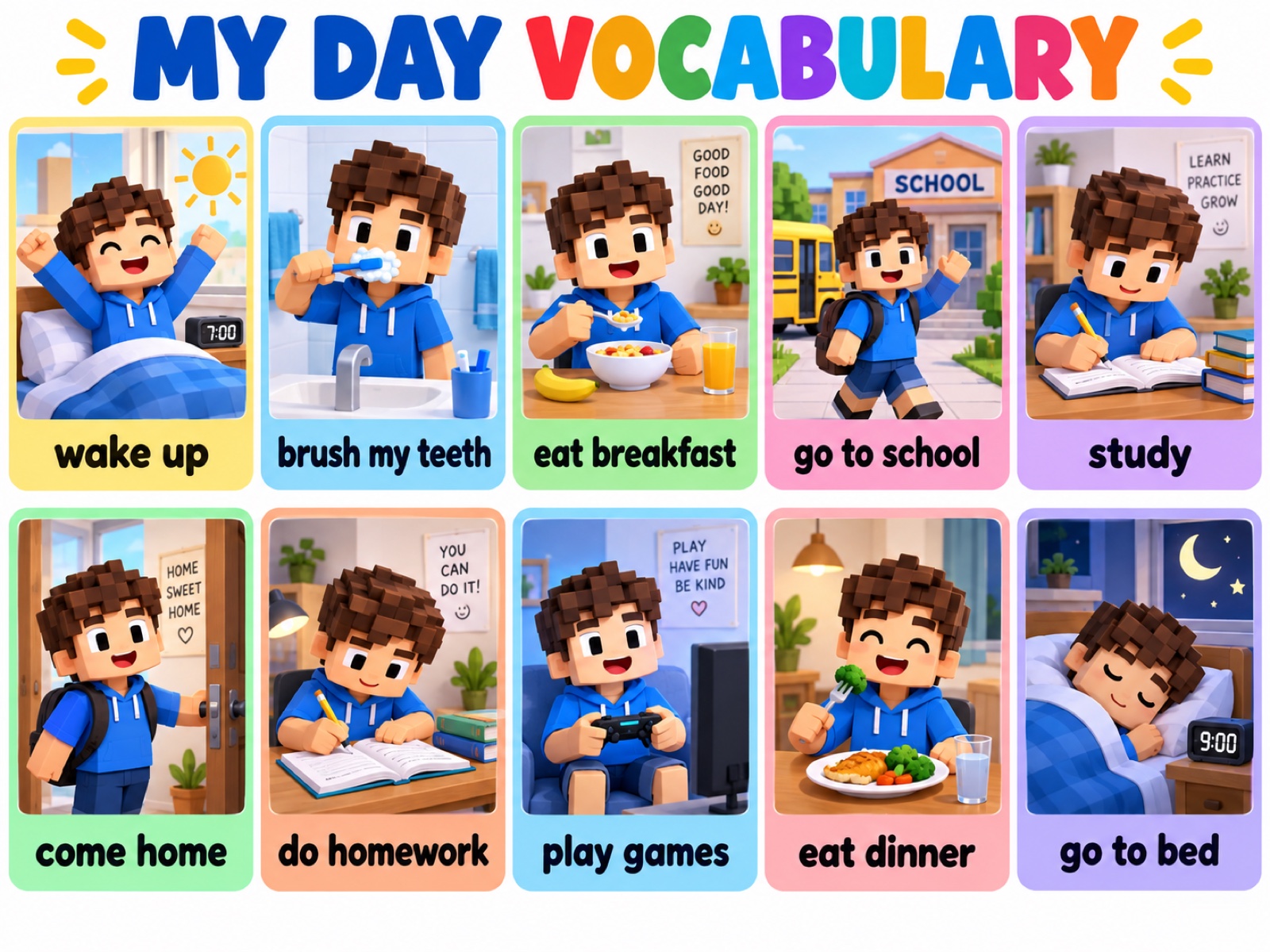


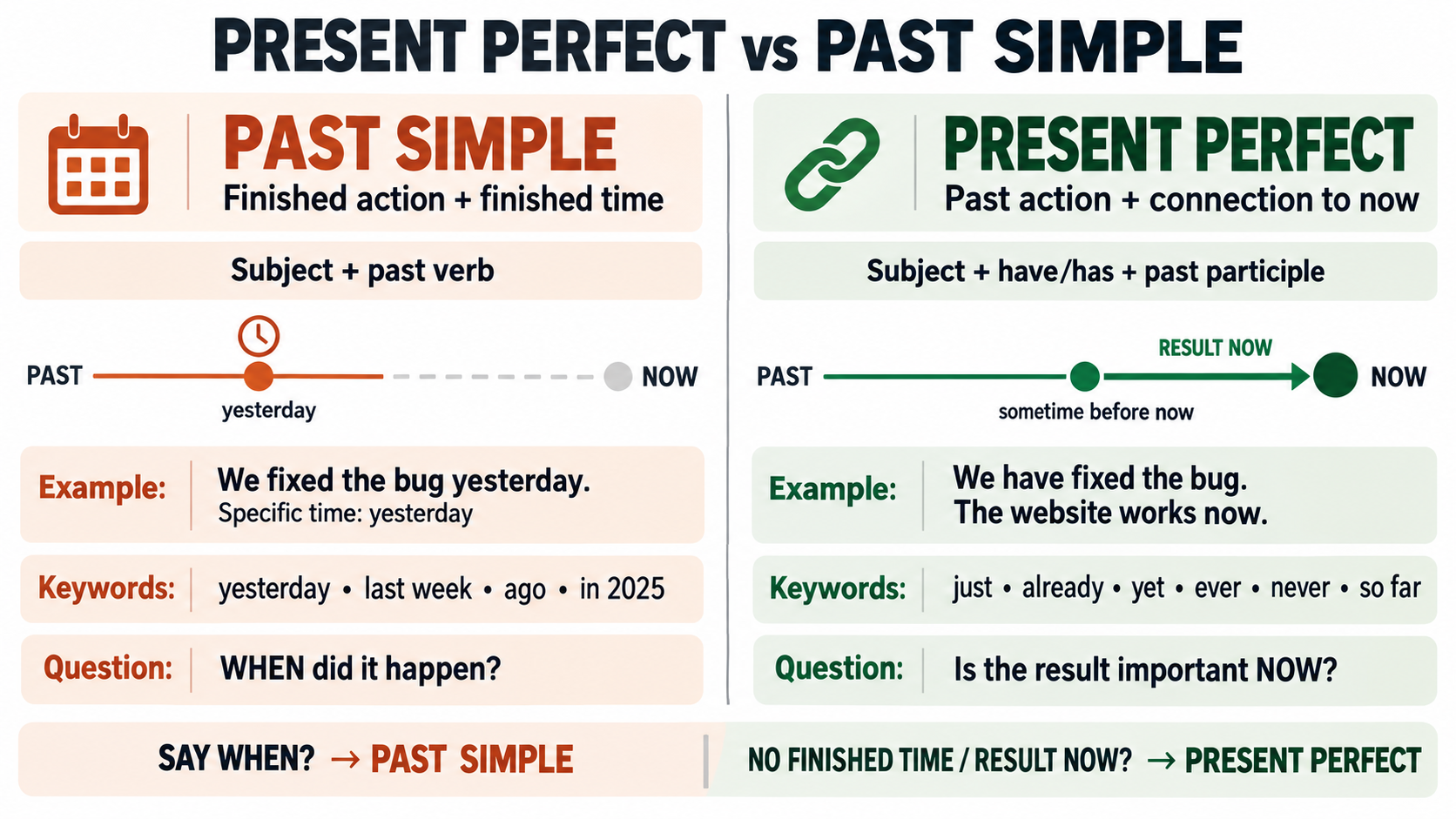


 destination
 accommodation
 flight
 reservation
 suitcase
 sightseeing