I am tired.
I am at home.
I work today.
I watch TV today.
Talk about how you felt, where you were, and the things you did.
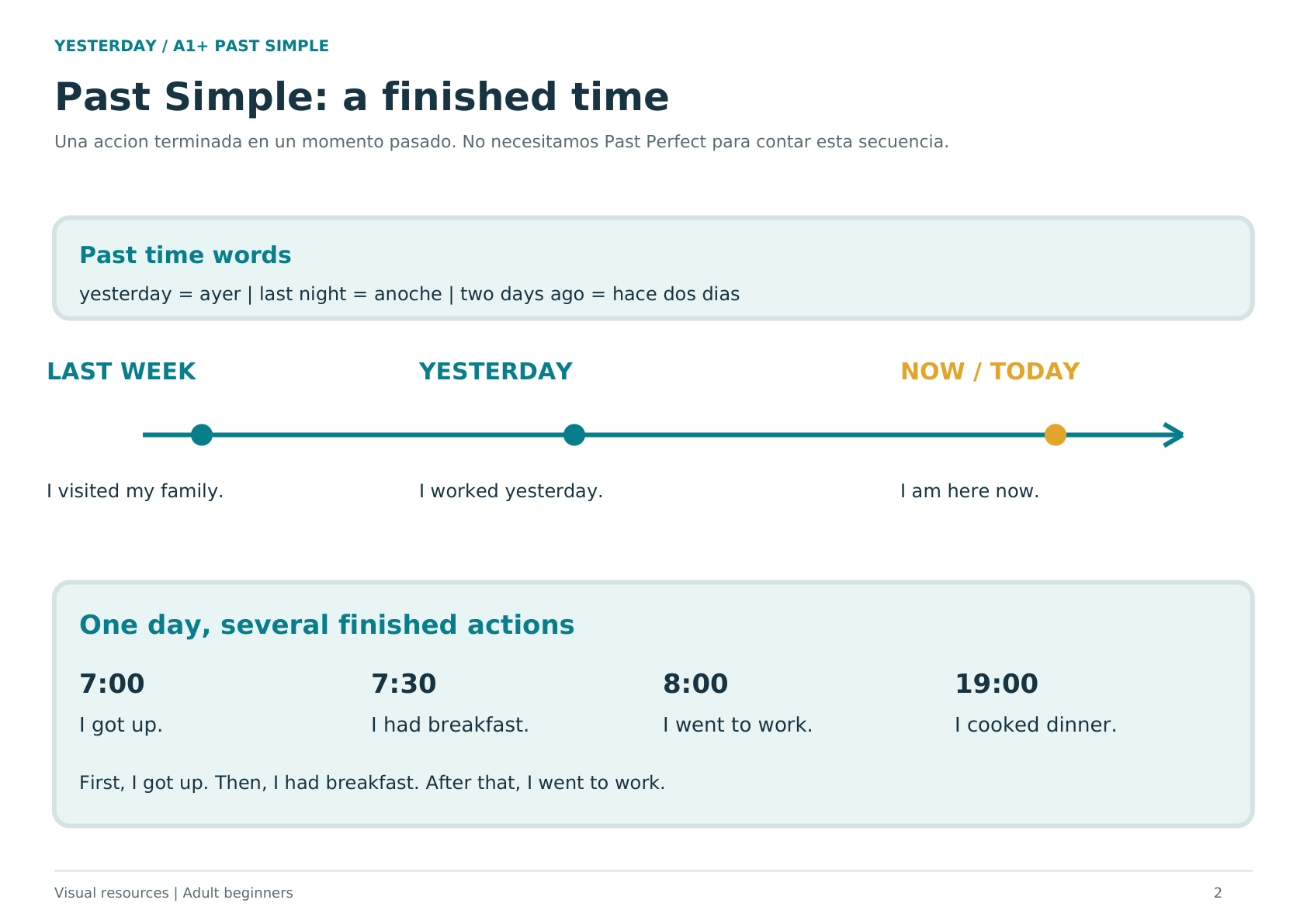
Start with what is true now. Then move the same idea into a finished past time.
I am tired.
I am at home.
I work today.
I watch TV today.
I was tired yesterday.
I was at home yesterday.
I worked yesterday.
I watched TV yesterday.
Teacher prompt: How do we say “ayer”, “anoche”, and “el fin de semana pasado”?
Use the past form of be for a state, feeling, description, or place.
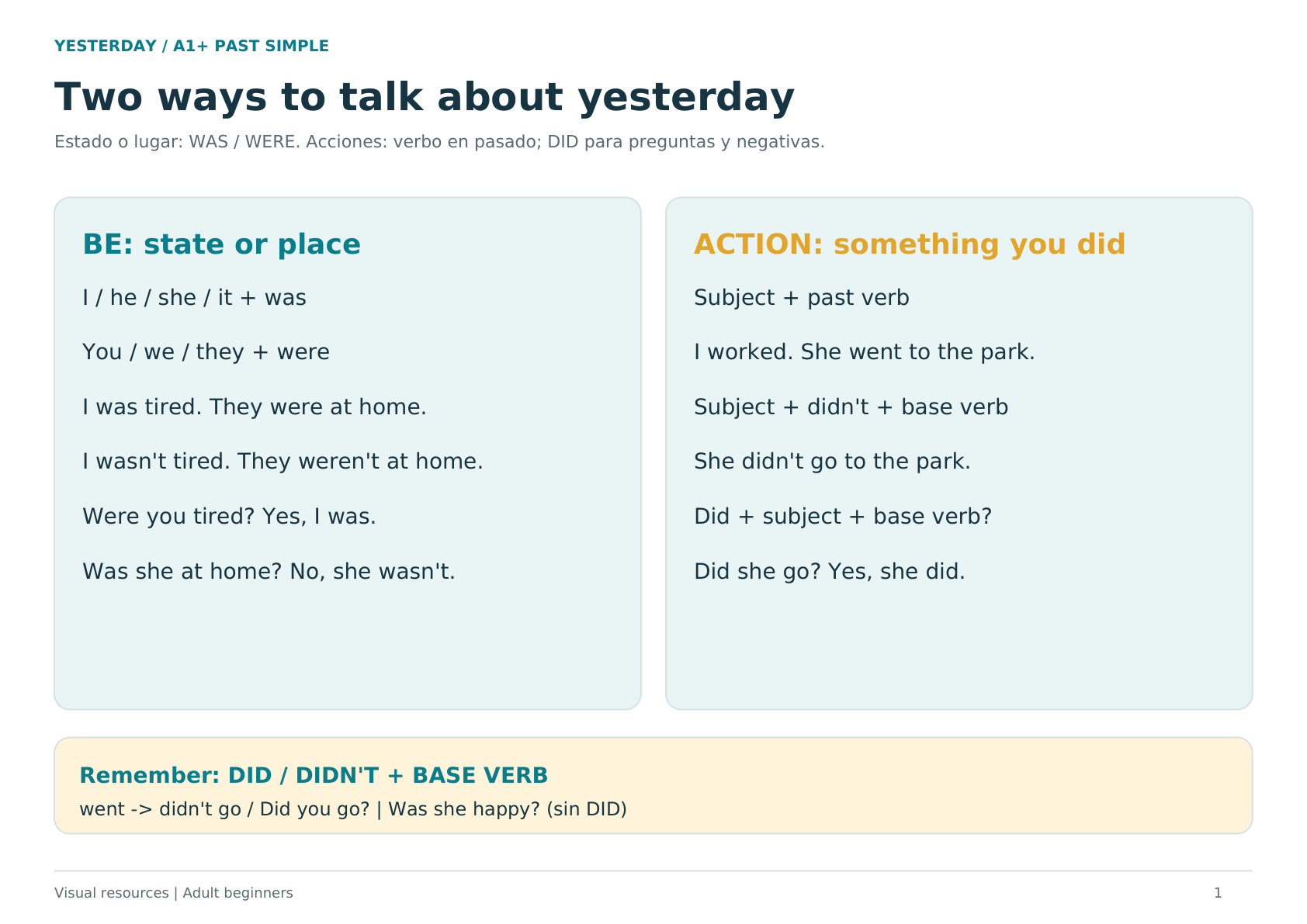
I / he / she / it + was | you / we / they + were
I was tired. · They were at home.1. was · 2. was · 3. were · 4. were · 5. were · 6. was
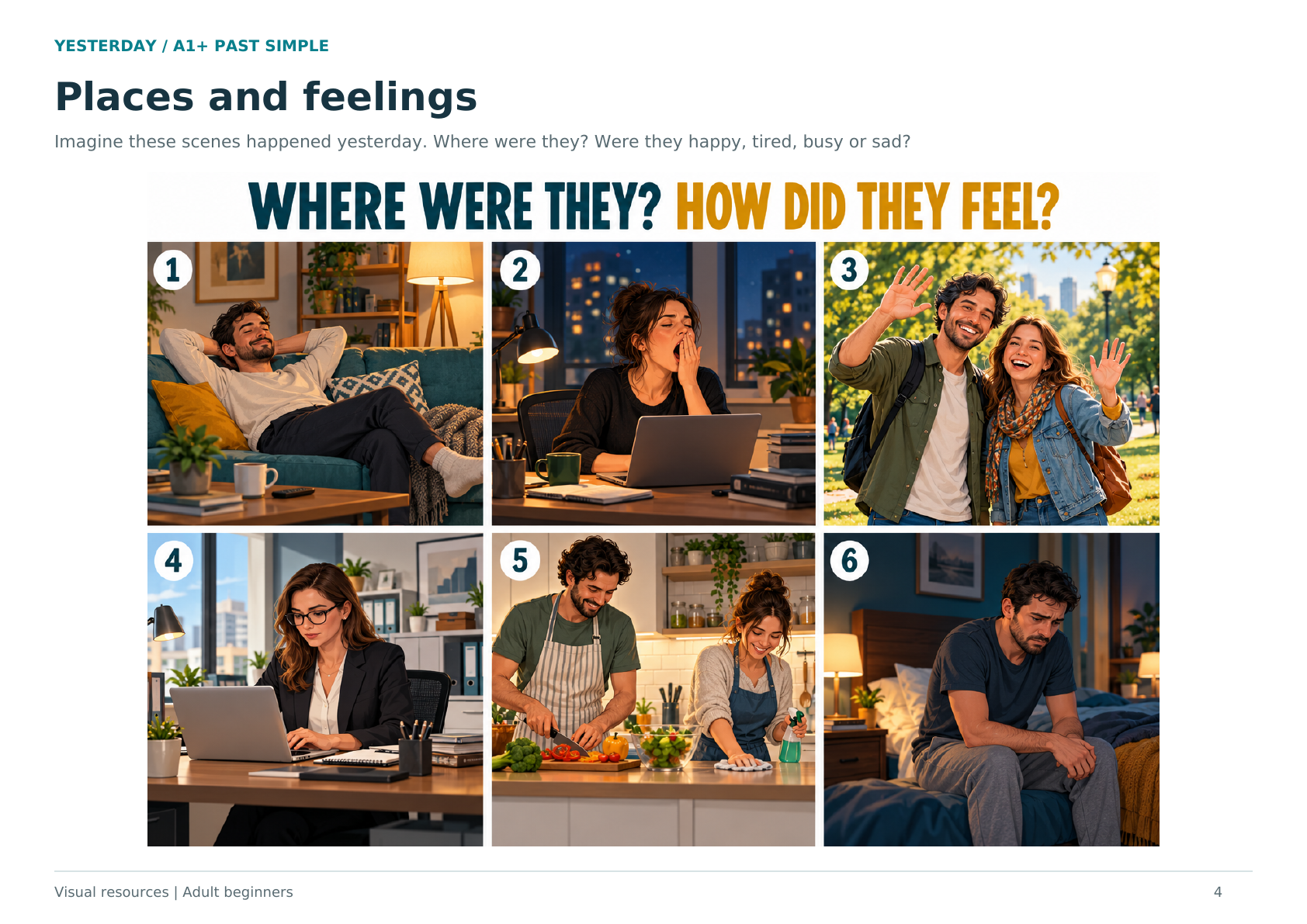
Now move from how you were to what you did.
I was tired.
I watched TV.
I worked. · She cooked dinner. · They played football.
The past form stays the same with every subject: I worked / she worked / they worked.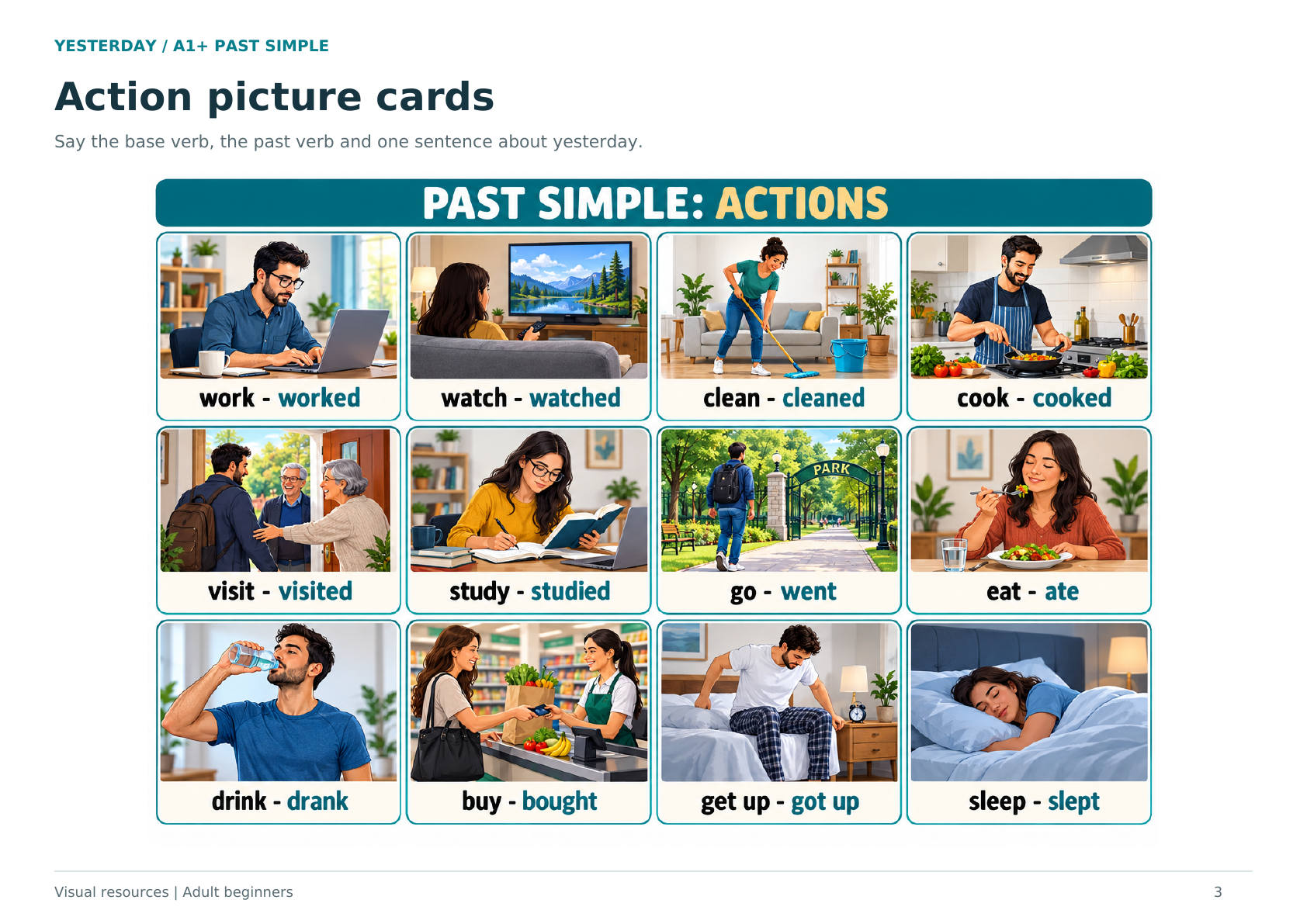
1. watched · 2. cooked · 3. visited · 4. studied · 5. played · 6. cleaned
These past forms do not use -ed. Read the verb, cover the past form, and try to remember it.
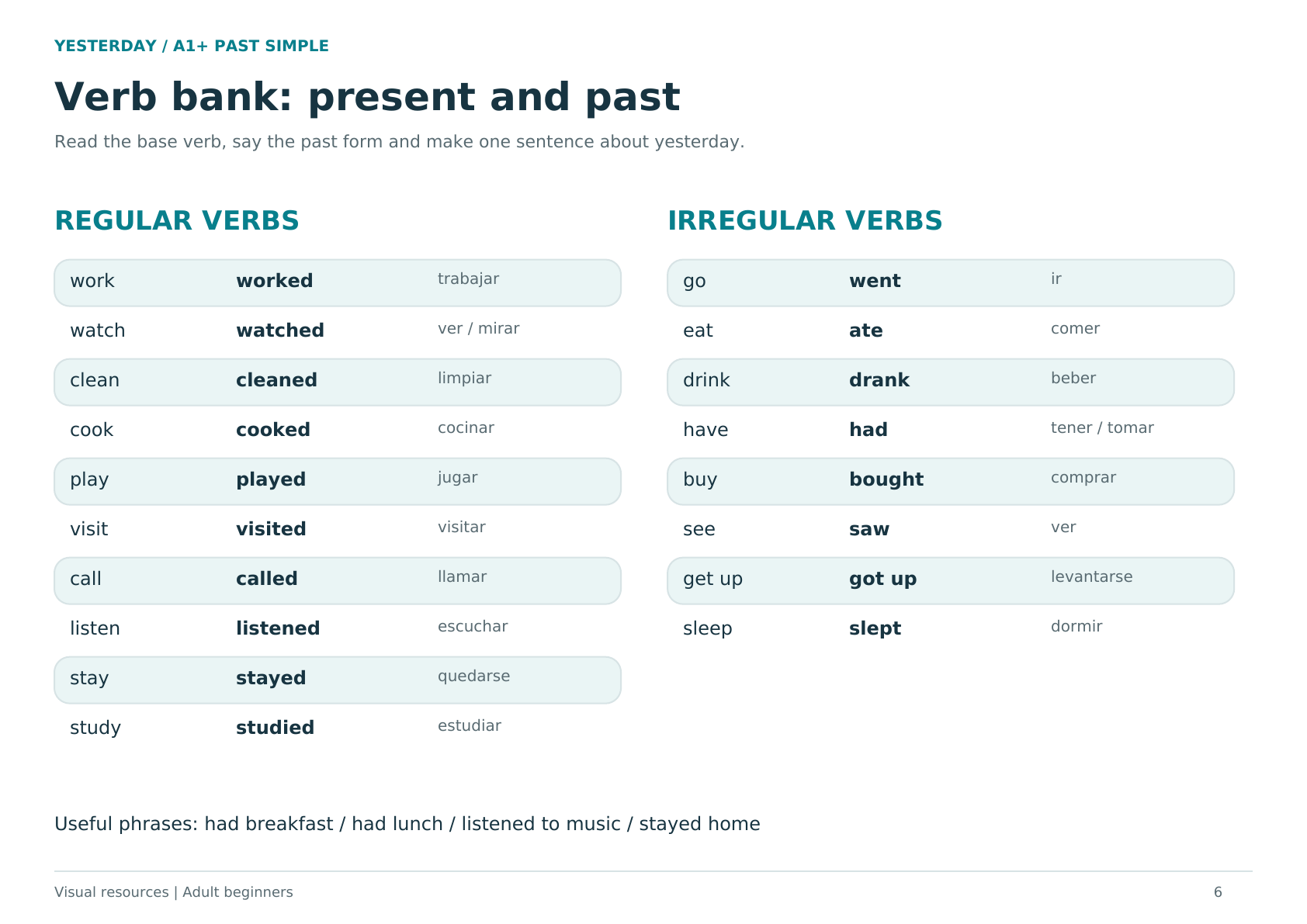
Useful phrases: had breakfast · had lunch · listened to music · stayed home
went · ate · drank · had · bought · got up
1. got up · 2. had · 3. went · 4. bought · 5. ate · 6. drank
For an action, use did / didn't. After them, the main verb returns to its base form.
I didn't work. · She didn't go. · We didn't eat breakfast.
Did you work? · Did she cook dinner? · Did they go shopping?
Short answers: Yes, I did. / No, I didn't.What did you do? · Where did you go? · What time did you get up?
1. He didn't work yesterday. / Did he work yesterday?
2. They didn't eat pizza. / Did they eat pizza?
3. She didn't watch TV. / Did she watch TV?
4. You didn't buy any bread. / Did you buy some bread?
Read the story. Notice the states, regular verbs, irregular verbs, and negative.
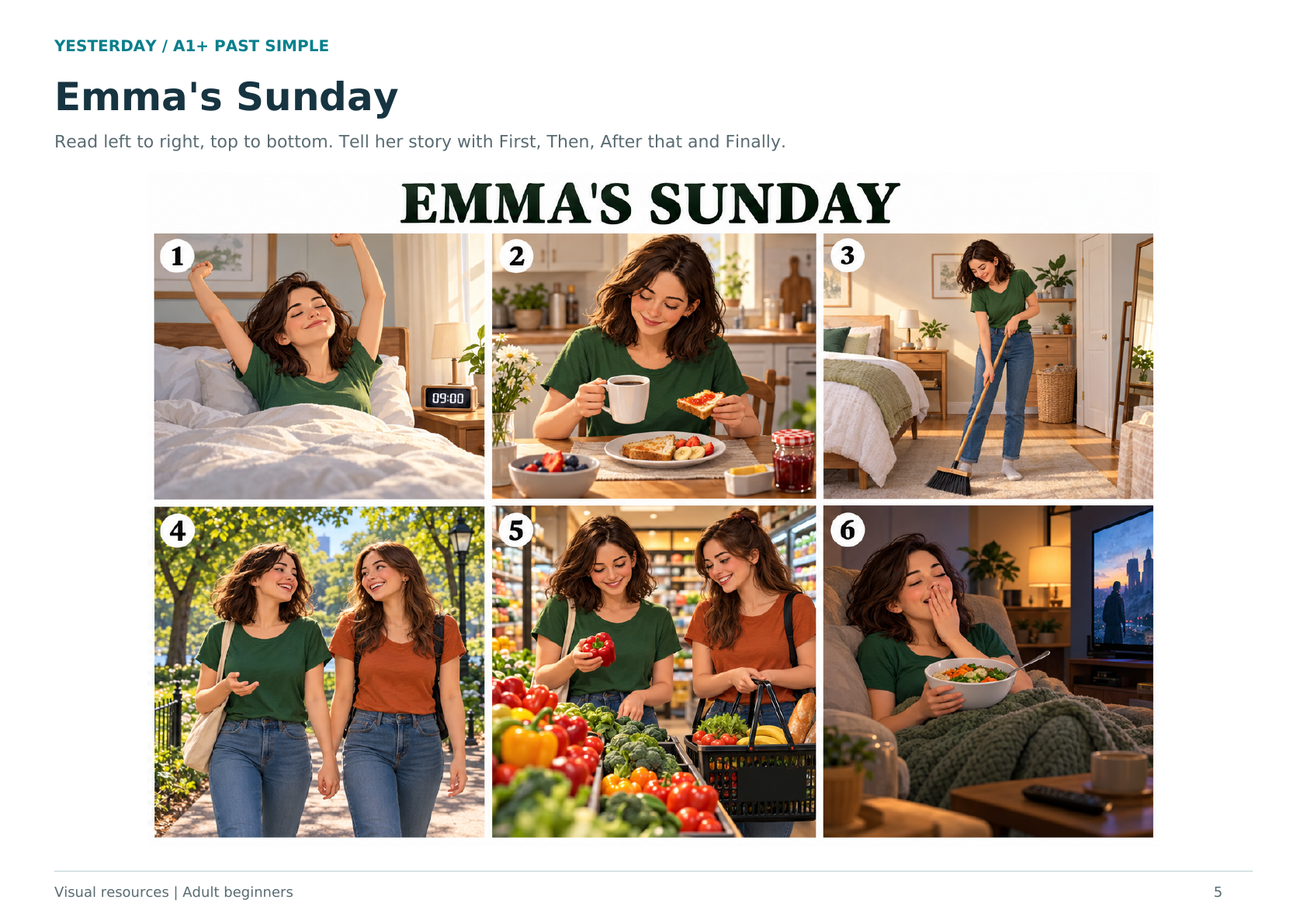
Yesterday was Sunday. Emma got up at nine. She had breakfast at home and drank coffee. In the morning, she cleaned her room.
In the afternoon, she went to the park with her sister. They were happy. After that, they bought some food.
In the evening, Emma cooked dinner and watched a movie. She didn't work or study. She was tired, but her day was good.
1. She got up at nine. · 2. She drank coffee. · 3. She cleaned her room. · 4. She went to the park. · 5. No, she didn't. · 6. Yes, she was.
Use the visual prompts, then tell a short story about your own day.
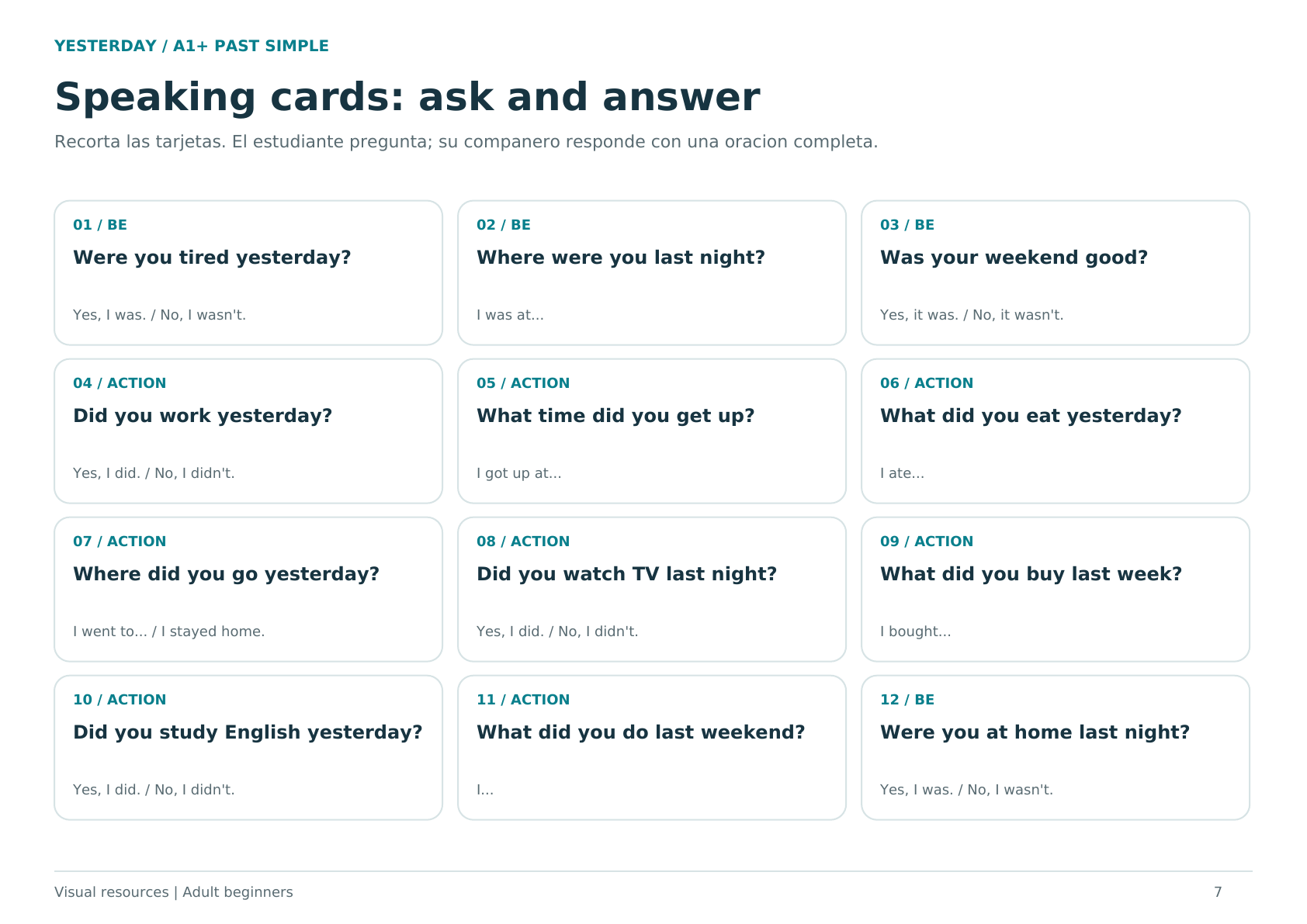
Were you tired yesterday?
Yes, I was. I was tired after work.Ask one with Were you…?, one with Did you…?, one with What did you…? and one with Where did you…?
Use these story words:
First · Then · After that · Finally____________________________
____________________________
____________________________
Yesterday, I… · First, I… · Then, I… · After that, I… · Finally, I…
Include: one was/were sentence + three past actions + one didn't sentence.
Yesterday, I was busy. First, I got up at seven and had breakfast. Then, I went to work. After that, I cooked dinner. Finally, I watched TV. I didn't study English. I was tired, but my day was good.
Say three sentences about yesterday. Two are true and one is false. Your partner guesses: “I think number two is the lie.”
Correct the sentences. Say why each correction is needed.
1. I was tired yesterday. · 2. She didn't go to work. · 3. Did you watch TV? · 4. They were at home. · 5. He studied English yesterday. · 6. Was she happy?
Remember: questions about a state use was/were. Questions about an action use did + base verb.
Homework · My last weekend: Write 6–8 sentences. Include where you were or how you felt with was/were, three actions in the past, one sentence with didn't, and first, then, finally. Add three questions to ask your teacher next class.
Feedback tip: If the student says “didn't went,” ask “After didn't: go or went?” If they say “Did she was…?”, ask “Is this BE or an action verb?” Goal: tell yesterday in 5–6 connected sentences and ask one DID question and one WAS/WERE question.
You can describe yesterday with was/were, past action verbs, and did / didn't.