What Had Been Happening?A2+ → B1 · Past Perfect Continuous
A2+ → B1 · 90 MINUTES
What Had Been Happening?
Explain an earlier activity, how long it continued, and why a later past situation happened.
◷ Duration↻ Earlier activity→ Past result
Final goalTell a complete story with two Past Perfect Continuous sentences, two Past Perfect Simple sentences and clear past events.
01 · THE BIG DIFFERENCE
One earlier situation. Two focuses.
Both forms look back from a later past moment.
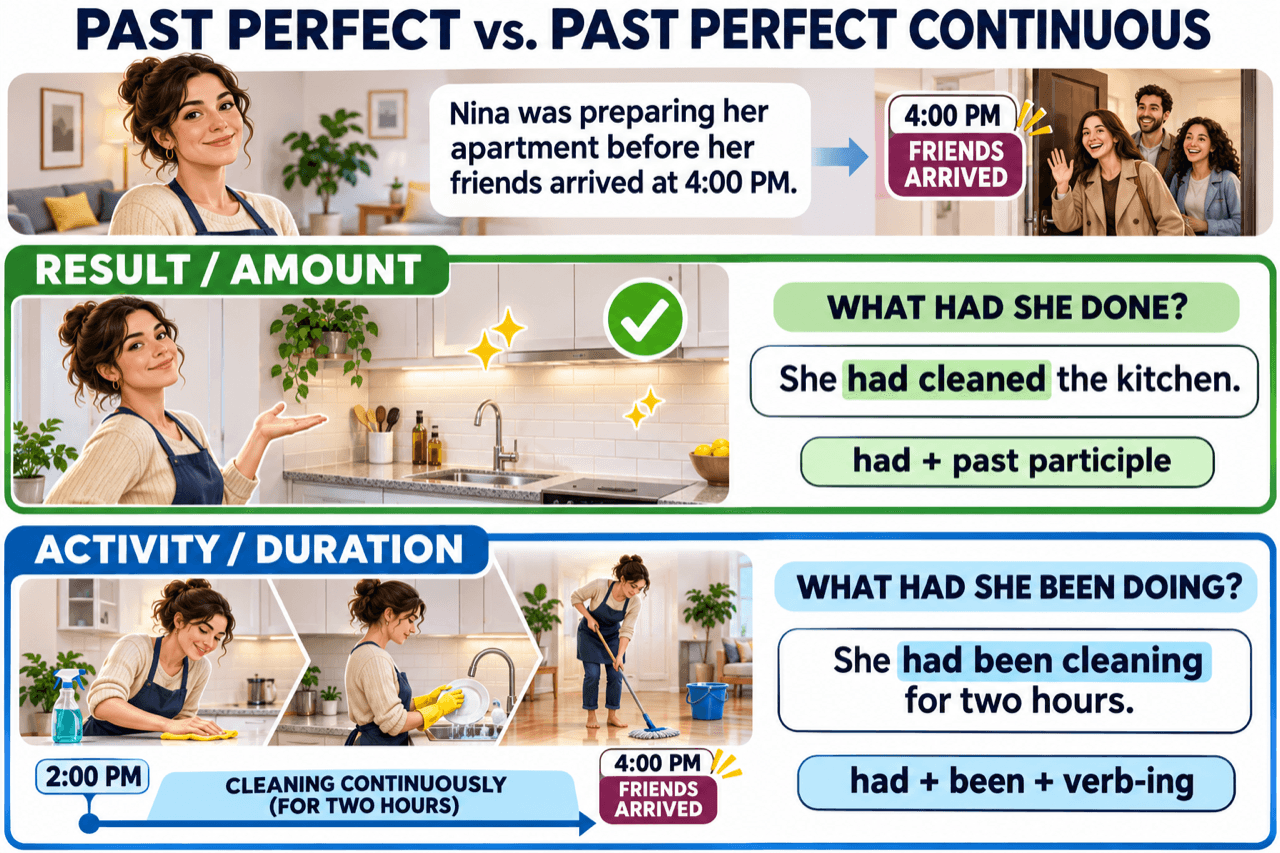
Ask: What had she done? Or what had she been doing?
RESULT / AMOUNT
Past Perfect Simple
She had cleaned the kitchen.
Focus: the completed resultACTIVITY / DURATION
Past Perfect Continuous
She had been cleaning for two hours.
Focus: the process and time
Useful question
Do I want to highlight a result or amount, or an activity and its duration?
Label each sentence: result / amount or activity / duration
Maria had prepared three dishes.
Maria had been cooking all morning.
They had set up the speakers.
They had been setting up the room for two hours.
He had answered ten messages.
He had been answering messages since breakfast.
1 result / amount · 2 activity / duration · 3 result · 4 activity / duration · 5 result / amount · 6 activity / duration
02 · LOOK BACK FROM THE PAST
Before which past moment?
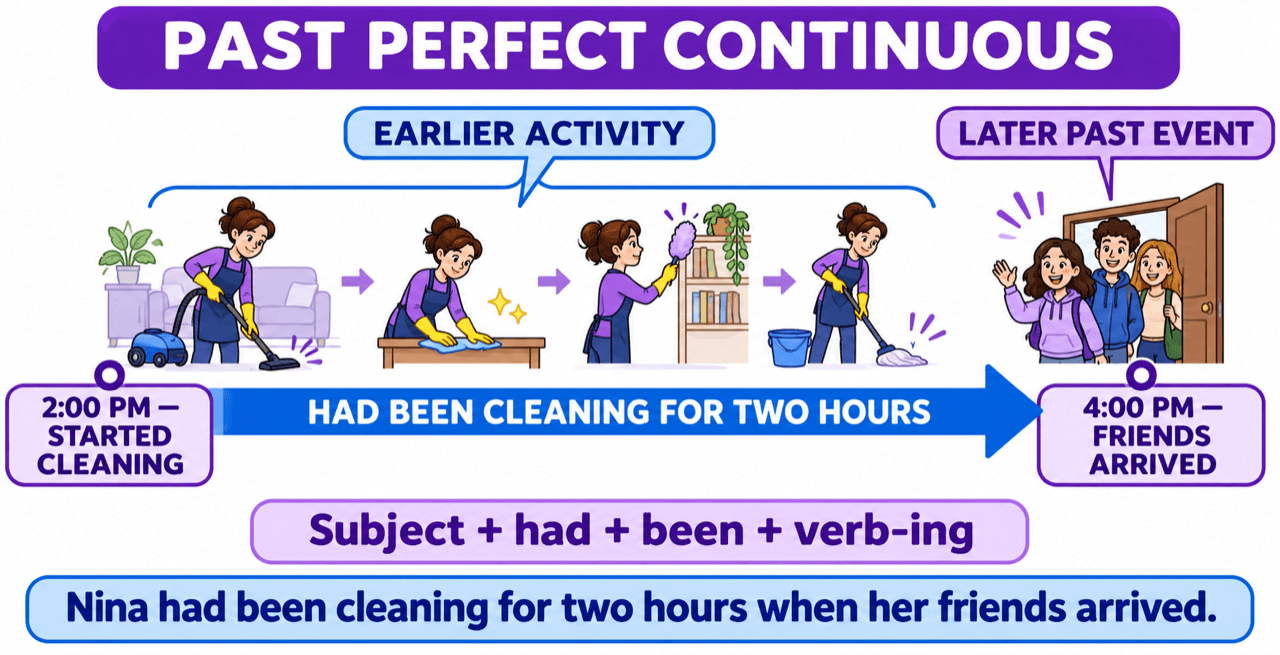
The earlier activity continued until, or close to, a later past event.
Earlier activity + duration + later past event.
SUBJECT+HAD+BEEN+VERB-ING
ExampleNina had been cleaning for two hours when her friends arrived.
Which activity started first?
Did it continue for some time?
Which event uses Past Simple?
What is the past reference point?
The cleaning started first. It continued for two hours. “Had been cleaning” describes the earlier activity. “Her friends arrived” is the later event and the past reference point.
03 · BUILD IT ACCURATELY
Affirmative, negative and questions
Had stays the same with every subject.
AFFIRMATIVE
I had been waiting.
They had been working.
NEGATIVE
She hadn’t been sleeping.
We hadn’t been checking.
QUESTION
Had you been waiting?
How long had she been studying?
After BEEN, use verb-ing✗ had been studied ✓ had been studying
Build the sentences
I / had / been / wait / for an hour
She / had / been / study / since breakfast
They / not / been / sleep / well
he / been / look for / his phone / ?
how long / she / been / practice / ?
1 I had been waiting for an hour. · 2 She had been studying since breakfast. · 3 They hadn’t been sleeping well. · 4 Had he been looking for his phone? · 5 How long had she been practicing?
04 · WHY USE IT?
Three meanings you need
Duration, cause and repeated activity before a past change.
1
Duration before an event
We had been driving for three hours when we stopped.
2
Cause of a past result
The street was wet because it had been raining.
3
Repeated earlier activity
He had been working out four times a week before his injury.
Identify the use: A duration · B cause · C repeated activity
His clothes were wet because he had been walking in the rain.
We had been waiting for forty minutes when the bus arrived.
She had been exercising three times a week before her injury.
The room smelled like paint because they had been painting.
I had been studying for two hours when my friend called.
He had been driving to work every day before he worked from home.
1 B · 2 A · 3 C · 4 B · 5 A · 6 C
05 · CONNECT THE TIMES
Four useful time links
Measure the activity and connect it to the later past moment.
FOR = duration
for twenty minutes for two hours for three weeks
SINCE = starting point
since 8:00 since Monday since breakfast
WHEN = later event
They had been waiting for an hour when the bus arrived.
BEFORE = earlier than
They had been waiting for an hour before the bus arrived.
For or since?
working ___ three hours
waiting ___ 8:30
looking for his phone ___ twenty minutes
traveling ___ early morning
studying ___ Monday
raining ___ two days
1 for · 2 since · 3 for · 4 since · 5 since · 6 for
06 · AT A MOMENT OR BEFORE IT?
Past Continuous vs. Past Perfect Continuous
One describes the action at that moment. The other measures the time before it.
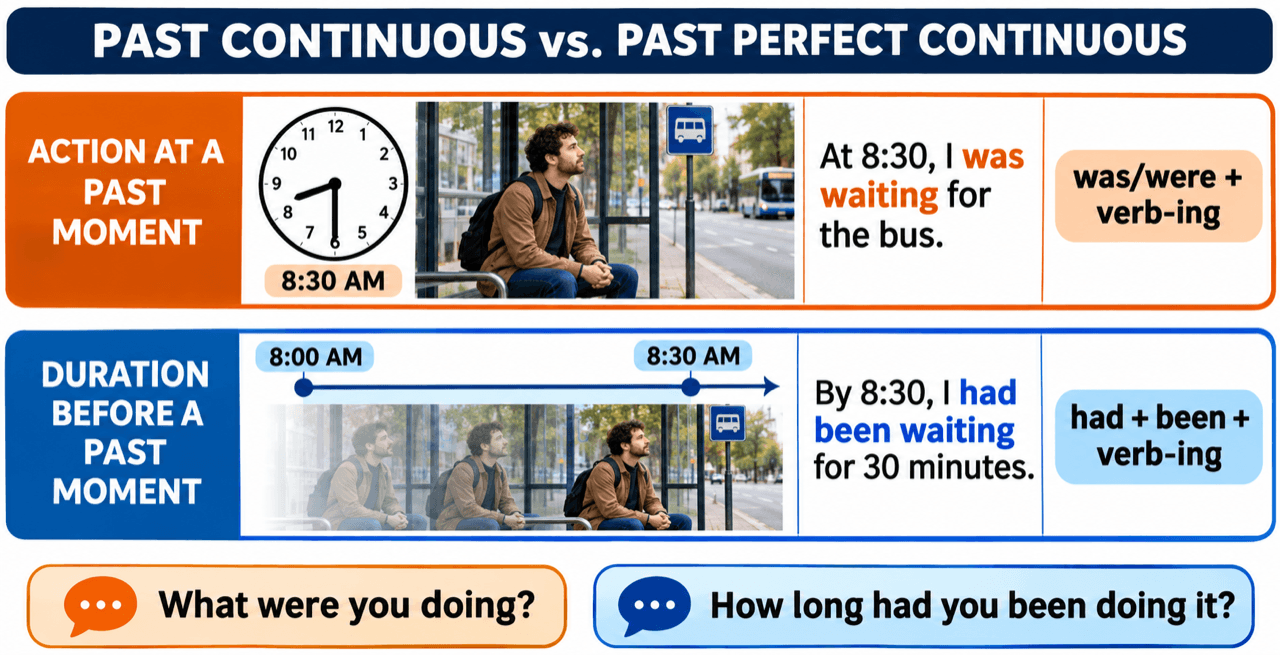
What were you doing? vs. How long had you been doing it?
AT 8:30
Past Continuous
I was waiting for the bus.
Action in progress at that momentBY 8:30
Past Perfect Continuous
I had been waiting for 30 minutes.
Accumulated duration before that moment
Choose the correct form
At 9:00, I (was waiting / had been waiting) for the bus.
By 9:00, I (was waiting / had been waiting) for forty minutes.
When I entered, Maria (was cooking / had been cooking) dinner.
Maria was tired because she (was cooking / had been cooking) all afternoon.
1 was waiting · 2 had been waiting · 3 was cooking · 4 had been cooking
07 · CHOOSE, COMPLETE, REPAIR
Controlled practice
Say every answer aloud before revealing the key.
A · Complete with Past Perfect Continuous
I ______ for my keys for twenty minutes. (look)
She ______ since 7:00 when the lights went out. (study)
We ______ the apartment all morning. (clean up)
It ______ all night, so the streets were wet. (rain)
How long ______ you ______ before the doctor arrived? (wait)
They ______ attention. (not / pay)
1 had been looking · 2 had been studying · 3 had been cleaning up · 4 had been raining · 5 had / been waiting · 6 hadn’t been paying
B · Simple or continuous?
Nina ______ three rooms. (clean)
Nina ______ for two hours. (clean)
Alex ______ his keys. (find)
Alex ______ for his keys for thirty minutes. (look)
We ______ the problem. (figure out)
We ______ to solve it all day. (try)
1 had cleaned · 2 had been cleaning · 3 had found · 4 had been looking · 5 had figured out · 6 had been trying
C · Correct the mistakes
She had been study for two hours.
We had being waiting since 8:00.
They had been cleaning since three hours.
How long you had been driving?
Did they had been waiting?
1 had been studying · 2 had been waiting · 3 for three hours · 4 How long had you been driving? · 5 Had they been waiting?
08 · GUIDED STORY 1
The Very Late Bus
Combine duration, cause, result and the later event.
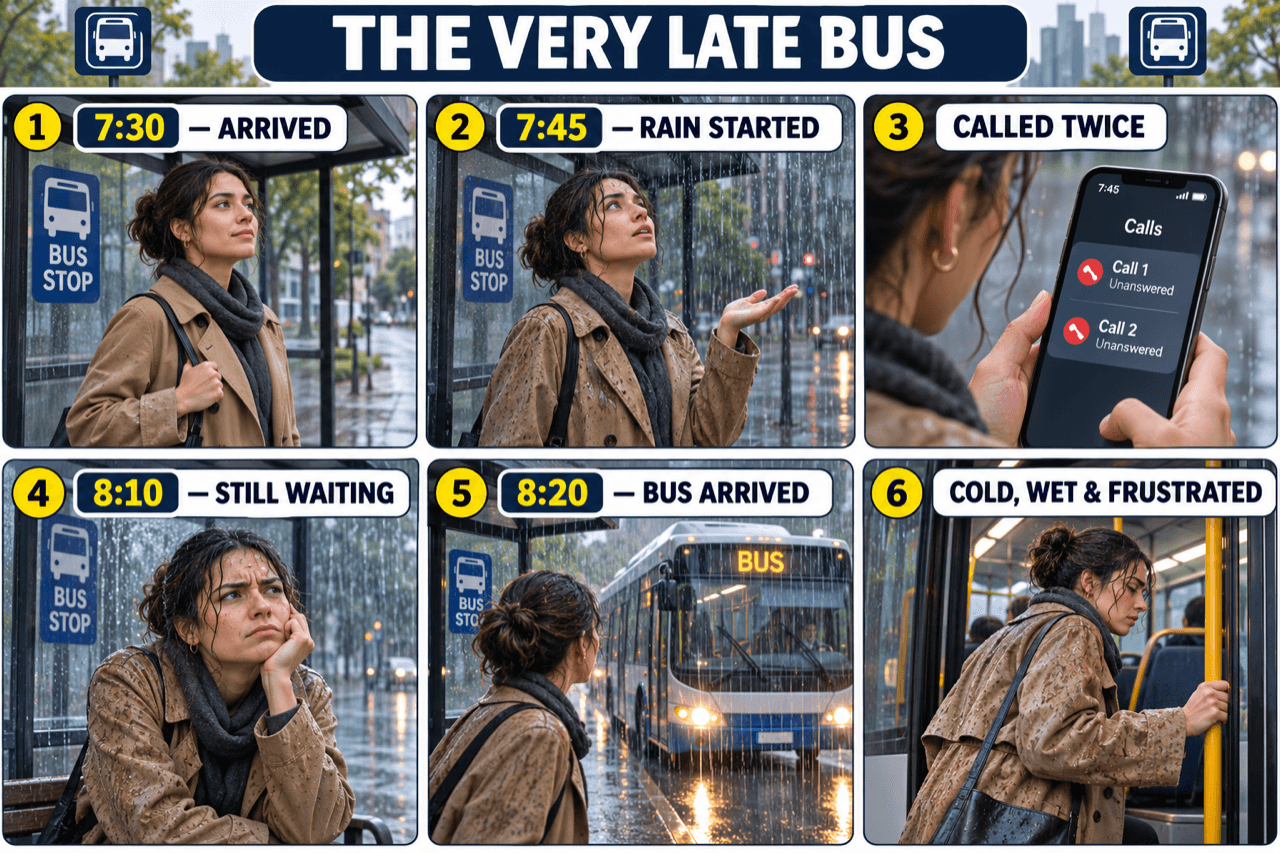
Mia arrived at 7:30. The bus finally arrived at 8:20.
How long had Mia been waiting?
How long had it been raining?
Why were her clothes wet?
How many times had she called her friend?
How did she feel?
Mia had been waiting for fifty minutes when the bus finally arrived. It had been raining since 7:45, so her clothes were wet. She had called her friend twice, but nobody answered. She felt cold and frustrated because she had been standing in the rain.
09 · GUIDED STORY 2
Friends Arrived Early
Use continuous forms for preparation and simple forms for finished results.
Planned arrival: 5:00. Actual arrival: 4:00.
How long had Nina been cleaning?
What had she finished?
What hadn’t she finished?
How long had her brother been setting up the speakers?
Had they figured out the problem?
Nina had been cleaning since 1:00 when her friends arrived early. She had finished the kitchen, but she hadn’t cleaned the living room. Her brother had been setting up the speakers for two hours, but he hadn’t figured out the problem.
10 · GUIDED STORY 3
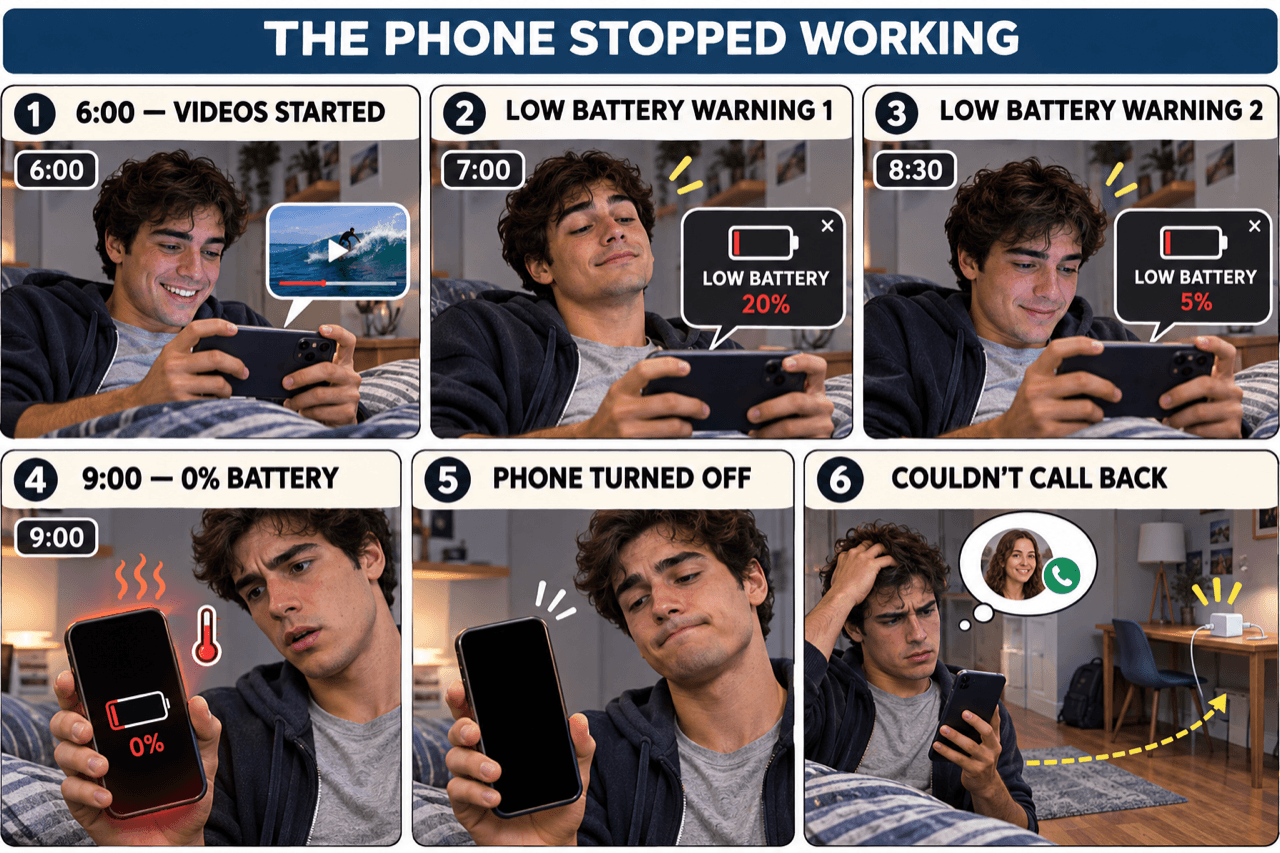
The Phone Stopped Working
Build the story from a long activity to its negative result.
Videos started at 6:00. The phone turned off at 9:00.
How long had Leo been watching videos?
Why was the phone hot?
Why had the battery run out?
How many warnings had he ignored?
What problem did this cause?
Leo had been watching videos for three hours when his phone turned off. It was hot because he had been using it continuously. He had ignored two warnings, and the battery had run out. Unfortunately, he couldn’t call his sister back.
11 · GUIDED STORY 4
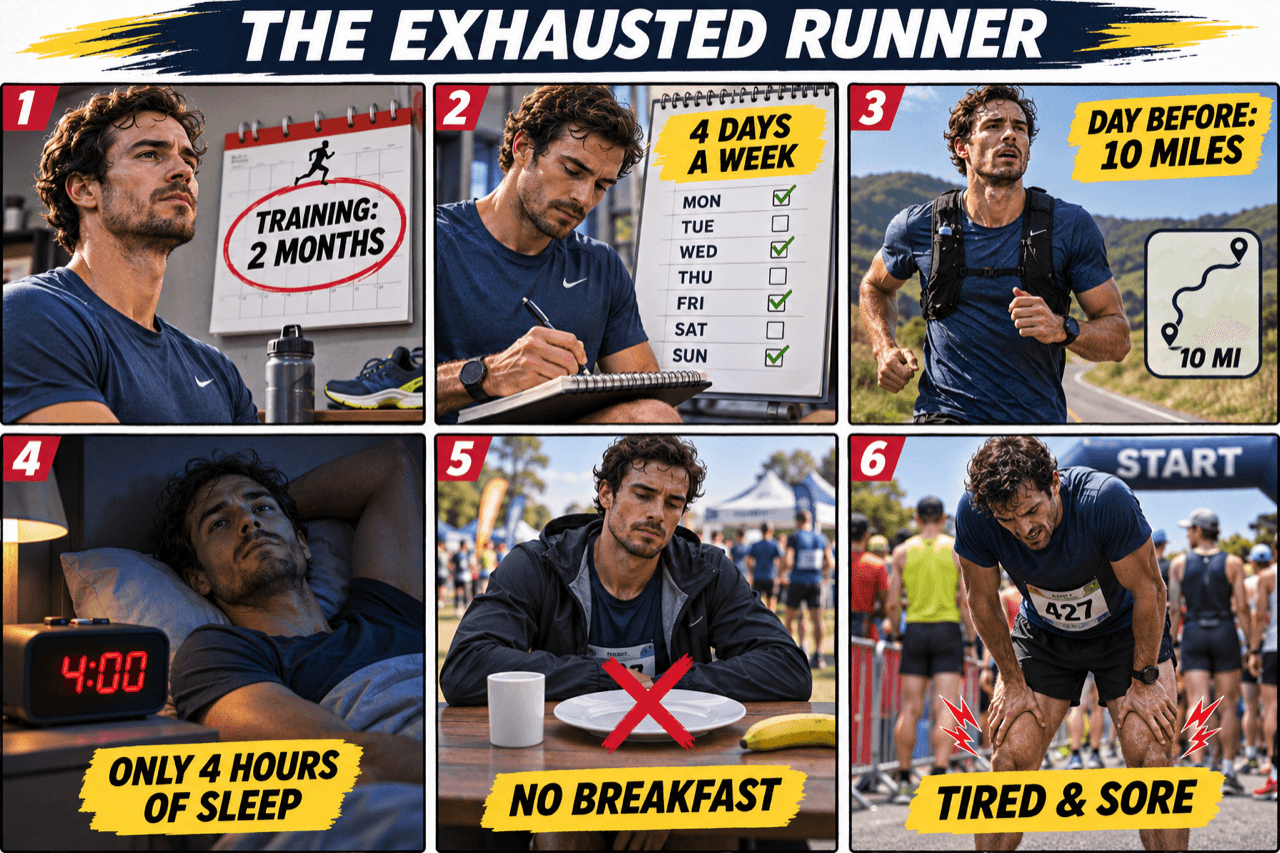
The Exhausted Runner
Explain routine, duration, completed distance and missing preparation.
Training for two months · four days a week · ten miles the day before.
How long had Jordan been training?
How often had he been working out?
How far had he run the previous day?
Why was he exhausted?
What hadn’t he done that morning?
What should he have done differently?
Jordan had been training for two months and working out four times a week. He had run ten miles the day before. He was exhausted because he hadn’t been sleeping enough, and he hadn’t eaten breakfast. He should have rested and prepared more carefully.
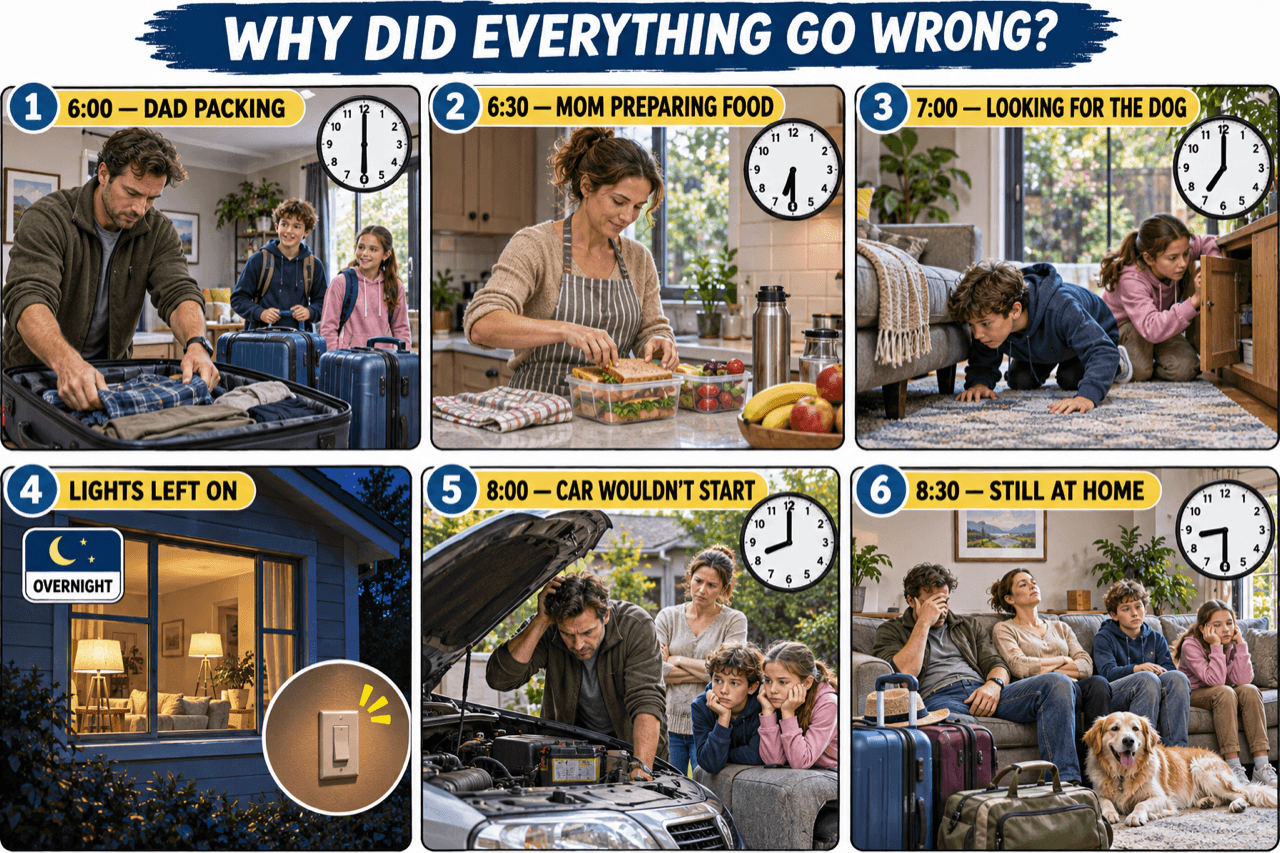
12 · WHY DID EVERYTHING GO WRONG?
Tell the complete story
Use the grammar to connect preparation, mistakes and the final problem.
They planned to leave at 8:00, but at 8:30 they were still at home.
2 Past Perfect Continuous2 Past Perfect Simple2 Past Simple1 sentence with because1 sentence with when
Dad had been…Mom had been…The children had been…They had already…When they tried to…This happened because…
The family planned to leave at 8:00. Dad had been packing for two hours, and Mom had been preparing food since 6:30. The children had been looking for the dog for an hour. When they tried to leave, the car didn’t start because Dad had left the lights on overnight. They hadn’t checked the car, so at 8:30 they were still at home.
STATE VERBS
Use simple forms: had known, had believed, had owned, had needed.