Lesson map
Before That Moment
Overview
B2 SPEAKING · PAST PERFECT
Two past moments.
One clear story.
Sarah starts at a past moment, looks back to explain what had happened, and then continues naturally in the past simple.
SUCCESS
Sarah can explain what had happened before another past moment.
0–5 MIN · ENTRY CONVERSATION
Start with Sarah’s real morning
Ask naturally — do not request the target tense yet
What time did you wake up today?
What did you do before this lesson?
Did you have breakfast?
Did you check your messages?
What did you eat?Who did you message?
Teacher move
Listen first. Then reformulate only what Sarah actually said.
Do not add breakfast, messages, or any other action unless Sarah mentioned it.
Possible reformulation
“So, before our lesson started, you had already had breakfast.”
“Before our lesson started, you hadn’t had breakfast.”
5–15 MIN · CENTRAL EXPLANATION
Stand at the second moment. Look back.
Which happened first?
→
→
LOOKING BACK
When the lesson started, I had already eaten breakfast.
Cuando empezó la clase, yo ya había desayunado.The idea
There are two past moments. We stand at the second moment and look back with had + participle.
Past Perfect is not obligatory every time. A chronological version is also natural:
I ate breakfast and then the lesson started.
One form for every subject
+Person + had + participleI had eaten.
−Person + hadn’t + participleI hadn’t eaten.
?Had + person + participle?Had you eaten?
Useful verbs
BASEPASTPARTICIPLE
eatateeaten
taketooktaken
leaveleftleft
sendsentsent
readreadread /red/
checkcheckedchecked
One more example
7:00 Your brother ate your dinner.7:30 You got home.
Who ate it? Before or after you got home? Was the dinner there? How did you feel?
“When I got home, my brother had eaten my dinner. I was hungry, so I ordered a sandwich.”
had eaten looks back; got home, was, ordered continue the story.15–23 MIN · GUIDED ORAL PRACTICE
Find the earlier event. Combine. Continue.
For each case: 1 identify the earlier event→2 complete the sentence→3 add what happened next
The closed shop
6:00 — the shop closed
6:30 — you arrived
When I arrived, the shop ______. (close)
Was it open?What did you do next?
When I arrived, the shop had closed. I went to another shop.
The missing keys
You left your keys at work. Later, you got home.
I couldn’t open my front door because I ______ my keys at work. (leave)
Where were they?Who could help?
I couldn’t open my front door because I had left my keys at work.
The unread message
Your friend sent the address. You didn’t read it. Later, you called.
She had sent me the address, but I ______ her message. (not / read)
Had she sent it before?Why did you call?
She had sent me the address, but I hadn’t read her message.
The document
You didn’t save the document. Then the computer crashed.
When the computer crashed, I ______ my document. (not / save)
What was the problem?What did you do next?
When the computer crashed, I hadn’t saved my document.
Fast finish?Invent one more three-sentence example: result → earlier event → next action.
23–35 MIN · STORY 1
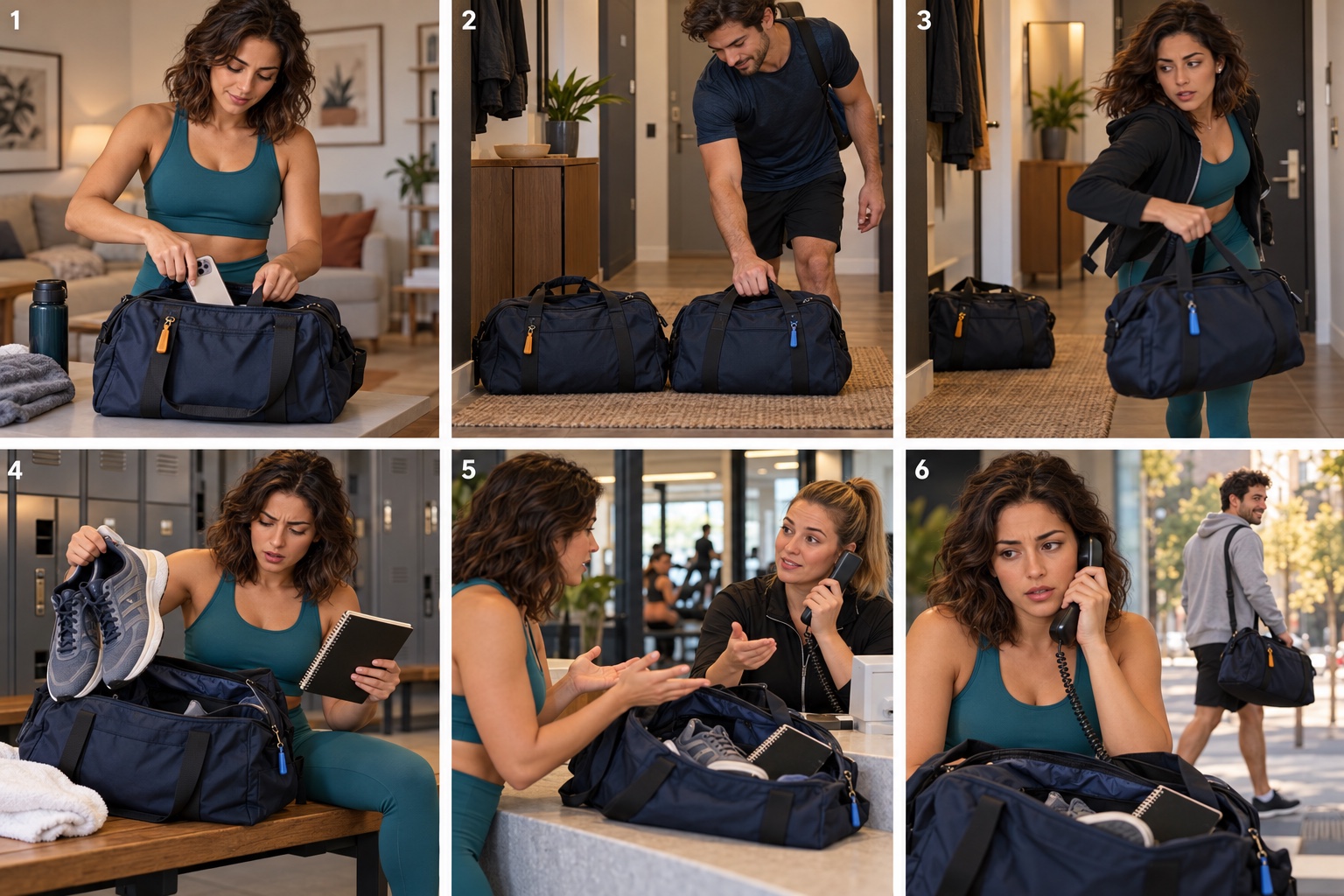
The wrong gym bag
1 Observe2 Order3 Discuss4 Tell5 Role-play6 Connect
→
→
KEY SENTENCE
When I opened the bag, I realized I had taken my brother’s bag.
Talk about it
- What did you find inside?
- Where was your phone?
- How did you feel?
- What did you do next?
bagbrotherphonereceptionist
Tell it without the model
Use the image and timeline. Add two details of your own.
I arrived at the gym and opened the bag. I saw my brother’s shoes and realized I had taken his bag. I had left my phone in my own bag at home. I felt annoyed, so I asked the receptionist if I could use the phone.
Mini role-play
Teacher: gym receptionist
Sarah: explain the mistake and ask for help.
Have you ever taken the wrong thing by mistake?
35–47 MIN · STORY 2
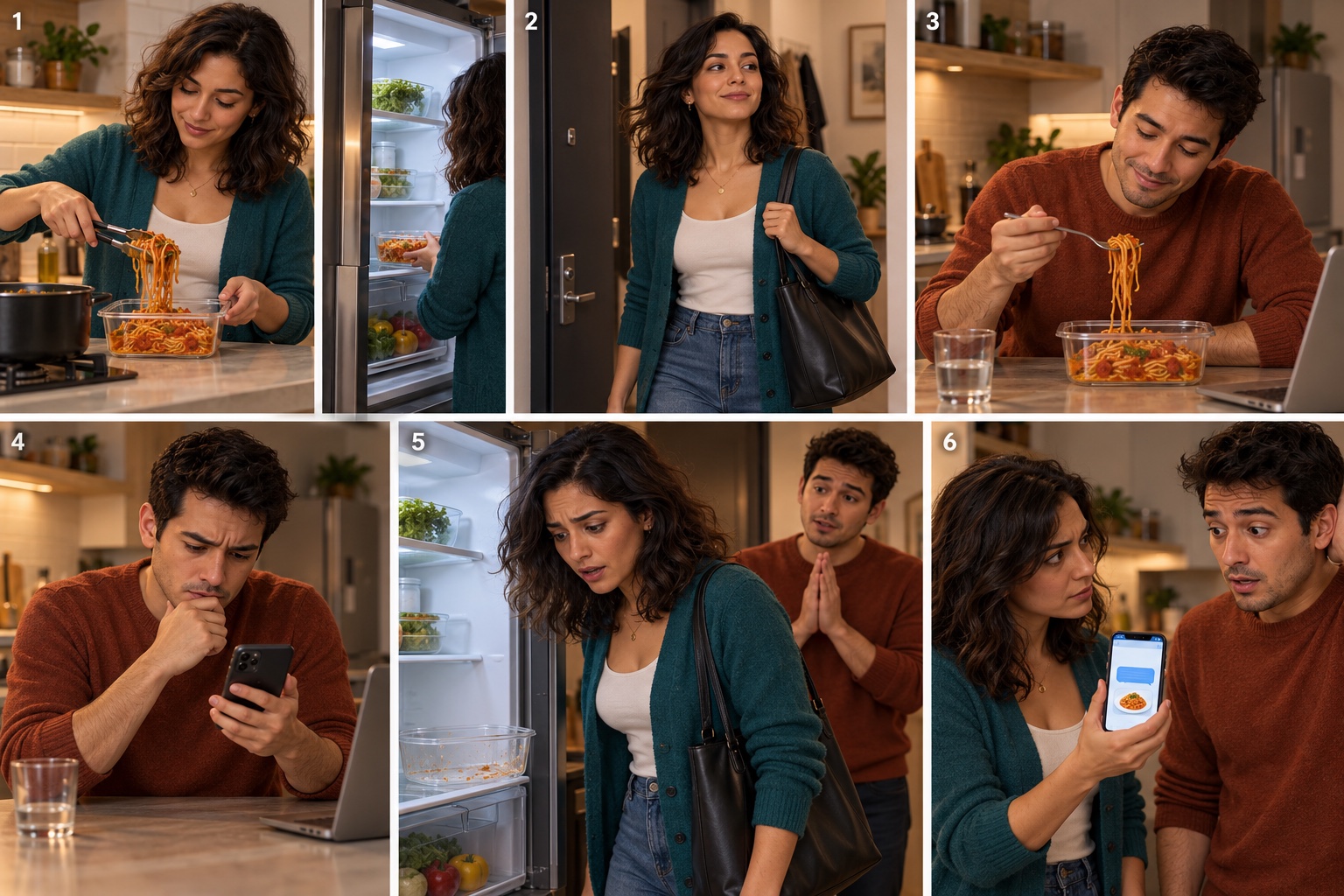
My dinner was gone
1 Observe2 Order3 Discuss4 Tell5 Role-play6 Connect
→
→
KEY SENTENCE
When I got home, my roommate had eaten my dinner.
Talk about it
- What had Sarah cooked?
- What did she find in the fridge?
- What had the roommate done?
- What should happen next?
pastafridgehungryorder foodask first
Tell it without the model
Start when Sarah arrived home. Then look back.
When I got home, I was hungry. I opened the fridge, but my dinner was gone. My roommate had eaten the pasta I had cooked earlier. He had ordered more food, but it hadn’t arrived yet. I asked him to check with me next time.
Mini role-play
Teacher: the roommate
Sarah: explain the problem and agree on a solution.
Has someone ever eaten something you were saving?
Teacher note
In the live conversation, the roommate may say “I’ve ordered more food.” In Sarah’s later narration: “He had ordered more food.” Keep the focus on the story, not a deep tense contrast.
47–59 MIN · STORY 3
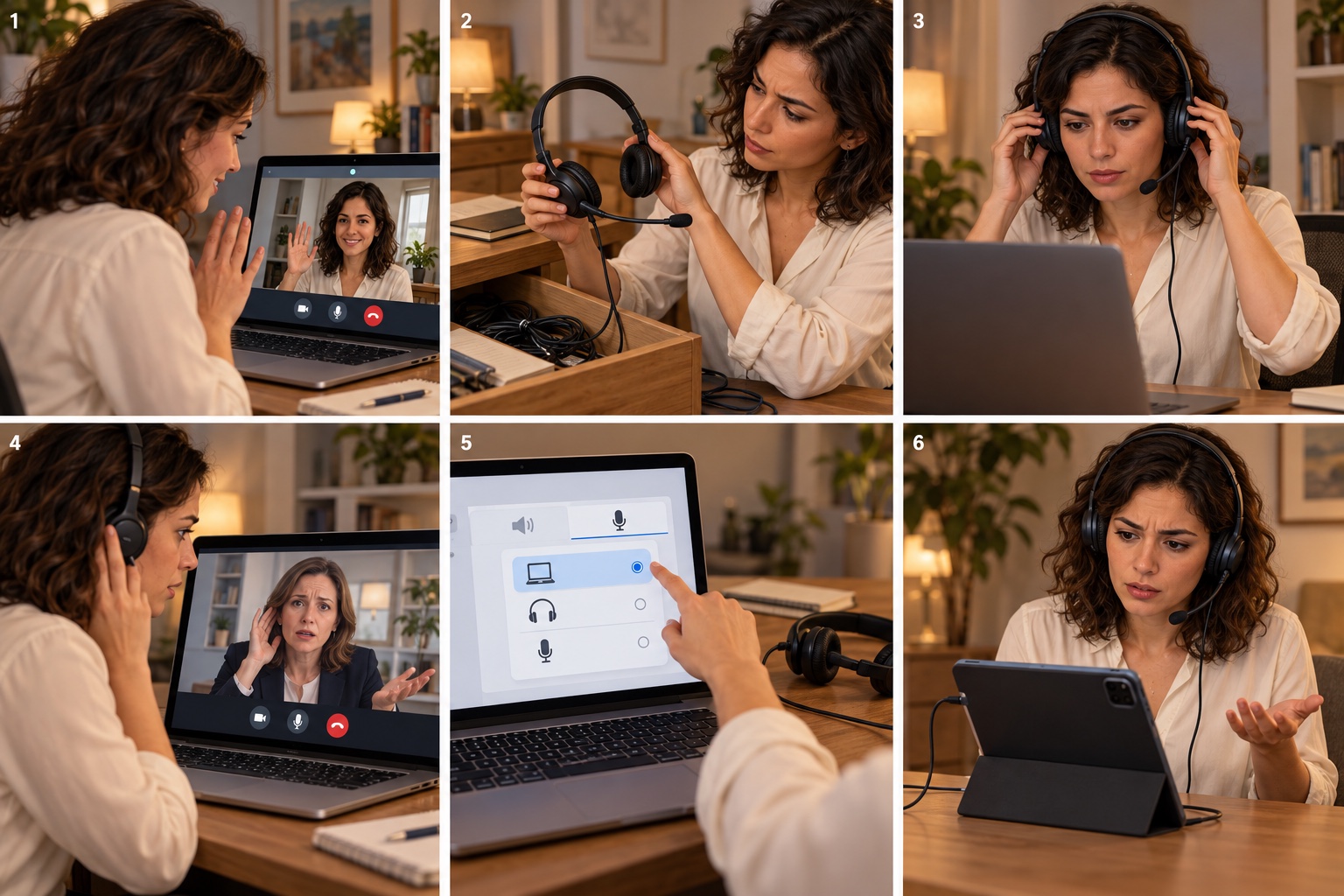
The microphone problem
1 Observe2 Order3 Discuss4 Tell5 Role-play6 Connect
→
→
KEY SENTENCE
I had checked the laptop microphone, but I hadn’t checked the headset microphone.
Talk about it
- What had worked in the test?
- What changed before the interview?
- What could Sarah try?
- What should she say?
checklaptopheadsetapologizecontinue
Tell it without the model
Explain what Sarah had and had not checked.
My interview started at nine. The interviewer couldn’t hear me. I had checked the laptop microphone, but I hadn’t checked the headset microphone. I apologized and switched back to the laptop microphone. Then we continued the interview.
Mini role-play
Teacher: interviewer
Sarah: apologize, explain, and solve the problem.
What technical problem have you had in an online call?
59–71 MIN · STORY 4
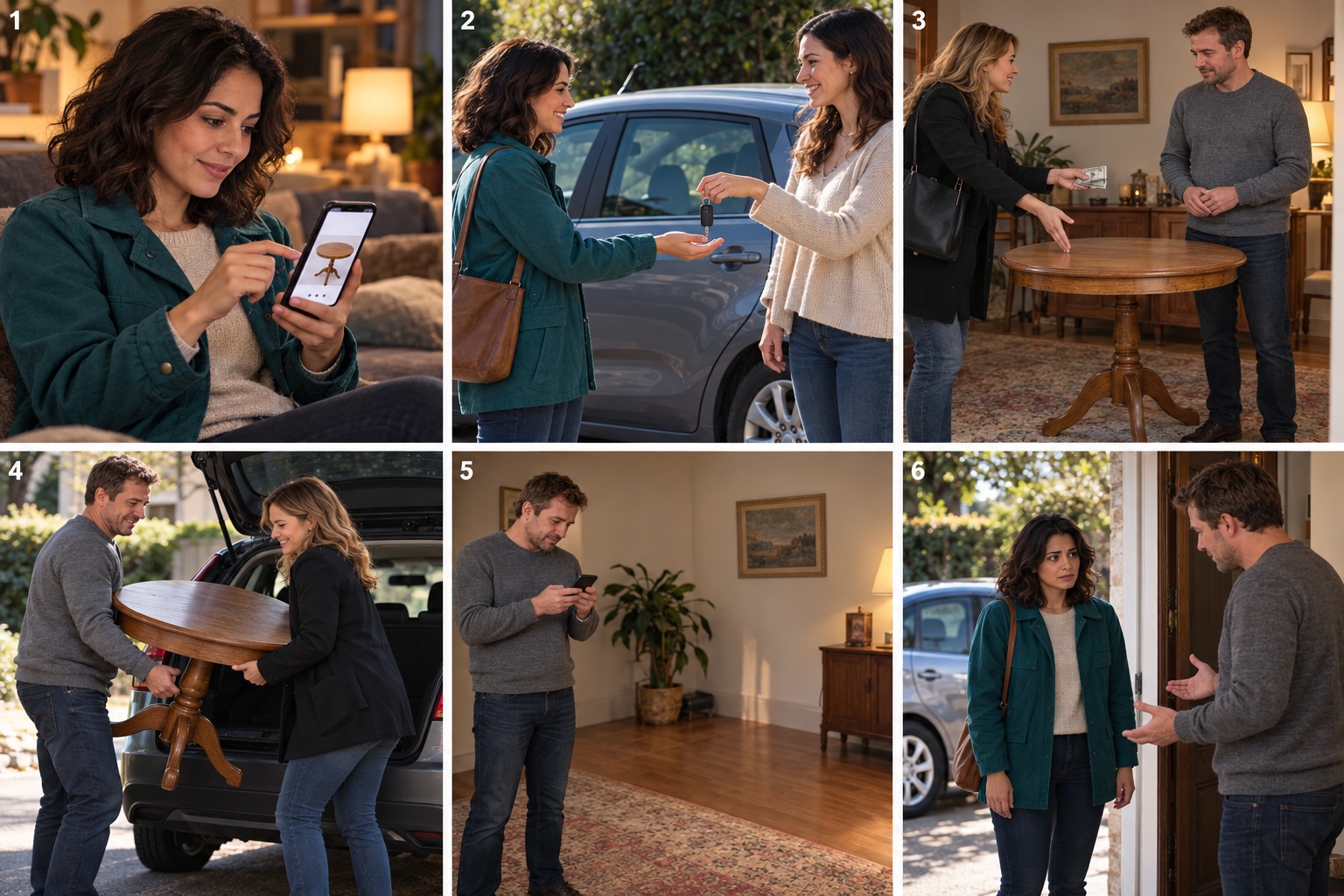
The table was gone
1 Observe2 Order3 Discuss4 Tell5 Role-play6 Connect
KEY SENTENCE
When I arrived, the seller had already sold the table.
Talk about it
- What had Sarah arranged?
- Why had she borrowed a car?
- What had the seller done?
- Why was she disappointed?
collectborrowsellmessagedisappointed
Tell it without the model
Keep one clear version of the facts.
I went to collect a table at noon. I had borrowed my cousin’s car to collect the table. When I arrived, the seller had already sold it to someone else. He had sent me a message, but I hadn’t read it. I explained why I was disappointed and went home.
Mini role-play
Teacher: the seller
Sarah: explain why you are disappointed.
Have you ever arrived and found that plans had changed?
71–77 MIN · STORY 5
The photographs were safe
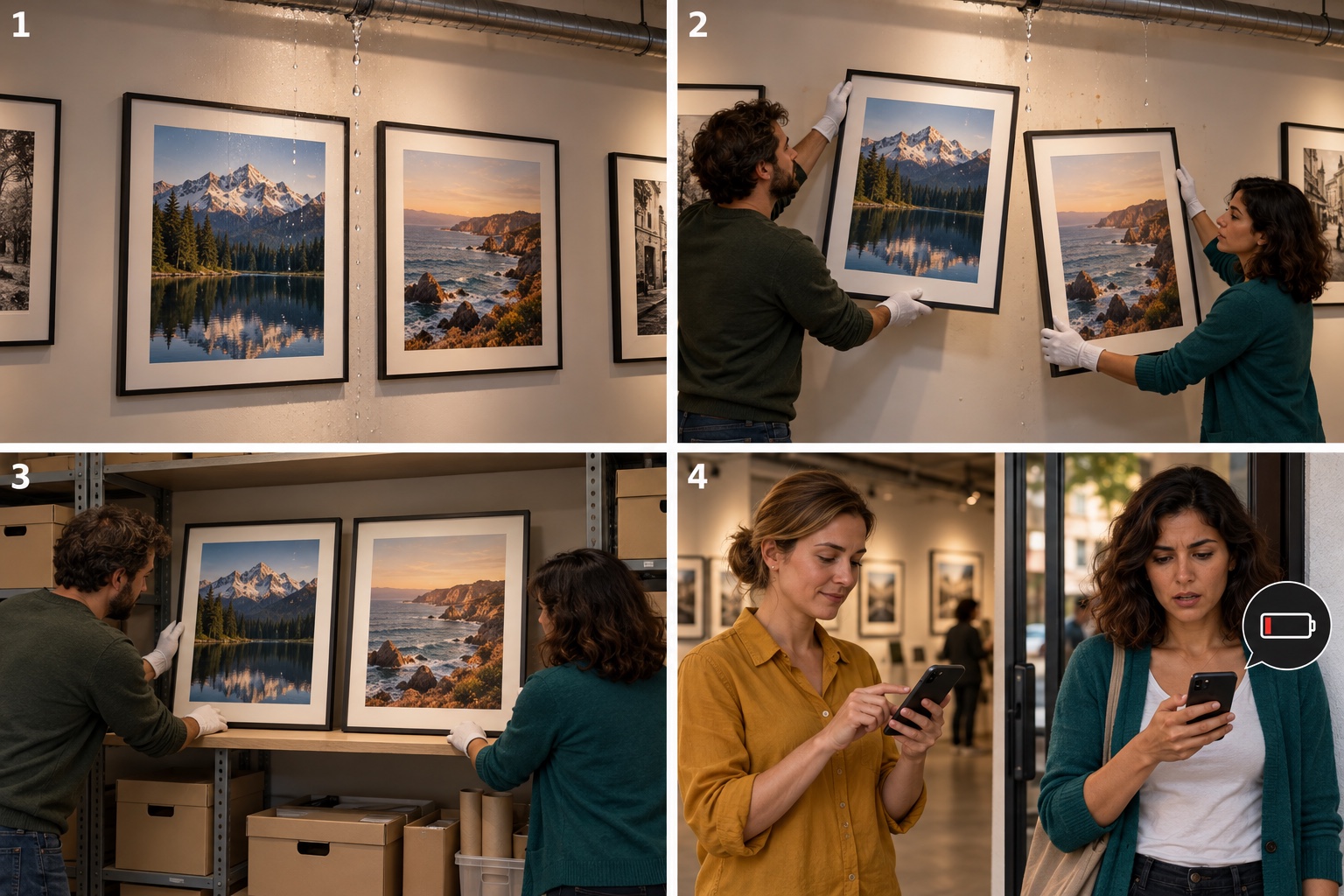
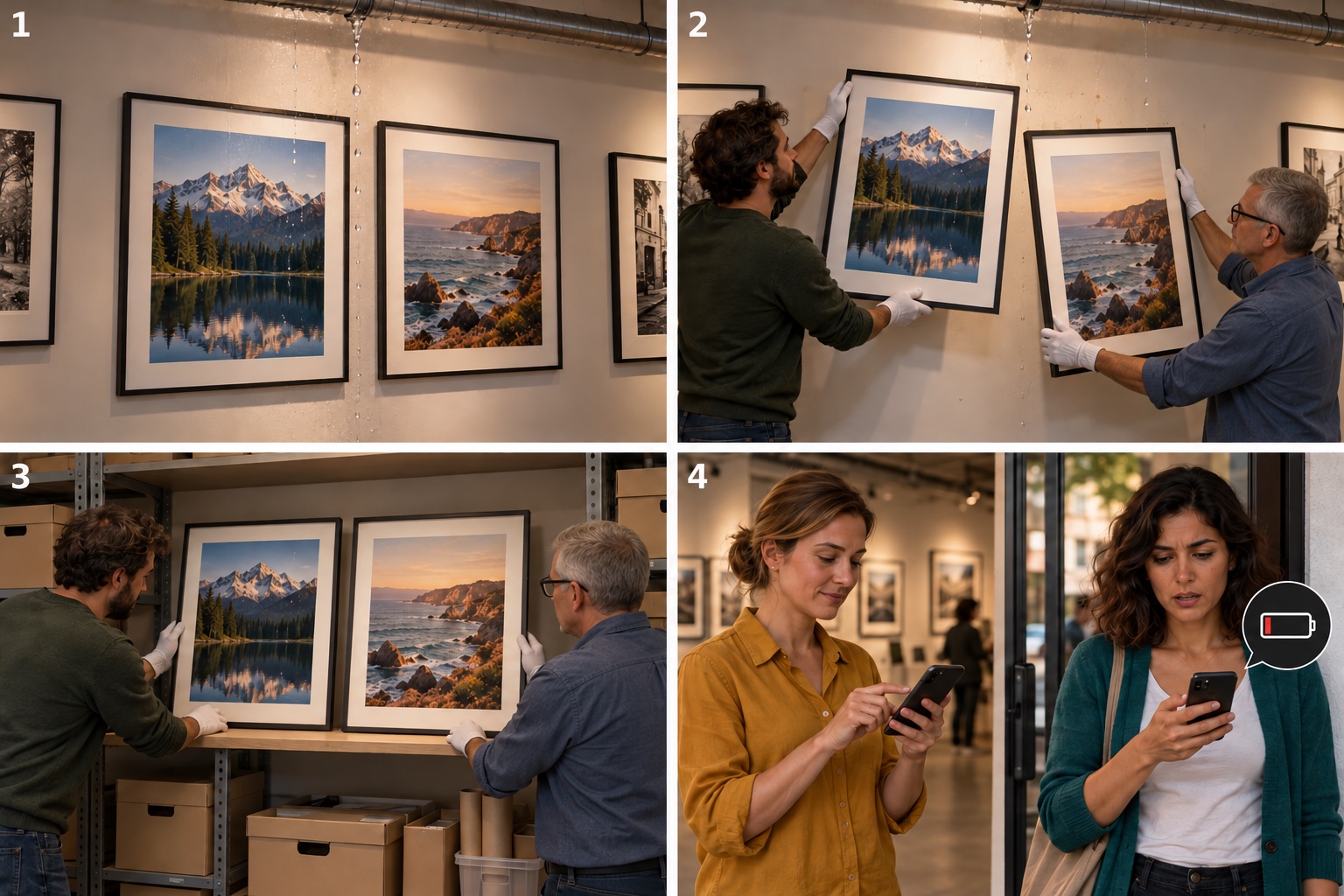
1 Observe2 Predict3 Reveal4 Explain5 Role-play6 Connect
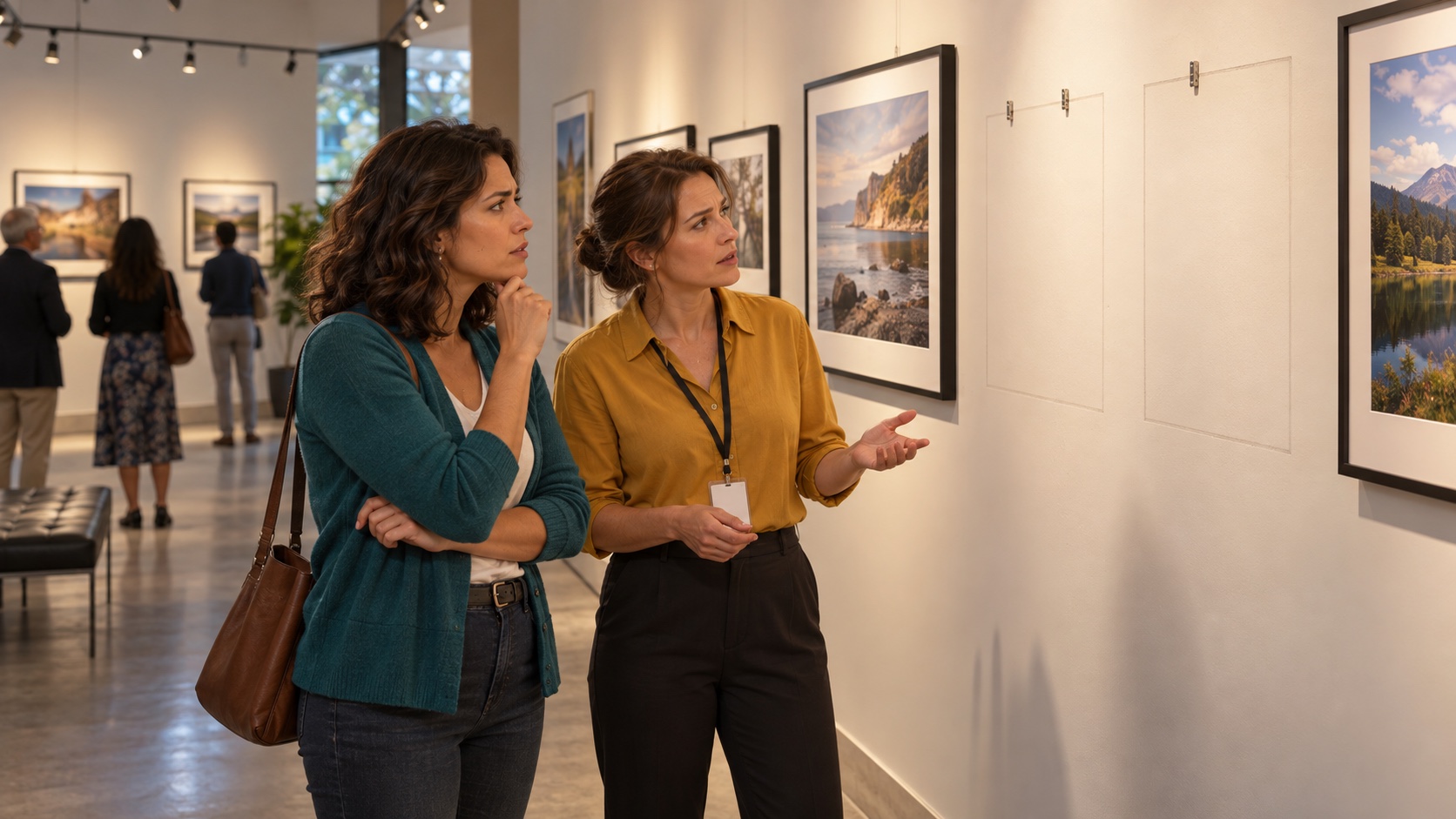
What had happened?
Let Sarah predict first. Then reveal the complete sequence.
→
→
KEY SENTENCE
When I arrived, the volunteers had moved the photographs to the storage room.
Conversation
Where had the water come from?Why had they moved the photos?Where were they now?Were they safe?
Visitor role-play
Teacher: “Where are the two missing photographs?”
Sarah: explain what had happened.
They are safe in the storage room. Water had started dripping above them, so the volunteers had moved them before I arrived.
77–80 MIN · FINAL CHALLENGE
Where was your wallet?
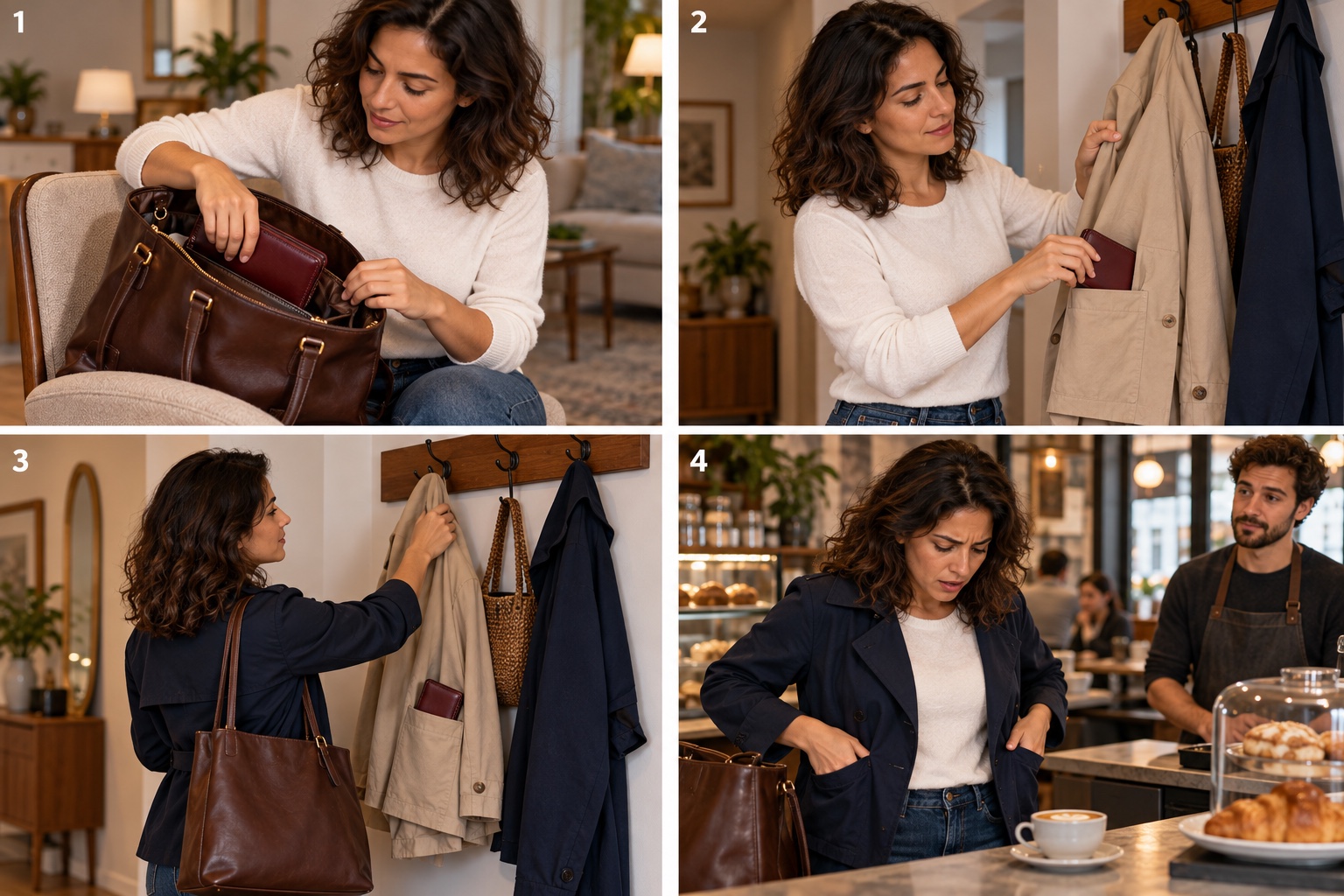
Your 45-second story
Where was the wallet? What had you changed?
Start at the café, look back, explain the problem, and invent a natural ending.
When I tried to pay, I realized…
One possible version
When I tried to pay, I realized I had left my wallet in my other jacket. I had changed jackets before leaving home. I explained the problem and asked if I could pay with my phone.
Order unclear?Which happened first?Clarify meaning before correcting form.
DONE